


Sandwich Type Candle Filter Packs
In high-pressure industrial filtration, the mechanical integrity and precision of the filter media are paramount. Among the various configurations available to process engineers, sandwich type candle filter packs represent a specialized solution designed to balance high filtration accuracy with the structural robustness required for demanding environments. These components are integral to candle filter systems, which are widely utilized in industries ranging from polymer processing to fine chemical production.
Understanding the engineering behind these packs is essential for technical professionals tasked with optimizing filtration efficiency, reducing downtime, and ensuring the longevity of downstream equipment. This guide examines the construction, performance characteristics, and selection criteria for sandwich type candle filter packs within the broader context of industrial Filter Discs & Packs.
The Engineering Logic of the Sandwich Construction
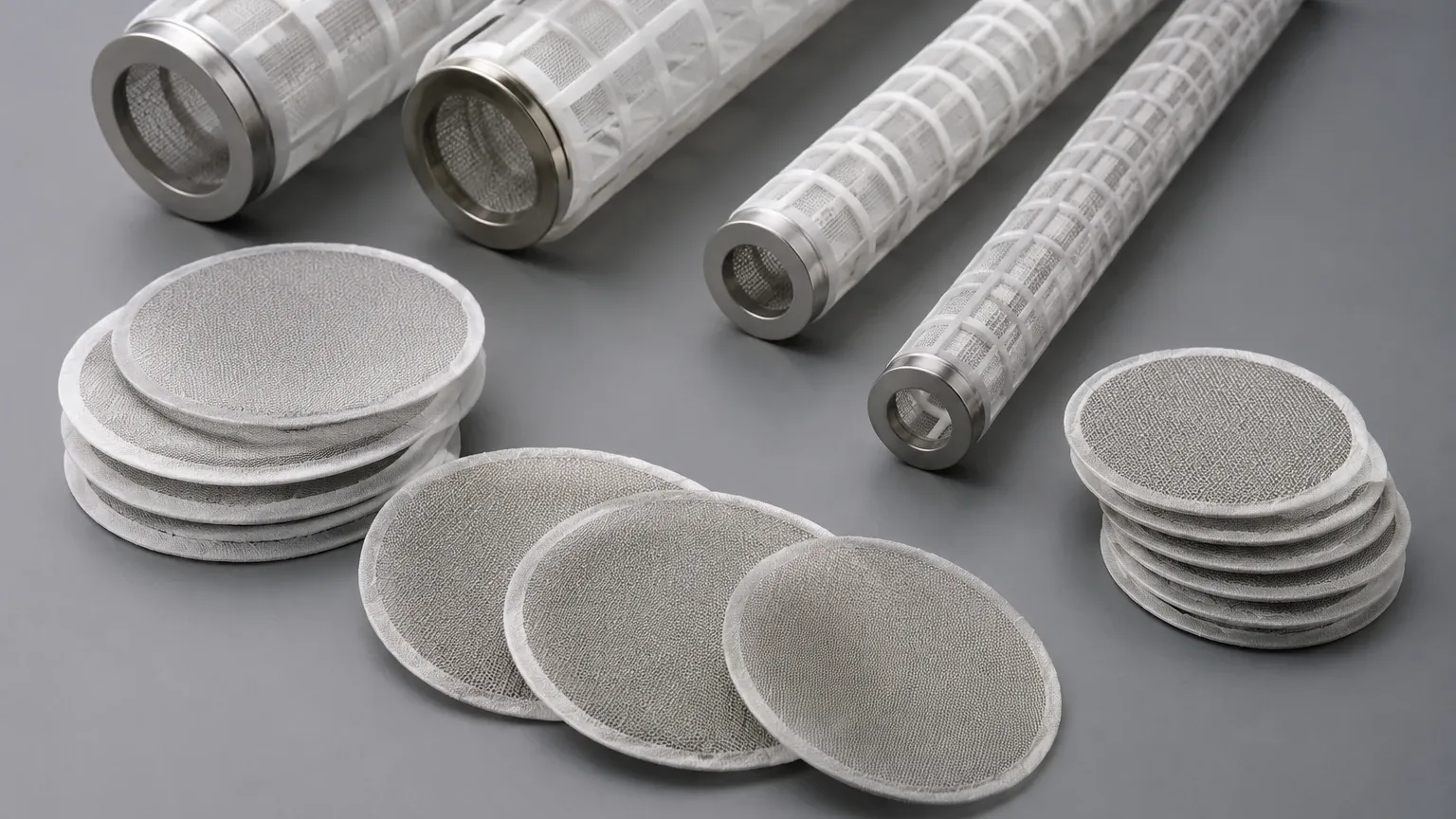
The term "sandwich type" refers to the multi-layered architecture of the filter media. Unlike single-layer wire mesh, which may deform under high differential pressure, a sandwich construction utilizes multiple functional layers bonded together to create a rigid, high-performance filtration unit.
Layer Configuration
A typical sandwich type candle filter pack consists of three to five distinct layers, each serving a specific engineering purpose:
1. The Filtration Layer: This is the core of the pack, usually made from fine stainless steel wire mesh or metal fiber felt. It determines the micron rating and the efficiency of particle capture.
2. The Drainage Layers: Positioned on either side of the filtration layer, these layers facilitate the even distribution of fluid across the filter surface and ensure that filtered fluid can exit the media with minimal resistance.
3. The Support/Protective Layers: The outermost layers are constructed from coarse, heavy-duty wire mesh. These provide the mechanical strength necessary to withstand high pressure drops and protect the delicate filtration layer from physical damage during installation, operation, or backwashing.
Bonding Techniques
To ensure these layers act as a single cohesive unit, manufacturers like Kaifil employ advanced bonding techniques. Sintering is the most common method for high-end applications. By heating the stacked layers in a vacuum furnace to a temperature just below their melting point, the wire contact points fuse at a molecular level. This creates a porous material that is exceptionally stable, does not suffer from media migration, and maintains its pore geometry even under extreme mechanical stress.
Performance Advantages in Industrial Applications
Sandwich type candle filter packs are engineered to solve specific challenges that standard filter elements cannot address. Their design offers several technical advantages that directly impact the total cost of ownership in a B2B environment.
Enhanced Mechanical Stability
In candle filter systems, the filter elements are often subjected to fluctuating pressures and high-velocity flows. A single-layer mesh can experience "pore blinding" or structural collapse if the pressure exceeds its limits. The sandwich design provides an inherent rigidity that prevents the filtration pores from shifting or enlarging. This stability is critical in applications like polymer melt filtration, where the viscosity of the fluid exerts immense force on the filter media.
Improved Backwashing Efficiency
Many industrial processes rely on automated cleaning cycles to extend the life of the filter elements. Because sandwich type candle filter packs are rigid and have a defined pore structure, they respond more effectively to back-pulsing or backwashing. The support layers prevent the filtration media from flexing during the reverse flow, ensuring that accumulated cake or contaminants are dislodged uniformly across the entire surface area.
High Dirt Holding Capacity
By utilizing specialized filtration media like pleated metal fiber felt within the sandwich structure, engineers can significantly increase the effective surface area of the pack. This leads to a higher dirt holding capacity, which translates to longer intervals between cleaning cycles and reduced labor costs for the end-user.
Material Selection and Compatibility
The performance of sandwich type candle filter packs is heavily dependent on the materials used in their construction. In the industrial filtration sector, stainless steel is the gold standard due to its versatility and durability.
* AISI 316L Stainless Steel: This is the most common material for sandwich packs. It offers excellent corrosion resistance, particularly against chlorides and acidic solutions, and can operate at temperatures exceeding 400°C.
* Specialty Alloys: For environments involving extreme chemical aggression or temperatures up to 600°C, alloys such as Hastelloy, Inconel, or Monel may be specified. These materials ensure that the filter pack does not degrade or leach contaminants into the process stream.
* Micron Ratings: Sandwich packs can be engineered with precision ranging from 1 micron to over 200 microns. Selecting the correct rating requires a balance between the required fluid cleanliness and the allowable pressure drop across the system.
Key Evaluation Criteria for Engineers
When specifying sandwich type candle filter packs for a new project or as replacement components, engineers should confirm several technical parameters to ensure application compatibility.
Differential Pressure (ΔP) Limits
Every filter pack has a maximum allowable differential pressure before the risk of structural failure or bypass occurs. Engineers must calculate the clean pressure drop and the terminal pressure drop (the point at which the filter must be cleaned or replaced). Sandwich constructions generally allow for higher terminal ΔP compared to non-sintered alternatives.
Chemical and Thermal Exposure
It is not enough for the filtration layer to be compatible with the process fluid; the bonding agents (if any) and the support structures must also withstand the operating environment. In high-temperature applications, the thermal expansion coefficients of the different layers must be matched to prevent delamination during thermal cycling.
Sealing Mechanisms
The effectiveness of a candle filter is only as good as its seal. Sandwich type packs must be designed to integrate seamlessly with the candle rod assembly. This often involves precision-machined end caps or specialized gaskets that prevent fluid bypass at the connection points.
Common Risks and Mitigation Strategies
While sandwich type candle filter packs are robust, they are not immune to failure if misapplied or poorly maintained. Identifying these risks early is vital for purchasing and maintenance teams.
1. Media Blinding: If the micron rating is too fine for the particle size distribution of the fluid, the surface will blind rapidly. This can be mitigated by performing a thorough particle size analysis before selecting the filtration media.
2. Improper Cleaning: Using aggressive chemicals or incorrect ultrasonic frequencies during cleaning can damage the sintered bonds of the sandwich pack. Following manufacturer-recommended cleaning protocols is essential for maintaining the integrity of the Filter Discs & Packs.
3. Fatigue Failure: Repeated pressure cycling can eventually lead to metal fatigue in the support layers. Regular inspection and tracking the number of cleaning cycles help in predicting the end-of-life for these components.
Customization and OEM Solutions
No two industrial filtration processes are identical. Factors such as fluid viscosity, flow rate, and contaminant characteristics vary significantly between a pharmaceutical line and a hydraulic oil system. Consequently, customization is a core requirement for most B2B filtration projects.
Manufacturers like Kaifil provide OEM services that allow for the customization of:
* Layer Stacking Sequences: Adjusting the number and type of layers to optimize for either flow rate or mechanical strength.
* Dimensions: Custom diameters and lengths to fit proprietary candle filter housings.
* Edge Treatments: Options such as welded edges, crimped edges, or aluminum/stainless steel rims to ensure structural integrity and ease of handling.
By collaborating closely with a manufacturer during the design phase, engineers can ensure that the sandwich type candle filter packs are optimized for the specific hydraulics and chemistry of their system.
Conclusion: Optimizing Filtration Performance
Sandwich type candle filter packs are a critical component for achieving high-precision filtration in demanding industrial environments. Their multi-layered, often sintered, construction provides the mechanical stability and filtration accuracy required to protect downstream assets and maintain product quality.
For engineers and purchasing teams, the key to success lies in understanding the technical trade-offs between micron ratings, pressure drops, and material durability. By focusing on high-quality Filter Discs & Packs and ensuring they are correctly specified for the application, industrial facilities can achieve significant improvements in operational uptime and a lower total cost of filtration. Whether for polymer extrusion, chemical synthesis, or water treatment, the right sandwich pack configuration is a fundamental building block of an efficient process.
