


U Filters
In the landscape of industrial filtration, precision and structural integrity are the primary drivers of operational efficiency. Among the various geometries used to achieve these goals, u filters—specifically those utilizing U-shaped edging or U-profile frames—play a critical role in high-pressure and high-temperature environments. These components are engineered to provide a robust sealing surface and enhanced mechanical strength, ensuring that filtration media remains secure under the most demanding process conditions. For engineers and procurement specialists, understanding the technical nuances of these filters is essential for optimizing system performance and reducing downtime.
Technical Definition and Design of U-Type Filtration Components
The term "u filters" in an industrial context typically refers to filtration elements characterized by a U-shaped cross-section or those that utilize a U-shaped metal binding around the periphery of the filter media. This design is not merely aesthetic; it is a functional requirement for applications where bypass must be zero and where the filter must withstand significant differential pressure.
The Significance of the U-Shaped Binding
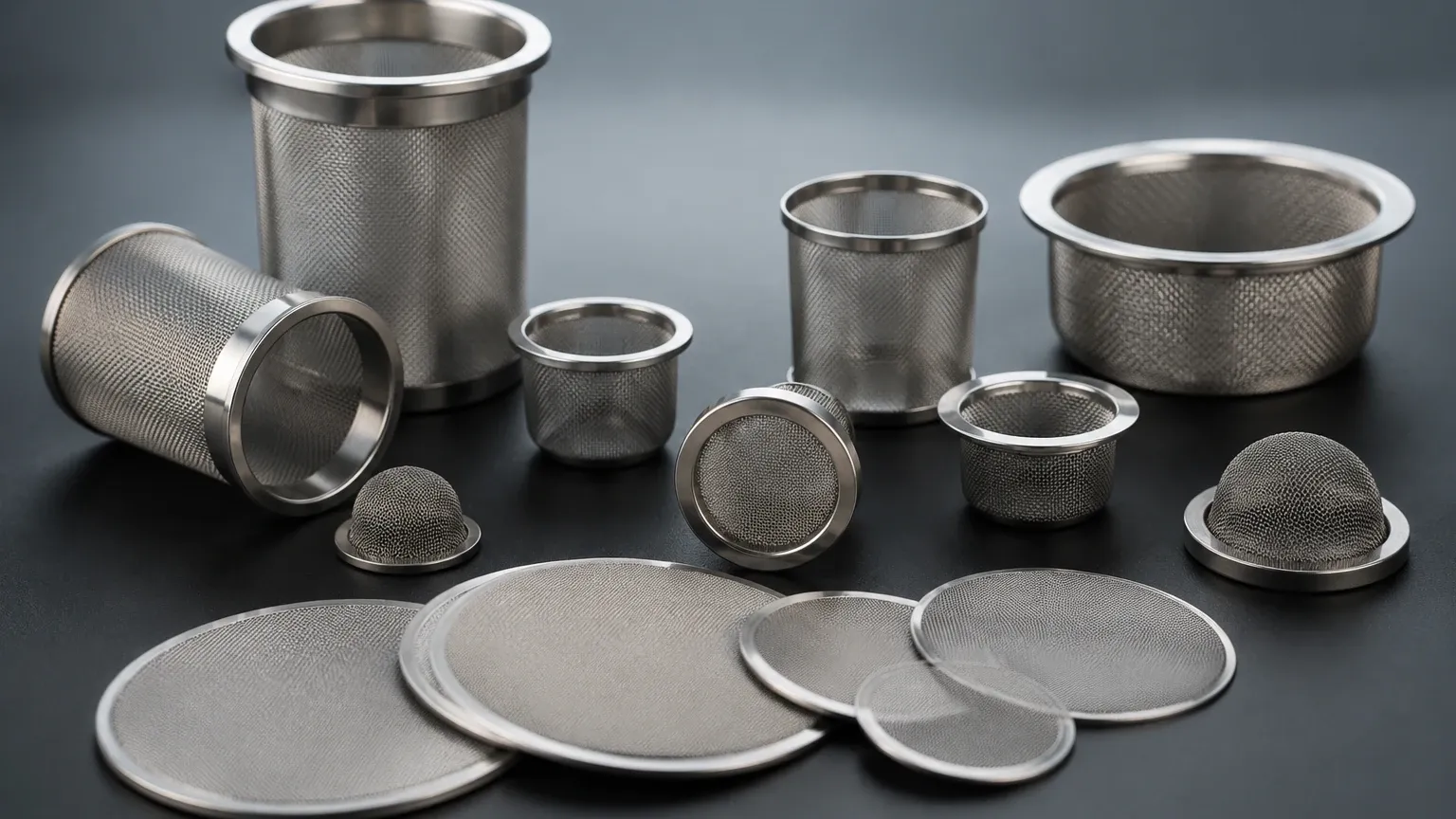
One of the most common iterations of this technology is found in multilayer Filter Discs & Packs. When multiple layers of stainless steel wire mesh are stacked to achieve a specific filtration gradient, the edges must be secured. A U-shaped aluminum, stainless steel, or copper rim is compressed around the stack. This "U-binding" serves several purposes:
1. Edge Sealing: It prevents the process fluid from bypassing the mesh layers at the perimeter of the filter holder.
2. Structural Rigidity: It provides a solid surface for mechanical clamping, preventing the mesh from fraying or distorting under pressure.
3. Safety: It encases the sharp edges of the cut wire mesh, making the filters safer to handle during installation and replacement.
Geometry and Flow Dynamics
In other configurations, u filters may refer to basket-style elements with a U-profile bottom. This geometry is often selected to maximize the effective filtration area (EFA) within a compact housing. The rounded transition of a U-profile reduces turbulence and dead zones where material could stagnate, which is particularly important in the food and beverage and pharmaceutical industries where hygiene and complete drainage are mandatory.
Material Selection for High-Performance U Filters
The performance of u filters is heavily dependent on the materials used for both the filtration media and the structural frame. In industrial environments involving corrosive chemicals or extreme temperatures, stainless steel is the industry standard.
Stainless Steel Alloys and Corrosion Resistance
Kaifil utilizes various grades of stainless steel to meet specific application requirements:
* AISI 304: The most common grade, offering excellent mechanical properties and good resistance to atmospheric corrosion and many organic and inorganic chemicals. It is widely used in food processing and general industrial applications.
* AISI 316L: Containing molybdenum, this grade offers superior resistance to chlorides and pitting. The "L" denotes low carbon content, which improves weldability and reduces the risk of intergranular corrosion in the heat-affected zones of welded u filters.
* Specialty Alloys: For highly aggressive environments, alloys such as Hastelloy, Inconel, or Monel may be used to ensure the longevity of the filter element.
Mesh Weave Types
The choice of weave within the u filter assembly determines the filtration accuracy and flow characteristics. Common weaves include:
* Plain Weave: A simple over-under pattern providing high flow rates and easy cleaning.
* Dutch Weave: A denser weave that offers higher strength and finer filtration ratings, often used in high-pressure hydraulic and fuel systems.
* Twill Weave: Allows for a heavier wire diameter in a given mesh count, providing increased durability for heavy-duty applications.
Integration with Filter Discs & Packs
U filters are frequently integrated into complex filtration assemblies known as Filter Discs & Packs. These packs are essential in the polymer extrusion and chemical fiber industries, where they are used to remove impurities from molten plastics and resins.
Multilayer Configurations and Sintering
To achieve the desired micron rating while maintaining structural integrity, engineers often specify multilayer packs. These may consist of a fine filtration layer protected by coarser support layers on both sides. In many u filters, these layers are sintered together. Sintering involves heating the mesh stack in a vacuum furnace to bond the wire contact points without melting the metal. This creates a porous, rigid plate that, when combined with a U-shaped edge binding, results in a filter that can withstand thousands of PSI without delamination.
Customization Options
Customization is a hallmark of professional filtration manufacturing. U filters can be tailored in several ways:
* Shape: Beyond standard circular discs, u filters can be manufactured in oval, rectangular, or kidney shapes to fit specific machine housings.
* Layer Sequence: The arrangement of mesh layers can be customized to provide depth filtration or surface filtration depending on the contaminant load.
* Rim Material: While stainless steel is standard, softer metals like copper or aluminum are used when the filter rim must also act as a gasket to create a leak-proof seal against the machine's internal surfaces.
Key Engineering Considerations for Selection
Selecting the appropriate u filter requires a thorough analysis of the operating environment. Engineers must move beyond simple micron ratings to consider the total performance profile of the component.
Filtration Accuracy and Micron Rating
The micron rating defines the size of particles the filter is intended to capture. However, it is important to distinguish between nominal and absolute ratings. Nominal ratings refer to the ability of the filter to retain a majority of particles of a certain size, while absolute ratings indicate the size of the largest spherical particle that can pass through the mesh. For critical applications like pharmaceutical processing or fine chemical production, absolute ratings are typically required.
Pressure Drop and Structural Integrity
Every filter introduces a resistance to flow, known as pressure drop (ΔP). A well-designed u filter must balance fine filtration with a manageable pressure drop to avoid excessive energy consumption or pump strain. Furthermore, the filter must possess the structural integrity to resist "bursting" or "collapsing" when the pressure drop increases as the filter becomes loaded with contaminants.
Effective Filtration Area (EFA)
The EFA is the total surface area available for fluid to pass through. In u filters, the design of the U-binding must be precise to maximize the EFA while ensuring a secure seal. A larger EFA leads to lower flux rates, which generally improves filtration efficiency and extends the time between cleaning or replacement cycles.
Industrial Applications of U Filters
The versatility of u filters makes them indispensable across a wide spectrum of heavy and light industries. Their ability to be customized for specific mechanical interfaces is a primary reason for their widespread adoption.
Polymer and Plastic Extrusion
In the production of plastic films, bottles, and fibers, molten polymer is forced through a screen pack at extremely high pressures. U filters are used here to catch "gels" (unmelted polymer) and foreign contaminants. The U-binding ensures that the screen pack remains flat and does not allow bypass, which would result in defects in the final product or damage to expensive downstream dies.
Hydraulic and Lubrication Systems
Precision hydraulic systems in aerospace and heavy machinery require exceptionally clean oil to prevent component wear. U filters are often used as last-chance filters or in-line strainers. Their robust construction allows them to handle the high-frequency pressure pulsations common in hydraulic circuits.
Chemical and Petrochemical Processing
In chemical reactors, u filters are used for catalyst recovery and the removal of particulates from aggressive solvents. The choice of 316L stainless steel or exotic alloys ensures that the filter does not succumb to chemical attack, maintaining the purity of the process stream.
Food and Beverage Filtration
For high-viscosity fluids like syrups, chocolate, or oils, u filters provide a durable solution that can be cleaned and reused. The stainless steel construction is inherently food-safe and can withstand the rigorous Clean-in-Place (CIP) cycles involving caustic chemicals and high-temperature steam sterilization.
Maintenance, Cleaning, and Longevity
One of the primary advantages of stainless steel u filters over disposable media is their cleanability. Depending on the nature of the contaminant, several methods can be employed to restore the filter to its original performance levels:
1. Ultrasonic Cleaning: Uses high-frequency sound waves in a cleaning solution to dislodge fine particles from deep within the mesh layers.
2. Chemical Cleaning: Involves soaking the filters in solvents, acids, or alkalis to dissolve specific types of buildup, such as polymers or organic deposits.
3. Thermal Cleaning (Burn-off): Used primarily in the plastics industry to vaporize polymer residue in a controlled-temperature oven.
4. Back-flushing: Directing fluid flow in the reverse direction to push contaminants out of the mesh pores.
The durability of Filter Discs & Packs and u filters means that, with proper maintenance, they can serve for many years, significantly reducing the total cost of ownership compared to single-use cartridges.
Conclusion: Optimizing Filtration Systems
The selection of u filters is a technical decision that impacts the reliability and quality of industrial production. By focusing on the mechanical advantages of the U-shaped geometry, the chemical resistance of stainless steel alloys, and the precision of modern mesh weaving techniques, engineers can specify filtration solutions that meet the most stringent requirements.
Whether used in the high-pressure environment of a polymer extruder or the sterile conditions of a pharmaceutical lab, u filters provide the necessary balance of strength and precision. When evaluating these components, it is crucial to partner with a manufacturer like Kaifil that understands the engineering challenges of your specific industry and can provide the customization required for optimal performance. By confirming filtration accuracy, material compatibility, and structural requirements before procurement, technical teams can ensure a seamless integration that maximizes both process uptime and product quality.
