


Common Filter Sizes
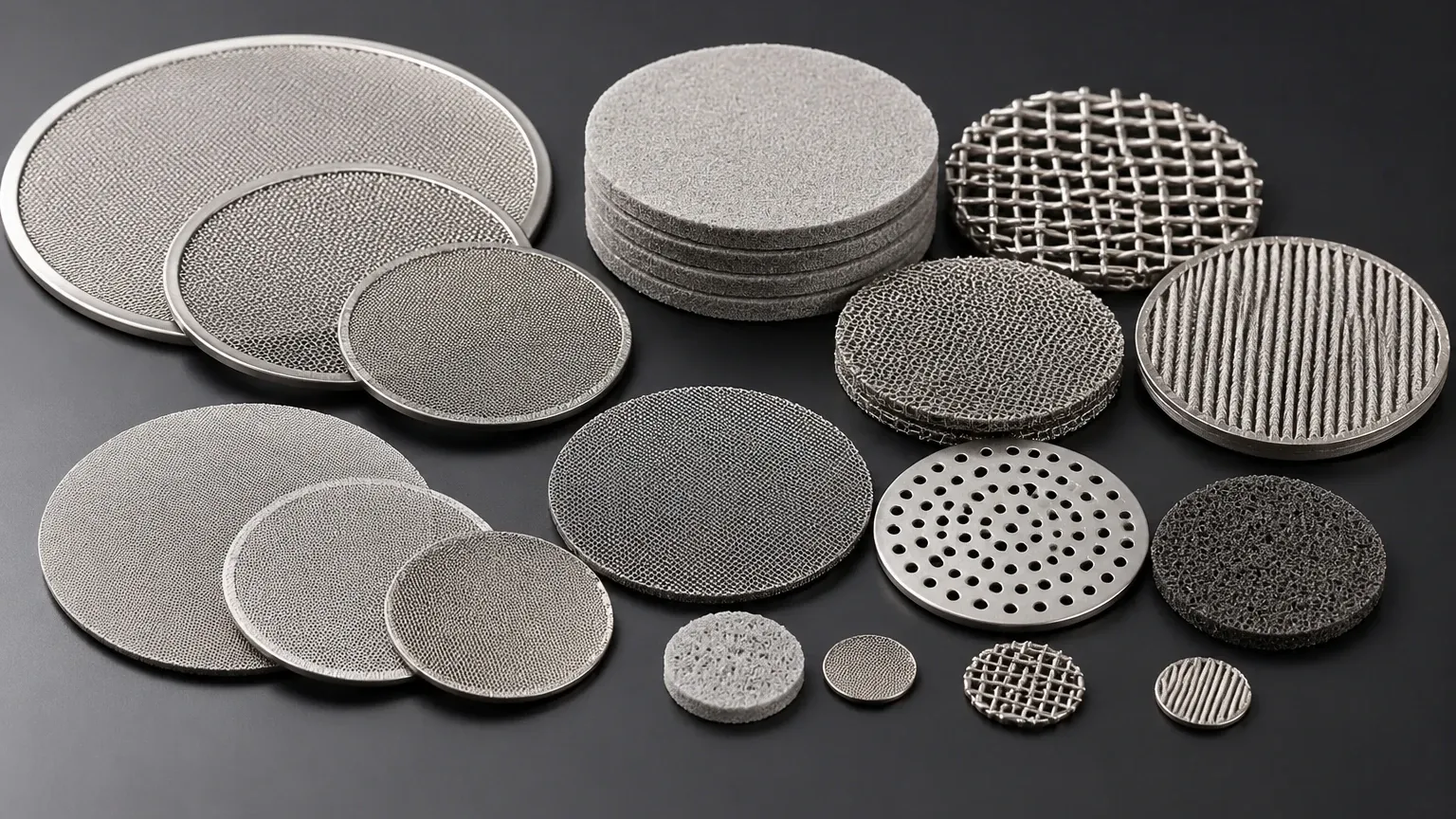
In industrial filtration, the dimensional accuracy of a filter component is as critical as its micron rating. Whether a system utilizes a single-layer screen or complex multi-layer Filter Discs & Packs, the physical size determines the integrity of the seal within the housing and the overall efficiency of the fluid or gas flow. Selecting the correct dimensions involves more than measuring a diameter; it requires an understanding of tolerances, material thickness, and the mechanical constraints of the filtration equipment.
For engineers and procurement specialists, identifying common filter sizes is often the first step in streamlining maintenance and reducing lead times. However, because industrial applications range from fine pharmaceutical processing to heavy-duty plastic extrusion, "standard" sizes vary significantly by industry. This guide examines the technical parameters of filter sizing, the impact of dimensions on performance, and the engineering considerations necessary for selecting the right components.
The Engineering Importance of Precise Sizing
Industrial filtration systems rely on a precise fit between the filter element and the housing or screen changer. If a filter disc is even slightly undersized, bypass can occur, allowing unfiltered contaminants to pass through the gap between the filter edge and the housing wall. Conversely, an oversized disc may buckle or fail to seat properly, leading to mechanical stress and potential structural failure under high pressure.
When evaluating common filter sizes, engineers must consider the following dimensional factors:
1. Outer Diameter (OD): The primary dimension for circular discs. In multi-layer packs, the OD must be consistent across all layers to ensure a uniform seal.
2. Inner Diameter (ID): Critical for ring-shaped filters or donut filters used in rotating machinery or specific manifold designs.
3. Overall Thickness: The cumulative height of all mesh layers plus any binding or rims. This is vital for ensuring the pack fits within the recessed depth of a screen changer or filter holder.
4. Concentricity and Ovality: For high-precision applications, the roundness of the disc is essential for maintaining an even seal around the entire perimeter.
Overview of Common Filter Sizes by Industry
While custom dimensions are frequently required, many industries have converged on specific ranges of common filter sizes to simplify equipment design and spare parts inventory.
Polymer and Plastic Extrusion
In the plastics industry, screen changers typically use round filter discs. Common diameters often include:
* Small Scale/Lab Lines: 20mm to 50mm
* Standard Production Lines: 60mm, 90mm, 120mm, and 150mm
* Large Scale Extrusion: 200mm to 400mm and above
These are often provided as multi-layer packs, spot-welded or bound with an aluminum or stainless steel rim to prevent individual mesh layers from shifting under the high viscosity and pressure of molten polymer.
Hydraulic and Oil Filtration
Hydraulic systems often utilize smaller, high-precision discs to protect sensitive valves and actuators. Common sizes in these applications frequently range from 5mm to 30mm in diameter. These small discs require tight tolerances, often within +/- 0.05mm, to ensure they seat perfectly within manifold blocks.
Chemical and Pharmaceutical Processing
In batch processing and catalyst recovery, larger filter plates or leaf filters are common. Sizes here can range from 300mm to over 1000mm. Because these environments often involve corrosive fluids, the dimensional stability of the material (typically 316L stainless steel) under thermal cycling is a primary engineering concern.
Technical Parameters: Mesh Count and Thickness
The size of a filter is not defined solely by its perimeter. The internal geometry—the mesh count and wire diameter—dictates the "thickness" of the disc, which is a critical dimension for stack-up height in multi-layer configurations.
Mesh Selection and Its Impact on Dimensions
A 100-mesh screen made with a 0.1mm wire will have a different thickness than a 100-mesh screen made with a 0.12mm wire. When multiple layers are combined into Filter Discs & Packs, these small differences compound. Engineers must calculate the total pack thickness to ensure compatibility with the mechanical clamping force of the filter housing.
Common mesh types used in these sizes include:
* Plain Weave: Provides a consistent thickness and is easy to cut into precise diameters.
* Dutch Weave: Offers higher strength and finer filtration but results in a thicker individual layer.
* Twill Weave: Used for finer filtration requirements where a single plain weave layer may not suffice.
Layer Configuration in Filter Packs
Multi-layer packs are designed to provide both filtration and structural support. A common configuration might include:
1. Support Layer: A coarse mesh (e.g., 20 mesh) to provide rigidity.
2. Drainage Layer: A medium mesh to facilitate flow.
3. Filtration Layer: The fine mesh (e.g., 325 mesh) that determines the micron rating.
4. Cover Layer: Another coarse mesh to protect the fine filtration layer from mechanical damage during installation.
Evaluating Tolerances and Edge Treatments
When specifying common filter sizes, the method of manufacturing the edge is as important as the dimension itself. The edge treatment affects how the filter interacts with the housing and how it handles pressure.
Die-Cutting vs. Laser Cutting
* Die-Cutting: The most common method for producing standard sizes. It is cost-effective for high volumes but can result in a slight "burr" or compression at the edge. For most industrial screen changers, this is acceptable.
* Laser Cutting: Used for high-precision applications or non-standard shapes. It provides extremely tight tolerances and clean edges without the physical deformation associated with mechanical shearing.
Rims and Borders
To improve handling and sealing, filter discs are often finished with a border.
* Spot Welded: Individual layers are welded at specific points. This keeps the pack together but does not seal the edges.
* Aluminum/Stainless Steel Rims: A metal U-channel is crimped around the edge. This provides a definitive outer diameter and a robust sealing surface, which is essential in high-pressure polymer filtration to prevent "wrap-around" leakage.
Performance Considerations: Effective Filtration Area (EFA)
When selecting between common filter sizes, engineers must evaluate the Effective Filtration Area (EFA). The EFA is the actual surface area through which fluid can pass, excluding the area covered by rims, seals, or support structures.
If a housing is designed for a 100mm disc but uses a wide 5mm rim, the EFA is significantly reduced compared to a spot-welded disc of the same diameter. A smaller EFA leads to higher flux rates (flow per unit area), which can increase the pressure drop and shorten the filter's service life. Therefore, when moving between different brands or styles of filter discs, the EFA should be verified to ensure the replacement component does not inadvertently alter system hydraulics.
Common Risks in Sizing and Selection
Errors in sizing often stem from a lack of communication regarding the operating environment. Two common risks include:
1. Thermal Expansion: In high-temperature applications, such as steam filtration or hot melt extrusion, the stainless steel filter will expand. If the common filter sizes selected do not account for this expansion within a cold housing, the filter may warp or crush its own edges upon reaching operating temperature.
2. Pressure Deformation: Under high differential pressure, a thin filter disc may "dish" or bow. If the size is not perfectly matched to the support plate (breaker plate), the mesh can be pulled out of its seat, leading to immediate bypass.
Customization and Procurement Strategy
While utilizing common filter sizes can reduce costs, customization is often necessary for optimized performance. Manufacturers like Kaifil provide the ability to tailor the mesh sequence, material grade (304, 316, 316L, or specialized alloys like Inconel), and exact dimensions to meet specific engineering requirements.
Before finalizing a purchase or specifying a size for a new project, technical teams should confirm:
* The exact housing dimensions: Including the depth of the recess.
* Operating temperature and pressure: To determine the required material thickness and edge reinforcement.
* Compatibility: Ensuring the alloy is resistant to the process fluid to prevent dimensional changes due to corrosion.
Conclusion
Understanding common filter sizes is essential for maintaining efficient industrial operations. By recognizing the relationship between diameter, thickness, and edge treatment, engineers can ensure they select components that provide a reliable seal and optimal flow characteristics. Whether utilizing standard off-the-shelf dimensions or requiring custom-engineered Filter Discs & Packs, the focus must remain on precision and application-specific requirements to achieve the lowest total cost of ownership and the highest level of process protection.
