


Filter Pack 2.0
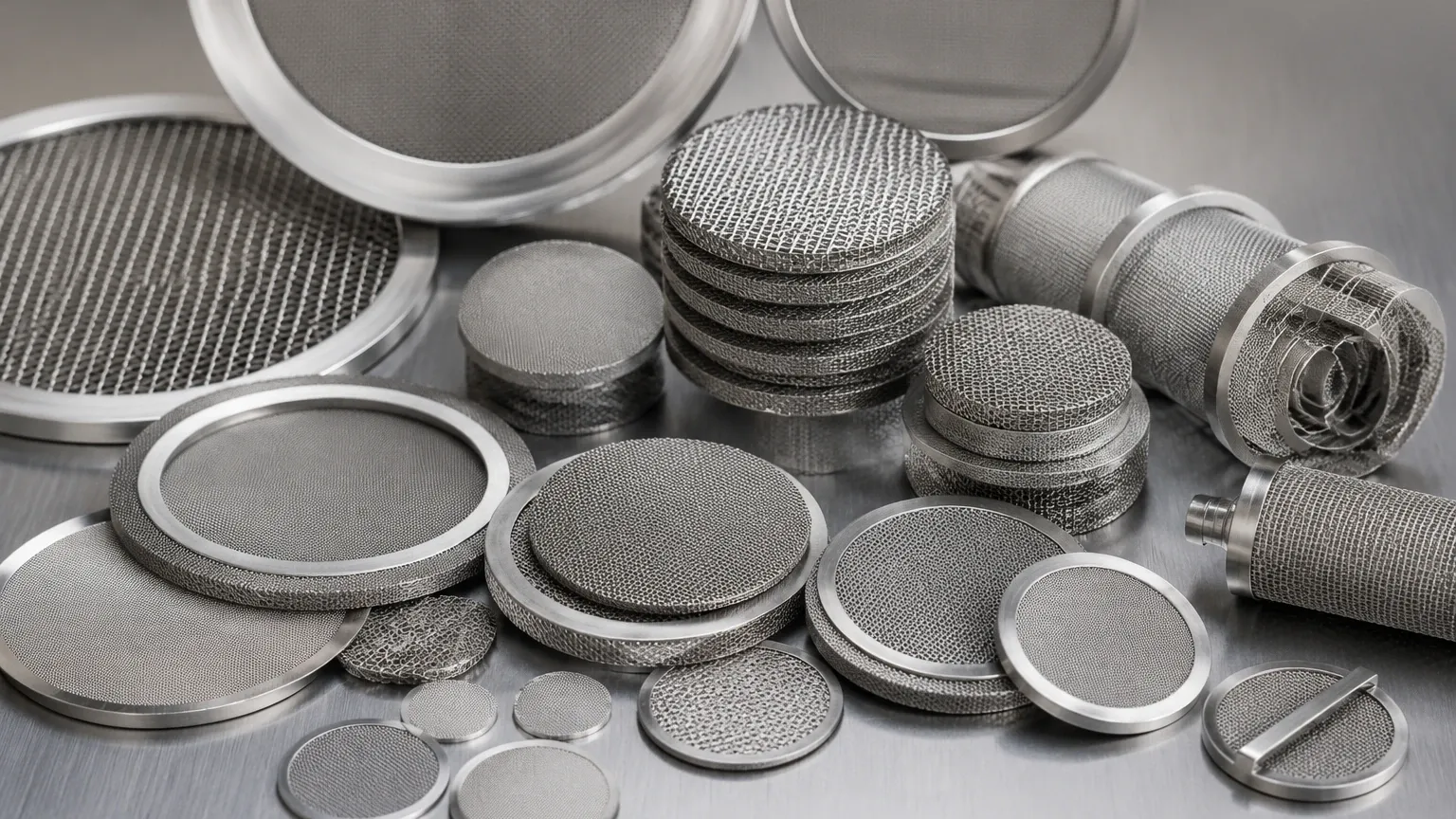
In the landscape of industrial filtration, the term "filter pack 2.0" represents a shift from traditional single-layer mesh components toward high-performance, multi-layered, and precision-engineered filtration assemblies. As industrial processes in chemical processing, pharmaceutical manufacturing, and polymer extrusion become more demanding, the requirements for filtration accuracy and structural integrity have evolved. Modern Filter Discs & Packs are no longer just consumables; they are critical engineering components designed to optimize flow dynamics, extend service life, and ensure the purity of the final product.
For engineers and procurement professionals, understanding the transition to advanced filter pack 2.0 configurations is essential for maintaining operational efficiency. This guide explores the technical foundations of these advanced filtration solutions, the engineering considerations behind their design, and the criteria for selecting the right components for demanding industrial environments.
The Evolution of Filter Discs & Packs: Moving Toward 2.0 Standards
Traditional filter packs often consisted of simple layers of wire mesh, sometimes held together by basic spot welding or simple frames. While effective for coarse filtration, these designs often struggled with high-pressure differentials, media migration, and inconsistent pore distribution. The concept of a filter pack 2.0 addresses these limitations through advanced manufacturing techniques such as vacuum sintering, precision laser cutting, and automated assembly.
From Single-Layer to Multi-Layer Sintered Structures
One of the defining characteristics of a filter pack 2.0 is the use of sintered multi-layer wire mesh. Unlike loose layers, sintered mesh is bonded at every contact point through a heat-treatment process in a vacuum furnace. This creates a monolithic structure that offers several advantages:
- No Media Migration: The individual wires cannot shift or shed, preventing downstream contamination.
- Fixed Pore Geometry: The filtration rating remains constant even under extreme pressure.
- Enhanced Mechanical Strength: The assembly can withstand high back-pressure during cleaning or processing without deforming.
Precision Bordering and Sealing
In the 2.0 era, the rim or border of the filter pack is as important as the mesh itself. Advanced packs utilize precision-machined aluminum, stainless steel, or copper rims. These borders are not merely for containment; they provide a critical seal within the filter housing, preventing "bypassing"—a common failure mode where unfiltered fluid escapes around the edges of the disc.
Engineering Considerations for Material Selection
Selecting the correct material is the first step in ensuring the longevity of a filter pack 2.0. Because these components often operate in corrosive or high-temperature environments, the metallurgical properties of the wire mesh must be matched to the application.
Stainless Steel 304 and 316L
Stainless steel remains the industry standard due to its balance of cost and performance.
- Type 304: Suitable for general industrial use where moderate corrosion resistance is required.
- Type 316L: The preferred choice for pharmaceutical and chemical applications. The lower carbon content and addition of molybdenum provide superior resistance to pitting and crevice corrosion, especially in chloride-rich environments.
Specialty Alloys for Extreme Conditions
For processes involving highly acidic or alkaline fluids, or temperatures exceeding the limits of standard stainless steel, advanced filter pack 2.0 solutions may utilize specialty alloys:
- Hastelloy: Offers exceptional resistance to strong acids and oxidizing agents.
- Inconel: Ideal for high-temperature applications where oxidation resistance is paramount.
- Monel: Frequently used in marine engineering and hydrofluoric acid processing.
Structural Design and Weave Patterns
The performance of a filter pack 2.0 is largely dictated by the weave pattern of the wire mesh layers. Engineers must choose patterns that balance filtration fineness with flow permeability.
Plain and Twill Weaves
These are common in the support layers of a pack. They provide high open areas and low pressure drops, acting as a drainage layer that allows the filtrate to flow efficiently toward the outlet after passing through the finer control layers.
Dutch Weave (Plain and Twilled)
Dutch weaves use a higher density of smaller diameter wires in one direction (usually the shute wires). This creates a "tortuous path" for particles, providing high-precision surface filtration. In a filter pack 2.0 configuration, twilled dutch weave layers are often used as the primary filtration media to achieve micron ratings as low as 1 to 5 microns.
The Importance of Layer Sequencing
A typical high-performance filter pack is not uniform. It is a gradient structure. A common sequence might include:
1. Protection Layer: A coarse mesh to protect the fine media from mechanical damage.
2. Control Layer: The precision mesh that defines the filtration rating.
3. Dispersion Layer: A layer designed to distribute flow evenly across the control layer.
4. Support Layers: Multiple layers of heavy-duty mesh to provide the necessary rigidity to resist pressure-induced bending.
Performance Evaluation Criteria for Engineers
When evaluating a filter pack 2.0 for a specific application, engineers should look beyond the nominal micron rating. Several key performance indicators (KPIs) determine the total cost of ownership and process reliability.
Dirty Hold Capacity (DHC)
This refers to the amount of contaminant a filter can retain before the pressure drop reaches a critical limit. A well-designed filter pack 2.0 utilizes depth filtration principles within its multi-layer structure to maximize DHC, thereby extending the time between filter changes and reducing downtime.
Pressure Drop (Delta P)
Every filter introduces resistance to flow. A high initial pressure drop limits the throughput of the system. Advanced packs are engineered to minimize this resistance through optimized weave selection and layer configuration, ensuring that the system operates efficiently from the moment of installation.
Bubble Point Integrity
To verify the filtration accuracy, the "bubble point" test is used. This measures the pressure required to force air through a liquid-saturated filter. For a filter pack 2.0, a consistent bubble point across different production batches is a hallmark of quality manufacturing and precise pore size control.
Common Risks and Mitigation Strategies
Even the most advanced Filter Discs & Packs can fail if not properly specified or maintained. Understanding common risks allows engineers to implement better procurement and operational protocols.
Risk 1: Bypass and Improper Sealing
If the filter pack does not fit perfectly within the housing, or if the rim is deformed, fluid will take the path of least resistance.
Mitigation: Specify precision-machined rims and ensure that the housing tolerances match the filter pack dimensions. Using compressed aluminum or annealed copper rims can help create a better seal in high-pressure applications.
Risk 2: Mesh Fatigue and Deformation
In applications with pulsating flow or high viscosity (such as polymer melt filtration), the mesh can experience fatigue, leading to cracks or "cupping" (permanent deformation).
Mitigation: Transition to sintered filter packs. The diffusion bonding process significantly increases the mechanical strength of the assembly, allowing it to resist deformation under loads that would destroy a standard mesh pack.
Risk 3: Chemical Incompatibility
Using the wrong grade of stainless steel can lead to rapid corrosion, which not only destroys the filter but also introduces metallic contaminants into the process stream.
Mitigation: Conduct thorough fluid compatibility tests. For pharmaceutical or food-grade applications, ensure the materials are certified and that the manufacturing process (including lubricants and cleaning agents) meets industry standards.
Customization: The Path to Optimized Filtration
One of the most significant advantages of the filter pack 2.0 approach is the ability to customize the component to the exact needs of the machinery. Off-the-shelf solutions often involve compromises in either flow rate or filtration fineness.
Tailored Micron Ratings
Manufacturers can combine different mesh counts to create a custom filtration profile. This is particularly useful in the chemical fiber industry, where specific particle sizes must be removed to prevent spinneret clogging while maintaining high throughput.
Specialized Shapes and Sizes
While circular discs are the most common, advanced manufacturing allows for the production of oval, rectangular, or complex geometric packs. These can be designed with central holes for bolt-on applications or integrated handles for easier replacement in hot-melt systems.
Reusability and Cleaning
Unlike disposable synthetic filters, stainless steel filter pack 2.0 assemblies are often cleanable and reusable. Methods such as ultrasonic cleaning, chemical baths, or burnout ovens (for polymer removal) can restore the filter to near-original performance. Engineers should confirm the recommended cleaning cycles and methods with the manufacturer to maximize the lifespan of the packs.
Conclusion: Making Informed Purchasing Decisions
Investing in filter pack 2.0 technology is a strategic decision that impacts the reliability and quality of industrial production. By focusing on sintered structures, precise material selection, and optimized layer sequencing, companies can achieve superior filtration results while reducing long-term costs associated with downtime and frequent replacements.
Before finalizing a purchase, technical teams should confirm the following with their supplier:
- Material Certification: Verification of the alloy grade (e.g., 316L vs. 304).
- Filtration Efficiency: Clarification between nominal and absolute micron ratings.
- Structural Integrity: Whether the pack is spot-welded, sintered, or framed.
- Application Compatibility: Review of temperature, pressure, and chemical exposure limits.
By treating Filter Discs & Packs as high-precision engineering tools rather than simple commodities, industrial operators can ensure their processes remain competitive and efficient in an increasingly demanding market.
