


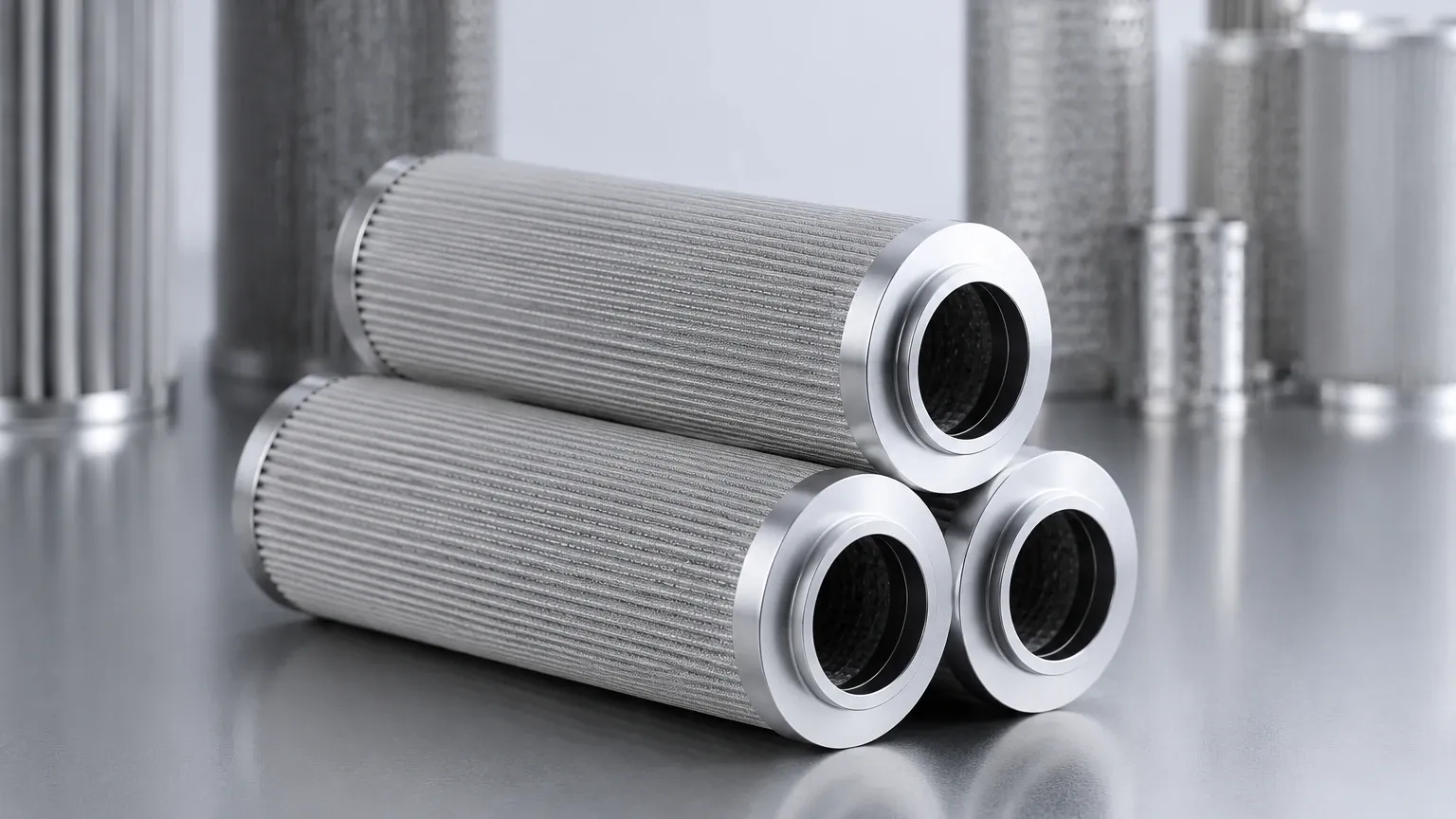
3 Pack Water Filter Cartridges
In industrial water treatment and fluid processing, the reliability of filtration components directly impacts operational uptime and product quality. For many engineering and procurement teams, sourcing Filter Cartridges in standardized sets, such as 3 pack water filter cartridges, is a strategic approach to inventory management and preventative maintenance. While the term "3 pack" is often associated with residential use, in a B2B and industrial context, it represents a calculated maintenance unit designed to support multi-stage filtration systems or to provide immediate redundancy for critical processes.
Industrial-grade water filter cartridges must withstand rigorous conditions, including high pressure, temperature fluctuations, and exposure to corrosive chemicals. Selecting the right configuration requires a deep understanding of filtration mechanics, material science, and the specific demands of the application environment.
Understanding Industrial Grade 3 Pack Water Filter Cartridges
In a professional setting, a 3 pack of filter cartridges typically serves one of two purposes. First, it may correspond to a three-stage filtration housing where each cartridge performs a different function—such as sediment removal, carbon block dechlorination, and fine particulate polishing. Second, it may serve as a planned maintenance kit for a single-stage housing, ensuring that the facility has a full cycle of replacements on hand to minimize downtime during scheduled change-outs.
Unlike consumer-grade products, industrial 3 pack water filter cartridges are often constructed from high-durability materials like 304 or 316L stainless steel, or high-purity polymers. These are engineered to meet precise micron ratings and flow rate requirements. For engineers, the focus is not just on the quantity, but on the consistency of the filtration media across all units in the pack to ensure predictable performance across the entire system.
Technical Specifications and Engineering Considerations
When evaluating filter cartridges for industrial water applications, several technical parameters must be analyzed to ensure the chosen product meets the system's requirements.
Micron Ratings and Filtration Efficiency
The micron rating defines the size of particles the cartridge can effectively trap. This is categorized into "nominal" and "absolute" ratings. A nominal rating indicates the cartridge can trap a major percentage of particles of a given size, whereas an absolute rating (often achieved through high-precision wire mesh or sintered metal) indicates that 99.9% or more of particles above that size are retained. In critical pharmaceutical or food and beverage applications, absolute ratings are often mandatory to ensure safety and compliance.
Flow Rate and Differential Pressure
Every filter cartridge introduces a degree of resistance to the fluid flow, known as pressure drop or differential pressure (ΔP). Engineers must calculate the clean pressure drop to ensure the pump system can maintain the required flow rate. As the 3 pack water filter cartridges accumulate contaminants, the ΔP increases. Monitoring this change is essential for determining the optimal replacement point before the system experiences bypass or structural failure of the filter media.
Material Compatibility
The choice of material is dictated by the chemistry of the water being treated. While standard polypropylene is common for general water use, stainless steel filter cartridges are preferred for high-temperature applications or where chemical cleaning (CIP – Clean-in-Place) is required. Stainless steel 316L offers superior resistance to pitting and corrosion in saline or acidic environments, making it a standard for industrial water treatment in the chemical and marine sectors.
Why Procurement Teams Prioritize Multipack Inventory
Strategic procurement of filtration components involves more than just unit price. Industrial facilities often operate on thin margins regarding downtime, where an hour of halted production can cost thousands of dollars. Sourcing 3 pack water filter cartridges provides several operational advantages:
1. Standardized Maintenance Cycles: By purchasing in sets of three, facilities can align their replacement schedules. If a system uses three identical housings in parallel, a single 3-pack ensures a complete system refresh in one maintenance window.
2. Reduced Shipping and Administrative Costs: Consolidating orders into multipacks reduces the frequency of purchase orders and the per-unit cost of logistics. This is particularly relevant for heavy-duty metal filters that may have higher shipping weights.
3. Emergency Redundancy: Having at least two spare cartridges on-site for every one in operation is a common risk-mitigation strategy. If a sudden spike in turbidity or a process upset clogs the active filter, the presence of a 3-pack ensures that the process can be restarted immediately without waiting for a new shipment.
Material Selection: Stainless Steel vs. Polymeric Options
In the realm of industrial Filter Cartridges, the debate often centers on the longevity of stainless steel versus the lower initial cost of disposable polymers.
Stainless Steel Wire Mesh Filters
Stainless steel cartridges are the hallmark of sustainable industrial filtration. They are cleanable and reusable, which significantly lowers the total cost of ownership over time. For applications involving high-pressure steam, aggressive solvents, or high-viscosity fluids, stainless steel is often the only viable option. These filters are typically constructed using pleated wire mesh to maximize surface area or sintered metal powder for depth filtration.
Polymeric Depth Filters
Polypropylene or PES (polyethersulfone) cartridges are frequently used in 3 pack water filter cartridges for high-purity water applications, such as deionized water loops or pre-filtration for reverse osmosis (RO) membranes. While these are disposable, they offer excellent chemical resistance to a wide range of aqueous solutions. However, they lack the structural integrity of metal filters when subjected to high-pressure surges or extreme temperatures.
Evaluating Filtration Performance and Maintenance Cycles
To optimize the use of 3 pack water filter cartridges, engineers must establish a baseline for performance. This involves regular testing of the effluent water quality and monitoring the pressure gauges installed across the filter housing.
Calculating Service Life
The service life of a filter cartridge is not a fixed duration but a function of the total suspended solids (TSS) in the influent and the total volume of water processed. In a B2B environment, it is recommended to perform a pilot test to determine the average "dirt-holding capacity" of the cartridge. This data allows the maintenance team to predict exactly when the cartridges from the 3-pack will need to be deployed, preventing both premature replacement (which wastes money) and late replacement (which risks downstream contamination).
Cleaning and Regeneration
For facilities using stainless steel 3 pack water filter cartridges, the maintenance cycle includes a cleaning phase. Techniques such as ultrasonic cleaning, backwashing, or chemical baths can restore the filter to near-original differential pressure levels. This capability is a significant factor in the selection process for industries aiming to reduce their environmental footprint and waste output.
Customization and OEM Solutions for Specialized Applications
Standard off-the-shelf 3 pack water filter cartridges may not always meet the unique requirements of a specialized industrial process. Customization is often necessary to address specific engineering challenges, such as non-standard housing dimensions, extreme temperature requirements, or specific end-cap configurations (e.g., Code 7, 222, or 226 o-rings).
Manufacturers like Kaifil specialize in providing OEM solutions where the filter media, support structures, and dimensions are tailored to the application. This ensures that the filtration system operates at peak efficiency. When ordering customized 3 pack water filter cartridges, engineers should provide detailed specifications regarding:
* Fluid Chemistry: pH levels, presence of oils, or oxidative agents.
* Operational Pressure: Normal operating pressure and potential for pressure spikes.
* Target Particle Size: The specific micron size that must be removed to protect downstream equipment like spray nozzles or sensitive membranes.
* Connection Type: Ensuring a leak-proof seal within the existing filter housing.
Application Scenarios in Industrial Sectors
Food and Beverage Industry
In this sector, water is both an ingredient and a cleaning agent. 3 pack water filter cartridges used here must comply with FDA and food-grade standards. Stainless steel mesh is often used for removing pulp or large particulates, while fine-fiber cartridges are used for final polishing before bottling.
Pharmaceutical and Biotech
Filtration in the pharmaceutical industry requires the highest levels of precision. Cartridges are often used in series, where a 3-pack might consist of a 5-micron pre-filter, a 1-micron intermediate filter, and a 0.22-micron sterilizing-grade filter. The integrity of these filters is paramount to ensuring the sterility of the final product.
Hydraulic and Industrial Machinery
Water contamination in hydraulic fluids can lead to component failure and oil degradation. Specialized water-removal filter cartridges are used in these systems to maintain fluid purity. A 3-pack in this context ensures that the maintenance team can quickly address water ingress issues before they lead to expensive machinery repairs.
Conclusion: Making an Informed Procurement Decision
Selecting the appropriate 3 pack water filter cartridges involves a balance of technical performance, material durability, and cost-effectiveness. For industrial applications, the move toward high-quality Filter Cartridges—particularly those made from stainless steel—offers a pathway to more reliable and sustainable operations.
By focusing on absolute micron ratings, material compatibility, and the total cost of ownership, engineers can ensure that their filtration systems provide consistent protection for their downstream processes. Whether for pre-filtration in a desalination plant or fine particulate removal in a chemical refinery, the right 3-pack configuration serves as a critical line of defense in maintaining industrial fluid purity. When the standard options do not suffice, partnering with a manufacturer capable of providing customized engineering support is the most effective way to achieve optimized filtration performance.
