


9 Inch Water Filter Cartridges
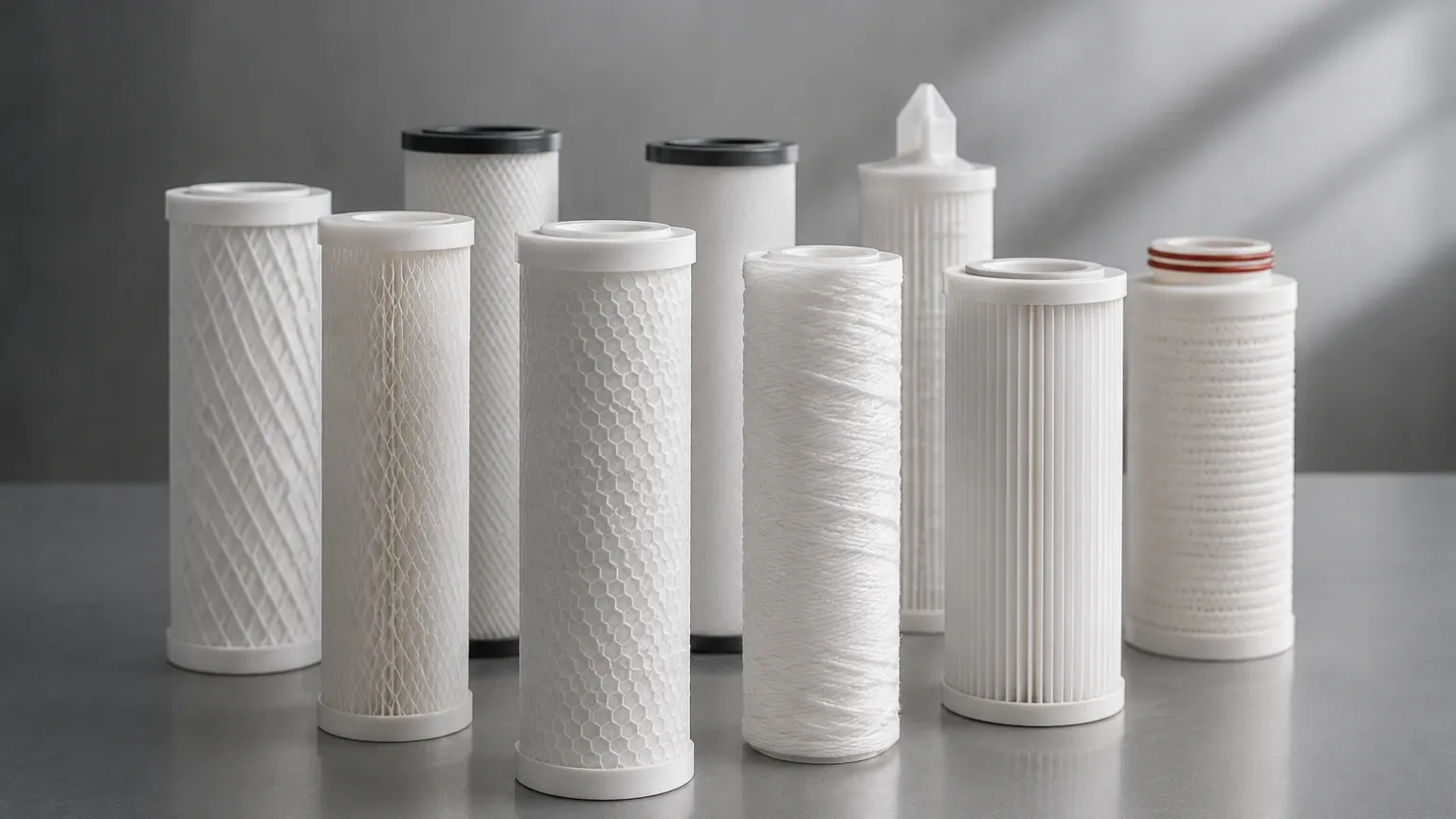
In industrial water treatment and process fluid management, the term "9 inch" often refers to a specific dimensional standard that engineers must navigate carefully. While the market frequently uses "10-inch" as a nominal category, the actual physical length of these components is typically 9.75 inches or 9.875 inches to accommodate gaskets and housing seats. Selecting the correct 9 inch water filter cartridges requires a deep understanding of material compatibility, micron precision, and the mechanical stresses of the specific application environment.
For industrial operators, transitioning from disposable polymer-based filters to high-performance stainless steel Filter Cartridges can significantly improve system reliability and reduce long-term operational costs. This guide examines the technical specifications, engineering considerations, and application-specific requirements for 9-inch filtration solutions.
Dimensional Standards and Housing Compatibility
The primary challenge in sourcing 9 inch water filter cartridges is the discrepancy between nominal and actual dimensions. In the filtration industry, a "10-inch housing" is designed to hold a cartridge that measures approximately 9.75 inches (248 mm) in length. This standard allows for the compression of gaskets at both ends to ensure a bypass-free seal.
Length Variations
Engineers must confirm the exact length required by their filter housing. Common variations include:
* 9.75 Inches: The industry standard for most standard industrial housings.
* 9.875 Inches: Often used in specialized high-purity or heavy-duty housings.
* 10 Inches Actual: Rare, but used in some bespoke European or custom-engineered systems.
End Cap Configurations
The effectiveness of a 9-inch cartridge depends heavily on its sealing interface. The most common configuration is the Double Open End (DOE), which utilizes flat gaskets on both the top and bottom. However, for high-pressure or high-vibration environments, Single Open End (SOE) designs with O-ring seals (such as Code 7 or Code 3 configurations) are preferred to prevent fluid bypass. When moving to stainless steel alternatives, ensuring that the end cap geometry matches the internal mandrel or seat of the housing is critical for maintaining filtration integrity.
Material Selection: Stainless Steel vs. Polymer
While many 9 inch water filter cartridges are manufactured from melt-blown polypropylene or pleated paper, industrial applications often demand the durability of stainless steel. Kaifil specializes in manufacturing these components using 304 or 316L stainless steel, providing distinct advantages in demanding environments.
Temperature and Pressure Resistance
Polymer filters typically fail or deform when temperatures exceed 60°C (140°F). In contrast, stainless steel cartridges can operate in environments exceeding 230°C (450°F), depending on the gasket material used. Furthermore, metal mesh filters maintain their structural integrity under high differential pressures (Delta P), where a standard plastic cartridge might collapse or experience "unloading"—a phenomenon where trapped contaminants are forced through the filter media as pressure builds.
Chemical Compatibility
In industrial water treatment, the "water" is rarely pure H2O. It often contains process chemicals, cleaning agents, or hydrocarbons. 316L stainless steel offers superior resistance to corrosion and chemical attack, making it suitable for pharmaceutical, chemical processing, and food and beverage wash-down applications where aggressive sanitization protocols are standard.
Engineering Micron Ratings and Media Types
When specifying 9 inch water filter cartridges, the distinction between nominal and absolute micron ratings is paramount. A nominal rating refers to a filter's ability to retain a majority of particles of a certain size, whereas an absolute rating indicates that 99.9% (or higher) of particles at that size will be captured.
Wire Mesh Structures
For 9-inch metal filters, the type of weave determines the performance characteristics:
* Plain Weave: Offers a straight-through flow path and is easiest to clean. Ideal for coarse filtration and pre-filtration stages.
* Dutch Weave: Utilizes a denser wire arrangement to achieve finer filtration levels, often down to 5-10 microns absolute. This is preferred for high-precision water polishing.
* Sintered Mesh: Multiple layers of wire mesh are bonded through heat and pressure to create a rigid, highly durable filter medium. Sintered 9-inch cartridges are the gold standard for high-pressure hydraulic water systems and steam filtration.
Porosity and Flow Rates
Engineers must balance filtration fineness with the required flow rate. A higher micron rating typically allows for a higher flow rate with lower initial pressure drop. However, stainless steel pleated designs increase the available surface area within the 9-inch footprint, allowing for higher dirt-holding capacity and extended service intervals compared to cylindrical (non-pleated) designs.
Industrial Applications for 9-Inch Cartridges
Because of their compact size and standardized fit, 9 inch water filter cartridges are utilized across a broad spectrum of industrial sectors. Their role varies depending on the specific purity requirements of the process.
Food and Beverage Processing
In this sector, 9-inch filters are used for ingredient water filtration, bottle washing, and steam filtration. Stainless steel is often mandated here due to FDA compliance requirements and the need for Clean-in-Place (CIP) capabilities. The ability to withstand repeated steam sterilization cycles without degrading is a key requirement that metal filters fulfill.
Chemical and Petrochemical Industries
Process water used in chemical cooling or as a solvent must be free of particulates that could foul heat exchangers or contaminate the final product. 9-inch stainless steel cartridges are used to handle corrosive fluids and high-temperature condensate return lines where standard filters would melt or dissolve.
Pharmaceutical and Biotech
For pre-filtration in high-purity water systems (WFI – Water for Injection), 9-inch cartridges serve as a critical barrier to protect expensive downstream membrane filters. The precision of 316L stainless steel mesh ensures that the particle load is consistently managed before the water reaches the final sterilization stage.
Maintenance, Cleaning, and Total Cost of Ownership
One of the most significant engineering decisions in filtration is the choice between disposable and cleanable media. While disposable 9 inch water filter cartridges have a lower initial purchase price, their total cost of ownership (TCO) can be significantly higher in high-load applications.
Cleaning Methodologies
Stainless steel 9-inch cartridges are designed to be cleaned and reused. Common cleaning methods include:
* Backwashing: Reversing the flow of fluid to dislodge particles from the surface of the mesh.
* Ultrasonic Cleaning: Using high-frequency sound waves in a cleaning solvent to remove deeply embedded contaminants from the wire weave.
* Chemical Cleaning: Soaking the cartridge in a caustic or acidic solution to dissolve organic or mineral scaling.
Lifecycle Analysis
A single stainless steel 9-inch cartridge can replace hundreds of disposable filters over its lifespan. This not only reduces the direct cost of replacement parts but also minimizes the labor costs associated with frequent filter changes and reduces the environmental impact of waste disposal. In systems where downtime is costly, the extended service life of a metal cartridge provides a measurable competitive advantage.
Customization and OEM Considerations
For many industrial equipment manufacturers (OEMs), standard off-the-shelf 9 inch water filter cartridges may not meet specific performance envelopes. Customization options allow engineers to tailor the filtration solution to the exact needs of their machinery.
Custom End Fittings
Beyond the standard DOE and O-ring configurations, custom 9-inch filters can be manufactured with threaded connections (NPT or BSP), flange mounts, or specialized bayonet fittings. This ensures a secure, leak-proof integration into proprietary housing designs.
Reinforced Cores and Outer Cages
In applications involving high-viscosity fluids or extreme pressure surges, 9-inch cartridges can be reinforced with internal perforated cores and external protective cages. This structural reinforcement prevents media pleats from bunching or collapsing, ensuring that the entire surface area of the filter remains active throughout the filtration cycle.
Material Traceability
For regulated industries like aerospace or pharmaceuticals, Kaifil provides full material traceability and certificates of conformance. This ensures that every component of the 9-inch cartridge, from the wire mesh to the welding rod, meets the required industrial standards for purity and strength.
Conclusion: Selecting the Right Filtration Partner
Choosing 9 inch water filter cartridges involves more than simply matching a length and a micron rating. It requires an analysis of the fluid dynamics, chemical environment, and operational goals of the facility. By opting for high-quality stainless steel components, engineers can achieve a level of precision and durability that disposable alternatives cannot match.
When evaluating filtration options, consider the long-term benefits of cleanability, the necessity of absolute filtration ratings, and the importance of structural integrity under pressure. A well-engineered 9-inch filtration solution is a critical component in maintaining process efficiency and protecting downstream equipment from damage and contamination.
