


Big Blue Filter Cartridges
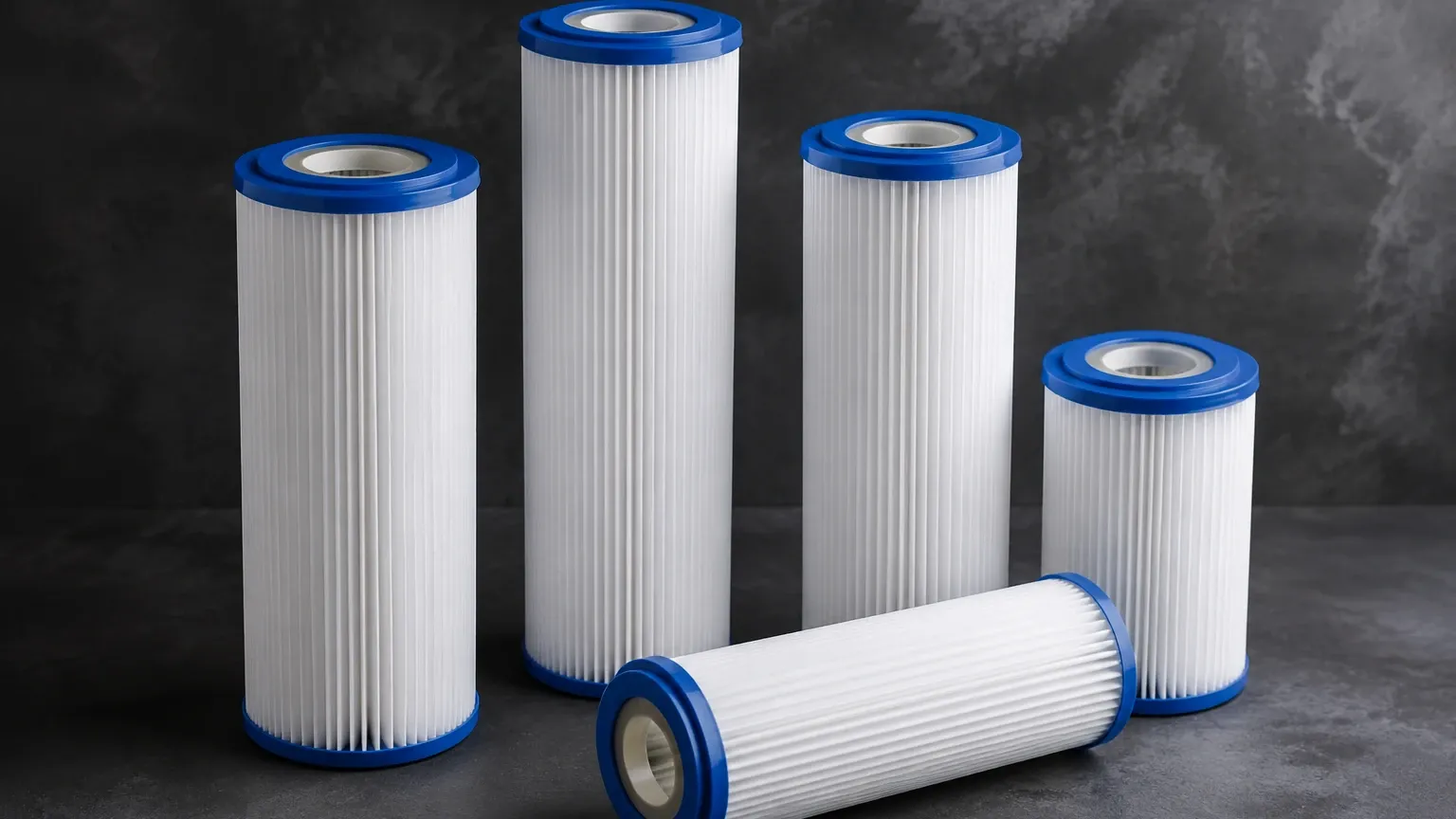
In the landscape of industrial water treatment and process filtration, the term "Big Blue" has become a standardized reference for a specific class of high-capacity filtration components. Big Blue filter cartridges are characterized by their larger diameter—typically 4.5 inches—compared to the standard 2.5-inch diameter cartridges used in smaller-scale applications. This increased surface area and volume allow for significantly higher flow rates and extended service life, making them a staple in commercial and industrial environments where efficiency and throughput are critical.
For engineers and procurement professionals, selecting the correct Filter Cartridges involves more than just matching dimensions. It requires a technical understanding of material science, filtration efficiency, and the specific hydraulic demands of the system. Whether used as a standalone solution or as pre-filtration for sensitive equipment like reverse osmosis (RO) membranes, these cartridges must be evaluated based on their ability to maintain structural integrity under pressure while delivering precise particulate removal.
Technical Specifications and Design Standards
The standard architecture of big blue filter cartridges is designed to fit into 10-inch and 20-inch "Big Blue" housings. The 4.5-inch outside diameter (OD) is the defining characteristic that distinguishes these from standard slim-line filters. This design choice is not merely for volume; it is a calculated engineering approach to reduce the frequency of maintenance intervals.
Dimensional Consistency
Most industrial systems utilize two primary lengths:
1. 10-inch Big Blue: Often used in space-constrained environments or for lower flow rates where high sediment loading is still expected.
2. 20-inch Big Blue: The industry standard for high-flow applications, providing double the surface area and dirt-holding capacity of the 10-inch version.
Flow Rate Advantages
Because the cross-sectional area of a 4.5-inch cartridge is significantly larger than a 2.5-inch cartridge, the flux (flow per unit area) is lower for the same total flow rate. This results in a lower initial pressure drop (Delta P) across the media. In practical terms, this means a system can process more fluid before reaching the terminal pressure drop that necessitates a cartridge change-out.
Material Engineering and Chemical Compatibility
The performance of big blue filter cartridges is heavily dependent on the media used. While many commercial applications rely on polypropylene, industrial processes often demand more robust materials to handle aggressive chemistry or elevated temperatures.
Polypropylene (Melt-Blown and Pleated)
Polypropylene is the most common material for sediment reduction. Melt-blown cartridges offer depth filtration, where particles are trapped throughout the entire thickness of the media. Pleated polypropylene cartridges, on the other hand, maximize surface area, making them ideal for consistent particle sizes and high-flow requirements. However, polypropylene has limitations in terms of temperature (typically capped at 140°F/60°C) and compatibility with certain organic solvents.
Stainless Steel and Precision Metal Mesh
In demanding industrial environments—such as chemical processing or high-temperature steam filtration—standard polymer cartridges may fail. Stainless steel [big blue filter cartridges], often constructed from 304 or 316L wire mesh, provide a solution for these extreme conditions. These metal components offer:
* Thermal Stability: Capability to operate at temperatures exceeding 500°F.
* Chemical Resistance: Immunity to many solvents and corrosive fluids that would degrade plastics.
* Cleanability: Unlike disposable depth filters, stainless steel mesh cartridges can often be cleaned via backwashing or ultrasonic baths, reducing the total cost of ownership over time.
Micron Ratings and Filtration Efficiency
Understanding the distinction between nominal and absolute micron ratings is essential for technical selection. A nominal rating indicates that the filter will trap a certain percentage of particles at that size (e.g., 85%), while an absolute rating implies a much higher efficiency (typically 99.9%).
Sediment Loading and Pore Structure
For Filter Cartridges used in heavy sediment applications, a graded-density pore structure is often preferred. This means the outer layers of the filter have larger pores to catch big debris, while the inner layers have tighter pores for fine filtration. This prevents the surface from "blinding" or clogging prematurely, ensuring that the entire volume of the filter media is utilized.
Common Micron Ranges
Big Blue cartridges are typically available in ratings ranging from 0.5 microns to 100 microns.
* 0.5 to 5 Microns: Used for fine sediment removal and protecting RO membranes.
* 10 to 25 Microns: General-purpose filtration for cooling water and process fluids.
* 50+ Microns: Coarse filtration or pre-screening to protect downstream pumps and valves.
Industrial Applications and Use Cases
The versatility of the Big Blue format allows it to be integrated into various stages of a production line. Its primary role is often as a "workhorse" filter that handles the bulk of particulate contamination.
Pre-Filtration for Reverse Osmosis (RO)
RO membranes are highly susceptible to fouling from suspended solids. Using 5-micron big blue filter cartridges as a pre-filter significantly extends the life of expensive membranes by ensuring that only dissolved solids reach the RO stage. The high flow capacity of the Big Blue format matches the demands of industrial RO skids without requiring an excessive number of filter housings.
Food and Beverage Processing
In the food and beverage industry, filtration is critical for both product quality and equipment protection. Stainless steel Big Blue variants are frequently employed here because they can withstand Clean-in-Place (CIP) procedures involving hot water or caustic chemicals. They ensure that incoming ingredient water or process wash water is free of pipe scale and sediment.
Cooling Tower and Boiler Feedwater
Suspended solids in cooling loops can lead to heat exchanger fouling and reduced thermal efficiency. Installing Big Blue filters in a side-stream configuration allows for continuous removal of debris, maintaining the heat transfer efficiency of the system and reducing the need for chemical dispersants.
Selection Criteria for Engineering Teams
When specifying [big blue filter cartridges] for a new or existing system, engineers should confirm several critical parameters to ensure performance and safety.
1. Differential Pressure (Delta P): What is the maximum allowable pressure drop before the process is affected? Monitoring the Delta P is the only reliable way to determine when a cartridge is exhausted.
2. Seal Material: The end caps of the cartridge must form a tight seal with the housing. Common materials include Buna-N, EPDM, and Viton. Selecting a seal that is incompatible with the process fluid can lead to bypass, where unfiltered fluid leaks around the cartridge.
3. Structural Integrity: In high-viscosity fluids or systems with frequent pressure surges, the cartridge must have a rigid center core (often made of reinforced polypropylene or stainless steel) to prevent collapse.
4. Total Cost of Ownership (TCO): While disposable cartridges have a lower upfront cost, the labor and disposal costs associated with frequent changes in high-load applications may make cleanable stainless steel cartridges a more economical long-term investment.
Maintenance and Replacement Protocols
Proper maintenance is vital to prevent "breakthrough," where high pressure forces contaminants through the filter media. Most industrial standards recommend replacing or cleaning Filter Cartridges when the differential pressure reaches 15 to 20 psi (1.0 to 1.4 bar) over the initial clean pressure.
For systems utilizing stainless steel mesh, a documented cleaning cycle should be established. This might involve an acid wash to remove mineral scale or a solvent rinse to remove oils. By maintaining a rigorous schedule, facilities can ensure consistent flow rates and protect downstream assets from contamination.
Conclusion
Big Blue filter cartridges provide a robust and scalable solution for industrial filtration challenges. By offering a standardized form factor with a wide range of media options—from economical polypropylene to high-performance stainless steel—they allow for precise control over fluid purity. For technical teams, the key to success lies in matching the cartridge material and micron rating to the specific chemical and thermal demands of the application. As industrial processes become more complex, the reliance on high-capacity, reliable filtration components like the Big Blue series continues to be a cornerstone of efficient system design.
