


Bunnings Water Filter Cartridges
In the realm of industrial maintenance and facility management, procurement teams and engineers often face the challenge of balancing immediate availability with long-term performance. Retail-grade solutions, such as bunnings water filter cartridges, are frequently utilized for light-duty utility water, staff amenities, or non-critical pre-filtration stages due to their accessibility. However, for industrial processes involving chemical handling, high temperatures, or precision manufacturing, the technical requirements often exceed the capabilities of consumer-market products.
Understanding the performance boundaries of standard retail cartridges versus high-specification industrial Filter Cartridges is essential for maintaining system integrity and optimizing the total cost of ownership. This guide examines the technical specifications, material limitations, and application suitability of common water filtration components found in the retail sector, and identifies when a transition to engineered industrial solutions is necessary.
Understanding the Context of Consumer-Grade Filter Cartridges in Industrial Settings
Retail outlets like Bunnings serve a vital role in providing immediate, off-the-shelf components for residential and light commercial plumbing. In an industrial facility, these cartridges are most commonly found in point-of-use (POU) drinking water systems, laboratory breakrooms, or as basic sediment filters for cooling tower make-up water.
The primary appeal of bunnings water filter cartridges lies in their standardized sizing—typically 10-inch or 20-inch Slimline and Big Blue formats—and their relatively low initial purchase price. For engineers, these products represent a known quantity for low-pressure, ambient-temperature water filtration where the cost of failure is minimal. However, the engineering margin in these products is designed for municipal water pressures and standard domestic flow rates. When integrated into industrial loops, these components must be evaluated against the specific hydraulic and chemical stresses of the environment.
Technical Specifications and Performance Limits
When evaluating bunnings water filter cartridges for a commercial or industrial site, technical professionals must look beyond the marketing claims of "cleaner water" and focus on the engineering data. Most retail-grade cartridges are constructed from polypropylene (melt-blown or string-wound) or activated carbon blocks.
Micron Ratings and Efficiency
Retail cartridges are often rated "nominally." A nominal 5-micron filter may only capture 60% to 85% of particles at that size. In contrast, industrial-grade cartridges are often "absolute" rated, meaning they achieve 99.9% efficiency (Beta 5000) at the specified micron level. For applications such as protecting sensitive reverse osmosis (RO) membranes or high-pressure nozzles, the lack of precision in a standard retail cartridge can lead to downstream fouling.
Pressure and Temperature Thresholds
Standard plastic-housed cartridges found in retail environments typically have a maximum operating temperature of approximately 38°C to 50°C (100°F to 122°F). In industrial heating loops or chemical processing lines where temperatures exceed these limits, the structural integrity of the polypropylene media or the plastic end caps can fail, leading to bypass or media migration. Furthermore, while these filters may be rated for a static pressure of 100 PSI, they are often susceptible to fatigue from the pressure hammers common in industrial pumping systems.
Material Compatibility and Chemical Resistance Considerations
A critical area where bunnings water filter cartridges may fall short in B2B applications is material compatibility. Retail cartridges are designed for potable municipal water. They are rarely tested for compatibility with the various process chemicals, lubricants, or cleaning agents found in industrial settings.
Media Selection
* Polypropylene: Excellent for general sediment but can degrade in the presence of certain hydrocarbons or high-strength oxidizers.
* Activated Carbon: Effective for chlorine removal in drinking water but may have limited capacity for high-concentration industrial VOCs (Volatile Organic Compounds).
* Gaskets and Seals: Retail cartridges often use NBR (Buna-N) or silicone gaskets. If the process water contains traces of oils or specific solvents, these seals can swell or degrade, causing leaks or contamination.
For engineers managing chemical processing or pharmaceutical lines, the shift toward stainless steel or specialized fluoropolymer Filter Cartridges is often driven by the need for chemical inertness and the ability to withstand aggressive Clean-in-Place (CIP) cycles involving caustic soda or nitric acid.
Total Cost of Ownership: Maintenance and Replacement Cycles
While the unit price of bunnings water filter cartridges is low, the Total Cost of Ownership (TCO) in an industrial context can be surprisingly high. This is primarily due to the frequency of replacement and the labor costs associated with maintenance.
Service Life and Dirt Holding Capacity
Industrial-grade filters are engineered with graded density structures or pleated designs that significantly increase the surface area. A retail-grade string-wound filter may blind (clog) much faster than an industrial pleated polyester or stainless steel mesh cartridge. In a high-solids environment, a maintenance team might find themselves replacing retail cartridges weekly, whereas an engineered industrial solution might last months.
Labor and Downtime
Every time a filter housing is opened, there is a risk of contamination and a requirement for system downtime. If a facility replaces four $20 cartridges per month, the annual hardware cost is $960. However, if each replacement takes one hour of technician time at an internal rate of $75/hour, the labor cost adds $3,600. Transitioning to a high-capacity industrial filter that requires quarterly replacement can reduce the total annual cost significantly, even if the individual industrial cartridge is more expensive.
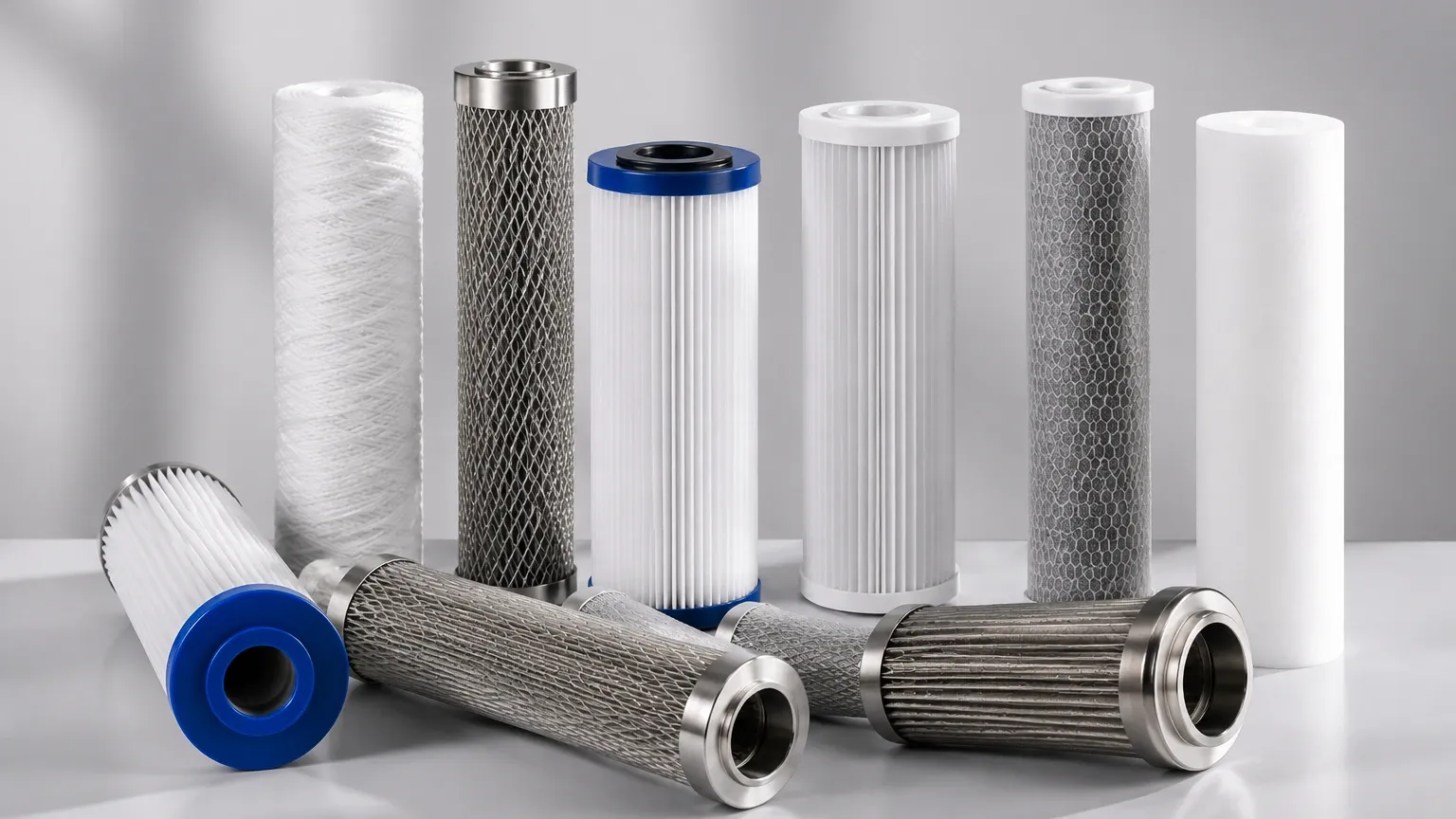
When to Transition from Retail Solutions to Industrial Filter Cartridges
Deciding when to move away from bunnings water filter cartridges and toward professional-grade Filter Cartridges depends on several "red flag" indicators in the process line:
1. Frequent Housing Failures: If plastic housings are cracking or leaking due to pressure spikes, it is time to move to stainless steel housings and compatible cartridges.
2. Media Migration: If fibers from the filter media are being found downstream in sensitive equipment, the structural bond of the retail cartridge is insufficient for the flow velocity.
3. High Differential Pressure: If the system reaches its terminal pressure drop too quickly, the surface area of the current cartridge is likely inadequate for the contaminant load.
4. Sterilization Requirements: If the filtration system must be steam-sterilized or autoclaved, standard retail plastic components will melt or deform, necessitating the use of stainless steel or high-temp polymer cartridges.
Industrial filters also offer the advantage of traceability. For industries like food and beverage or pharmaceuticals, having material certificates (such as FDA compliance or 3.1 material certificates) is a regulatory requirement that retail-grade products cannot fulfill.
Customization and Engineering Support for Industrial Filtration
One of the most significant differences between purchasing bunnings water filter cartridges and sourcing from an industrial manufacturer like Kaifil is the level of engineering support. Retail purchases are "as-is," with no recourse for application-specific adjustments.
In contrast, industrial filtration solutions allow for:
* Custom Dimensions: Manufacturing filters to fit legacy housings that do not conform to standard 10" or 20" sizes.
* Specific Alloy Selection: Utilizing 304, 316L, or even exotic alloys like Hastelloy for extreme corrosion resistance.
* Variable Micron Ratings: Fine-tuning the filtration levels to achieve a specific particle distribution required for a particular process.
* Structural Reinforcement: Adding internal cores or external cages to ensure the cartridge can withstand high collapse pressures.
For engineers, the ability to consult with a manufacturer about flow dynamics, viscosity, and particle characteristics ensures that the filtration system is an asset to production rather than a recurring maintenance bottleneck.
Conclusion: Choosing the Right Tool for the Job
Bunnings water filter cartridges remain a practical and cost-effective solution for standard water filtration tasks in low-stakes environments. They provide a reliable baseline for potable water and light sediment removal. However, as the complexity of the industrial process increases, the limitations of retail-grade filtration become apparent.
When system reliability, chemical compatibility, and long-term cost efficiency are the priorities, technical professionals should look toward specialized Filter Cartridges designed for the rigors of the industrial sector. By evaluating the specific needs of the application—including pressure, temperature, and contaminant type—purchasing teams can make informed decisions that protect their equipment and optimize their operational budgets. Whether it is a simple sediment filter or a complex multi-stage chemical filtration system, selecting the right grade of equipment is the first step toward process excellence.
