


Cartridge Filter 73110
In industrial filtration, the selection of a specific component like the cartridge filter 73110 requires a deep understanding of both the mechanical specifications and the operational environment. For engineers and procurement specialists, identifying a part number is only the first step; the critical task lies in evaluating whether the filter’s material composition, structural integrity, and filtration efficiency align with the rigorous demands of their specific application.
Industrial Filter Cartridges are designed to remove contaminants from fluids or gases, protecting downstream equipment and ensuring product purity. When dealing with specifications such as the 73110, it is essential to look beyond the basic dimensions and consider the engineering nuances that dictate long-term performance and total cost of ownership.
Technical Specifications and Dimensional Accuracy
The cartridge filter 73110 is defined by a specific set of physical parameters that ensure compatibility with existing filter housings. In the industrial sector, dimensional accuracy is non-negotiable. Even a minor deviation in the outer diameter (OD), inner diameter (ID), or overall length can lead to bypass—a condition where unfiltered fluid escapes through gaps in the sealing surface, compromising the entire process.
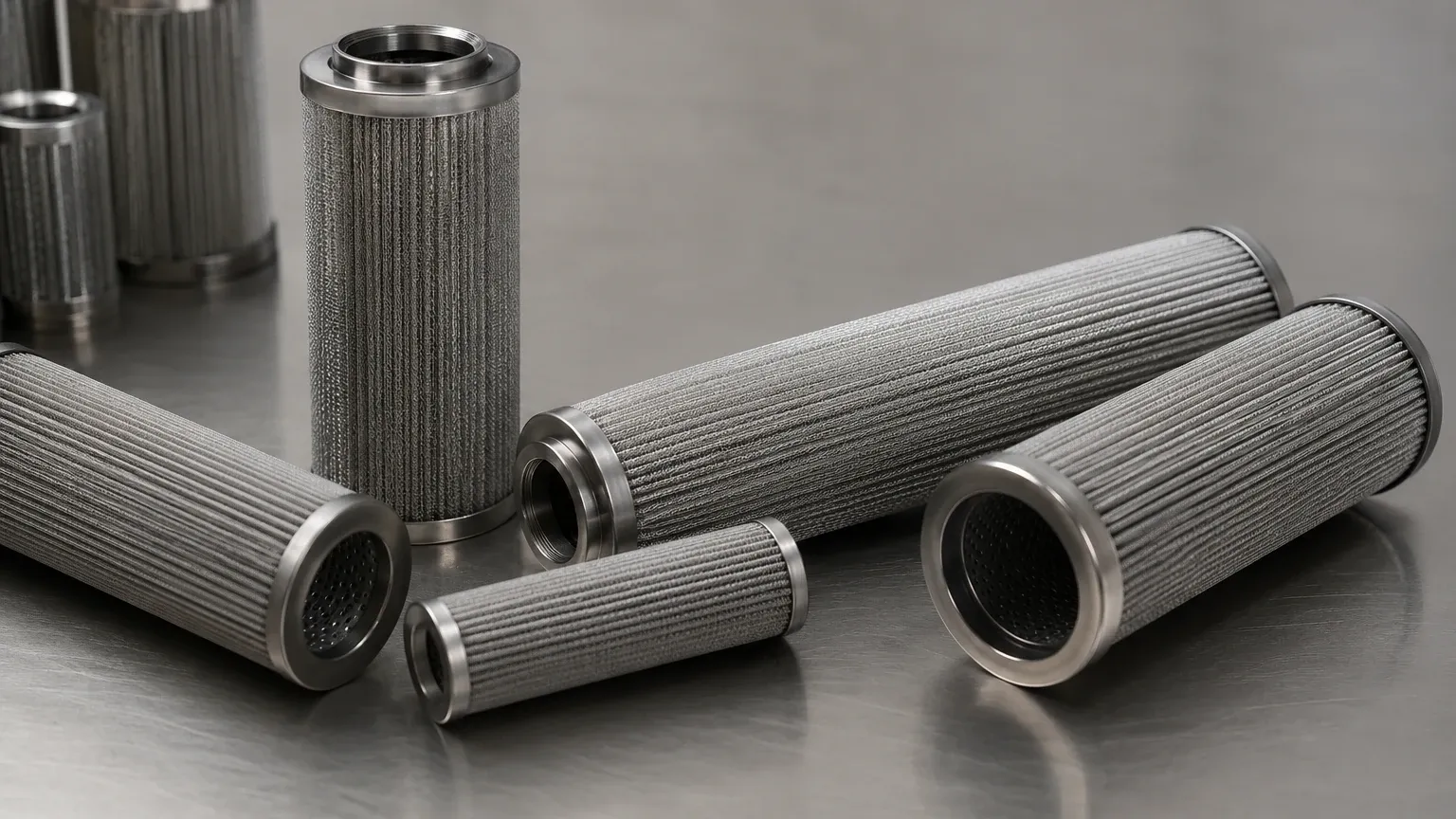
Typically, a filter of this class is evaluated based on its surface area and the configuration of its end caps. For high-pressure or high-temperature applications, the interface between the filter media and the end caps must be robust. While many standard 73110 filters utilize polymer-based seals, industrial-grade versions often employ stainless steel end caps with specialized gaskets (such as Viton, EPDM, or PTFE) to withstand chemical exposure and thermal cycling.
Engineers must also verify the collapse pressure rating. In hydraulic or high-viscosity fluid applications, the structural core of the cartridge must be capable of resisting the differential pressure that builds up as the filter cake accumulates. A reinforced inner core, often made of perforated stainless steel, is a hallmark of a high-performance cartridge designed for industrial longevity.
Material Selection: Stainless Steel vs. Synthetic Media
While many commercial versions of the 73110 utilize pleated paper or synthetic fibers, industrial applications often necessitate a transition to metallic media. Stainless steel wire mesh and sintered metal fibers offer distinct advantages that synthetic materials cannot match.
Corrosion and Temperature Resistance
Stainless steel 304 and 316L are the standards for demanding environments. In chemical processing or steam filtration, synthetic filters may degrade or off-gas, contaminating the filtrate. Stainless steel Filter Cartridges maintain their structural integrity at temperatures exceeding 500°F (260°C), making them suitable for hot oil, polymer melt, and high-temperature gas filtration.
Reusability and Cleanability
One of the primary drivers for selecting a stainless steel 73110-compatible filter is the ability to clean and reuse the element. Unlike disposable depth filters, stainless steel mesh can be backwashed, ultrasonically cleaned, or chemically sanitized. This feature significantly reduces the volume of industrial waste and lowers the long-term procurement costs, despite a higher initial investment.
Filtration Efficiency and Micron Ratings
The performance of a cartridge filter 73110 is primarily measured by its micron rating and its efficiency (nominal vs. absolute). Engineers must distinguish between these two to ensure the protection of sensitive components like high-pressure pumps or precision nozzles.
* Nominal Rating: This indicates the filter's ability to retain a major percentage (usually 60% to 90%) of particles of a specific size. It is often used for pre-filtration stages where the goal is to remove the bulk of large contaminants.
* Absolute Rating: This refers to the diameter of the largest hard spherical particle that will pass through the filter under specified test conditions. For critical pharmaceutical or food and beverage processes, an absolute-rated 73110 filter is required to ensure consistent product quality.
When specifying a replacement or a custom 73110 filter, the Beta Ratio (β) provides a more accurate picture of efficiency. A higher Beta Ratio indicates a higher capture rate for particles of a specific size. For instance, a Beta 1000 rating at 10 microns means that for every 1000 particles of 10-micron size entering the filter, only one passes through.
Operational Parameters: Pressure Drop and Flow Rates
Every filtration system operates under the constraint of the "Clean Pressure Drop" (ΔP). When installing a cartridge filter 73110, it is vital to calculate the initial pressure drop at the required flow rate. A high initial ΔP reduces the available "dirt-holding capacity" before the filter reaches its terminal pressure drop and requires replacement or cleaning.
Factors influencing the pressure drop include:
1. Fluid Viscosity: Higher viscosity fluids require more force to pass through the media, necessitating a larger surface area or a coarser mesh.
2. Flow Velocity: Increasing the flow rate through a fixed surface area exponentially increases the pressure drop. Pleated designs are often preferred for the 73110 specification because they maximize the filtration surface area within a compact footprint, thereby lowering the flux (flow per unit area).
3. Media Porosity: The ratio of open space to the total volume of the filter media. Sintered metal fibers offer high porosity and low resistance, which is ideal for high-flow industrial applications.
Application Suitability and Industry Standards
The cartridge filter 73110 is utilized across a spectrum of industries, each with its own regulatory and performance standards. Understanding these contexts is crucial for selecting the right filter variant.
Chemical and Petrochemical Processing
In these environments, the focus is on chemical compatibility. The 73110 filter must resist aggressive solvents, acids, and bases. Using 316L stainless steel ensures that the filter does not succumb to pitting or stress corrosion cracking, which is a common failure mode for lesser materials in chloride-rich environments.
Food and Beverage Industry
Filtration components in this sector must comply with FDA and EU food contact regulations. This involves using non-toxic materials and ensuring that the filter construction (such as welding instead of adhesive bonding) prevents the migration of contaminants into the product stream. Stainless steel Filter Cartridges are particularly valued here for their ability to withstand Clean-in-Place (CIP) cycles involving caustic chemicals and high-pressure steam.
Hydraulic and Lubrication Systems
For hydraulic systems, the 73110 filter protects valves and actuators from wear-inducing particles. Here, the focus is on high-pressure stability and the ability to handle rapid flow fluctuations without media migration.
Maintenance, Cleaning, and Total Cost of Ownership
For many facilities, the transition from disposable cartridges to high-quality stainless steel 73110 replacements is a strategic decision based on Total Cost of Ownership (TCO). While the upfront cost of a stainless steel cartridge is higher, the ROI is realized through several factors:
* Reduced Downtime: Longer service intervals and the ability to clean the filter in-situ (via backpulsing) reduce the frequency of system shutdowns.
* Waste Mitigation: Eliminating the disposal of contaminated synthetic cartridges reduces environmental impact and disposal fees, which are increasingly scrutinized under ESG (Environmental, Social, and Governance) mandates.
* Consistency: Metal filters do not suffer from the "unloading" effect common in some fiber filters, where pressure surges can force previously trapped contaminants through the media.
To maintain a stainless steel 73110 filter, a structured cleaning protocol is necessary. This may include solvent soaking to dissolve organic residues, followed by ultrasonic cleaning to dislodge inorganic particles from the depths of the mesh. Proper maintenance ensures that the filter can be returned to near-original clean pressure drop levels multiple times.
Customization and OEM Solutions
In many industrial scenarios, a standard off-the-shelf cartridge filter 73110 may not perfectly meet the operational requirements. Customization allows engineers to optimize the filter for specific challenges. This includes modifying the mesh weave (e.g., plain weave, twilled weave, or Dutch weave) to balance flow rate and particle retention.
OEM (Original Equipment Manufacturer) capabilities are vital for facilities looking to upgrade their filtration systems. By working with a manufacturer that understands the intricacies of metal fabrication and filtration physics, companies can develop bespoke 73110 solutions that feature reinforced support layers, specialized end-cap geometries, or unique alloy compositions like Monel or Hastelloy for extreme environments.
When evaluating a supplier for Filter Cartridges, it is important to confirm their quality control processes. This includes bubble point testing to verify pore size integrity and pressure testing to ensure structural soundness. For critical applications, material traceability and certificates of conformance are essential components of the procurement package.
Conclusion: Making an Informed Selection
The cartridge filter 73110 is more than a commodity part; it is a critical component of industrial process integrity. Whether the goal is to protect a high-value pump, ensure the purity of a chemical batch, or reduce the environmental footprint of a facility, the choice of filter must be driven by technical data and engineering requirements. By prioritizing high-grade materials like stainless steel and focusing on absolute filtration efficiency, industrial operators can achieve a more reliable, cost-effective, and sustainable filtration process.
