


Ef S Filter Cartridges
In industrial filtration, the demand for high-efficiency liquid processing has led to the development of specialized components designed to handle high flow rates while maintaining strict particle retention standards. Among these, ef s filter cartridges represent a category of high-performance filtration elements often utilized in demanding environments where fluid purity is critical. For engineers and procurement specialists, selecting the right filter cartridges involves a deep understanding of material compatibility, pressure dynamics, and the specific mechanical requirements of the filtration housing.
As a professional manufacturer of custom stainless steel filtration solutions, Kaifil provides the technical expertise necessary to navigate the complexities of industrial filter selection. Whether used in chemical processing, food and beverage production, or hydraulic systems, the performance of ef s filter cartridges is foundational to the efficiency of the entire process line.
Technical Foundations of High-Efficiency Filtration
High-efficiency (EF) filtration systems are engineered to provide a higher surface area and greater dirt-holding capacity than standard depth or pleated filters. The "S" designation often refers to specific sizing or structural standards that ensure compatibility with specialized filter housings designed for high-volume throughput.
When evaluating Filter Cartridges, engineers must prioritize the beta ratio—a measure of the filter's capture efficiency. For ef s filter cartridges, achieving a high beta ratio (often Beta 5000 or 99.9% efficiency) at a specific micron rating is essential for protecting downstream equipment such as high-pressure pumps, spray nozzles, and sensitive analytical instruments.
Key Engineering Considerations:
1. Micron Rating: Determining whether absolute or nominal filtration is required for the specific application.
2. Flow Velocity: Calculating the optimal flow rate to prevent premature blinding of the filter media.
3. Structural Integrity: Ensuring the cartridge can withstand the maximum differential pressure (ΔP) without collapsing or bypassing.
Material Selection: Stainless Steel vs. Synthetic Media
While many ef s filter cartridges are available in synthetic materials like polypropylene or polyester, industrial applications involving high temperatures or aggressive chemicals often necessitate the use of stainless steel. Kaifil specializes in manufacturing stainless steel filter cartridges that offer significant advantages over disposable synthetic options.
Durability and Temperature Resistance
Stainless steel 304 and 316L are the preferred materials for filtration in extreme environments. Unlike polymer-based media, stainless steel ef s filter cartridges can operate at temperatures exceeding 250°C (482°F) without losing structural integrity or leaching contaminants into the process stream. This makes them ideal for steam filtration and high-temperature chemical reactions.
Chemical Compatibility
In chemical processing and pharmaceutical manufacturing, the filter media must be inert to the fluids being processed. Stainless steel provides excellent resistance to a wide range of organic solvents, acids, and bases. This chemical stability ensures that the filtration process does not introduce impurities, which is a critical requirement for maintaining product quality and safety.
Design Features of Ef S Filter Cartridges
The performance of ef s filter cartridges is largely dictated by their internal architecture. To maximize efficiency, these cartridges often utilize a multi-layered approach to filtration.
Pleated vs. Cylindrical Media
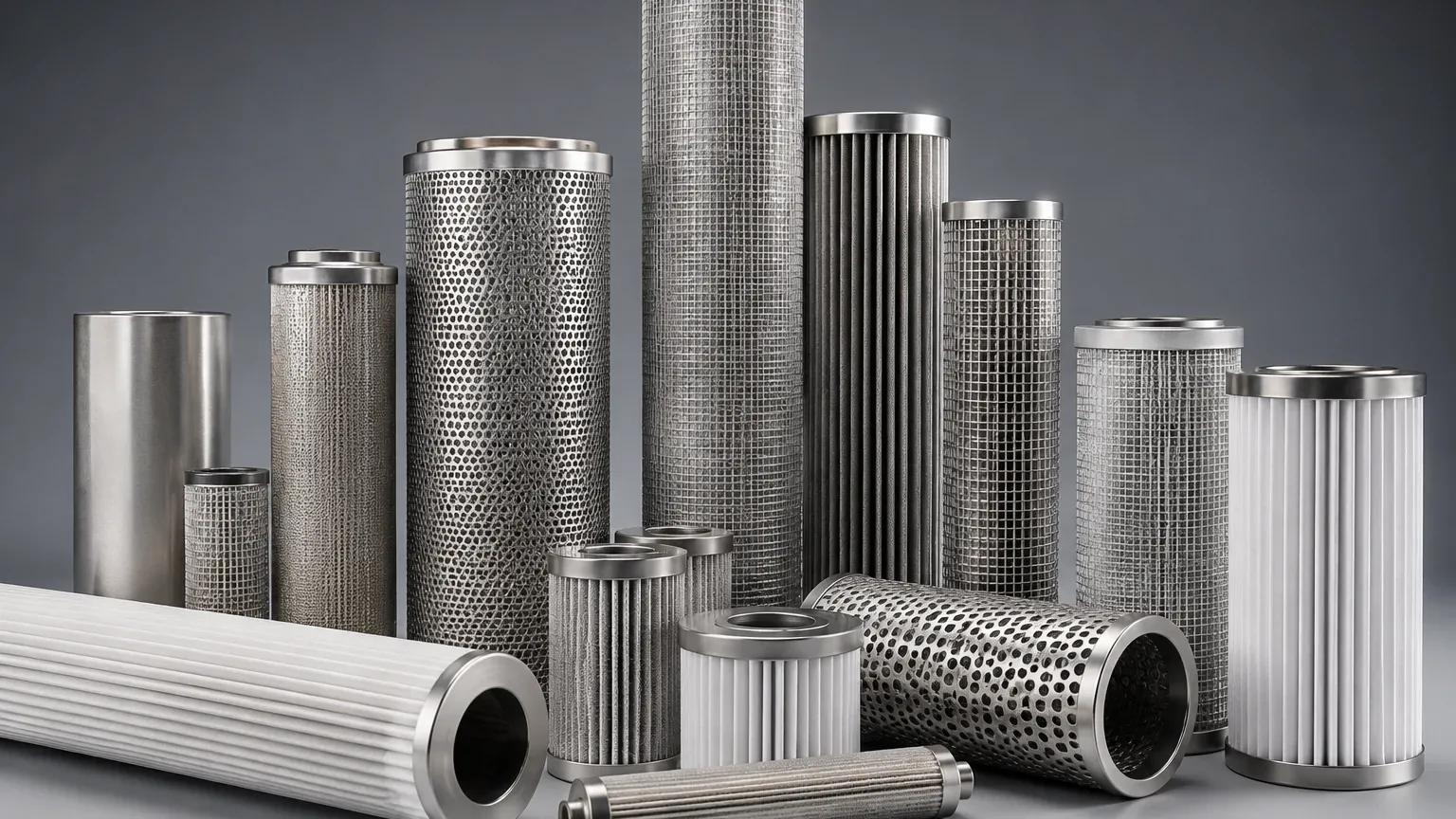
To increase the effective filtration area, many high-efficiency cartridges use pleated media. By folding the filter material, manufacturers can pack significantly more surface area into the same footprint. This design reduces the face velocity of the fluid passing through the media, which lowers the initial differential pressure and extends the service life of the cartridge. For applications involving heavy particulate loads, cylindrical or wrap-style filters may be used to provide a more robust mechanical structure.
Precision Wire Mesh and Sintered Metal
For the highest levels of precision, ef s filter cartridges may incorporate sintered metal fiber or multi-layered wire mesh. Sintering involves bonding metal fibers or wires at their contact points through a thermal process, creating a rigid, porous structure with highly controlled pore sizes. This technology allows for precise filtration down to sub-micron levels while maintaining the mechanical strength of solid metal.
Operational Performance and Pressure Management
One of the most critical aspects of managing a filtration system is monitoring differential pressure. As ef s filter cartridges capture contaminants, the resistance to flow increases. If the differential pressure becomes too high, it can lead to several negative outcomes:
* Media Migration: The pressure may force captured particles through the media or cause the media itself to shed fibers.
* Structural Failure: The cartridge core may buckle, leading to a complete bypass of the filtration stage.
* Increased Energy Costs: Pumps must work harder to maintain the required flow rate, leading to higher electricity consumption.
Engineers typically set a "change-out" differential pressure, usually between 15 and 25 PSI, depending on the system design. Using high-quality ef s filter cartridges with a robust inner core ensures that the system can reach these pressure limits safely without risking downstream contamination.
Customization and OEM Solutions
Every industrial process has unique requirements that standard off-the-shelf filters may not meet. Customization is a core strength of Kaifil’s manufacturing process. When standard ef s filter cartridges do not provide the necessary chemical resistance, flow rate, or filtration accuracy, custom engineering becomes necessary.
Tailored End-Cap Configurations
Compatibility with existing filter housings is a primary concern. Custom cartridges can be manufactured with various end-cap styles, including Code 7 (226 O-rings with a locking fin), Code 3 (222 O-rings), or DOE (Double Open End) configurations. Ensuring a perfect seal at the end-cap is vital to prevent fluid bypass.
Specialized Media Layers
For complex fluids, such as those with varying particle size distributions, a custom-designed gradient density media can be used. This involves layering different micron ratings within a single cartridge, allowing larger particles to be trapped on the outer layers while finer particles are captured deeper within the media. This approach significantly increases the dirt-holding capacity of ef s filter cartridges.
Total Cost of Ownership: Cleanable vs. Disposable
When purchasing filter cartridges, the initial price is only one component of the total cost of ownership (TCO). While synthetic ef s filter cartridges have a lower upfront cost, they are typically single-use items that generate waste and require frequent replacement.
In contrast, stainless steel ef s filter cartridges are cleanable and reusable. Through processes such as ultrasonic cleaning, backwashing, or chemical cleaning, these filters can be restored to near-original performance levels. For high-value processes or those with high filtration frequencies, the ability to reuse the filter media provides a significant return on investment (ROI) by reducing replacement costs and minimizing environmental impact.
Selection Checklist for Purchasing Teams
Before finalizing a purchase of ef s filter cartridges, engineers and procurement teams should confirm the following technical specifications with their supplier:
1. Operating Temperature: What is the maximum continuous and peak temperature the filter will encounter?
2. Fluid Chemistry: Are there specific acids, bases, or solvents that could degrade the media or seals?
3. Flow Rate and Viscosity: Does the cartridge design support the required throughput at the fluid's operating viscosity?
4. Retention Requirements: Is the target micron rating based on absolute or nominal efficiency?
5. Housing Compatibility: Do the end-caps and dimensions match the existing vessel requirements?
Conclusion
Selecting the appropriate ef s filter cartridges is a critical decision that impacts the reliability, efficiency, and cost-effectiveness of industrial liquid processes. By understanding the engineering principles behind high-efficiency filtration and the benefits of materials like stainless steel, technical professionals can optimize their systems for long-term success.
Kaifil remains committed to providing high-performance, customized filtration components that meet the rigorous demands of modern industry. From material selection to final production, our focus on precision and durability ensures that every filter cartridge delivers dependable performance in the most challenging environments. For those seeking to optimize their filtration processes, exploring advanced Filter Cartridges and custom-engineered solutions is the first step toward achieving superior fluid purity and operational excellence.
