


Filter Cartridge 0.01 Micron
In the landscape of industrial filtration, the requirement for sub-micron precision often marks the boundary between standard processing and high-purity engineering. A filter cartridge 0.01 micron rating represents one of the finest levels of mechanical separation available for industrial fluids and gases. At this scale, the filtration process is no longer just about removing visible debris; it is about capturing microscopic contaminants, oil aerosols, and even certain viral structures to protect downstream equipment and ensure product integrity.
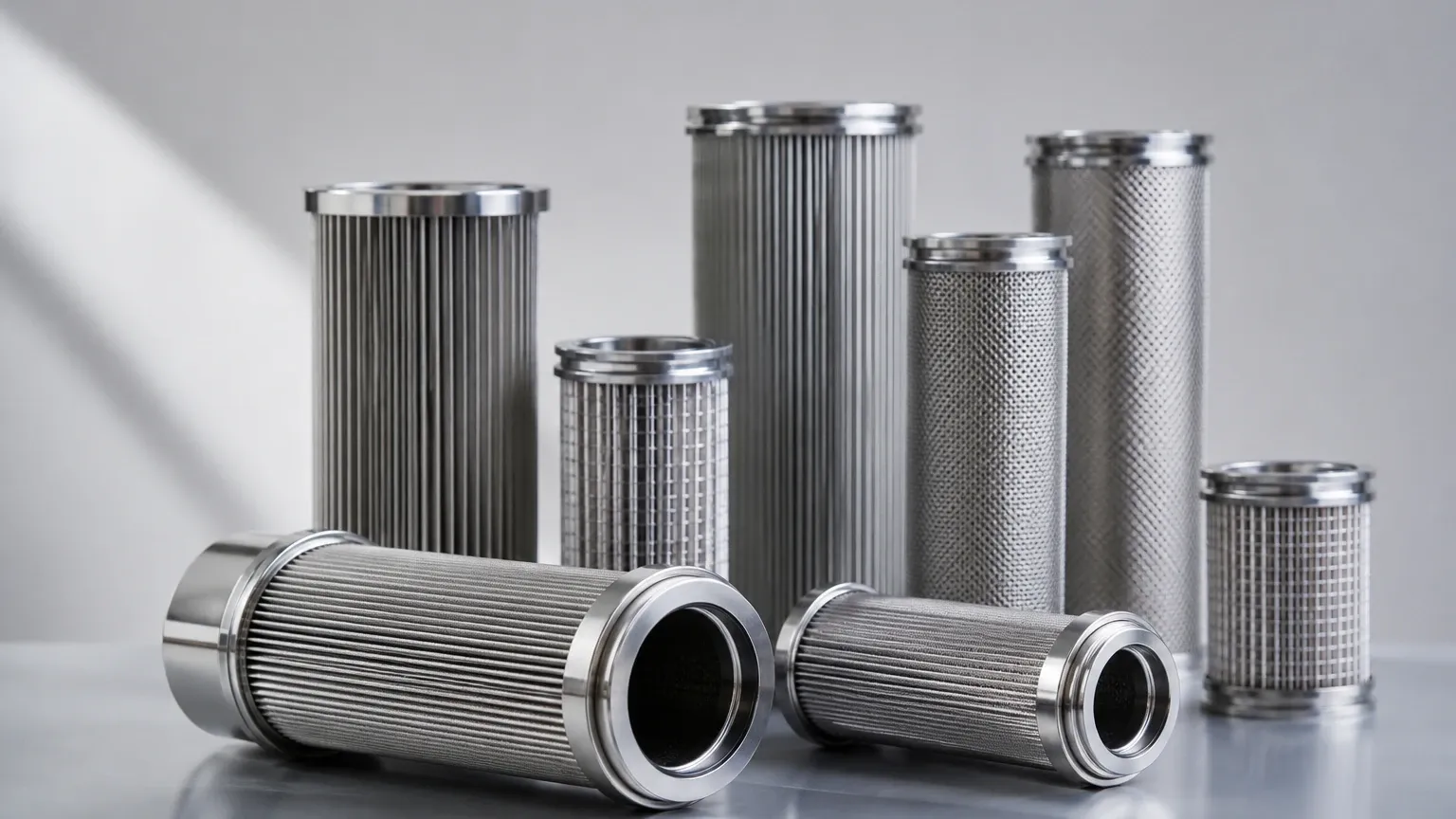
For engineers and procurement specialists, selecting a 0.01-micron solution requires a deep understanding of material science, fluid dynamics, and the specific rigors of the operating environment. While many synthetic materials offer fine filtration, stainless steel Filter Cartridges have become the industry standard for demanding applications where temperature, pressure, and chemical compatibility are non-negotiable.
The Technical Significance of 0.01 Micron Filtration
To put 0.01 micron into perspective, a human hair is approximately 50 to 70 microns in diameter. A 0.01-micron rating is 5,000 times smaller than the width of a hair. In industrial terms, this level of filtration is typically classified as "ultra-fine" or "sub-micron" filtration.
When utilizing a filter cartridge 0.01 micron, the primary mechanism of capture shifts. While larger particles are caught through simple mechanical sieving, particles at the 0.01-micron level are often influenced by Brownian motion, diffusion, and electrostatic attraction. In gas applications, these filters are frequently used as coalescing filters to remove sub-micron oil mists and water aerosols from compressed air lines. In liquid applications, they serve as the final polishing stage for high-purity chemicals or deionized water.
Material Engineering for Sub-Micron Precision
Achieving a reliable 0.01-micron rating in a durable format requires advanced manufacturing techniques. While polymer membranes (such as PTFE or PES) are common, they often lack the structural integrity required for high-pressure or high-temperature industrial cycles. This is where sintered metal technology becomes essential.
Sintered Metal Fiber Felt
For 0.01-micron applications, manufacturers like Kaifil often utilize sintered metal fiber felt. Unlike traditional woven wire mesh, which has a structured, two-dimensional pore geometry, fiber felt consists of non-woven stainless steel fibers that are bonded together through a high-temperature sintering process. This creates a three-dimensional labyrinthine structure that provides:
* High Porosity: Allowing for high flow rates despite the fine filtration grade.
* Depth Filtration: Capturing particles throughout the thickness of the media, which extends the service life before the pressure drop becomes critical.
* Thermal Stability: Maintaining pore integrity at temperatures exceeding 300°C, where synthetic filters would melt or deform.
316L Stainless Steel Superiority
In most B2B industrial contexts, 316L stainless steel is the preferred alloy for a filter cartridge 0.01 micron. The low carbon content and the addition of molybdenum provide superior resistance to pitting and crevice corrosion, particularly in environments involving chlorides or acidic cleaning agents. This ensures that the filter does not introduce metallic contaminants into the process stream through corrosion.
Performance Evaluation: Efficiency and Pressure Drop
When evaluating Filter Cartridges with a 0.01-micron rating, engineers must balance filtration efficiency with the resulting pressure drop (Delta P).
Beta Ratio and Absolute vs. Nominal Ratings
In the B2B sector, it is critical to distinguish between nominal and absolute ratings. A nominal 0.01-micron filter might only capture 60% to 80% of particles at that size. For critical applications, an absolute rating—backed by a Beta Ratio (typically βx = 1000 or 99.9% efficiency)—is required. High-performance stainless steel cartridges are engineered to meet these absolute standards, ensuring that the filtrate quality remains consistent even under fluctuating flow conditions.
Managing Differential Pressure
As the pore size decreases to 0.01 micron, the resistance to flow naturally increases. To mitigate this, engineering designs often incorporate pleating. By pleating the sintered fiber felt, the effective surface area of the filter is significantly increased. This results in:
* Lower initial pressure drop.
* Higher dirt-holding capacity.
* Reduced energy consumption for pumps and compressors.
Critical Applications in Industrial Environments
The implementation of a filter cartridge 0.01 micron is usually found in sectors where "clean" is not enough, and "ultra-pure" is the requirement.
Compressed Air and Gas Purification
In automated manufacturing and food packaging, compressed air must be free of oil aerosols. A 0.01-micron coalescing filter is used to merge tiny oil droplets into larger drops that can be drained away. This prevents the contamination of pneumatic valves and ensures that air coming into contact with food products is sterile and oil-free.
Pharmaceutical and Biotech Processing
Sterile venting is a common use case. Tanks containing sensitive biological cultures must "breathe" to equalize pressure. A 0.01-micron stainless steel filter acts as a sterile barrier, preventing bacteria and viruses from entering the tank while withstanding repeated In-Situ Steam (SIP) sterilization cycles.
Chemical and Semiconductor Manufacturing
In the production of semiconductors, even a single sub-micron particle can ruin a silicon wafer. 0.01-micron filtration is used for the point-of-use delivery of process chemicals and ultra-pure water, ensuring that the fluids are free of colloidal silica and other microscopic particulates.
Selection Criteria for Engineers and Purchasing Teams
Choosing the right filter cartridge 0.01 micron involves more than just selecting the micron rating. Technical buyers should confirm the following specifications with the manufacturer:
1. End-Cap Configuration: Does the application require a Double Open End (DOE) or a code-specific plug-in (like Code 7 with 226 O-rings and locking fins)? Proper sealing is vital at 0.01 micron, as any bypass will render the fine filtration useless.
2. Structural Strength: What is the maximum collapse pressure? In hydraulic or high-viscosity applications, the filter must withstand significant differential pressure without structural failure.
3. Chemical Compatibility: Beyond the stainless steel media, what material are the O-rings and gaskets? Options typically include Viton, EPDM, or PTFE-encapsulated silicone.
4. Cleaning Protocols: Can the filter be cleaned via ultrasonic baths, backwashing, or chemical surfactants? The ability to regenerate a stainless steel filter is a primary driver of its long-term value.
Total Cost of Ownership and Maintenance
While the initial investment in a stainless steel filter cartridge 0.01 micron is higher than that of a disposable polypropylene version, the Total Cost of Ownership (TCO) is often significantly lower in industrial settings.
Longevity and Reusability
Disposable filters are a recurring expense and contribute to industrial waste. In contrast, a high-quality metal filter can be cleaned and returned to service multiple times. For processes that run 24/7, the reduction in downtime associated with frequent filter changes provides a rapid Return on Investment (ROI).
Monitoring and Replacement Cycles
To optimize the life of a 0.01-micron cartridge, differential pressure gauges should be installed across the filter housing. A standard practice is to initiate a cleaning cycle when the Delta P reaches a pre-determined limit (often 1.5 to 2 bar, depending on the system design). Regular monitoring prevents "plugging," where contaminants are forced through the media or cause the media to deform.
Conclusion
The transition to a filter cartridge 0.01 micron is a strategic decision for facilities aiming to achieve the highest standards of purity and equipment protection. By utilizing stainless steel Filter Cartridges, industries can benefit from a combination of extreme filtration precision and the ruggedness required for heavy-duty industrial processing. Whether the goal is to produce sterile air for pharmaceuticals or to protect high-pressure hydraulic components, understanding the engineering behind the 0.01-micron rating ensures that the selected filtration solution will perform reliably under the most demanding conditions.
