


Filter Cartridge 10 Inch
In industrial filtration systems, the 10-inch format represents one of the most widely adopted standards for liquid and gas processing. Whether utilized as a pre-filtration stage or a final polishing step, the filter cartridge 10 inch serves as a modular building block in housings across chemical, pharmaceutical, and food and beverage sectors. For engineers and procurement specialists, selecting the correct cartridge involves more than just matching the length; it requires a technical evaluation of media composition, end-cap configurations, and performance metrics under specific operating conditions.
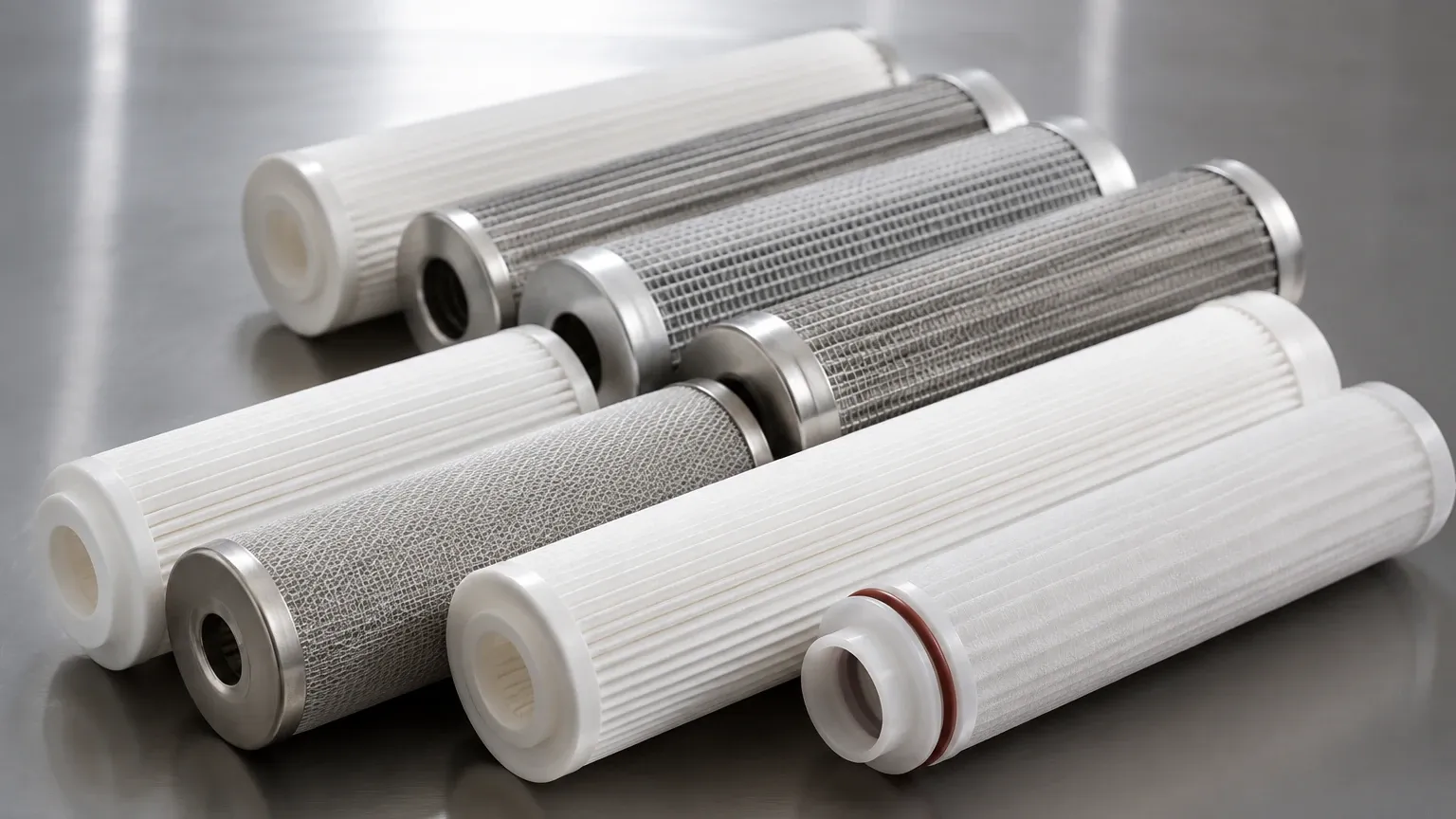
As a specialized manufacturer, Kaifil provides precision-engineered Filter Cartridges designed to meet the rigorous demands of industrial environments. By focusing on stainless steel and high-performance alloys, these components offer durability and cleanability that standard polymer filters cannot match in high-temperature or high-pressure applications.
Understanding the 10-Inch Filter Cartridge Standard
The term "10-inch" is a nominal designation. In practice, the actual length of a filter cartridge 10 inch can vary slightly based on the end-cap style and the manufacturer's design. Most standard industrial cartridges measure approximately 9.75 to 10 inches (248 to 254 mm) in length.
This standardization allows for interchangeability across different housing brands, provided the diameter and end-cap interface are compatible. The standard outer diameter (OD) for these cartridges typically ranges from 2.5 inches (64 mm) for standard flow to 4.5 inches (114 mm) for "Big Blue" or high-flow variations. Understanding these dimensional nuances is critical for ensuring a proper seal within the filter housing, as even a millimeter of bypass can compromise the entire filtration process.
Material Engineering: Stainless Steel vs. Synthetic Media
When specifying a filter cartridge 10 inch, the choice of material is the primary determinant of chemical compatibility and thermal resistance. While polypropylene and PES (polyethersulfone) are common for water treatment, industrial processes often require the robustness of metal.
Stainless Steel Wire Mesh and Sintered Fiber
Kaifil specializes in stainless steel filtration solutions, utilizing 304, 316, or 316L grades. Metal cartridges are preferred in the following scenarios:
* Extreme Temperatures: Stainless steel can operate in environments exceeding 250°C, where polymer media would melt or lose structural integrity.
* High Differential Pressure: Metal mesh and sintered metal fibers resist collapsing under high-pressure surges, maintaining consistent pore geometry.
* Chemical Aggression: For solvents, caustic cleaning agents, and acidic fluids, 316L stainless steel provides superior corrosion resistance.
* Sustainability and Reusability: Unlike disposable plastic cartridges, stainless steel versions can be cleaned via backwashing, ultrasonic baths, or chemical cleaning, significantly reducing the total cost of ownership (TCO) over time.
Synthetic and Depth Media
For applications requiring high dirt-holding capacity for soft or deformable particles, depth filters made of melt-blown polypropylene or pleated membranes are often used. However, in heavy-duty industrial cycles, these are frequently replaced by metal pleated cartridges that offer a high surface area while remaining fully cleanable.
Performance Metrics: Micron Ratings and Flow Dynamics
The effectiveness of a filter cartridge 10 inch is measured by its ability to remove specific particle sizes, known as the micron rating. Engineers must distinguish between nominal and absolute ratings:
1. Nominal Rating: Indicates the ability of the filter to retain a majority of particles (usually 60% to 90%) of a specific size. This is suitable for general-purpose filtration where 100% efficiency is not required.
2. Absolute Rating: Refers to the diameter of the largest hard spherical particle that will pass through the filter under specified test conditions. In critical pharmaceutical or chemical processes, an absolute-rated stainless steel mesh ensures process consistency.
Flow Rate and Pressure Drop (Delta P)
Every filter introduces resistance to the flow, known as pressure drop. A 10-inch cartridge's flow capacity is influenced by the media's porosity and the total surface area. Pleated designs increase the available surface area within the 10-inch footprint, allowing for higher flow rates and lower initial pressure drops compared to cylindrical wrap designs. Monitoring the "Clean Delta P" versus the "Terminal Delta P" (the point at which the filter must be cleaned or replaced) is essential for maintaining system efficiency.
Industrial Applications and Compatibility
The versatility of the filter cartridge 10 inch makes it a staple in various specialized fields. Each industry presents unique challenges that dictate the cartridge's construction.
Chemical Processing
In chemical manufacturing, filters must withstand aggressive solvents and catalysts. Stainless steel cartridges are often the only viable option for filtering hot resins, polymers, and corrosive acids where plastic leaching or degradation would contaminate the product.
Food and Beverage
Filtration in this sector requires materials that are FDA-compliant and resistant to Clean-in-Place (CIP) procedures. Stainless steel 10-inch cartridges are used for steam filtration, carbonated beverage polishing, and protecting downstream equipment from particulate matter without shedding fibers into the food chain.
Hydraulic and Lubrication Systems
Precision metal filters are used to remove wear particles from hydraulic fluids and lubricating oils. The 10-inch format is common in bypass filtration loops, where maintaining fluid cleanliness is vital for preventing component failure in heavy machinery.
Selection Criteria for Engineering and Procurement
To select the optimal filter cartridge 10 inch, technical teams should confirm the following parameters before procurement:
* Fluid Characteristics: Viscosity, temperature, and pH level.
* Contaminant Profile: Are the particles hard, soft, or gelatinous? What is the expected solids loading?
* End-Cap Configuration: Standard configurations include Double Open End (DOE), Code 7 (226 O-rings with a bayonet lock), and Code 3 (222 O-rings with a flat cap). A mismatch here will result in a failure to seal.
* Seal Material: O-rings and gaskets must be compatible with the fluid. Common options include Buna-N, EPDM, Viton, and PTFE-encapsulated silicone.
* Regulatory Compliance: Does the application require USP Class VI plastic testing or PED (Pressure Equipment Directive) certification for the housing and cartridge assembly?
Maintenance, Cleaning, and Replacement Cycles
For disposable cartridges, the replacement cycle is strictly governed by the pressure drop. However, for the stainless steel solutions provided by Kaifil, the maintenance strategy shifts toward cleaning and restoration.
Cleaning Methods for Metal Cartridges
* Backpulsing/Backwashing: Using a reverse flow of clean fluid or gas to dislodge particles from the surface of the mesh.
* Ultrasonic Cleaning: Utilizing high-frequency sound waves in a cleaning solvent to remove fine particulates trapped deep within sintered fibers.
* Chemical Cleaning: Using surfactants or acids to dissolve organic or mineral scaling that cannot be removed mechanically.
Properly maintained stainless steel cartridges can last for years, providing a much lower environmental impact and long-term cost savings compared to the constant disposal of polymer-based filters.
Customization and OEM Integration
While the 10-inch length is a standard, many industrial systems require customized internal structures or specialized materials to optimize performance. Kaifil works closely with global customers to develop tailored filtration components. This includes:
* Custom Micron Ratings: Engineering specific pore sizes for unique particle distributions.
* Reinforced Cores: Adding internal support to withstand extreme pressure differentials or vacuum conditions.
* Specialized Alloys: Utilizing Monel, Inconel, or Hastelloy for environments where even 316L stainless steel might fail.
By integrating manufacturing expertise with engineering knowledge, Kaifil ensures that each filter cartridge 10 inch is optimized for its specific industrial role, providing reliable, repeatable, and cost-effective filtration performance.
In conclusion, the filter cartridge 10 inch is a critical component that requires careful technical selection. By prioritizing material integrity, understanding flow dynamics, and considering the benefits of reusable stainless steel media, industrial operators can achieve higher process purity and improved operational efficiency. For those seeking high-performance, customized solutions, exploring the range of professional Filter Cartridges is the first step toward optimizing industrial filtration infrastructure.
