


Filter Cartridge 10 Micron
In industrial filtration, the selection of a micron rating is a critical engineering decision that directly impacts fluid cleanliness, equipment longevity, and operational costs. A filter cartridge 10 micron represents a versatile middle ground in filtration hierarchies, often serving as a primary fine filter or a critical pre-filter for high-purity systems. Understanding the technical nuances of this specific rating—ranging from material science to flow dynamics—is essential for engineers and procurement teams tasked with maintaining system integrity.
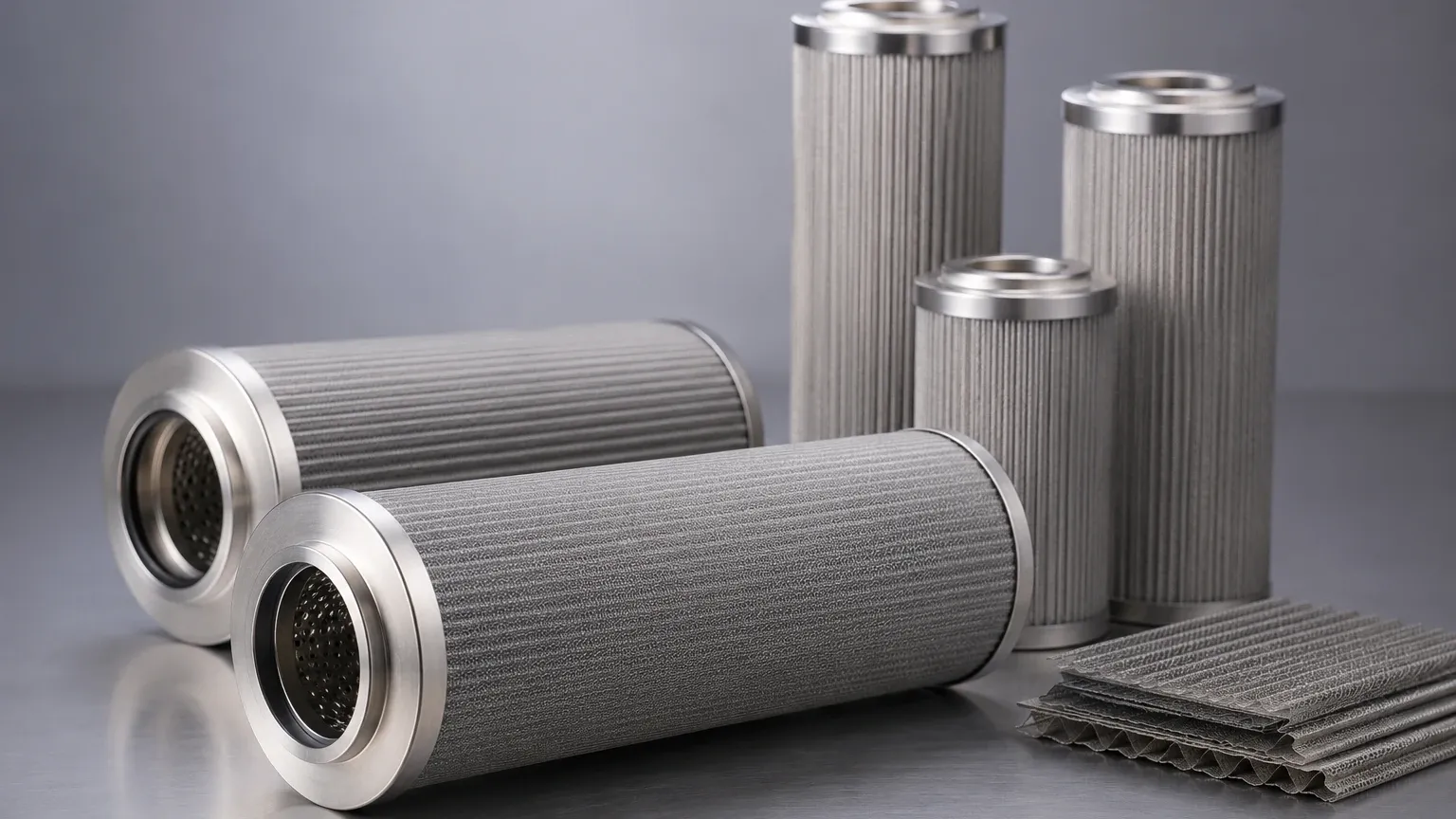
Industrial Filter Cartridges are designed to remove particulate matter from liquids and gases. When a cartridge is rated at 10 microns, it is engineered to capture particles as small as 0.01 millimeters. However, the efficacy of this capture depends heavily on whether the rating is nominal or absolute, the construction of the filter media, and the specific environmental conditions of the application.
Understanding the 10-Micron Filtration Threshold
The term "10 micron" refers to the pore size or the particle retention capability of the filter media. To put this in perspective, a human hair is approximately 70 microns in diameter, and the lower limit of visibility for the naked eye is roughly 40 microns. Therefore, a 10-micron filter is handling contaminants that are invisible to the operator but highly destructive to precision components like hydraulic valves, fuel injectors, and high-pressure pumps.
Nominal vs. Absolute Ratings
When evaluating a filter cartridge 10 micron, technical professionals must distinguish between nominal and absolute ratings:
- Nominal Rating: This is a commercial-grade rating indicating that the filter can trap a large percentage (typically 50% to 95%) of particles of the stated size. It does not guarantee total removal and is often used in less critical applications or as primary stage filtration.
- Absolute Rating: This indicates that the filter media has a consistent pore structure capable of removing 99.9% (Beta 1000) or more of particles at the 10-micron level. For critical processes in the pharmaceutical or chemical industries, absolute-rated cartridges are the standard to ensure consistent output quality.
Material Engineering: Stainless Steel vs. Polymer Media
The choice of material for a 10-micron filter cartridge is dictated by chemical compatibility, operating temperature, and the requirement for reusability. While polymer-based filters (such as polypropylene or PES) are common for single-use applications, stainless steel filtration solutions offer distinct advantages in demanding industrial environments.
Stainless Steel Wire Mesh and Sintered Metal
For high-temperature or corrosive environments, stainless steel (typically Grade 304 or 316L) is the preferred material. At the 10-micron level, stainless steel filters are usually constructed using one of two methods:
1. Sintered Metal Fiber: This involves ultra-fine stainless steel fibers that are non-woven and sintered together. This structure provides high porosity and excellent dirt-holding capacity while maintaining a precise 10-micron absolute rating.
2. Square or Dutch Weave Wire Mesh: Precision-woven wire cloth can be manufactured to achieve a 10-micron nominal or absolute rating. Dutch weave patterns, in particular, offer superior mechanical strength and are easier to backwash or clean compared to depth-style media.
Polymer Media
Polypropylene or pleated polyester cartridges are often used for water treatment or mild chemical applications. While cost-effective initially, these are disposable and cannot withstand the high differential pressures or aggressive cleaning cycles that stainless steel components can endure.
Structural Integrity and Design of 10-Micron Cartridges
The physical design of a filter cartridge 10 micron determines its surface area and, consequently, its service life. In industrial settings, two primary designs dominate the market: pleated and cylindrical.
Pleated Designs
Pleating the filter media significantly increases the effective filtration surface area within the same footprint. For a 10-micron application, a pleated stainless steel cartridge can offer up to five times the surface area of a standard cylindrical design. This leads to:
- Lower initial clean pressure drop.
- Higher dirt-holding capacity.
- Longer intervals between cleaning or replacement cycles.
Cylindrical and Wrap Designs
Cylindrical cartridges are often used in high-viscosity applications where pleated structures might collapse under extreme pressure or where the fluid contains fibrous contaminants that could clog pleats. These designs are simpler to manufacture but require careful engineering to ensure the 10-micron rating is maintained across the entire surface.
End Cap and Seal Configurations
To prevent bypass—where fluid skips the filter media entirely—the choice of end caps and seals is vital. Common configurations include Double Open End (DOE), Single Open End (SOE) with 222 or 226 O-rings, and threaded connections. For 10-micron filtration, ensuring a leak-proof seal is as important as the media itself, as a single gap can compromise the entire downstream process.
Performance Metrics: Flow Rate, Pressure Drop, and Beta Ratios
When integrating a 10-micron filter into a system, engineers must calculate the balance between filtration efficiency and flow resistance.
Clean Pressure Drop (Delta P)
Every filter introduces a resistance to flow. For a filter cartridge 10 micron, the initial pressure drop should be minimized to allow for maximum throughput. Factors affecting Delta P include the viscosity of the fluid, the flow velocity, and the total open area of the filter media. Stainless steel mesh is particularly effective here, as it provides a high percentage of open area compared to thick depth filters.
Beta Ratio and Efficiency
The Beta Ratio ($\\beta$) is a formula used to express the filtration efficiency. For example, a $\\beta_{10} = 1000$ means that for every 1,000 particles of 10 microns entering the filter, only one passes through. This represents 99.9% efficiency. When sourcing cartridges, requesting the Beta curve helps technical teams understand how the filter performs across a spectrum of particle sizes, not just at the 10-micron mark.
Dirt-Holding Capacity
This metric defines how much contaminant a cartridge can retain before reaching the maximum allowable differential pressure (usually 20-35 PSID for disposable filters, though stainless steel can often handle much higher). A well-designed 10-micron filter should distribute particles throughout the depth or surface of the media to prevent premature blinding.
Industrial Applications for 10-Micron Filtration
The 10-micron threshold is a "sweet spot" for many industrial processes where removing visible sediment is insufficient, but sub-micron filtration is unnecessary and cost-prohibitive.
Hydraulic and Lube Oil Systems
In hydraulic systems, particles in the 5 to 15-micron range are the primary cause of component wear. Using a filter cartridge 10 micron in the return line or kidney loop helps maintain ISO 4406 cleanliness codes, protecting expensive pumps and servo-valves from silt-induced failure.
Food and Beverage Processing
For the filtration of syrups, beverages, and process water, 10-micron cartridges remove yeast, large bacteria colonies, and environmental debris. In these applications, using 316L stainless steel is often mandatory to meet food safety standards and to allow for Steam-In-Place (SIP) sterilization.
Chemical and Petrochemical Production
10-micron filters are used to protect downstream catalysts or to clarify final products. Because these fluids are often aggressive, the chemical resistance of the filter media and the integrity of the welded seams (rather than adhesive-bonded seams) are critical for preventing media migration and process contamination.
Pre-filtration for Reverse Osmosis (RO)
To protect sensitive RO membranes from fouling, 10-micron pre-filters are used to capture suspended solids. This extends the life of the more expensive membranes and reduces the frequency of chemical cleanings.
Maintenance and Cleaning of Reusable Stainless Steel Cartridges
One of the primary reasons engineers specify stainless steel for a filter cartridge 10 micron is the ability to clean and reuse the component. This significantly reduces the Total Cost of Ownership (TCO) compared to disposable alternatives.
Cleaning Methods
- Ultrasonic Cleaning: High-frequency sound waves create cavitation bubbles that dislodge 10-micron particles from deep within the mesh or sintered structure.
- Backwashing: Reversing the flow of clean fluid through the cartridge can effectively remove surface-loaded contaminants.
- Chemical Cleaning: Using compatible solvents or acids to dissolve organic or inorganic buildup without damaging the stainless steel substrate.
Determining Replacement Cycles
While stainless steel is durable, it is not infinite. Over many cleaning cycles, the media may experience "work hardening" or the pores may become permanently blinded. Engineers should monitor the "clean" pressure drop after each cleaning; once the initial Delta P rises significantly above the original factory specifications, the cartridge should be replaced to maintain system efficiency.
Selection Criteria for Engineering and Procurement Teams
Before finalizing a purchase for a 10-micron filtration solution, the following technical parameters must be confirmed with the manufacturer:
1. Operating Environment: What is the maximum temperature and pressure? Are there pressure spikes (water hammer) that the cartridge must withstand?
2. Fluid Characteristics: What is the viscosity at operating temperature? Is the fluid chemically compatible with 304 or 316L stainless steel and the selected gasket material (Buna-N, Viton, EPDM, or PTFE)?
3. Contaminant Profile: Is the loading heavy or light? Are the particles hard (metal shavings) or soft (organic gels)? This determines whether pleated or sintered media is more appropriate.
4. Regulatory Compliance: Does the application require FDA, 3A, or ASME certification?
5. Customization Requirements: Does the housing require a non-standard length or a specific end-cap adapter to fit existing hardware?
By focusing on these factual engineering requirements, organizations can ensure they select a filter cartridge 10 micron that provides the necessary protection for their equipment while optimizing the balance between performance and long-term operational costs. Whether for protecting hydraulic systems or ensuring the clarity of a chemical product, the precision of the 10-micron rating remains a cornerstone of modern industrial fluid management.
