


Filter Cartridge 5
In industrial filtration, the designation "5" typically refers to one of two critical specifications: a 5-micron filtration rating or a 5-inch nominal length. Both parameters are foundational in the design and integration of Filter Cartridges within complex fluid processing systems. Selecting a filter cartridge 5 requires a deep understanding of particle size distribution, fluid dynamics, and material compatibility to ensure system longevity and process integrity.
For engineers and procurement specialists, the "5" represents a specific threshold where fine particulate removal meets the practicalities of industrial flow rates. Whether the application involves protecting sensitive hydraulic components or ensuring the purity of chemical reagents, the 5-micron level is often the standard for secondary or final-stage filtration. This article examines the technical nuances, engineering considerations, and selection criteria for these essential components.
Understanding the Role of 5-Micron Filtration in Industrial Processes
A 5-micron rating is a common benchmark in liquid and gas filtration. To put this in perspective, a human hair is approximately 70 microns in diameter, while the smallest particle visible to the naked eye is roughly 40 microns. A filter cartridge 5 is designed to capture particles significantly smaller than what is visible, targeting silt, fine sand, and various suspended solids that can cause abrasive wear in downstream equipment.
In the context of filtration efficiency, it is vital to distinguish between "nominal" and "absolute" ratings. A nominal 5-micron filter might capture 60% to 80% of particles at that size, whereas an absolute-rated filter—often constructed from multi-layered stainless steel wire mesh or pleated media—aims for 99.9% efficiency (Beta 1000). Engineers must confirm which rating is required based on the sensitivity of the downstream components. For instance, high-pressure hydraulic systems often require absolute filtration to prevent the "sandblasting" effect of fine particulates on valve seats and pump vanes.
Material Selection for Filter Cartridge 5 Applications
The material of construction dictates the filter's performance in extreme environments. While polymer-based filters are common in water treatment, industrial applications often demand the durability of metal.
Stainless Steel Wire Mesh
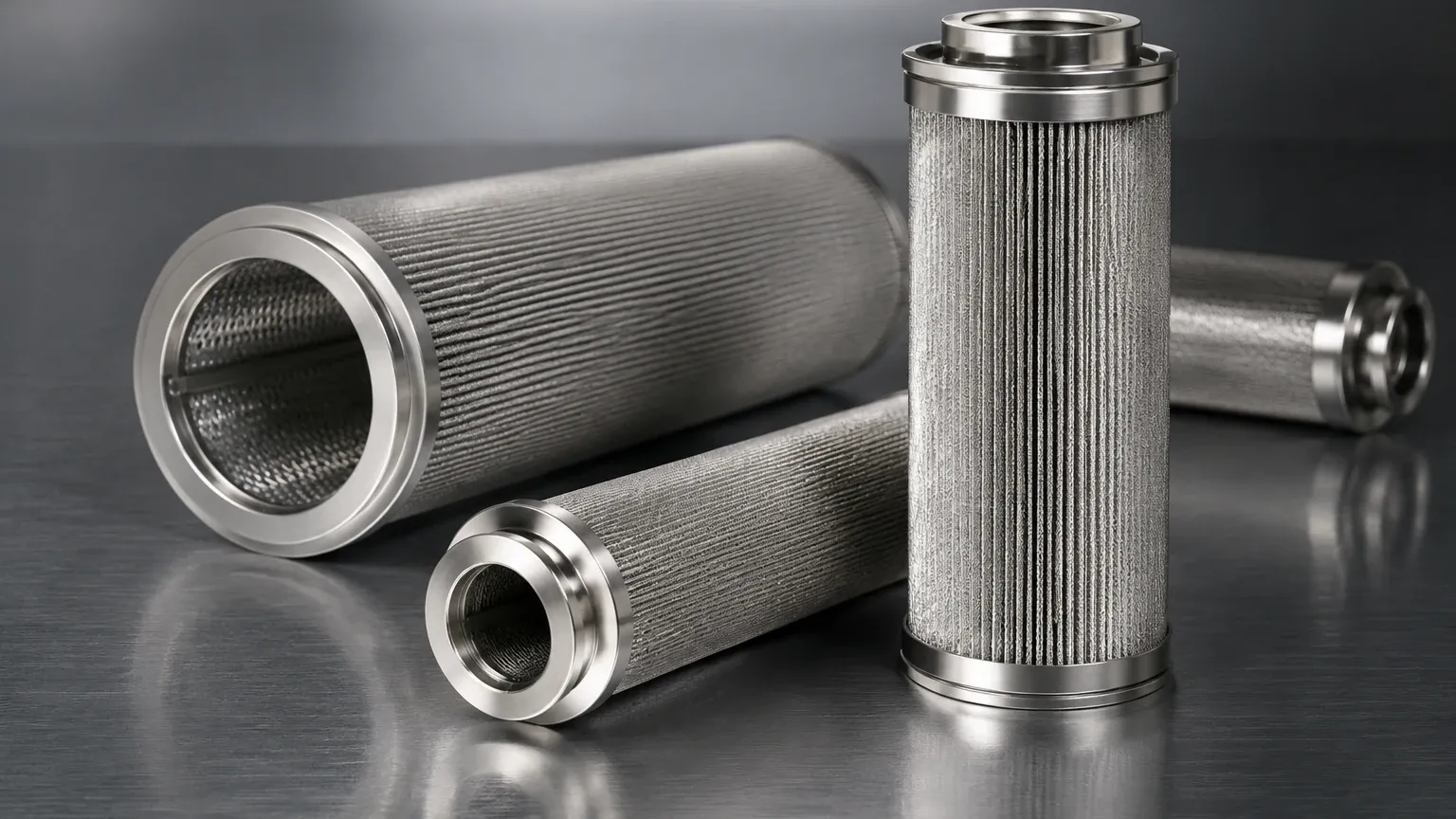
Stainless steel (typically 304 or 316L) is the preferred material for demanding B2B environments. A stainless steel filter cartridge 5 offers several advantages over disposable media:
* Thermal Stability: Metal cartridges can operate at temperatures exceeding 500°F (260°C), where polymers would melt or degrade.
* Chemical Resistance: 316L stainless steel provides excellent resistance to corrosion from acids, alkalis, and organic solvents, making it indispensable in chemical processing.
* Cleanability: Unlike depth filters that must be discarded when clogged, stainless steel mesh filters can be backwashed, ultrasonically cleaned, or chemically cleaned, significantly reducing the total cost of ownership over the product's lifecycle.
Sintered Metal Media
For applications requiring high structural integrity and precise pore size control, sintered metal fiber or powder is utilized. Sintering bonds the metal particles or fibers together, creating a rigid structure that resists media migration—a common failure point in lower-quality filters where fibers from the filter itself break off and contaminate the filtrate.
Engineering Parameters: Flow Rate and Differential Pressure
When integrating a filter cartridge 5 into a system, engineers must calculate the clean pressure drop (ΔP) and the terminal pressure drop. The 5-micron threshold introduces more resistance than coarser 20 or 50-micron filters, necessitating a larger surface area to maintain desired flow rates.
The Relationship Between Surface Area and Longevity
As particles accumulate on the surface of the filter, the effective open area decreases, causing the differential pressure to rise. To mitigate this, pleated designs are frequently employed. Pleating increases the available surface area within the same footprint of a standard 5-inch or 10-inch housing. For a filter cartridge 5, maximizing surface area is the most effective way to extend the service interval and prevent frequent system shutdowns for maintenance.
Viscosity and Flow Velocity
The viscosity of the fluid significantly impacts the performance of a 5-micron cartridge. Higher viscosity fluids require lower flow velocities to prevent excessive pressure drops. In hydraulic oil filtration, for example, the start-up pressure in cold environments can spike, potentially damaging the filter media if a bypass valve is not present or if the cartridge lacks sufficient collapse strength.
Application-Specific Requirements for 5-Inch and 5-Micron Cartridges
The utility of the filter cartridge 5 spans across multiple heavy industries, each with unique regulatory and performance standards.
Chemical and Petrochemical Processing
In these sectors, the primary concern is the compatibility of the filter with aggressive solvents. A 5-micron stainless steel cartridge is often used to protect catalysts or to ensure the clarity of final chemical products. The ability of stainless steel to withstand high pressures and corrosive environments ensures that the filtration process does not become a point of failure.
Food and Beverage Industry
Filtration at the 5-micron level is critical for removing yeast, large bacteria, and sediment. Here, the focus is on "food-grade" materials. Stainless steel Filter Cartridges are favored because they do not shed fibers and can withstand Steam-In-Place (SIP) and Clean-In-Place (CIP) sterilization cycles, which are mandatory for maintaining hygiene standards.
Water Treatment and Desalination
In reverse osmosis (RO) systems, a 5-micron filter often serves as the final pre-treatment stage. It protects the expensive RO membranes from being fouled by silt and suspended solids. Using a high-quality filter cartridge 5 at this stage can extend the life of the membranes by several years, providing a substantial return on investment.
Maintenance, Cleaning, and Replacement Cycles
One of the most frequent questions engineers face is when to replace or clean a filter. For a filter cartridge 5, monitoring the differential pressure is the only reliable method for determining the end-of-life for a specific cycle.
Monitoring Differential Pressure
Most industrial housings are equipped with pressure gauges upstream and downstream of the filter. A typical rule of thumb is to initiate cleaning or replacement when the differential pressure reaches 15–25 psi (1.0–1.7 bar) above the clean pressure drop. Operating beyond this limit risks "breakthrough," where the pressure forces contaminants through the media, or mechanical failure of the cartridge itself.
Cleaning Procedures for Reusable Cartridges
For stainless steel cartridges, cleaning is a precise process. Methods include:
1. Backflushing: Reversing the flow of fluid to dislodge surface cake.
2. Ultrasonic Cleaning: Using high-frequency sound waves in a cleaning solvent to remove particles lodged deep within the mesh or sintered structure.
3. Chemical Cleaning: Using specific detergents or acids to dissolve organic or inorganic scaling.
Proper cleaning restores the filter to near-original flow characteristics, making the filter cartridge 5 an environmentally friendly and cost-effective choice compared to disposable alternatives.
Customization and OEM Considerations
Standard off-the-shelf filters do not always meet the specific needs of specialized industrial equipment. This is where custom manufacturing becomes essential. When sourcing a filter cartridge 5, technical teams should consider several customization options:
* End Cap Configurations: Depending on the housing, cartridges may require Double Open End (DOE), Single Open End (SOE) with 222 or 226 O-rings, or threaded connections like NPT or BSP.
* Structural Reinforcement: In high-pressure or high-pulsation environments, internal support cores and external cages are added to prevent the pleats from collapsing or the mesh from deforming.
* Custom Dimensions: While 5-inch and 10-inch are standard, custom lengths and diameters can be engineered to fit proprietary housings or to optimize the surface area within a limited space.
Working with a manufacturer that understands these engineering nuances allows for the development of filtration solutions that are tailored to the specific flow, pressure, and chemical conditions of the application.
Total Cost of Ownership (TCO) Analysis
When evaluating a filter cartridge 5, the initial purchase price is only one component of the total cost. Procurement teams must also factor in:
* Disposal Costs: Disposable filters generate waste and may require specialized disposal if used with hazardous chemicals.
* Downtime: The time required to change filters impacts production efficiency. Longer-lasting or cleanable metal filters reduce the frequency of these interruptions.
* Energy Consumption: A filter that maintains a lower differential pressure for a longer period reduces the load on pumps, leading to lower energy costs over time.
By choosing high-performance stainless steel Filter Cartridges, industrial facilities can achieve a lower TCO despite a higher initial investment compared to polymer disposables. The durability and reliability of metal filtration ensure that the process remains stable and the downstream equipment remains protected.
Conclusion
The filter cartridge 5 is a versatile and vital component in the industrial landscape. Whether it is defined by its 5-micron precision or its 5-inch compact form factor, its role in protecting equipment and ensuring product quality cannot be overstated. By focusing on material integrity, engineering specifications like differential pressure, and the long-term benefits of cleanable media, technical professionals can select filtration solutions that provide consistent, high-performance results in even the most demanding environments.
