


Recessed Chamber Filter Press
In the landscape of industrial solid-liquid separation, the recessed chamber filter press stands as one of the most reliable and efficient technologies for dewatering slurries. Engineered to handle high-pressure filtration and large volumes of solids, this equipment is utilized across chemical processing, wastewater treatment, mining, and food production. For engineers and procurement specialists, understanding the technical nuances of these systems—and specifically the filtration components that drive their performance—is essential for optimizing operational efficiency and reducing the total cost of ownership.
At the core of these systems is the interaction between the mechanical press and the filtration medium. While many standard applications utilize synthetic cloths, demanding industrial environments often require the durability and precision of stainless steel filtration solutions. As a professional manufacturer, Kaifil specializes in these high-performance components, ensuring that the internal filtration architecture of a recessed chamber filter press can withstand the rigors of corrosive chemicals and high-temperature processes.
Understanding the Mechanics of the Recessed Chamber Design
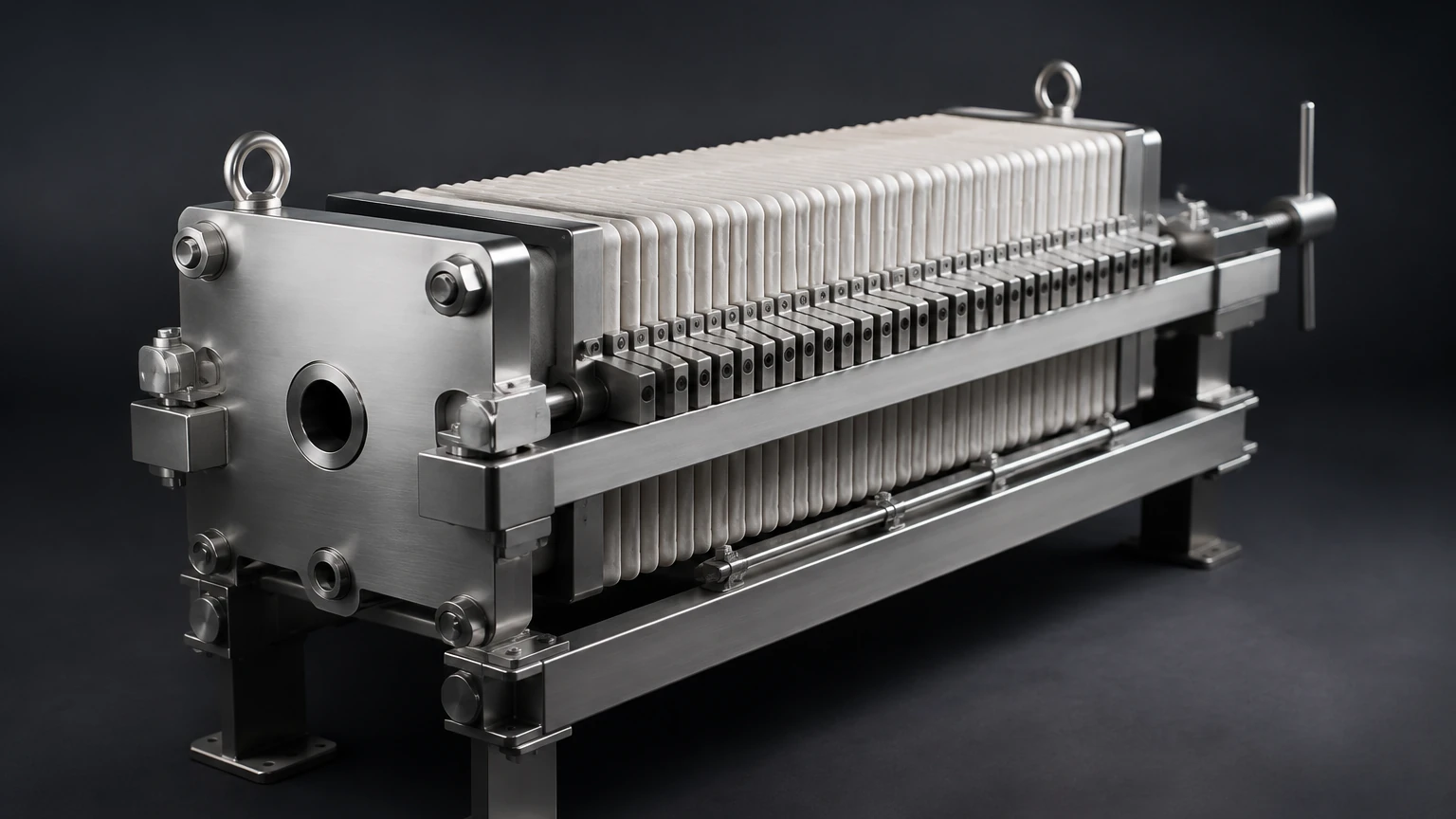
The recessed chamber filter press is distinguished by the design of its filter plates. Unlike the older plate-and-frame design, which uses separate frames to create space for cake accumulation, the recessed chamber plate features a built-in depression or "recess." When two plates are clamped together by a hydraulic ram, these recesses align to form a sealed chamber.
During operation, slurry is pumped into these chambers under high pressure. The liquid (filtrate) is forced through the filter medium—often supported by a precision wire mesh or specialized metal filter element—and exits through drainage ports. The solids are trapped within the chamber, gradually forming a "filter cake." Once the chambers are full and the flow of filtrate slows, the pressure is released, the plates are separated, and the solid cakes are discharged.
This design offers several engineering advantages over traditional configurations:
* Enhanced Sealing: The integration of the chamber into the plate reduces the number of joint surfaces, significantly lowering the risk of leakage under high pressure.
* Structural Integrity: Recessed plates are typically more robust, allowing for higher feed pressures, which results in drier filter cakes and faster cycle times.
* Automation Compatibility: The simplified plate movement makes recessed chamber systems easier to automate for cake discharge and cloth washing, reducing labor costs.
The Role of Stainless Steel Filtration Components
The efficiency of a recessed chamber filter press is heavily dependent on the quality of the filter medium and its support structure. In many industrial applications, standard polypropylene cloths are insufficient due to chemical incompatibility or mechanical failure under extreme heat. This is where stainless steel wire mesh and precision metal filter components become critical.
Kaifil provides customized stainless steel filtration solutions that are integrated into the plate assembly. These components offer superior mechanical strength, ensuring that the filter medium does not sag or tear under the immense pressure of the slurry feed. Furthermore, stainless steel 304 or 316L provides the necessary corrosion resistance for pharmaceutical and chemical applications where filtrate purity is paramount.
By utilizing advanced manufacturing techniques, these metal components can be engineered with specific pore sizes and flow characteristics. This level of precision ensures consistent filtration accuracy, which is vital for processes requiring the recovery of fine catalysts or the removal of microscopic contaminants. For more information on how these components support industrial systems, you can visit the Main Page to review product options and application support.
Key Evaluation Criteria for Engineers
When selecting or specifying a recessed chamber filter press, engineers must look beyond the basic dimensions of the machine. The following technical factors determine the long-term success of the installation:
1. Filtration Accuracy and Micron Rating
The choice of the filter medium must align with the particle size distribution of the slurry. If the mesh or cloth is too coarse, solids will pass into the filtrate (bleeding); if it is too fine, the system will blind rapidly, leading to excessive pressure drops and short cycle times. Precision-engineered wire mesh allows for a defined aperture that remains stable even under high compaction forces.
2. Chemical and Thermal Compatibility
Slurries in the chemical and mining sectors often feature extreme pH levels or high temperatures. Engineers must confirm that the plate material (often polypropylene, PVDF, or cast iron) and the filtration media (stainless steel or specialized alloys) are chemically inert to the process fluid. Stainless steel is often the preferred choice for temperatures exceeding 90°C, where synthetic fibers begin to lose structural integrity.
3. Cake Discharge and Washability
The geometry of the recessed chamber influences how easily the cake drops during the opening cycle. A smooth, high-quality surface finish on the metal support mesh can prevent cake sticking, which reduces downtime for manual cleaning. Additionally, if the process requires cake washing to remove impurities, the drainage pattern on the plate must ensure an even distribution of the wash liquid.
Managing Common Risks and Operational Challenges
Operating a recessed chamber filter press is not without its challenges. Understanding these risks during the procurement phase allows for better system design and component selection.
* Chamber Plugging: If the slurry is not fed at the correct velocity or if the solids concentration is inconsistent, the center feed ports can become plugged. This leads to uneven pressure distribution across the plate, which can cause plate warping or breakage. Engineering the feed manifold and using reinforced stainless steel support structures can mitigate this risk.
* Medium Blinding: Fine particles can become trapped within the depth of the filter medium. While backwashing is possible, the durability of the medium is tested during every cleaning cycle. Stainless steel wire mesh is particularly advantageous here, as it can withstand high-pressure cleaning and mechanical scraping that would destroy synthetic cloths.
* Seal Failure: The sealing surfaces (stays) of the plates must be kept clean. Even a small amount of grit on the sealing edge can prevent a tight seal, leading to "wicking" or high-pressure spraying of the slurry outside the press.
Customization and OEM Solutions
Every industrial process has unique requirements, and a "one-size-fits-all" approach rarely yields the best ROI. Customization is a core strength of manufacturers like Kaifil, who work closely with engineers to develop bespoke filtration components for recessed chamber systems.
Customization options often include:
* Variable Mesh Weaves: Selecting between plain, twilled, or dutch weaves to balance flow rate and particle retention.
* Reinforced Edges: Adding specialized borders to metal filter elements to ensure a leak-proof fit within the recessed plate.
* Multi-Layer Laminates: Sintering multiple layers of wire mesh together to create a filter medium that combines fine filtration with high mechanical rigidity.
For technical professionals, these customized solutions mean fewer replacements and more predictable maintenance schedules. When the filtration media is engineered specifically for the chemical composition and physical properties of the slurry, the entire recessed chamber filter press operates closer to its theoretical maximum efficiency.
Total Cost of Ownership (TCO) Considerations
While the initial capital expenditure for high-quality stainless steel filtration components may be higher than standard synthetic options, the total cost of ownership is often significantly lower. Engineers should calculate the TCO by factoring in:
1. Replacement Frequency: Metal filters often last years, whereas cloths may need replacement every few weeks or months in harsh environments.
2. Labor Costs: Fewer filter changes mean less downtime and lower labor requirements for maintenance teams.
3. Product Yield: Improved filtration accuracy and better cake dryness directly impact the recovery of valuable solids or the cost of waste disposal.
4. Energy Efficiency: Optimized flow paths and reduced resistance through the filter medium lower the energy required by the feed pumps.
Conclusion
The recessed chamber filter press remains a cornerstone of industrial dewatering due to its robust design and high-pressure capabilities. However, the performance of the press is only as good as the filtration media housed within its chambers. By focusing on precision engineering, material compatibility, and high-performance stainless steel components, industrial facilities can achieve superior separation results and long-term operational reliability. For engineers seeking to optimize their filtration processes, partnering with a manufacturer that understands these technical boundaries is the first step toward achieving efficient and cost-effective performance.
