


Filter Cartridge Bunnings
In the procurement process for filtration components, technical professionals often encounter a wide array of options ranging from consumer-grade retail products to high-performance industrial solutions. The search for "filter cartridge bunnings" typically reflects a need for immediate, accessible filtration media, often used in residential water systems or light commercial applications. However, for engineers and plant managers operating in the chemical processing, pharmaceutical, or food and beverage sectors, the requirements for filtration go far beyond the specifications of off-the-shelf retail products.
Understanding the distinction between retail-grade cartridges and industrial-grade Filter Cartridges is essential for ensuring system reliability, process efficiency, and long-term cost-effectiveness. This guide examines the technical parameters that differentiate these categories and provides a framework for selecting the appropriate filtration technology for demanding industrial environments.
Understanding the Intent Behind Filter Cartridge Bunnings Searches
When a technical buyer searches for filter cartridges in a retail context like Bunnings, the intent is usually driven by one of three scenarios: emergency replacement for a non-critical system, benchmarking prices for standard sediment filters, or seeking components for general-purpose water treatment. Retail outlets primarily stock polypropylene melt-blown, pleated paper, or activated carbon cartridges designed for low-pressure, ambient-temperature water filtration.
While these products are effective for domestic use, they often fail to meet the rigorous standards required in industrial settings. Industrial applications frequently involve high temperatures, aggressive chemical solvents, high differential pressures, and strict regulatory compliance (such as FDA or GMP standards). In these cases, the transition from disposable plastic media to precision-engineered stainless steel components becomes a technical necessity rather than a preference.
Material Comparison: Polypropylene vs. Stainless Steel
The most significant difference between retail-grade cartridges and industrial solutions lies in the material of construction. Most cartridges found in general hardware stores are made from polymers or organic fibers.
Polypropylene and Synthetic Media
Polypropylene is a common material for sediment filtration. It is cost-effective and offers good chemical resistance to many acids and bases. However, its thermal stability is limited, typically losing structural integrity above 60°C to 80°C. Furthermore, under high pressure, these cartridges can experience "bypass" or media migration, where the filter material itself sheds fibers into the downstream filtrate.
Stainless Steel (304 and 316L)
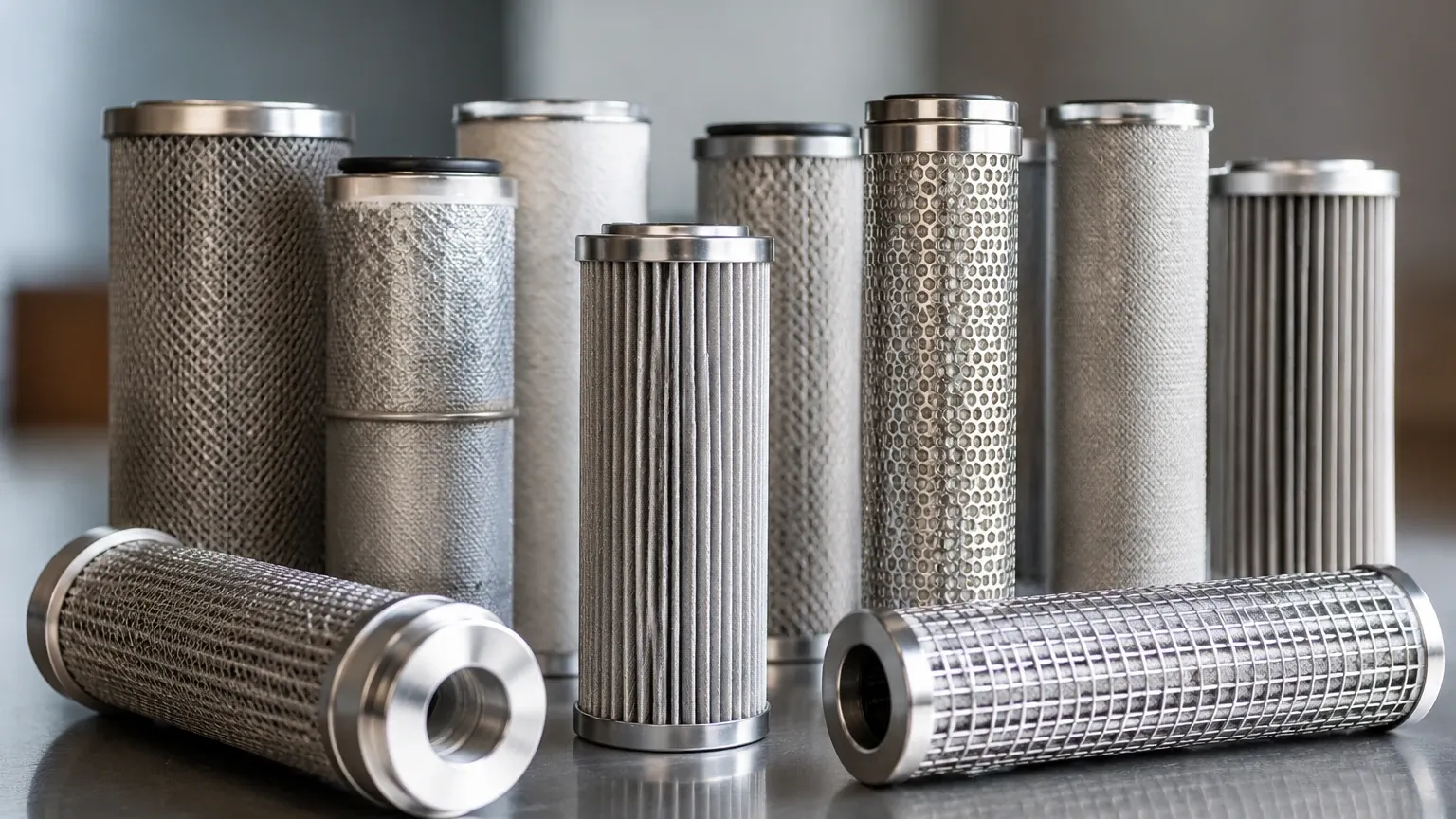
Industrial filter cartridges, such as those manufactured by Kaifil, utilize stainless steel wire mesh or sintered metal fibers. Stainless steel offers several critical advantages:
* Thermal Resistance: Capable of operating in environments exceeding 300°C, making them suitable for steam filtration and high-temperature chemical reactions.
* Structural Integrity: Metal cartridges do not deform under high differential pressure, ensuring consistent filtration accuracy throughout the service cycle.
* Chemical Compatibility: 316L stainless steel provides superior resistance to corrosion in marine environments and against aggressive cleaning agents used in CIP (Clean-in-Place) processes.
Engineering Considerations for Industrial Filtration
Selecting a filter cartridge requires an analysis of the specific engineering challenges presented by the fluid and the process. Retail-grade filters are often rated with a "nominal" micron rating, which can be misleading in an industrial context.
Absolute vs. Nominal Filtration
A nominal rating indicates that the filter will trap a large percentage of particles of a given size. However, it does not guarantee 100% efficiency. In critical applications—such as protecting high-pressure nozzles or ensuring the purity of a pharmaceutical batch—an "absolute" rating is required. Industrial stainless steel cartridges are engineered to provide absolute filtration, meaning they are tested to ensure that no particles above the specified micron size pass through the media.
Pressure Drop and Flow Rates
Every filter creates a pressure drop (delta P) across the system. Retail cartridges often have a high initial pressure drop because of their dense fiber structure. In contrast, pleated stainless steel cartridges maximize the surface area, allowing for higher flow rates with lower initial pressure drops. This reduces the energy load on pumps and extends the time between cleaning or replacement cycles.
Total Cost of Ownership: Disposable vs. Cleanable
A common misconception in procurement is focusing solely on the initial purchase price. While a "filter cartridge bunnings" search might yield a low-cost disposable unit, the total cost of ownership (TCO) often favors industrial metal cartridges.
1. Replacement Frequency: Disposable filters must be discarded once they reach their terminal pressure drop. In high-load industrial processes, this can result in weekly or even daily replacements, leading to significant downtime and disposal costs.
2. Cleanability: Stainless steel filter cartridges are designed to be cleaned and reused. Through ultrasonic cleaning, chemical baths, or backwashing, these filters can be restored to near-original performance. This eliminates the recurring cost of purchasing new media and reduces the environmental impact of waste generation.
3. Process Downtime: The time required to shut down a system, bleed pressure, and replace a cartridge represents a hidden cost. Metal filters, due to their higher dirt-holding capacity and cleanability, significantly extend the intervals between maintenance events.
Performance Metrics and Selection Criteria
When evaluating Filter Cartridges for a specific industrial application, engineers should confirm the following technical specifications:
* Micron Rating: Determine if the process requires absolute or nominal filtration. Common industrial ranges span from 0.5 microns to 500 microns.
* Operating Temperature: Confirm the maximum and continuous operating temperatures. If the process involves thermal cycling, metal cartridges are preferred to prevent fatigue.
* Fluid Chemistry: Analyze the pH levels and the presence of oxidizing agents. While stainless steel is highly resistant, certain specialized alloys may be required for specific acids.
* End-Cap Configuration: Industrial housings use various sealing methods, such as DOE (Double Open End), Code 7 (226 O-ring with bayonet), or NPT threaded connections. Retail filters often use standard 10-inch or 20-inch DOE configurations which may not provide a bypass-free seal in high-pressure systems.
Customization and OEM Solutions
One of the primary limitations of retail-sourced filtration is the lack of customization. Industrial applications often involve unique housing dimensions or specific flow characteristics that standard sizes cannot accommodate.
Kaifil specializes in providing OEM and customized filtration solutions. This includes designing cartridges with specific pleat counts to optimize surface area, selecting specialized wire mesh weaves (such as Dutch weave or twill weave) to balance flow and strength, and manufacturing custom lengths and diameters to fit existing vessel footprints. This level of engineering support is critical for optimizing a filtration system's performance and is unavailable through general retail channels.
Common Risks of Using Under-Specified Cartridges
Using a filter cartridge intended for light-duty applications in a heavy industrial environment carries several risks:
* Media Migration: The breakdown of synthetic fibers can contaminate the product stream, leading to batch rejection.
* Collapse: Under high differential pressure, a plastic core may collapse, causing a total loss of filtration and potential damage to downstream equipment like turbines or sensitive instruments.
* Chemical Leaching: Certain polymers may leach plasticizers or other chemicals when exposed to solvents, which is unacceptable in food-grade or medical applications.
Conclusion: Making the Right Selection
While the convenience of a "filter cartridge bunnings" search is undeniable for household maintenance, industrial filtration requires a more rigorous, engineering-led approach. The selection of a filter cartridge should be based on a comprehensive understanding of the fluid dynamics, chemical environment, and long-term operational goals of the facility.
By opting for high-performance stainless steel Filter Cartridges, industrial operators can achieve higher filtration accuracy, better durability, and a lower total cost of ownership. For engineers tasked with maintaining the integrity of complex systems, the transition from commodity retail products to precision-manufactured metal filtration components is a fundamental step in process optimization.
Before making a final selection, it is recommended to consult with a specialist manufacturer like Kaifil to confirm material compatibility, micron requirements, and the potential for a customized design that meets the exact needs of your industrial application.
