


Filter Cartridge Everpure
In the realm of commercial and industrial water treatment, the selection of filtration media is a critical decision that impacts equipment longevity, product consistency, and operational overhead. The filter cartridge Everpure series has long been a staple in the food service, vending, and hospitality industries, known for its specialized pre-coat technology and high-surface-area designs. For engineers and facility managers, understanding the technical nuances of these systems—and how they compare to broader industrial Filter Cartridges—is essential for optimizing water quality and maintenance schedules.
Industrial water filtration requires a balance between flow rate, filtration accuracy, and structural integrity. While standard residential filters focus on basic sediment removal, professional-grade cartridges are engineered to address specific contaminants such as chlorine, volatile organic compounds (VOCs), cysts, and scale-forming minerals. This article examines the engineering principles behind high-performance cartridges, the criteria for selection in demanding environments, and the role of specialized metal filtration components in extending system life.
Engineering Principles of Pre-Coat and Carbon Filtration
The technical foundation of many commercial water filters, including the filter cartridge Everpure line, often relies on pre-coat technology. Unlike standard depth filters that trap particles throughout a thick media, pre-coat filters utilize a thin, highly porous membrane coated with a filtration medium, such as diatomaceous earth or specialized carbon blends.
This design provides several engineering advantages:
* High Surface Area: The unique folding or pleating of the internal membrane allows for a significantly larger filtration surface within a compact canister. This maximizes the contact time between the water and the filter media.
* Sub-Micron Accuracy: Many of these cartridges are rated at 0.5 microns, capable of mechanically removing 99.9% of contaminants such as Cryptosporidium and Giardia cysts.
* Consistent Flow: By utilizing a large surface area, the pressure drop across the filter remains relatively low even as it nears the end of its service life, ensuring that downstream equipment (such as espresso machines or steam cookers) receives a steady supply of water.
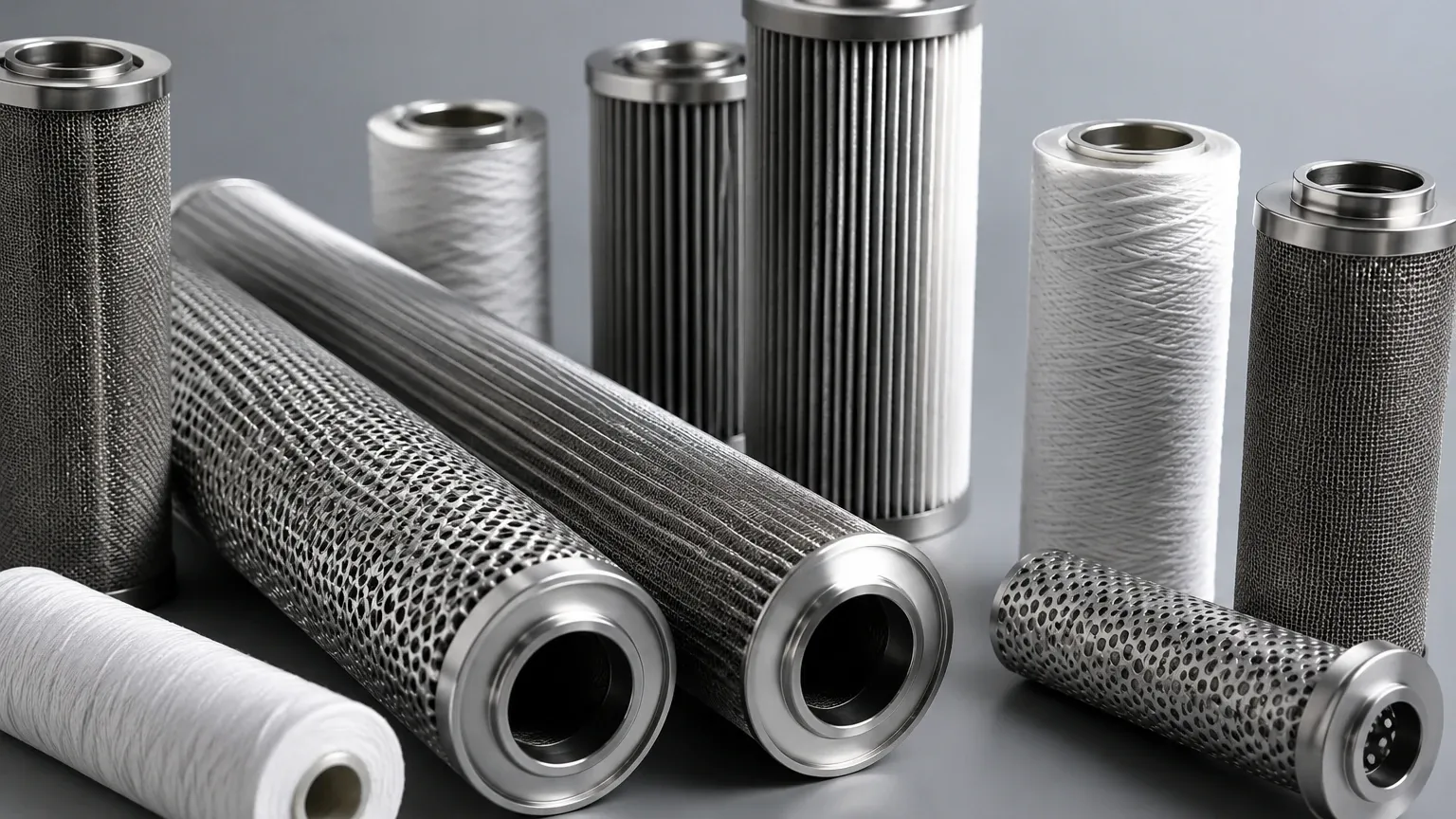
In contrast, industrial applications involving high temperatures or aggressive chemicals often require stainless steel filter cartridges. These metal components provide the structural rigidity necessary to withstand high differential pressures that would cause a standard polymer-based cartridge to collapse or bypass.
Key Performance Metrics for Industrial Water Filtration
When evaluating a filter cartridge Everpure or any industrial filtration solution, engineers must look beyond the brand name and focus on specific performance data. The following metrics are critical for ensuring the filtration system meets the demands of the application:
Micron Rating and Efficiency
Filtration accuracy is typically defined by the micron rating. It is important to distinguish between "nominal" and "absolute" ratings. A nominal rating indicates the filter can trap a percentage of particles of a certain size, whereas an absolute rating (often required in pharmaceutical or high-precision chemical processing) guarantees the retention of nearly all particles at that size. Most high-end commercial cartridges target a sub-micron absolute rating to ensure biological safety and clarity.
Flow Rate and Pressure Drop (Delta P)
Every filter introduces resistance into the fluid stream. The initial pressure drop (the difference in pressure between the inlet and outlet) must be calculated to ensure the pump system can maintain the required flow. As the filter cartridge collects debris, the Delta P increases. In industrial settings, monitoring this pressure differential is the primary method for determining when a cartridge requires replacement.
Chemical Compatibility and Temperature Limits
Standard commercial cartridges are typically rated for cold water applications (up to 100°F or 38°C). If the process involves hot water loops or chemical cleaning agents, the housing and the internal media must be compatible. This is where custom stainless steel filtration solutions become necessary, as they can operate in environments exceeding 500°F and resist corrosion from acidic or alkaline fluids.
Operational Considerations: Maintenance and Replacement Cycles
A common challenge for purchasing teams is managing the total cost of ownership (TCO) of filtration systems. While a filter cartridge Everpure offers high-quality output, its lifespan is finite. Several factors influence the replacement cycle:
1. Influent Water Quality: High turbidity or high levels of suspended solids will clog sub-micron filters prematurely. In such cases, installing a coarse pre-filter (often a stainless steel wire mesh filter) can significantly extend the life of the more expensive fine-polishing cartridges.
2. Gallon Capacity: Most cartridges are rated for a specific number of gallons. However, this is an estimate based on average water quality. In industrial environments, capacity should be monitored via flow meters to prevent breakthrough of contaminants.
3. Scale Inhibition: Many cartridges include polyphosphate or other scale-inhibiting media. These are essential for protecting boilers and heating elements from calcium and magnesium deposits. If the scale inhibitor is depleted before the mechanical filter is clogged, the equipment remains at risk.
The Role of Customization in Industrial Filtration
While off-the-shelf solutions like the filter cartridge Everpure serve a wide range of standard applications, many industrial processes require customized filtration components. OEM manufacturers often seek bespoke designs that fit into proprietary machinery or address unique fluid dynamics.
Customization options typically include:
* Material Selection: Choosing between 304 or 316L stainless steel for enhanced corrosion resistance.
* End Cap Configurations: Designing specific fittings (such as double open-ended, code 7, or threaded connections) to ensure a leak-proof seal within the housing.
* Reinforced Cores: For high-pressure hydraulic or chemical applications, internal perforated cores provide the necessary support to prevent media migration.
By integrating high-performance Filter Cartridges into a multi-stage filtration strategy, facilities can achieve the precise water chemistry required for their specific industrial or food-grade processes.
Common Risks and Mitigation Strategies
Failure to properly specify or maintain filter cartridges can lead to significant operational risks. Engineers should be aware of the following potential issues:
* Bypass Leakage: If the cartridge is not seated correctly or if the O-rings are damaged, unfiltered water can bypass the media. This is particularly dangerous in applications requiring cyst reduction or sterile water.
* Media Migration: In low-quality cartridges, fragments of the filter media (such as carbon fines) can break loose and enter the effluent stream. Selecting cartridges with high structural integrity and proper post-filtration layers is essential.
* Biofilm Growth: If a filter system remains stagnant for extended periods, bacteria can proliferate within the wet media. Regular replacement and the use of antimicrobial-treated media or UV sterilization downstream are common mitigation tactics.
Selecting the Right Filter Cartridge: A Technical Checklist
Before purchasing or specifying a filter cartridge Everpure or an equivalent industrial alternative, technical professionals should confirm the following data points:
* Target Contaminants: Is the goal sediment removal, chemical reduction, or biological stabilization?
* Peak Flow Requirements: Does the filter support the maximum instantaneous demand of the downstream equipment?
* Space Constraints: Does the installation area allow for the vertical clearance needed to change out the cartridges?
* Certification Standards: Does the application require NSF/ANSI 42 (Aesthetic Effects) or NSF/ANSI 53 (Health Effects) certifications?
* Pre-filtration Needs: Would a reusable stainless steel mesh filter reduce the replacement frequency of the primary cartridges?
Conclusion
The filter cartridge Everpure represents a sophisticated approach to water quality, particularly for applications where taste, clarity, and equipment protection are paramount. However, for industrial engineers, the cartridge is just one component of a larger fluid management system. By understanding the underlying engineering of these products and recognizing when a standard solution needs to be augmented with custom stainless steel components, organizations can ensure consistent performance and optimized operational costs. Whether managing a single commercial kitchen or a large-scale industrial processing plant, the principles of surface area, micron efficiency, and material compatibility remain the benchmarks of successful filtration.
