


Filter Cartridge for Aquarium
In commercial aquaculture, public aquariums, and high-end aquatic research facilities, the standard for water quality and system reliability far exceeds that of the hobbyist market. While consumer-grade systems often rely on plastic-housed disposable media, industrial-scale aquatic environments require robust, high-performance filtration components. Selecting the appropriate filter cartridge for aquarium systems at this scale involves complex engineering decisions regarding material compatibility, flow dynamics, and long-term operational costs.
As a professional manufacturer of stainless steel filtration solutions, Kaifil provides industrial-grade Filter Cartridges designed to meet the rigorous demands of large-scale aquatic life support systems (LSS). This article explores the technical considerations and engineering advantages of utilizing precision metal filtration in commercial aquatic applications.
Understanding Filtration Requirements in Commercial Aquatic Systems
Commercial aquatic systems—ranging from recirculating aquaculture systems (RAS) to large-scale public displays—require multi-stage filtration to maintain biological equilibrium. The primary role of a mechanical filter cartridge in these systems is the removal of suspended solids, uneaten feed, and organic debris before they can break down into toxic ammonia or clog downstream biological filters.
Mechanical Filtration Precision
In industrial aquatic applications, the micron rating of the filter cartridge is critical. If the mesh is too coarse, fine particulates remain in suspension, increasing turbidity and taxing the ozone or UV sterilization systems. If the mesh is too fine, the cartridge will blind (clog) prematurely, leading to excessive pressure drops and frequent maintenance. Engineers must balance the Particle Size Distribution (PSD) of the specific environment with the surface area of the filter media.
Flow Consistency and Pressure Drop
Unlike small-scale pumps, commercial pumps operate at high flow rates where even slight resistance can lead to significant energy loss or cavitation. A high-quality filter cartridge for aquarium use must offer a high open-area ratio to minimize initial pressure drop (ΔP). Stainless steel mesh cartridges are particularly effective here, as they provide structural integrity that allows for thinner, more efficient media compared to bulky felt or depth-type cartridges.
Material Selection: Why Stainless Steel for Aquarium Filter Cartridges?
The choice of material is perhaps the most significant factor in the longevity of a filtration system, especially in marine (saltwater) environments. While plastic is common, it lacks the structural rigidity and thermal stability required for pressurized industrial housings.
Corrosion Resistance in Marine Environments
For saltwater applications, the use of 316L stainless steel is the industry standard. The molybdenum content in 316L provides superior resistance to pitting and crevice corrosion caused by chlorides. In freshwater systems, SS304 may suffice, offering a cost-effective yet durable alternative to polymers. Kaifil specializes in these alloys to ensure that the filter components do not leach contaminants into the sensitive aquatic ecosystem.
Structural Integrity and Durability
Industrial Filter Cartridges must withstand high differential pressures during surge events or when the media becomes heavily loaded with debris. Stainless steel cartridges, whether pleated or cylindrical, maintain their shape under stress. This prevents "bypass"—a common failure in plastic cartridges where the media deforms, allowing unfiltered water to pass through the gaps.
Engineering Considerations for High-Flow Aquarium Filtration
When specifying a filter cartridge for aquarium use in a B2B context, engineers must look beyond simple dimensions. The internal geometry and construction methods dictate the performance profile of the filter.
Pleated vs. Cylindrical Designs
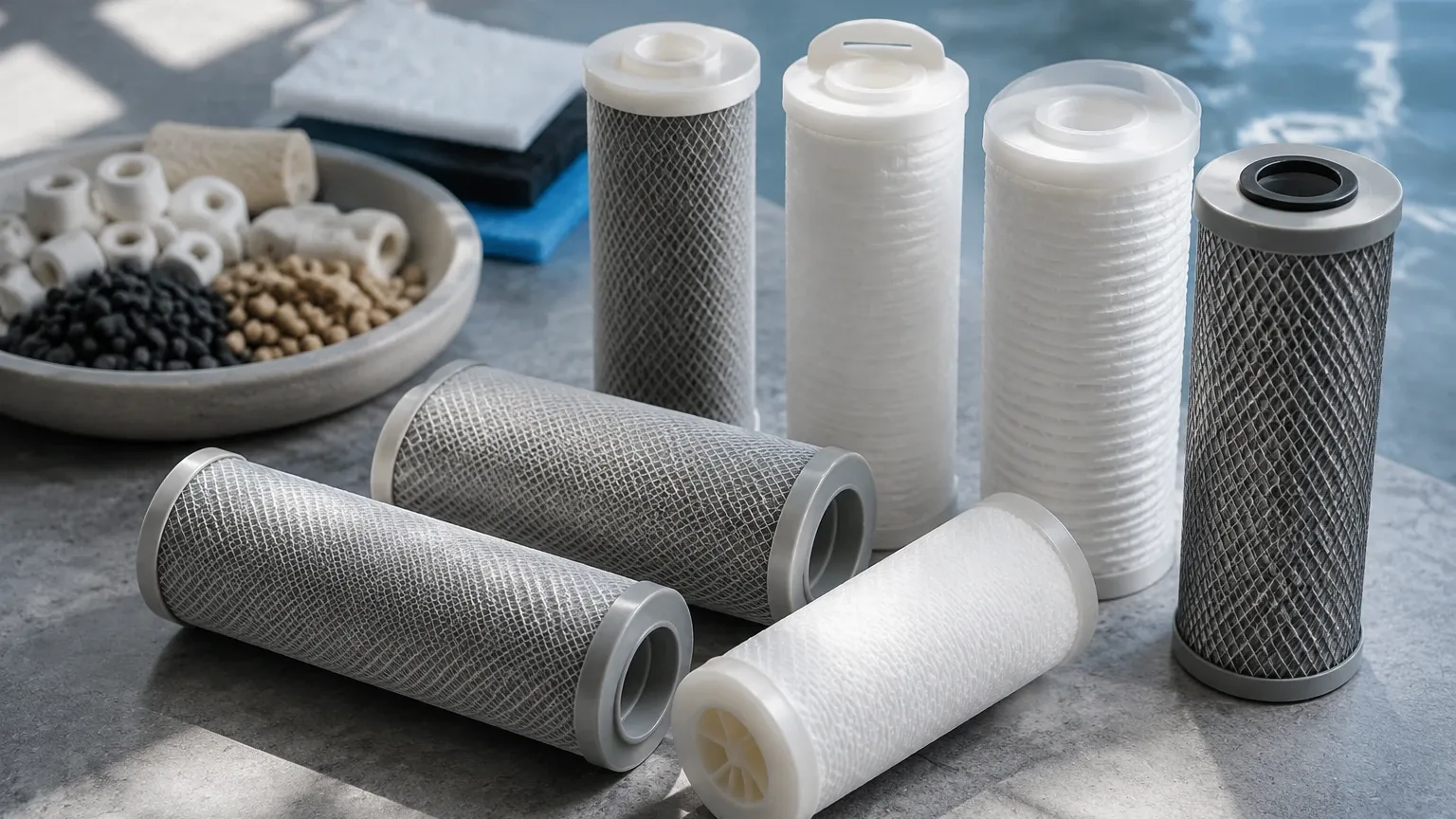
* Pleated Mesh Cartridges: These are preferred when high surface area is required within a compact footprint. By pleating the stainless steel wire cloth, the effective filtration area is increased significantly, which extends the service life between cleaning cycles and allows for higher flow rates.
* Cylindrical/Wrap Cartridges: These are often used for coarser filtration or as a pre-filter stage. They are easier to clean manually and are exceptionally robust against physical damage.
End Cap Configurations and Sealing
To ensure zero bypass, the interface between the cartridge and the housing must be perfectly sealed. Industrial cartridges utilize various end cap configurations, such as Double Open End (DOE), Code 7 (226 O-ring with bayonet), or Code 3 (222 O-ring). For aquatic systems, EPDM or Silicone gaskets are typically specified due to their chemical inertness and safety for live organisms.
Comparing Reusable Stainless Steel Cartridges with Disposable Media
For purchasing teams and facility managers, the Total Cost of Ownership (TCO) is a primary metric. While the initial investment in a stainless steel filter cartridge for aquarium systems is higher than that of disposable polypropylene or pleated paper filters, the long-term economics favor metal media.
1. Waste Reduction: Large facilities can generate tons of used filter waste annually. Stainless steel cartridges are permanent assets that can be cleaned and reused for years, aligning with corporate sustainability goals.
2. Labor Costs: Although metal cartridges require cleaning, their high dirt-holding capacity often leads to longer run times. Furthermore, the risk of a disposable filter bursting and necessitating a full system flush is eliminated.
3. Filtration Consistency: Disposable media can shed fibers (media migration), which can irritate the gills of sensitive fish species or clog precision nozzles in misting systems. Stainless steel wire mesh provides a fixed pore structure that does not change over time or under pressure.
Customization Options for Specialized Aquatic Research
Every aquatic facility has unique parameters based on the species housed and the volume of water processed. Standard off-the-shelf solutions often fail to meet the specific requirements of custom-built life support systems. Kaifil’s OEM capabilities allow for the development of bespoke filtration components.
Custom Micron Ratings and Mesh Types
Depending on whether the goal is the removal of large organic solids or the capture of microscopic parasites, the mesh count can be customized. Options include plain weave, twilled weave, or Dutch weave patterns, each offering different strength and flow characteristics.
Dimensional Tailoring
In many retrofit scenarios, new Filter Cartridges must fit into existing, perhaps proprietary, housings. Customizing the length, diameter, and connection type ensures a seamless integration without the need for expensive plumbing overhauls.
Maintenance and Cleaning Protocols for Industrial-Grade Cartridges
To maintain the efficiency of a stainless steel filter cartridge for aquarium use, a proper cleaning regimen is essential. Unlike disposables, these components are designed to be restored to near-original condition.
* Backwashing: Many industrial systems are designed with backwash capabilities, where the flow is reversed to dislodge accumulated solids. The rigid structure of stainless steel is essential for this process.
* Ultrasonic Cleaning: For deep cleaning of fine meshes, ultrasonic baths can remove trapped micro-particulates that manual rinsing might miss.
* Chemical Cleaning: In systems with heavy mineral scaling or organic biofilm buildup, stainless steel can be treated with mild acidic or alkaline cleaners that would destroy plastic-based media.
Technical Confirmation for Procurement
Before finalizing a purchase of industrial filter cartridges, engineering teams should confirm the following technical specifications with the manufacturer:
* Maximum Differential Pressure (ΔP): What is the collapse pressure of the cartridge?
* Chemical Compatibility: Is the alloy and gasket material compatible with ozone or specific water treatments used in the facility?
* Flow Rate vs. Micron Rating: Provide the manufacturer with the target GPM (Gallons Per Minute) to ensure the surface area is sufficient to prevent high-velocity impingement.
* Certification: Ensure the materials used are food-grade or inert to prevent heavy metal leaching into the aquatic environment.
Conclusion
In the demanding world of commercial and industrial aquatic management, the choice of filtration media directly impacts the health of the ecosystem and the efficiency of the facility. Transitioning to high-performance stainless steel Filter Cartridges offers a path toward greater durability, precision, and sustainability. By understanding the engineering nuances of the filter cartridge for aquarium applications, technical professionals can ensure their systems operate at peak performance for years to come.
For organizations seeking tailored filtration solutions, Kaifil provides the manufacturing expertise and engineering support necessary to develop components that meet the most exacting standards. Whether for aquaculture, public exhibits, or industrial water treatment, our focus remains on delivering reliability through precision metal craftsmanship.
