


Filter Cartridge Ge
In the landscape of industrial process filtration, the term "filter cartridge ge" frequently serves as a benchmark for performance and reliability across diverse sectors, including water treatment, chemical processing, and food production. General Electric (GE), whose water technologies division is now part of larger global environmental entities, established rigorous standards for depth and pleated filtration media. For engineers and procurement specialists, understanding the technical specifications associated with these cartridges is essential for maintaining system integrity and optimizing operational efficiency.
Industrial filtration is not merely about removing particulates; it is about managing fluid dynamics, chemical compatibility, and structural stability under pressure. Whether an application requires standard polypropylene depth filters or high-performance pleated membranes, the selection process must be guided by factual engineering data rather than generic marketing claims. This guide explores the technical nuances of industrial Filter Cartridges and how they interface with demanding process requirements.
Technical Specifications and Engineering Standards
When evaluating a filter cartridge ge or its equivalent, engineers must first look at the filtration mechanism. Industrial cartridges generally fall into two categories: depth filtration and surface filtration.
Depth Filtration Mechanics
Depth filters, such as the widely recognized melt-blown or string-wound varieties, utilize the thickness of the media to trap particles throughout the entire structure. These are often used as pre-filters because of their high dirt-holding capacity. In these systems, the gradient density—where the outer layers are coarser and the inner layers are finer—allows for a staged removal of contaminants, preventing the surface from blinding prematurely.
Surface and Pleated Filtration
Pleated cartridges provide a significantly higher surface area compared to depth filters. This design is preferred for high-flow applications where low pressure drop is critical. By pleating the media, manufacturers can fit several square feet of filtration material into a standard 10-inch or 20-inch housing. This is particularly relevant in sterile filtration or fine chemical processing where absolute retention ratings are required.
Material Compatibility and Selection
The efficacy of a filter cartridge ge is largely determined by its material of construction. While many standard industrial applications utilize polypropylene due to its broad chemical resistance and low cost, specialized environments require more robust materials.
1. Polypropylene: Ideal for aqueous solutions, organic solvents, and many acids and alkalis. However, it is limited by temperature, typically losing structural integrity above 80°C (176°F).
2. Polyethersulfone (PES): Often used in the pharmaceutical and food and beverage industries for its high flux rates and hydrophilic nature, making it suitable for final sterilization steps.
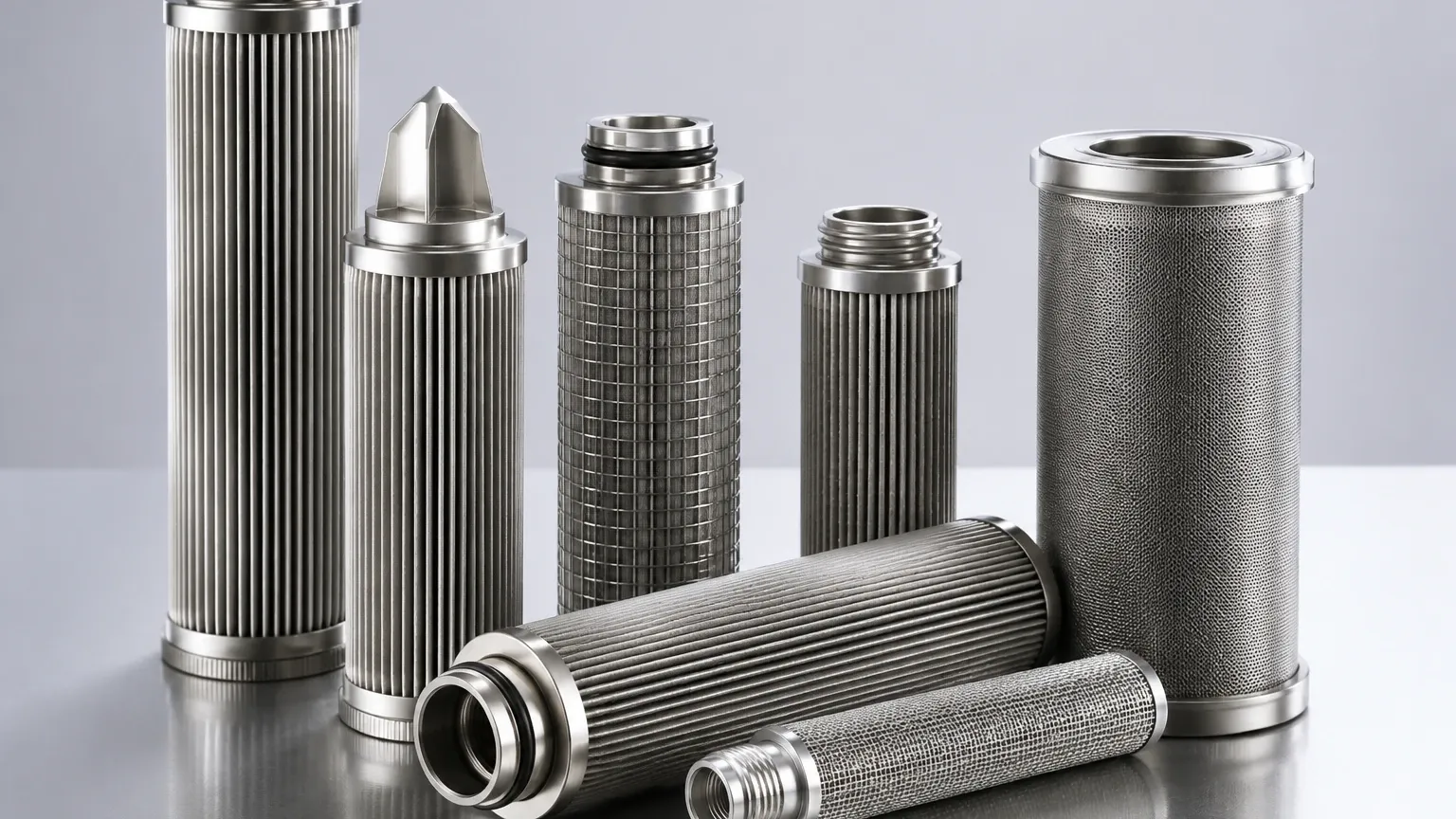
3. Stainless Steel: For applications involving extreme temperatures, high differential pressures, or aggressive chemicals that would degrade polymers, stainless steel filter cartridges are the engineering standard. Unlike disposable polymer cartridges, stainless steel variants offer cleanability and a significantly longer service life in harsh environments.
Understanding Micron Ratings: Absolute vs. Nominal
A common point of confusion in the procurement of filter cartridges is the distinction between nominal and absolute micron ratings.
* Nominal Rating: This is an arbitrary value assigned by the manufacturer, indicating that the filter will trap a certain percentage (often 50% to 85%) of particles at that size. It does not guarantee total removal.
* Absolute Rating: This refers to the diameter of the largest hard spherical particle that will pass through the filter under specific test conditions. For critical processes, such as the protection of downstream RO membranes or the removal of bacteria, absolute-rated cartridges are mandatory.
Engineers should request the Beta Ratio ($β$) data for any filter cartridge ge they are considering. The Beta Ratio provides a more precise measurement of filtration efficiency by comparing the number of particles of a given size in the upstream fluid to the number of particles in the downstream fluid.
Structural Integrity and End-Cap Configurations
Compatibility with existing filter housings is a primary concern for maintenance teams. The "GE style" often refers to specific end-cap configurations that ensure a leak-proof seal within the housing. Common configurations include:
* Double Open End (DOE): Features flat gaskets on both ends; the seal is achieved through compression by the housing's internal hardware.
* Single Open End (SOE) with O-Rings: Often designated as Code 3, Code 7, or Code 8. For example, a Code 7 configuration features a finned end and double 226 O-rings with a bayonet lock, providing a highly secure seal that prevents bypass in high-pressure scenarios.
Selecting the correct O-ring material—be it EPDM, Viton, Silicone, or PTFE—is just as critical as the filter media itself. A failure in the seal is functionally equivalent to a failure in the filter media, as it allows unfiltered fluid to bypass the system.
Performance Evaluation in Industrial Applications
To ensure the longevity of a filtration system, engineers must evaluate the total cost of ownership (TCO) rather than the initial purchase price. A filter cartridge ge that is inexpensive but requires frequent replacement due to premature clogging or structural collapse will ultimately cost more in labor, downtime, and waste disposal.
Pressure Drop and Flow Rate
The Clean Pressure Drop ($ΔP$) is a vital metric. A high initial pressure drop limits the remaining "room" for contaminant loading before the filter reaches its terminal pressure drop (the point at which it must be replaced). High-quality cartridges are designed to maximize flow while minimizing resistance, which reduces the energy requirements of the pump system.
Dirt Holding Capacity (DHC)
DHC measures the total mass of a standard contaminant a filter can hold before reaching the terminal pressure drop. In heavy industrial processes, such as cooling water filtration or oil and gas processing, high DHC is the primary driver of maintenance intervals. Custom-engineered stainless steel mesh or sintered metal cartridges often provide superior DHC in high-viscosity applications compared to standard polymer depth filters.
Customization and OEM Solutions
While off-the-shelf filter cartridge ge products meet many standard needs, unique industrial challenges often require customized filtration solutions. Factors such as non-standard housing dimensions, extreme chemical concentrations, or the need for back-washable media necessitate a move toward specialized manufacturing.
Custom stainless steel filtration components can be engineered to match the exact footprint of standard polymer cartridges while offering enhanced thermal and mechanical properties. This allows facilities to upgrade their filtration performance without the capital expense of replacing entire housing assemblies. For instance, in hydraulic systems or high-temperature steam filtration, a custom-designed metal cartridge can withstand the pulsations and thermal shocks that would cause a standard pleated paper or polymer filter to fail.
Maintenance and Replacement Cycles
Establishing a data-driven replacement cycle is essential for process consistency. Relying on visual inspection is often insufficient; instead, differential pressure gauges should be used to monitor the health of the filter cartridges.
1. Installation: Ensure O-rings are lubricated with a compatible fluid to prevent pinching during insertion.
2. Monitoring: Record the initial $ΔP$ at a specific flow rate. Any sudden drop in $ΔP$ may indicate a media rupture or seal failure (bypass).
3. Replacement: Most manufacturers recommend replacing cartridges when the differential pressure reaches 15-25 psi (1.0-1.7 bar), depending on the structural limits of the media and the requirements of the downstream process.
Conclusion
Selecting the right filter cartridge ge or its industrial equivalent requires a deep dive into the physics of the application. By focusing on absolute versus nominal ratings, chemical compatibility, and structural configurations, engineering teams can ensure they are choosing a solution that protects their equipment and maintains product quality. While polymer cartridges serve a vast range of standard applications, the transition to high-performance materials like stainless steel is often the most cost-effective path for demanding, high-stakes industrial environments. For those seeking to optimize their filtration systems, reviewing detailed product specifications and consulting with manufacturing experts is the most reliable way to achieve consistent results.
