


Filter Cartridge Iii a C
In the landscape of industrial fluid management, the selection of filtration components is a critical decision that impacts operational efficiency, product purity, and equipment longevity. Among the various designations encountered by procurement teams and maintenance engineers, the filter cartridge iii a c represents a specific category often associated with high-flow requirements and standardized dimensions. While many filters in this class are designed as disposable synthetic units, industrial applications frequently demand the durability and precision that only advanced metal filtration media can provide.
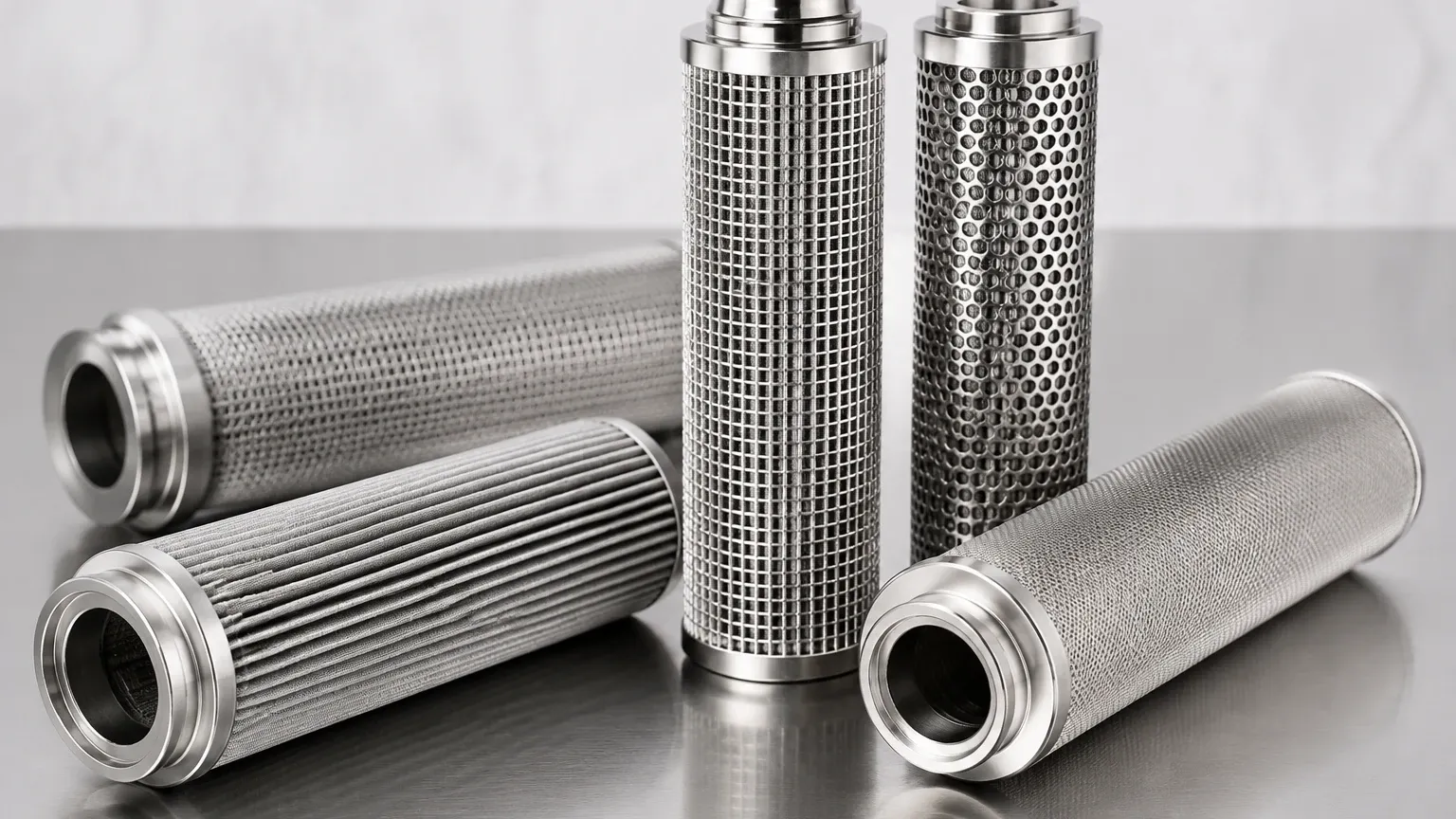
At Kaifil, we specialize in the engineering and manufacture of high-performance stainless steel Filter Cartridges that serve as robust alternatives to standard filtration components. Understanding the technical nuances of the filter cartridge iii a c designation—and how to optimize its performance through material selection and customized engineering—is essential for achieving a lower total cost of ownership (TCO) in demanding environments.
Technical Specifications and Compatibility of Filter Cartridge III A C
The designation "III A C" typically refers to a specific size and compatibility standard used in various water treatment and industrial fluid systems. In many contexts, Type III and Type A/C filters share identical dimensions, making them interchangeable in terms of housing fitment but not necessarily in terms of performance or material composition.
From an engineering perspective, a filter cartridge iii a c must adhere to precise physical parameters to ensure a leak-proof seal within the filter housing. Standard dimensions for this category usually involve a height of approximately 8 inches (203mm) and an outer diameter of 4.2 inches (106.7mm). However, for industrial B2B applications, the physical dimensions are only the starting point. Engineers must also consider:
* End-Cap Configuration: Whether the cartridge requires a Double Open End (DOE) or a specific Single Open End (SOE) with an O-ring or gasket seal.
* Flow Velocity: The ability of the internal core to withstand differential pressure without collapsing.
* Surface Area: The total filtration area available, which directly influences the dirt-holding capacity and the interval between cleaning cycles.
By utilizing stainless steel wire mesh or sintered metal media, Kaifil provides a high-strength version of these cartridges that can operate under temperatures and pressures that would cause standard synthetic filters to fail.
Material Engineering: Why Stainless Steel Outperforms Synthetic Media
When evaluating a filter cartridge iii a c for industrial use, the choice of material is the most significant factor in long-term performance. While polypropylene or polyester filters are common in light-duty applications, they are often insufficient for chemical processing, high-temperature fluid handling, or food and beverage production.
Corrosion Resistance and Alloy Selection
Kaifil utilizes premium 304 and 316L stainless steel for our filter cartridges. 316L, in particular, offers superior resistance to pitting and crevice corrosion in chloride-rich environments or acidic solutions. This makes the stainless steel version of a filter cartridge iii a c ideal for pharmaceutical and chemical applications where material integrity is non-negotiable.
Structural Integrity under Pressure
Industrial systems often experience pressure surges or high differential pressures (ΔP) as the filter becomes loaded with contaminants. Synthetic cartridges are prone to "bypass" or structural deformation under these conditions. In contrast, a stainless steel filter cartridge features a rigid internal support core and a robust outer mesh, ensuring that the filtration gap remains consistent throughout the service life.
Thermal Stability
Many industrial processes operate at temperatures exceeding 100°C (212°F). Synthetic filter media typically lose structural strength or begin to leach chemicals at these temperatures. Stainless steel filter cartridges maintain their mechanical properties at much higher thermal thresholds, providing a reliable solution for steam filtration or hot oil processing.
Filtration Accuracy and Micron Ratings
A critical aspect of the filter cartridge iii a c is its filtration efficiency, often measured by its micron rating. In industrial settings, it is vital to distinguish between nominal and absolute filtration ratings.
1. Nominal Rating: This indicates the ability of the filter to retain a majority of particles of a specified size. It is a general guide but does not guarantee 100% retention.
2. Absolute Rating: This refers to the diameter of the largest hard spherical particle that will pass through the filter under specified test conditions. For critical processes, such as the protection of high-pressure nozzles or sensitive downstream instrumentation, an absolute-rated stainless steel cartridge is preferred.
Kaifil’s manufacturing process allows for precise control over the pore size of the wire mesh. Whether the application requires coarse filtration (100 microns or more) or fine precision (down to 1-5 microns), the use of pleated stainless steel wire mesh can significantly increase the effective filtration area of a filter cartridge iii a c, leading to lower initial pressure drops and longer service intervals.
Customization and OEM Integration
One of the primary challenges for engineers is finding a filter cartridge iii a c that fits an existing legacy system while meeting modern performance standards. Kaifil addresses this through comprehensive OEM and customization services.
When a standard off-the-shelf cartridge does not meet the specific chemical compatibility or flow requirements of a project, we can modify the design. Customization options include:
* Reinforced Cores: For high-viscosity fluids that exert significant force on the cartridge.
* Variable Mesh Layers: Combining different layers of wire mesh (e.g., a fine filtration layer protected by coarser drainage layers) to optimize flow and durability.
* Specialized Seals: Utilizing Viton, EPDM, or PTFE gaskets to ensure compatibility with aggressive solvents or high-temperature fluids.
By focusing on the specific needs of the application, we ensure that the filter cartridge iii a c is not just a replacement part, but an engineered component that improves the overall reliability of the filtration system.
Maintenance, Cleaning, and Total Cost of Ownership
The most significant advantage of transitioning from disposable units to a stainless steel filter cartridge iii a c is the shift from a consumable expense to a capital asset. While the initial purchase price of a metal filter is higher, the total cost of ownership is substantially lower over time.
Cleanability and Reusability
Unlike synthetic filters that must be discarded once clogged, stainless steel cartridges can be cleaned and returned to service. Depending on the contaminant, cleaning methods include:
* Backwashing: Reversing the flow of fluid to dislodge particles from the mesh surface.
* Ultrasonic Cleaning: Using high-frequency sound waves in a cleaning solvent to remove fine particles trapped deep within the mesh.
* Chemical Cleaning: Using compatible solvents or acids to dissolve organic or inorganic scaling.
Waste Reduction
In modern industrial operations, sustainability is a key performance indicator. Using a washable filter cartridge iii a c eliminates the recurring waste stream associated with disposable filters, helping facilities meet environmental targets and reduce disposal costs.
Applications Across Key Industrial Sectors
The versatility of the filter cartridge iii a c makes it a staple in various industries. By upgrading to stainless steel variants, companies in these sectors can achieve more consistent results:
* Chemical Processing: Handling aggressive solvents, catalysts, and intermediate chemicals where polymer degradation is a risk.
* Food and Beverage: Ensuring the removal of particulates in water, syrups, or oils while adhering to strict sanitary standards. Stainless steel is inherently non-leaching and easy to sterilize.
* Hydraulic Systems: Protecting sensitive valves and pumps from particulate contamination in high-pressure hydraulic circuits.
* Water Treatment: Serving as a pre-filter for RO (Reverse Osmosis) systems or as a final polishing filter in industrial wastewater recycling.
Selecting the Right Solution with Kaifil
Choosing the correct filter cartridge iii a c requires a balance of technical knowledge and application-specific data. Before finalizing a purchase, engineers should confirm the maximum operating pressure, the chemical composition of the fluid, the expected particle load, and the required flow rate.
Kaifil’s expertise in custom stainless steel filtration allows us to guide our clients through this selection process. We don't just provide a product; we provide a filtration solution tailored to the demanding environments of modern industry. Our commitment to quality and precision ensures that every cartridge we manufacture meets the rigorous standards required for industrial reliability.
For those looking to optimize their filtration processes or seeking a more durable alternative to standard disposable units, exploring our range of Filter Cartridges is the first step toward enhanced operational efficiency. Whether you need a standard size or a fully customized metal filter component, Kaifil delivers the durability and performance your application demands.
