


Filter Cartridge Price
For procurement managers and systems engineers, understanding the filter cartridge price involves more than a simple comparison of unit costs. In industrial filtration, the initial purchase price is only one component of a complex financial equation that includes operational efficiency, maintenance frequency, and equipment longevity. When evaluating stainless steel filter cartridges, technical specifications and material selection are the primary drivers of cost, directly influencing the performance and durability of the filtration system.
Industrial filtration environments, such as those found in chemical processing, pharmaceuticals, and food production, demand high-performance components. Selecting the right filter requires a balance between technical requirements and budgetary constraints. This guide explores the factors that determine the price of industrial filter cartridges, the engineering considerations that justify investment in high-grade materials, and how to evaluate the total cost of ownership.
Primary Factors Influencing Filter Cartridge Price
The pricing of Filter Cartridges is determined by a combination of raw material costs, manufacturing complexity, and performance requirements. Unlike standard consumer-grade filters, industrial metal filters are precision-engineered components designed for specific fluid dynamics and environmental stresses.
Material Selection and Grade
The most significant variable in the filter cartridge price is the material of construction. Stainless steel is the industry standard for reusable filters due to its corrosion resistance and structural integrity. However, the specific grade chosen impacts the cost:
* 304 Stainless Steel: A cost-effective option for general industrial applications where corrosion risks are moderate.
* 316L Stainless Steel: Contains molybdenum, providing superior resistance to chlorides and pitting. This grade is essential for pharmaceutical and marine applications and carries a higher price point than 304.
* Specialty Alloys: For extreme environments involving high acidity or temperatures exceeding 500°C, materials like Hastelloy, Monel, or Inconel may be required. These alloys significantly increase the unit price but are necessary for specialized chemical processing.
Filtration Accuracy (Micron Rating)
The micron rating—the size of particles the filter is designed to capture—affects the manufacturing process. Achieving high filtration accuracy (e.g., 1 to 5 microns) requires finer wire mesh or specialized sintered metal media. The production of fine mesh involves more intensive weaving and inspection processes, which is reflected in the final price. Conversely, coarse filtration (100 microns and above) typically utilizes thicker wire and simpler weaves, resulting in lower costs.
Dimensions and Surface Area
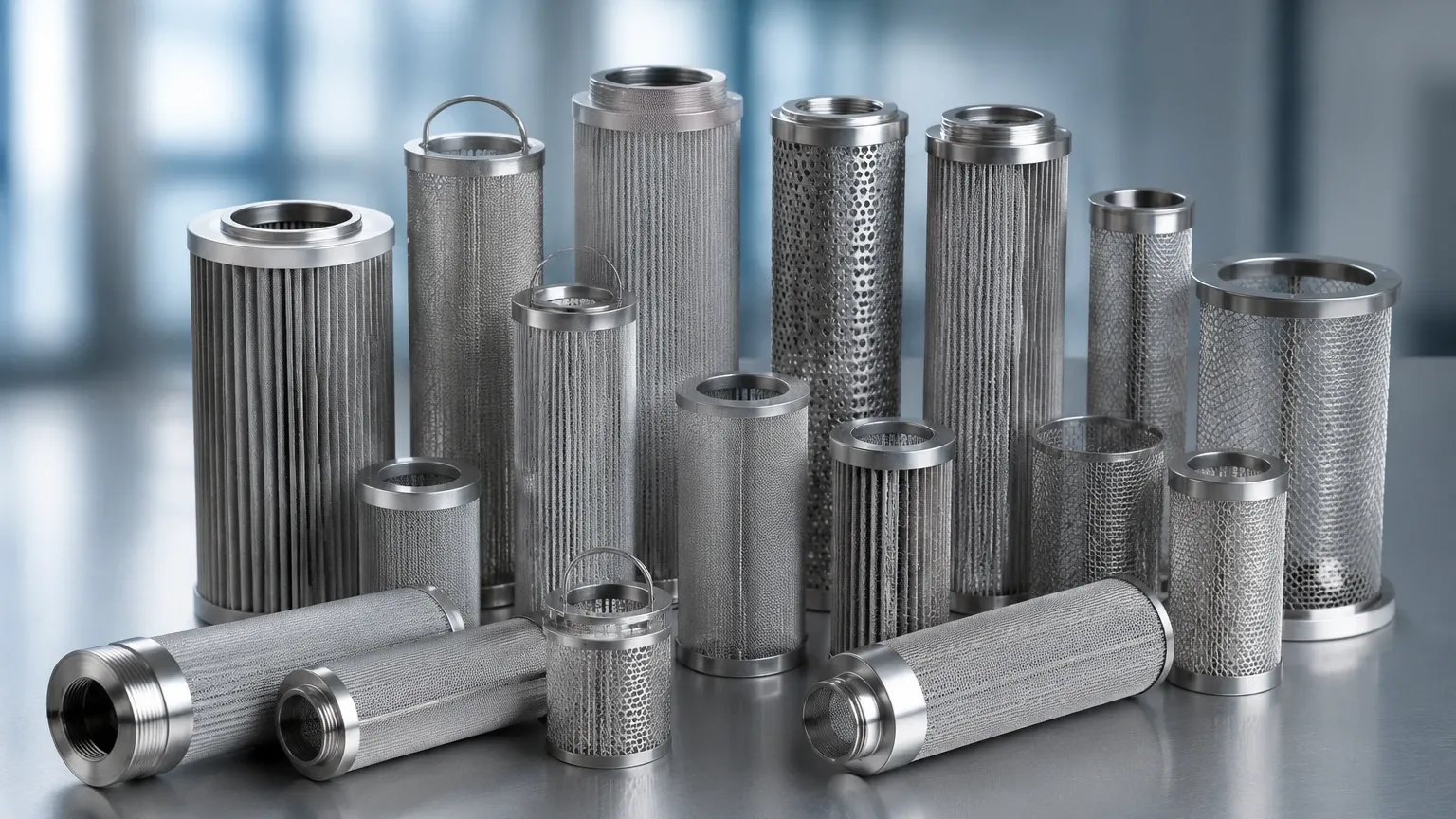
Physical size is a direct contributor to cost. Larger cartridges require more material and longer welding or assembly times. Furthermore, the design of the filter—whether it is a simple cylindrical sleeve or a pleated structure—changes the surface area. Pleated filter cartridges offer a much larger filtration area within the same footprint, which reduces the pressure drop and extends the time between cleaning cycles. While the pleating process adds to the initial filter cartridge price, the increased efficiency often justifies the investment.
Manufacturing Complexity and Customization
Standardized filter cartridges are produced in high volumes, allowing for economies of scale. However, many industrial applications require custom configurations to fit existing housings or to meet specific flow rate requirements. Customization is a core aspect of B2B filtration solutions and influences the price in several ways.
Connection Types and End Caps
The method by which a filter cartridge is secured into a housing impacts its price. Standard DOE (Double Open End) configurations are generally the most affordable. More complex configurations, such as Code 7 (226 O-rings with locking tabs) or NPT/BSP threaded connections, require precision machining. High-quality seals and O-rings—made from materials like Viton, EPDM, or PTFE—also add to the component cost but are critical for preventing bypass and ensuring chemical compatibility.
Structural Reinforcement
In high-pressure or high-viscosity applications, filter cartridges must withstand significant differential pressure without collapsing. To ensure structural integrity, manufacturers may add internal support cores or external protective cages. The thickness of these components and the method of attachment (e.g., seamless welding vs. spot welding) are technical factors that contribute to the overall price. Sintered metal cartridges, which fuse multiple layers of mesh together, offer the highest structural strength but come at a premium compared to simple mesh-wrapped designs.
OEM and Custom Engineering
When an application requires a non-standard length, diameter, or filtration media combination, the price will include engineering and setup costs. Professional manufacturers like Kaifil work with engineers to develop OEM solutions that meet specific technical benchmarks. While custom prototypes have a higher initial cost, they eliminate the need for expensive system modifications and ensure optimal performance in the field.
Performance vs. Price: Evaluating Total Cost of Ownership
A common pitfall in industrial procurement is focusing solely on the acquisition cost while ignoring the Total Cost of Ownership (TCO). While stainless steel filter cartridges have a higher initial price than disposable plastic or paper filters, their long-term value is often superior in demanding environments.
Reusability and Cleaning Cycles
One of the primary advantages of stainless steel Filter Cartridges is that they are cleanable and reusable. Methods such as ultrasonic cleaning, backwashing, or chemical steeping can restore the filter to near-original performance. When calculating the filter cartridge price over a three-year period, the cost of a single stainless steel unit is often significantly lower than the cost of purchasing, storing, and disposing of hundreds of single-use cartridges.
Reduction in Downtime
Every time a filter needs to be replaced, the production line must be stopped, leading to labor costs and lost revenue. Durable metal filters with high dirt-holding capacity and the ability to be cleaned in-place (CIP) reduce the frequency of these interruptions. For high-output industries like food and beverage or chemical manufacturing, the savings generated by reduced downtime quickly offset the higher initial filter cartridge price.
Energy Efficiency and Pressure Drop
The design of a filter cartridge affects the energy required to pump fluid through the system. A poorly designed, low-cost filter may cause a high pressure drop, forcing pumps to work harder and consume more electricity. High-quality cartridges are engineered to maximize open area and minimize resistance. Over the lifespan of the equipment, the energy savings from a more efficient filter can be substantial.
Technical Considerations for Purchasing Teams
Before finalizing a purchase, technical professionals should confirm several performance metrics to ensure the filter cartridge price aligns with the application's needs. Failure to account for these variables can lead to premature filter failure or system damage.
1. Chemical Compatibility: Ensure the stainless steel grade and seal materials are compatible with the process fluid. Corrosive fluids can cause rapid degradation of the wrong material, leading to frequent replacements.
2. Temperature and Pressure Limits: Verify that the cartridge is rated for the maximum operating temperature and the maximum expected differential pressure. In hydraulic or high-pressure steam applications, structural reinforcement is non-negotiable.
3. Flow Rate Requirements: The filter must be sized correctly to handle the required flow without exceeding the recommended velocity. Undersized filters lead to rapid clogging and high pressure drops.
4. Cleaning Protocols: Determine if the facility has the equipment necessary to clean the cartridges. If specialized ultrasonic cleaning is required, this should be factored into the operational budget.
Market Dynamics and Lead Times
The global market for raw materials, particularly nickel and chromium used in stainless steel, can cause fluctuations in the filter cartridge price. Additionally, the complexity of the manufacturing process affects lead times. Standard mesh filters may be available for rapid shipment, while custom-engineered sintered components or specialty alloy filters may require several weeks for production.
Purchasing teams can often secure better pricing by ordering in larger batches or establishing long-term supply agreements. This allows the manufacturer to optimize production schedules and material procurement. When requesting a quote, providing a clear forecast of annual usage can help in negotiating more favorable unit costs.
Conclusion
Determining the right filter cartridge price requires a holistic view of the filtration process. While budget constraints are always a factor, the cheapest option is rarely the most cost-effective in industrial settings. By focusing on material quality, filtration precision, and structural durability, engineers can select components that provide reliable service and lower long-term costs.
Stainless steel solutions offer the versatility and strength needed for the most challenging applications. Whether for water treatment, pharmaceutical processing, or hydraulic systems, investing in high-quality filtration media ensures that the process remains efficient and the final product meets quality standards. When evaluating your next filtration project, consider both the technical specifications and the operational advantages of custom-engineered metal cartridges to achieve the best balance of performance and price.
