


Filter Cartridge Pump
In industrial fluid management, the integration of a pump with a filtration assembly—often referred to as a filter cartridge pump system—is a critical configuration for ensuring fluid purity and system longevity. Whether in chemical processing, food and beverage production, or hydraulic power units, the pump provides the necessary motive force to drive fluid through the restrictive media of a filter cartridge. Understanding the technical relationship between the pump’s performance curve and the filter’s resistance is essential for engineers and technical purchasing teams tasked with optimizing process efficiency.
Selecting the right combination of pump and Filter Cartridges requires a deep dive into fluid dynamics, material compatibility, and the specific requirements of the application. This guide examines the engineering considerations, selection criteria, and maintenance protocols necessary for high-performance industrial filtration systems.
The Engineering Relationship Between Pump and Filter
A filter cartridge pump system operates on the principle of overcoming differential pressure. As fluid is forced through the porous structure of a stainless steel or wire mesh cartridge, the media exerts a resistance known as pressure drop (ΔP).
Understanding Differential Pressure (ΔP)
In any filtration circuit, there are two types of pressure drop to consider:
1. Clean Pressure Drop: The initial resistance of the filter media and housing when the cartridge is new or freshly cleaned.
2. Operating Pressure Drop: The increasing resistance as the filter captures contaminants over time.
The pump must be sized not only to handle the clean pressure drop but also to maintain the required flow rate as the filter reaches its terminal pressure drop—the point at which the cartridge is considered "blinded" or full and requires replacement or cleaning. If a pump is undersized, the flow rate will decay prematurely, leading to process downtime. Conversely, an oversized pump may force contaminants through the media (media migration) or cause structural failure of the cartridge if the bypass valve fails to engage.
Flow Velocity and Filtration Efficiency
Filtration efficiency is often sensitive to the velocity of the fluid passing through the media. High-velocity surges, often caused by centrifugal pumps during startup or valve adjustments, can dislodge previously captured particles. For precision applications requiring consistent micron ratings, engineers must balance the pump’s output with the effective filtration area (EFA) of the cartridges to ensure laminar flow conditions where possible.
Key Components of an Industrial Filter Cartridge Pump System
To build a reliable system, several components must work in harmony. While the pump and the cartridge are the primary actors, the housing and monitoring instrumentation are equally vital.
The Filter Housing
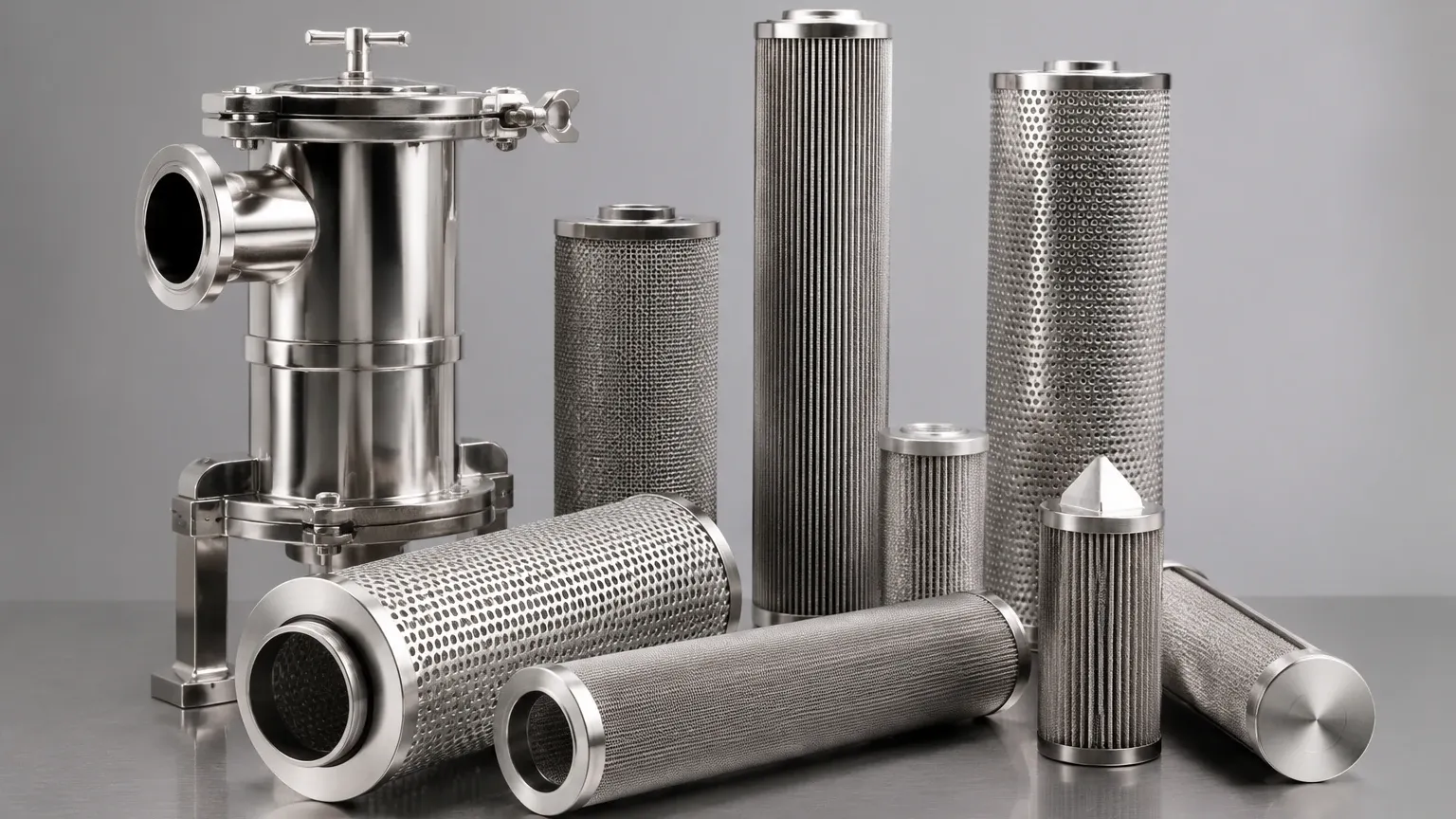
The housing must be rated for the maximum discharge pressure of the pump. In industrial settings, stainless steel housings (304 or 316L) are preferred for their durability and resistance to corrosion. The internal design of the housing should minimize turbulence and ensure even distribution of fluid across the entire surface of the filter cartridges.
The Pump Type
Different applications require different pump technologies:
* Centrifugal Pumps: Common for high-flow, low-viscosity fluids like water or light solvents. They are generally easier to maintain but their flow rate is highly dependent on the system's backpressure.
* Positive Displacement (PD) Pumps: Ideal for high-viscosity fluids or applications requiring a constant flow rate regardless of the pressure drop across the filter. However, PD pumps require robust over-pressure protection (relief valves) to prevent housing rupture if the filter becomes completely blocked.
Monitoring Instrumentation
A functional filter cartridge pump setup is incomplete without pressure gauges installed both upstream and downstream of the filter housing. This allows operators to monitor the differential pressure in real-time, providing the data needed to schedule maintenance before a system failure occurs.
Material Selection and Compatibility
In demanding industrial environments, material selection is the primary factor determining the total cost of ownership. While plastic components may suffice for light-duty or residential applications, industrial processes involving high temperatures, aggressive chemicals, or high pressures demand metal solutions.
Stainless Steel Advantages
Kaifil specializes in stainless steel filtration solutions because of the material's inherent benefits:
* Temperature Resistance: Stainless steel cartridges can operate in environments exceeding 250°C, where polymer-based filters would melt or lose structural integrity.
* Chemical Compatibility: 316L stainless steel offers superior resistance to organic solvents, fuels, and many acids, making it the standard for chemical processing filter cartridge pump systems.
* Cleanability: Unlike disposable depth filters, stainless steel wire mesh and sintered metal cartridges can often be cleaned via backwashing, ultrasonic cleaning, or chemical baths, significantly reducing long-term waste and replacement costs.
Gasket and Seal Considerations
The pump seals and the O-rings within the filter housing must be compatible with the process fluid. Common materials include Viton (FKM), EPDM, and PTFE. A mismatch here can lead to leaks, which not only compromises the filtration process but also poses safety risks in the case of hazardous fluids.
Selecting the Right Filter Cartridge for Your Pump
When specifying Filter Cartridges for a pump system, engineers must evaluate the particle size distribution of the contaminants and the desired cleanliness level (ISO code).
Micron Ratings: Absolute vs. Nominal
* Nominal Rating: An approximate value indicating that the filter will retain a majority of particles at that size. This is often insufficient for critical hydraulic or pharmaceutical applications.
* Absolute Rating: A value derived from rigorous testing (such as the Multi-pass test) indicating that the filter will retain 99.9% or more of particles at the specified micron size. When a pump is operating at high pressure, an absolute-rated cartridge is necessary to ensure consistent fluid quality.
Structural Strength (Collapse Pressure)
Every filter cartridge has a maximum allowable differential pressure before it collapses. In a filter cartridge pump system, the pump's maximum dead-head pressure should never exceed the collapse pressure of the cartridge. Stainless steel pleated cartridges offer significantly higher structural strength than wrapped or melted fiber alternatives, making them ideal for high-pressure pump circuits.
Common Risks and Mitigation in Pump-Driven Filtration
Operating a pump-driven filtration system involves risks that can lead to equipment damage or product contamination if not properly managed.
Cavitation
If a filter is placed on the suction side of the pump (to protect the pump from debris), a clogged filter will increase the vacuum at the pump inlet. If the pressure drops below the fluid's vapor pressure, cavitation occurs. This creates vapor bubbles that implode against the pump impeller, causing severe pitting and mechanical failure. To mitigate this, suction-side filters should have a large surface area and be monitored closely, or the filtration should be moved to the discharge side of the pump.
Pressure Spikes and Water Hammer
Rapidly closing a valve downstream of a filter cartridge pump can send a shockwave back through the system. This can rupture the filter media or damage the pump seals. Installing pulse dampeners or using variable frequency drives (VFDs) to ramp pump speed up and down can prevent these issues.
Bypassing
In many systems, a bypass valve is installed to allow fluid to flow around the filter if it becomes clogged. While this protects the pump and prevents pipe rupture, it allows unfiltered fluid into the downstream process. Engineers must decide if the risk of "dirty" fluid is more or less acceptable than the risk of a total system shutdown.
Maintenance and Replacement Cycles
Determining when to service the filter cartridge pump system is a balance between process economy and equipment protection.
1. Scheduled vs. Condition-Based Maintenance: While some facilities replace cartridges based on time (e.g., every 30 days), condition-based maintenance using differential pressure readings is more cost-effective.
2. Cleaning Protocols: For reusable stainless steel cartridges, the cleaning cycle must be validated. Repeated cleaning can eventually fatigue the metal mesh, so periodic integrity testing (such as a bubble point test) is recommended.
3. Pump Service: Regularly inspect pump seals and bearings. A failing pump seal can introduce air into the system, which can cause oxidation in certain fluids or interfere with the filtration efficiency of the cartridges.
Application-Specific Considerations
Hydraulic Systems
In hydraulic power units, the filter cartridge pump must handle high-pressure oil. The focus here is on removing fine particles that could cause wear in precision valves and actuators. Sintered metal fiber media is often chosen for its high dirt-holding capacity and ability to withstand high ΔP.
Food and Beverage
For food-grade applications, the entire system—including the pump, housing, and cartridges—must meet FDA or 3A standards. Stainless steel is mandatory here for its non-leaching properties and ability to withstand Clean-in-Place (CIP) procedures using caustic chemicals and steam.
Chemical Processing
When dealing with aggressive solvents, the primary concern is corrosion. The use of 316L stainless steel Filter Cartridges ensures that the filter does not contribute metallic ions to the fluid, preserving the purity of the chemical product.
Conclusion: Optimizing Your Filtration Strategy
A successful filter cartridge pump installation is the result of careful engineering and a clear understanding of the application's demands. By matching the pump's hydraulic characteristics with the structural and filtration capabilities of high-quality stainless steel cartridges, industrial operators can achieve reliable, long-term performance.
Before finalizing a system design or purchasing replacement components, engineers should confirm:
* The maximum flow rate and pressure requirements of the process.
* The chemical and thermal compatibility of all wetted parts.
* The target micron rating and the nature of the contaminants (deformable vs. hard particles).
* The total cost of ownership, weighing the benefits of cleanable stainless steel against disposable options.
Kaifil provides the technical expertise and manufacturing precision required to develop customized filtration components that integrate seamlessly into your pump systems, ensuring that your industrial processes remain efficient and contaminant-free.
