


Filter Cartridge System
In industrial processing, the efficiency of a filtration setup is often the determining factor in product quality, equipment longevity, and operational uptime. A filter cartridge system represents a modular and highly adaptable approach to liquid and gas filtration, utilized extensively across the chemical, pharmaceutical, food and beverage, and hydraulic industries. Unlike bulkier sand filters or less precise bag filters, a cartridge-based system allows for fine-tuned control over filtration accuracy and flow dynamics through the selection of specific media and housing configurations.
For engineers and procurement specialists, understanding the nuances of a filter cartridge system is essential for optimizing process performance. This guide examines the technical components, material considerations, and engineering criteria necessary to implement an effective filtration solution.
The Architecture of a Filter Cartridge System
A complete filter cartridge system is comprised of several critical components that must work in harmony to ensure reliable performance. The primary elements include the filter housing (the pressure vessel), the internal Filter Cartridges, and the sealing mechanisms that prevent fluid bypass.
The Filter Housing
The housing is the structural foundation of the system. It is typically constructed from stainless steel (304 or 316L) to withstand high operating pressures and temperatures. In industrial settings, housings may be designed for single-cartridge use or multi-round configurations, where dozens of cartridges are housed in a single vessel to accommodate high flow rates. The design must account for inlet and outlet port sizes, vent and drain valves, and pressure gauge ports to monitor the differential pressure across the system.
The Filter Cartridges
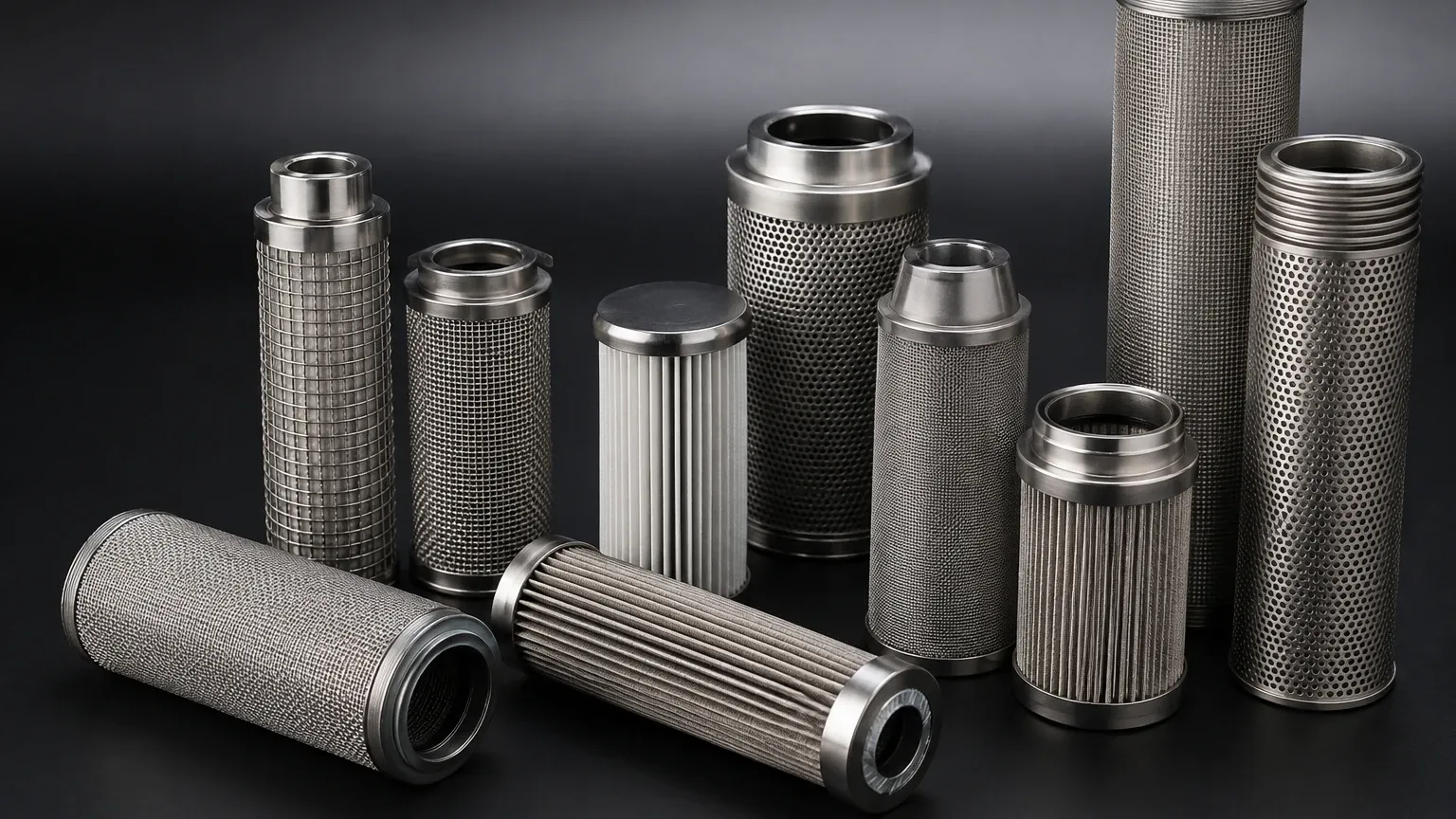
The cartridges are the functional heart of the system. These are cylindrical inserts containing the filtration media. Depending on the application, these may be surface filters (where particles are trapped on the outer layer) or depth filters (where particles are trapped within the thickness of the media). For demanding industrial environments, stainless steel wire mesh or sintered metal cartridges are preferred due to their mechanical strength and thermal stability.
Sealing and Support
To ensure that 100% of the process fluid passes through the media, the system relies on high-quality seals, such as O-rings or gaskets, made from materials like Viton, EPDM, or PTFE. Additionally, internal support cores and outer cages are often used to prevent the media from collapsing or bursting under high differential pressure.
Selecting Media for Industrial Filter Cartridges
The choice of media within a filter cartridge system dictates the filtration efficiency and the types of contaminants that can be removed. In professional manufacturing environments, stainless steel is the material of choice for its durability and cleanability.
1. Pleated Wire Mesh: By pleating the stainless steel mesh, manufacturers significantly increase the effective filtration area (EFA). This design allows for higher flow rates and a higher dirt-holding capacity compared to flat cylindrical designs. It is ideal for removing rigid particles from liquids and gases where low pressure drop is required.
2. Sintered Metal Fiber: Produced by vacuum sintering fine stainless steel fibers, this media provides a high porosity and a complex tortuous path for contaminants. It offers excellent depth filtration characteristics and is capable of withstanding extreme temperatures and corrosive chemicals.
3. Wedge Wire: For heavy-duty applications involving high-viscosity fluids or high solids loading, wedge wire cartridges provide a robust surface filtration solution. The V-shaped profile of the wire prevents clogging and facilitates easy backwashing.
Fluid Dynamics and System Sizing Considerations
Properly sizing a filter cartridge system is a complex engineering task that goes beyond simply matching pipe diameters. Several variables must be analyzed to ensure the system does not become a bottleneck in the production line.
Flow Rate and Velocity
The system must be sized to handle the maximum expected flow rate without exceeding the recommended face velocity for the specific media. High velocities can force contaminants through the media (a phenomenon known as "breakthrough") or cause premature clogging due to the compression of the cake layer.
Differential Pressure (ΔP)
Differential pressure is the difference in pressure between the upstream and downstream sides of the filter. A well-designed system starts with a low "clean" pressure drop (typically 2–5 psi). As the filter collects debris, the ΔP increases. Engineers must define the "terminal" ΔP—the point at which the cartridges must be cleaned or replaced—to prevent damage to the cartridges or the pump.
Viscosity and Temperature
The viscosity of the fluid significantly impacts the pressure drop. High-viscosity fluids (such as heavy oils or syrups) require larger surface areas or coarser media to maintain acceptable flow rates. Similarly, operating temperatures affect the choice of sealing materials and the thermal expansion calculations for the housing and internal supports.
Material Science: Why Stainless Steel Dominates Industrial Systems
While polymer-based cartridges are common in water treatment, industrial-grade filter cartridge systems often require the specialized properties of stainless steel. Kaifil specializes in these high-performance metal solutions for several reasons:
* Thermal Resistance: Many chemical and steam filtration processes operate at temperatures exceeding 200°C, which would melt or degrade plastic media. Stainless steel maintains its structural integrity across a wide thermal range.
* Chemical Compatibility: In pharmaceutical and chemical processing, exposure to aggressive solvents, acids, and bases is common. 316L stainless steel provides superior resistance to pitting and corrosion.
* Mechanical Strength: Industrial systems often experience pressure surges or hydraulic shocks. Metal cartridges can withstand high differential pressures without deforming, ensuring consistent filtration accuracy.
* Sustainability and Reusability: Unlike disposable plastic cartridges that contribute to industrial waste, stainless steel cartridges can be cleaned (via ultrasonic baths, chemical cleaning, or backflushing) and reused, lowering the total cost of ownership over time.
Operational Maintenance and the Cleaning Cycle
A filter cartridge system is only as effective as its maintenance regime. For systems utilizing cleanable metal cartridges, establishing a standardized cleaning protocol is vital for maintaining consistent flow.
Monitoring Performance
Continuous monitoring of the differential pressure is the most reliable way to determine the state of the filter. Automated systems can trigger an alarm or a bypass valve when the terminal ΔP is reached. In some advanced configurations, a redundant "duplex" housing setup is used, allowing one side to be cleaned while the other remains in operation, ensuring zero downtime.
Cleaning Methods
For stainless steel cartridges, cleaning typically involves one of the following:
* Backpulsing/Backwashing: Using a reverse flow of clean fluid or gas to dislodge particles from the surface of the media.
* Ultrasonic Cleaning: Using high-frequency sound waves in a detergent bath to remove fine particles trapped deep within sintered or pleated layers.
* Chemical Cleaning: Utilizing specific solvents or acids to dissolve organic or inorganic deposits that cannot be removed mechanically.
Engineering Custom Solutions for Specialized Applications
Off-the-shelf filtration products rarely meet the specific needs of complex industrial processes. A custom-engineered filter cartridge system allows for the optimization of every variable, from the micron rating to the physical dimensions of the housing.
When collaborating with a manufacturer like Kaifil, engineers should be prepared to confirm several technical details:
1. Micron Rating: Does the application require absolute or nominal filtration? Absolute ratings are critical for sterile applications, while nominal ratings may suffice for general pre-filtration.
2. Contaminant Type: Are the particles rigid, gelatinous, or fibrous? This determines whether surface or depth filtration is more appropriate.
3. Connection Standards: Does the system need to interface with existing piping via NPT threads, flanged connections (ANSI/DIN), or sanitary tri-clamp fittings?
4. Regulatory Compliance: For food, beverage, or pharmaceutical use, the system must meet specific hygienic standards (such as FDA or 3A) regarding surface finish and weld quality.
Conclusion
Investing in a robust filter cartridge system is a strategic decision that impacts the entire production chain. By focusing on high-quality materials, precise engineering, and proper system sizing, industrial operators can achieve superior filtration performance while minimizing long-term costs. Whether the goal is to protect sensitive downstream equipment or to ensure the purity of a final product, the integration of professional-grade stainless steel cartridges provides the reliability and durability required for modern industrial challenges.
