


Filter Cartridges Pp Wound
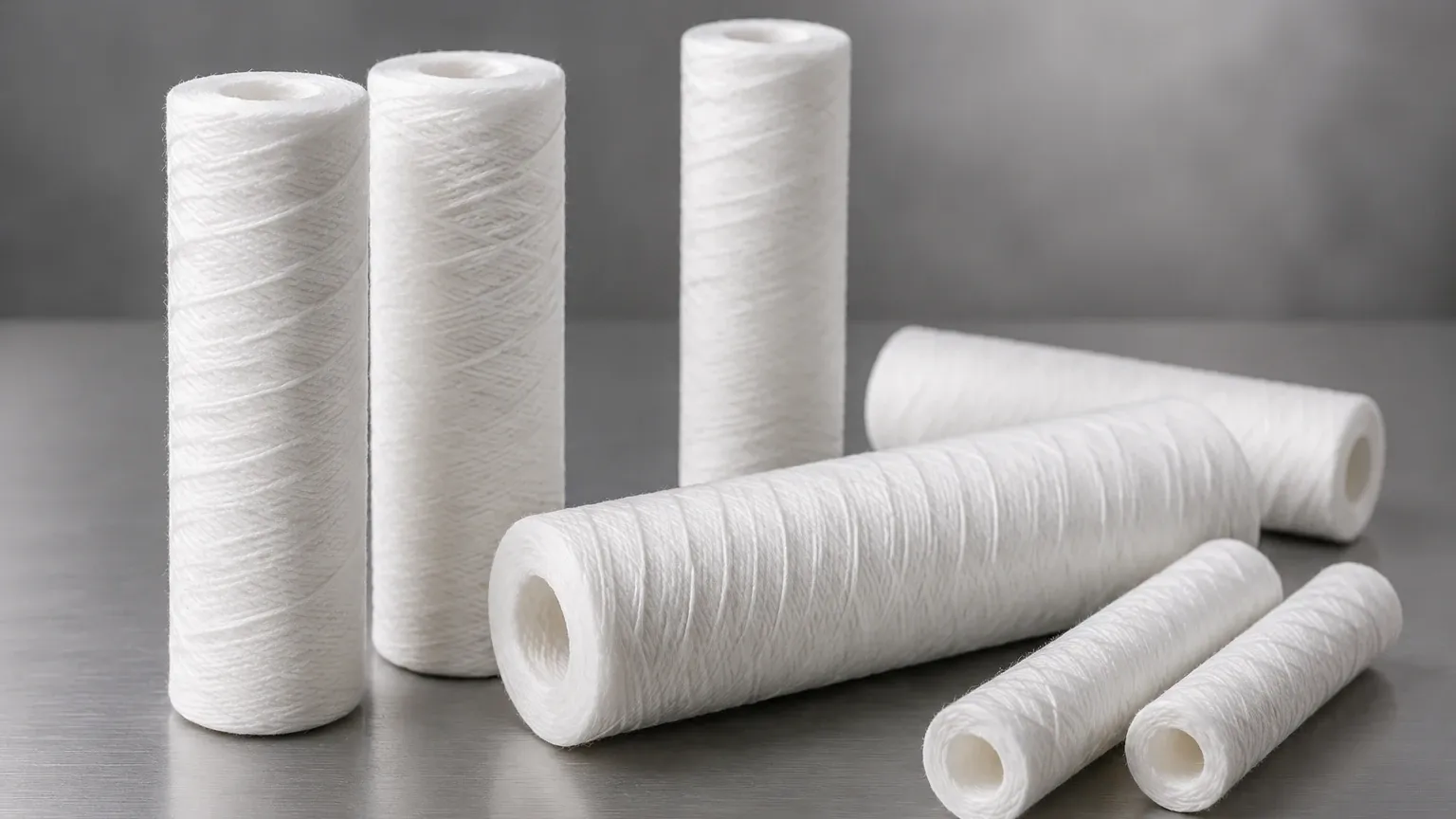
In the landscape of industrial liquid process filtration, depth filtration remains a cornerstone for managing high sediment loads and protecting sensitive downstream equipment. Among the various technologies available, filter cartridges pp wound—polypropylene string-wound cartridges—are one of the most widely utilized solutions. These components are engineered to provide a tortuous path for fluid, effectively trapping particles throughout the entire thickness of the filter media rather than just on the surface.
For engineers and procurement specialists, understanding the technical nuances of string-wound construction, material compatibility, and performance variables is essential for optimizing filtration efficiency and reducing the total cost of ownership. While high-end applications often require precision-engineered metal Filter Cartridges, PP wound versions serve as the critical sacrificial layer in many multi-stage filtration systems.
The Mechanics of Depth Filtration in Wound Media
The performance of filter cartridges pp wound is fundamentally rooted in their manufacturing process. These filters are produced by winding textile fibers (yarn) around a perforated central core in a specific geometric pattern. This winding process is not merely a method of assembly but a precise engineering technique that determines the filter’s functional characteristics.
Gradient Density and Pore Structure
As the yarn is wound, the tension and the spacing of the diamond-shaped openings are adjusted. A well-engineered wound cartridge features a "true gradient density" structure. This means the openings are wider at the outer perimeter to capture larger particles and become progressively tighter toward the center core to trap finer contaminants. This structure prevents the surface from blinding prematurely, allowing the entire depth of the media to be utilized for dirt holding.
The Role of the Yarn "Nap"
In string-wound filtration, the fibers of the yarn itself play a role. The "nap" or the fuzziness of the yarn creates additional micro-paths for the fluid. As the fluid passes through the layers of yarn, these fibers intercept particles through mechanical straining and, in some cases, adsorption. This is why the choice between continuous filament yarn and staple fiber yarn is significant; continuous filament reduces the risk of media migration (fibers breaking off into the filtrate), which is a critical consideration in high-purity applications.
Material Selection and Chemical Compatibility of Polypropylene
Polypropylene (PP) is the most common material for wound cartridges due to its versatile chemical resistance and cost-effectiveness. However, the performance of filter cartridges pp wound is limited by the physical properties of the polymer and the material used for the internal core.
Chemical Resistance
Polypropylene is highly resistant to a wide range of industrial chemicals, including most acids, alkalis, and many organic solvents. This makes it suitable for chemical processing, plating solutions, and industrial water treatment. It is generally avoided in applications involving strong oxidizing agents or high concentrations of certain hydrocarbons that can cause the polymer to swell or degrade.
Temperature Constraints
The thermal limit for standard polypropylene is typically around 60°C to 80°C (140°F to 176°F). Beyond these temperatures, the structural integrity of the fibers may weaken, leading to pore bypass or media deformation. In high-temperature environments, engineers often transition to cotton media with a stainless steel core or move toward fully metallic Filter Cartridges that can withstand extreme thermal stress.
Core Material Options
While the media is polypropylene, the core provides the structural backbone necessary to withstand differential pressure. Options include:
* Polypropylene Cores: Best for general chemical compatibility and low-cost applications.
* Tin-Plated Steel Cores: Used for added strength in non-corrosive environments.
* Stainless Steel Cores (304/316): Essential for high-pressure differentials or applications where the core must be compatible with aggressive cleaning agents, even if the media is disposable.
Evaluating Micron Ratings and Filtration Efficiency
One of the most common points of confusion in specifying filter cartridges pp wound is the distinction between nominal and absolute micron ratings. Wound cartridges are almost exclusively "nominal" filters.
Nominal vs. Absolute Filtration
A nominal rating indicates that the filter will capture a major percentage (usually 60% to 85%) of particles at the specified micron size. Because the winding process creates a flexible structure, the pore sizes are not fixed. Under high pressure or flow surges, the pores can slightly expand, allowing some particles to pass through. In contrast, pleated or metal mesh filters often provide absolute ratings (99.9% efficiency), which are required for critical final-stage filtration.
Pressure Drop and Flow Rates
The initial differential pressure ($ΔP$) is a key metric for system design. A high-quality wound cartridge should offer low initial resistance to flow. As the filter loads with contaminants, the $ΔP$ will increase. Engineers should size the filtration housing so that the initial pressure drop does not exceed 0.1 to 0.2 bar (2-3 psi). Operating a system at high flow rates through too few cartridges will lead to rapid blinding and frequent downtime.
Comparison: Wound vs. Melt-Blown and Pleated Cartridges
Selecting the right cartridge type requires a balance between particle size requirements, fluid volume, and budget.
| Feature | PP Wound Cartridges | Melt-Blown Cartridges | Pleated Cartridges |
| :— | :— | :— | :— |
| Filtration Type | Depth | Depth | Surface/Depth Hybrid |
| Dirt Holding | Very High | High | Moderate |
| Efficiency | Nominal | Nominal to Semi-Absolute | Absolute |
| Cost | Lowest | Moderate | Highest |
| Media Migration | Possible (if low quality) | Low | Minimal |
Filter cartridges pp wound excel in applications with high concentrations of sand, scale, or rust. Because they have a higher void volume than melt-blown filters, they can often hold more physical mass before reaching their terminal pressure drop. However, if the goal is to remove very fine, deformable particles or to ensure a specific sterile grade, pleated or specialized metal Filter Cartridges are more appropriate.
Industrial Application Scenarios for PP Wound Filters
Because of their versatility, filter cartridges pp wound are found in nearly every sector of industrial manufacturing.
1. Reverse Osmosis (RO) Pre-filtration
In water desalination and purification plants, RO membranes are extremely sensitive to fouling. Wound cartridges are used as a primary defense to remove suspended solids, silt, and clay that would otherwise clog the expensive membranes. Using a 5-micron or 1-micron wound filter significantly extends the life of the RO system.
2. Chemical and Petrochemical Processing
In the production of bulk chemicals, these filters remove impurities from reagents and intermediate products. Their resistance to acids and bases allows them to be used in aggressive environments where other synthetic materials might fail.
3. Food and Beverage Industry
For food-grade applications, it is imperative to use PP wound filters that are manufactured from FDA-compliant materials. They are commonly used for filtering bottled water, juices, and edible oils. In these cases, the absence of surfactants, binders, or adhesives in the manufacturing process is critical to prevent leaching into the product.
4. Metal Finishing and Plating
Plating baths must stay free of particulates to ensure a smooth, defect-free finish on metal parts. The depth filtration capability of wound cartridges is ideal for managing the continuous buildup of metal fines and precipitates in these recirculating systems.
Engineering Considerations for Sizing and Installation
Properly sizing a system involving filter cartridges pp wound involves more than just matching the pipe diameter. Engineers must consider the viscosity of the fluid and the nature of the solids being removed.
Viscosity Adjustments
As fluid viscosity increases, the resistance to flow through the wound media increases exponentially. For fluids thicker than water (such as oils or syrups), the flow rate per 10-inch cartridge must be derated. Failure to account for viscosity results in a system that reaches its terminal pressure drop almost immediately upon startup.
Housing Compatibility
Wound cartridges come in various lengths (typically 10, 20, 30, and 40 inches) and diameters (standard 2.5" or "Big Blue" 4.5"). The end-cap configuration is also vital. While many wound filters are "Double Open End" (DOE) with flat gaskets, some industrial housings require "Single Open End" (SOE) designs with O-rings (e.g., Code 7 or Code 3) to ensure a bypass-free seal. Ensuring a tight seal is paramount; even a 1% bypass can compromise the entire downstream process.
Maintenance Protocols and Replacement Cycles
The total cost of filtration is driven by the frequency of replacement. For filter cartridges pp wound, the replacement trigger is almost always the differential pressure.
When to Change the Filter
Most industrial systems are designed for a filter change-out when the differential pressure reaches 1.0 to 1.5 bar (15-22 psi). Allowing the pressure to climb higher can lead to "unloading," where the high pressure forces previously trapped particles through the media and back into the process stream. In extreme cases, the internal core can collapse, leading to catastrophic system failure.
Monitoring for Media Migration
In critical processes, engineers should periodically check for fiber shedding. If polypropylene fibers are found in downstream samples, it may indicate that the winding tension was insufficient or that the flow velocity is exceeding the material's structural limits. In such instances, transitioning to a higher-quality continuous filament wound cartridge or a precision-manufactured metal mesh filter may be necessary.
OEM and Customization
For specialized equipment manufacturers, standard off-the-shelf filters may not meet specific flow or space constraints. Working with a manufacturer that offers OEM capabilities allows for the customization of winding patterns and core materials to match specific industrial requirements. Whether the application calls for standard polypropylene or more robust Filter Cartridges for extreme environments, selecting a partner with technical expertise ensures that the filtration system performs reliably under demanding conditions.
By carefully evaluating the fluid dynamics, chemical environment, and particle load, technical professionals can effectively leverage filter cartridges pp wound to maintain process integrity and protect high-value industrial assets.
