


Filter Cartridges Replacement
In industrial fluid processing, the efficiency of a filtration system is fundamentally tied to the condition of its internal components. Filter cartridges replacement is a critical maintenance task that ensures process continuity, protects downstream equipment, and maintains the required purity levels of the filtrate. For engineers and maintenance managers, understanding when and how to replace these components is essential for optimizing system performance and controlling operational costs.
Industrial Filter Cartridges are engineered to capture contaminants through various mechanisms, including surface filtration and depth filtration. Over time, the accumulation of solids within the filter media leads to increased resistance to flow. If not addressed through timely replacement or cleaning, this resistance can result in system failure, product contamination, or structural damage to the filter housing and the cartridges themselves.
Key Indicators for Filter Cartridges Replacement
Determining the optimal time for replacement requires a combination of real-time monitoring and historical performance data. Relying solely on visual inspection is often insufficient and can lead to premature replacement or, conversely, operating beyond the safe limit of the media.
Differential Pressure (ΔP)
The most reliable indicator for replacement is the differential pressure, which is the difference in pressure between the inlet and the outlet of the filter housing. As the filter media becomes loaded with contaminants, the ΔP increases. Every filtration system has a manufacturer-specified "terminal pressure drop." Once this threshold is reached—typically between 15 and 25 psi (1.0 to 1.7 bar) for many industrial applications—the cartridge must be replaced. Operating beyond this limit risks "breakthrough," where contaminants are forced through the media, or mechanical collapse of the cartridge core.
Flow Rate Degradation
In systems where pumps operate at a constant speed, a noticeable drop in the flow rate often signals that the filter cartridges are reaching the end of their service life. If the required volume of fluid cannot pass through the system within the designated timeframe, it can disrupt downstream processes, such as chemical reactions, bottling lines, or cooling cycles. Monitoring flow meters in conjunction with pressure gauges provides a comprehensive view of the filter's status.
Filtrate Quality and Particle Counts
For high-precision industries like pharmaceuticals or semiconductor manufacturing, the primary indicator is the quality of the effluent. If downstream particle counters detect an increase in contaminants or if turbidity levels rise, it suggests that the filter media has either been bypassed or has suffered structural degradation. In such cases, immediate filter cartridges replacement is mandatory to prevent batch loss.
Technical Evaluation Criteria for Selecting Replacement Units
When sourcing replacement cartridges, it is vital to match the technical specifications of the original component or, if possible, upgrade to a more durable solution based on observed wear patterns. Engineering considerations should include material compatibility, micron ratings, and structural design.
Material Compatibility and Chemical Resistance
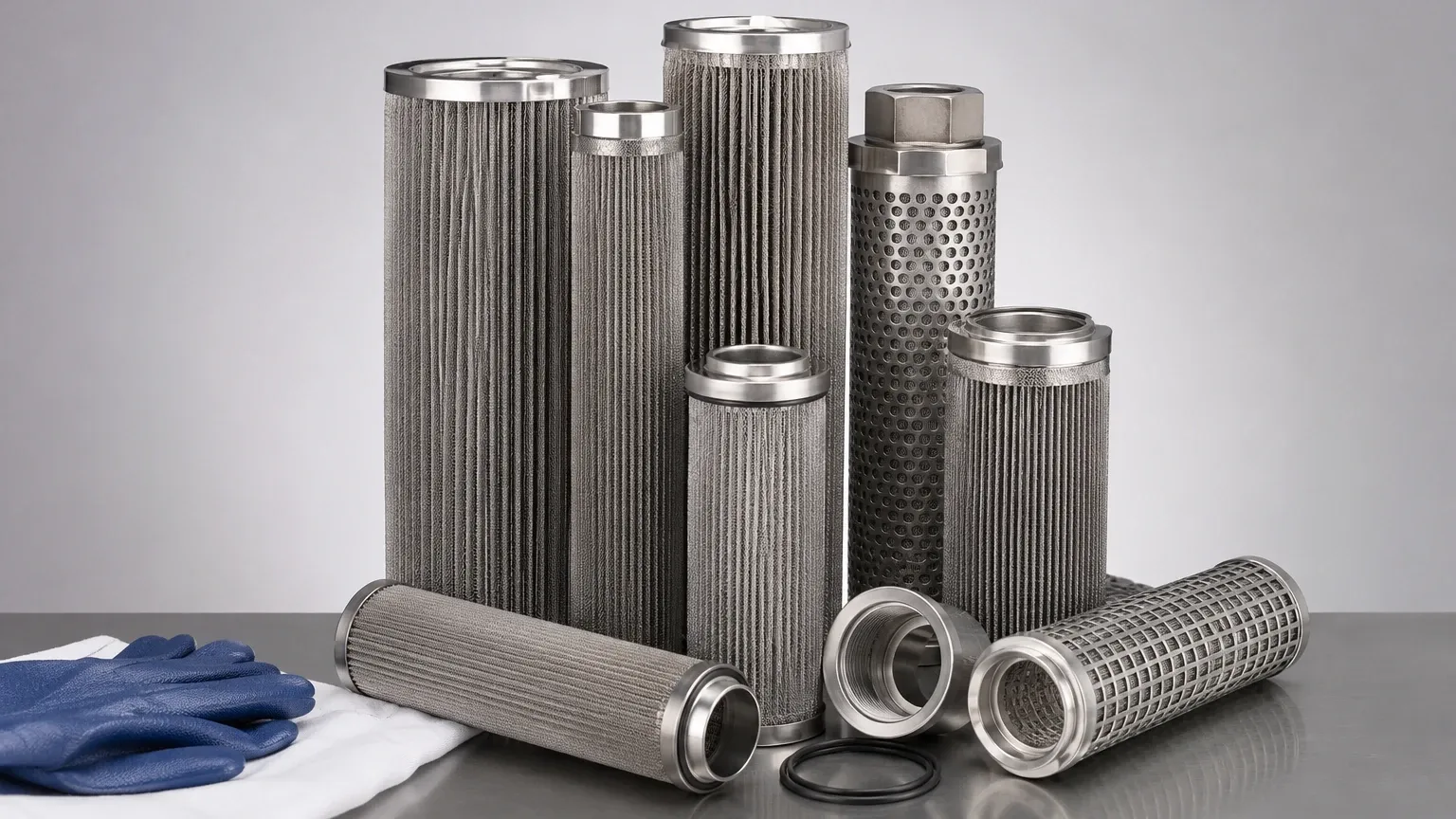
The choice of material is paramount, especially in aggressive chemical environments or high-temperature applications. Stainless steel filter cartridges, often constructed from 304 or 316L alloys, offer superior resistance to corrosion and thermal stress compared to polymer-based alternatives. When selecting a replacement, engineers must verify that the media, end caps, and adhesives (if any) are compatible with the process fluid. For instance, 316L stainless steel is preferred for marine environments or highly acidic solutions due to its molybdenum content, which enhances pitting resistance.
Micron Rating: Absolute vs. Nominal
Understanding the distinction between absolute and nominal micron ratings is crucial for ensuring filtration accuracy. A nominal rating refers to a filter's ability to retain a major weight percentage of particles of a certain size, whereas an absolute rating indicates that 99.9% (or higher) of particles of that size will be captured. During the replacement process, upgrading to an absolute-rated stainless steel mesh can provide more predictable performance in critical applications like hydraulic oil filtration or water treatment.
Structural Integrity and Collapse Pressure
Replacement cartridges must be able to withstand the maximum system pressure and potential pressure surges. The design of the inner core and the outer support cage determines the collapse pressure. In high-viscosity applications or systems with frequent start-stop cycles, reinforced stainless steel cartridges are often required to prevent mechanical deformation during operation.
Step-by-Step Procedure for Industrial Filter Replacement
Executing a filter cartridges replacement requires a standardized protocol to ensure safety and prevent the introduction of new contaminants into the system. While specific steps may vary based on the housing design, the following general procedure applies to most industrial environments:
1. System Isolation and Depressurization: Close the inlet and outlet valves to isolate the filter housing. Slowly open the vent valve to release internal pressure. Ensure the system is completely depressurized before attempting to open the housing.
2. Drainage: Open the drain valve at the bottom of the housing to remove the remaining process fluid. This is particularly important when handling hazardous chemicals or high-temperature liquids.
3. Housing Opening: Depending on the design (bolt-on cover, V-band clamp, or swing-bolt), carefully remove the housing lid. Inspect the cover gasket or O-ring for signs of wear or compression set.
4. Cartridge Removal: Carefully lift the used cartridges out of the housing. In many industrial systems, cartridges are secured by a compression plate or individual hold-down nuts. These must be removed and set aside for cleaning.
5. Inspection and Cleaning: Inspect the interior of the housing for sediment buildup or corrosion. Clean the housing surfaces using a compatible solvent or lint-free cloth. Inspect the used cartridges for unusual wear patterns, which may indicate flow bypass or mechanical stress.
6. Installation of New Cartridges: Verify that the new Filter Cartridges match the required specifications. Ensure the seals (O-rings or gaskets) are properly seated. Lubricate the seals with a process-compatible lubricant if necessary to ensure a leak-tight fit.
7. Resealing and Air Bleeding: Replace the housing cover and secure the fasteners according to the manufacturer’s torque specifications. Slowly open the inlet valve while keeping the vent valve open to allow trapped air to escape. Once fluid begins to exit the vent, close it and slowly open the outlet valve to resume operation.
Strategies to Optimize Replacement Frequency
Frequent filter cartridges replacement can lead to high operational costs and increased downtime. Implementing strategies to extend the life of the filter media can significantly improve the total cost of ownership.
Implementation of Pre-filtration
One of the most effective ways to protect expensive high-precision cartridges is the use of a pre-filter. By installing a coarser, lower-cost filter upstream, the majority of large particulate matter is captured before it reaches the primary filter. This staged filtration approach ensures that the high-performance cartridges are only used for fine polishing, thereby extending their service life.
Cleanable vs. Disposable Media
In many industrial applications, switching from disposable polymer cartridges to cleanable stainless steel wire mesh or sintered metal cartridges can reduce the frequency of replacement. Stainless steel cartridges can often be cleaned via backwashing, ultrasonic cleaning, or chemical soaking, allowing them to be reused multiple times. This is particularly advantageous in processes with high solids loading where disposable filters would blind quickly.
Monitoring and Data Logging
Using automated ΔP sensors linked to a centralized control system allows for precise tracking of filter loading. By analyzing the rate at which the pressure drop increases, maintenance teams can transition from reactive replacement to predictive maintenance, scheduling replacements during planned shutdowns rather than waiting for a critical failure.
Analyzing the Total Cost of Ownership (TCO)
When evaluating filter cartridges replacement, the purchase price of the cartridge is only one component of the total cost. A comprehensive TCO analysis includes:
* Labor Costs: The man-hours required to perform the replacement and clean the housing.
* Disposal Costs: Many industrial filters become hazardous waste after use, requiring specialized disposal procedures that can be expensive.
* Energy Consumption: As a filter becomes clogged, the pump must work harder to maintain flow, leading to increased electricity usage. Replacing filters slightly earlier than the terminal ΔP can sometimes save more in energy costs than the cost of the cartridge itself.
* Downtime: The lost production capacity during the replacement process.
By selecting high-quality, durable filtration components, such as those manufactured from precision-engineered stainless steel, facilities can often reduce the frequency of these interventions, leading to a lower TCO over the life of the equipment.
Custom Engineering and OEM Considerations
Standard off-the-shelf filter cartridges may not always meet the specific requirements of unique industrial processes. In such cases, customized filtration solutions are necessary. Customization can involve modifying the micron rating, changing the end-cap configuration (e.g., Code 7, 222, or 226 styles), or utilizing specialized mesh weaves to handle specific particle shapes.
Working with a manufacturer that offers OEM capabilities allows for the development of replacement cartridges that are optimized for the specific flow dynamics and contaminant profiles of a given system. For instance, in hydraulic applications, a custom-designed stainless steel cartridge can provide the necessary structural rigidity to handle high-pressure pulses that would cause standard cartridges to fail. Similarly, in food and beverage processing, ensuring that the replacement units meet stringent sanitary standards and utilize FDA-approved materials is non-negotiable.
In conclusion, filter cartridges replacement is a technical necessity that requires careful monitoring, precise selection of replacement media, and a disciplined approach to maintenance. By focusing on high-quality materials and engineering best practices, industrial operators can ensure their filtration systems provide reliable, long-term performance.
