


Filter Cartridges Universal
In the landscape of industrial process engineering, the term "universal" is frequently applied to filtration components to suggest broad compatibility and ease of replacement. However, for engineers and procurement specialists managing complex fluid systems, the concept of filter cartridges universal requires a nuanced understanding that goes beyond simple physical dimensions. While standardized sizing allows for interchangeability across different housing brands, the technical performance, material compatibility, and structural integrity of a filter cartridge must be precisely matched to the specific demands of the application to ensure operational efficiency and equipment protection.
Industrial Filter Cartridges serve as the primary defense against contaminants in sectors ranging from chemical processing and pharmaceuticals to food and beverage production. Understanding the boundaries of "universal" fitment versus application-specific performance is critical for optimizing filtration cycles and reducing the total cost of ownership.
Dimensional Standardization and Housing Compatibility
The most common interpretation of "universal" in the filtration industry refers to the standardized dimensions that allow cartridges from various manufacturers to fit into a single housing. Most industrial housings are designed to accommodate cartridges with standard lengths—typically 10, 20, 30, or 40 inches—and outer diameters ranging from 2.5 to 2.75 inches.
Beyond length and diameter, the interface between the cartridge and the housing is the most critical factor for achieving a "universal" fit. Several standard end-cap configurations have emerged as industry benchmarks:
* Double Open End (DOE): This is perhaps the most common "universal" configuration. It features flat gaskets at both ends and relies on the housing’s internal compression to create a seal. While versatile, it is more susceptible to bypass if the housing is not perfectly aligned.
* Code 7 (226 O-Rings/Bayonet): Often used in high-purity applications, this design features two 226 O-rings and a locking tab (bayonet) to ensure a secure, leak-proof fit. It is widely considered a standard for pharmaceutical and food-grade housings.
* Code 3 (222 O-Rings/Flat): This configuration uses two 222 O-rings at the base with a flat top, providing a reliable seal for liquid filtration where bypass cannot be tolerated.
* Code 8 (222 O-Rings/Fin): Similar to Code 3 but with a "fin" or spear at the top to help center the cartridge during installation in multi-round housings.
When sourcing filter cartridges universal solutions, engineers must verify that the end-cap geometry matches the housing hardware exactly. Even a minor deviation in O-ring seat depth or gasket thickness can lead to fluid bypass, rendering the filtration process ineffective.
Material Integrity: Beyond the "Universal" Polymer
While many "universal" filter cartridges are constructed from polypropylene or other polymers, industrial environments often demand materials that can withstand extreme temperatures, high pressures, and aggressive chemical solvents. In these scenarios, stainless steel filtration components offer a level of durability and compatibility that polymer filters cannot match.
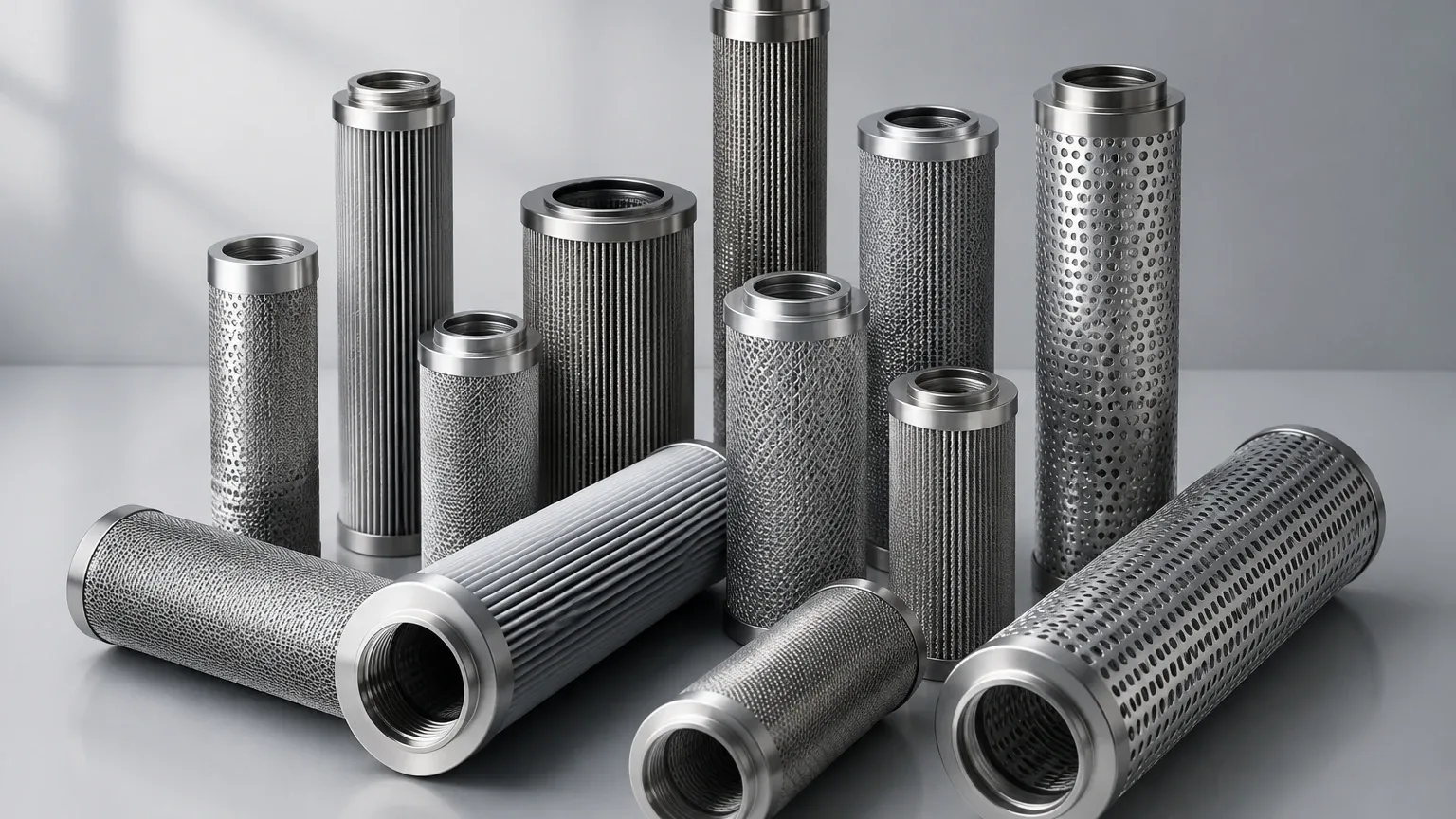
Stainless steel 304 and 316L are the primary materials used for high-performance metal filter cartridges. These materials are inherently resistant to corrosion and can operate in temperatures exceeding 500°F (260°C), far beyond the melting point of most plastics. Furthermore, stainless steel cartridges manufactured by specialists like Kaifil utilize advanced construction techniques such as pleated wire mesh or sintered metal fibers.
Unlike disposable polymer filters, stainless steel cartridges are often cleanable and reusable. This shift from a consumable model to a permanent asset model changes the "universal" calculation. A stainless steel cartridge might have a higher initial capital cost, but its ability to be backwashed or ultrasonically cleaned significantly reduces the long-term waste and replacement costs associated with standard disposable units.
Technical Performance Metrics for Engineers
True compatibility in filtration is not just about fit; it is about performance. When evaluating filter cartridges universal options, engineers must look at the technical specifications that define how the filter interacts with the process fluid. Key metrics include:
Micron Rating: Absolute vs. Nominal
A "universal" 5-micron filter from one manufacturer may perform very differently than a 5-micron filter from another. It is essential to distinguish between nominal and absolute ratings. A nominal rating indicates the filter can trap a large percentage of particles of a certain size, but it does not guarantee 100% efficiency. An absolute rating, often defined by a Beta Ratio (e.g., β=5000), indicates that the filter will capture 99.9% or more of particles at that specific micron size. For critical applications like hydraulic systems or pharmaceutical sterile filtration, absolute ratings are mandatory.
Clean Pressure Drop (ΔP)
Every filter introduces resistance to flow. The clean pressure drop is the differential pressure measured across a new filter at a specific flow rate. If a "universal" replacement cartridge has a significantly higher ΔP than the original equipment manufacturer (OEM) part, it may trigger premature high-pressure alarms or reduce the overall system flow rate, leading to pump strain and energy inefficiency.
Dirt Holding Capacity (DHC)
The DHC determines how much contaminant a cartridge can retain before the pressure drop reaches the terminal limit (the point where the filter must be changed or cleaned). Depth filters (like wound or melt-blown cartridges) generally have high DHC for varied particle sizes, while surface filters (like pleated wire mesh) provide more precise filtration for specific particle sizes. Choosing a universal replacement requires balancing these two factors to maintain consistent production cycles.
Application-Specific Considerations: When Universal is Not Enough
There are several industrial scenarios where a standard "universal" off-the-shelf cartridge may fail or cause process contamination. Engineers should be cautious in the following areas:
1. Chemical Compatibility: The gaskets and O-rings (Viton, EPDM, Silicone, PTFE) must be compatible with the process fluid. A "universal" cartridge with a standard EPDM seal will fail rapidly if used in a system transporting petroleum-based oils.
2. Viscosity Challenges: High-viscosity fluids, such as resins or heavy syrups, require cartridges with high structural strength to prevent media migration or collapse under high differential pressure. Sintered metal or reinforced wire mesh cartridges are often required here.
3. Sanitary Requirements: In the food, beverage, and pharmaceutical industries, filters must meet FDA or USP Class VI standards. "Universal" industrial filters may contain binders or surfactants that can leach into the product, whereas high-quality stainless steel filters are typically free of such additives.
4. Flow Surges: In systems with frequent start-stop cycles or water hammer effects, polymer filters may deform. Metal cartridges provide the mechanical rigidity necessary to maintain pore size integrity under fluctuating hydraulic loads.
Total Cost of Ownership and Maintenance Strategies
The decision to use a filter cartridges universal approach is often driven by the desire to simplify procurement and reduce costs. However, the true cost of filtration includes the purchase price, labor for replacement, disposal costs of contaminated media, and the potential cost of downstream equipment damage if a filter fails.
For many industrial facilities, moving toward customized or high-durability stainless steel filtration solutions is a more sustainable strategy. Because these cartridges can be cleaned, the frequency of purchasing new units is drastically reduced. Maintenance teams can establish a cleaning schedule based on differential pressure readings, ensuring that the filters are always operating within their optimal range.
When considering a transition to more robust filtration, it is advisable to Review product options and application support to determine if a standardized stainless steel solution or a custom-engineered component is better suited for the specific operational environment. Customization allows for the optimization of pleat density, wire diameter, and support structures, which can significantly extend the service life of the filter compared to a generic universal alternative.
Conclusion: Selecting the Right Filtration Path
In the B2B industrial sector, "universal" should be viewed as a starting point for dimensional compatibility rather than a guarantee of performance. Engineers must validate every replacement cartridge against the specific thermal, chemical, and mechanical stresses of their system.
By focusing on high-quality materials like 316L stainless steel and understanding the nuances of micron ratings and pressure drops, purchasing teams can move beyond the risks of low-quality "universal" parts. Whether the goal is to protect sensitive hydraulic valves, ensure the purity of a pharmaceutical batch, or maintain the clarity of a beverage, the choice of filter cartridge remains one of the most impactful decisions for process reliability. Prioritizing technical specifications over generic compatibility ensures that the filtration system remains an asset to production rather than a recurring point of failure.
