


Filter Replacement Delonghi Magnifica Evo
Maintaining the performance of a high-precision espresso machine like the DeLonghi Magnifica Evo requires a fundamental understanding of fluid dynamics and contaminant management. At the heart of this maintenance routine is the water filtration system. For engineers and technical professionals, a filter is not merely a consumable part but a critical component that regulates water chemistry, protects internal heating elements from calcification, and ensures the consistency of the final output.
In industrial applications, Filter Cartridges are designed with rigorous specifications for flow rate, pressure drop, and micron ratings. While a consumer-grade coffee machine operates on a smaller scale, the engineering principles governing filter replacement delonghi magnifica evo remain grounded in the same filtration science used in large-scale food and beverage processing. This guide examines the technical requirements, replacement procedures, and the underlying science of water filtration for the Magnifica Evo system.
The Role of Filter Cartridges in Precision Equipment
In any system involving the heating and transport of water through narrow orifices—such as the boiler and brew group of an espresso machine—the presence of dissolved minerals poses a significant mechanical risk. The primary function of the filter cartridge in the DeLonghi Magnifica Evo is to mitigate the impact of water hardness.
Water hardness is primarily caused by calcium and magnesium cations. When water is heated, these minerals precipitate to form calcium carbonate (scale). In industrial boiler systems, scale acts as an insulator, reducing thermal efficiency and eventually leading to catastrophic component failure. In the context of the Magnifica Evo, scale buildup narrows the internal tubing and compromises the precision of the thermoblock.
By utilizing specialized resin-based Filter Cartridges, the system employs ion-exchange technology to replace scale-forming ions with sodium or hydrogen ions. This chemical stabilization is essential for maintaining the hydraulic integrity of the machine. Furthermore, activated carbon stages within the cartridge adsorb chlorine and organic compounds that can cause oxidative stress on internal seals and affect the sensory profile of the water.
Technical Specifications for the Magnifica Evo Filter
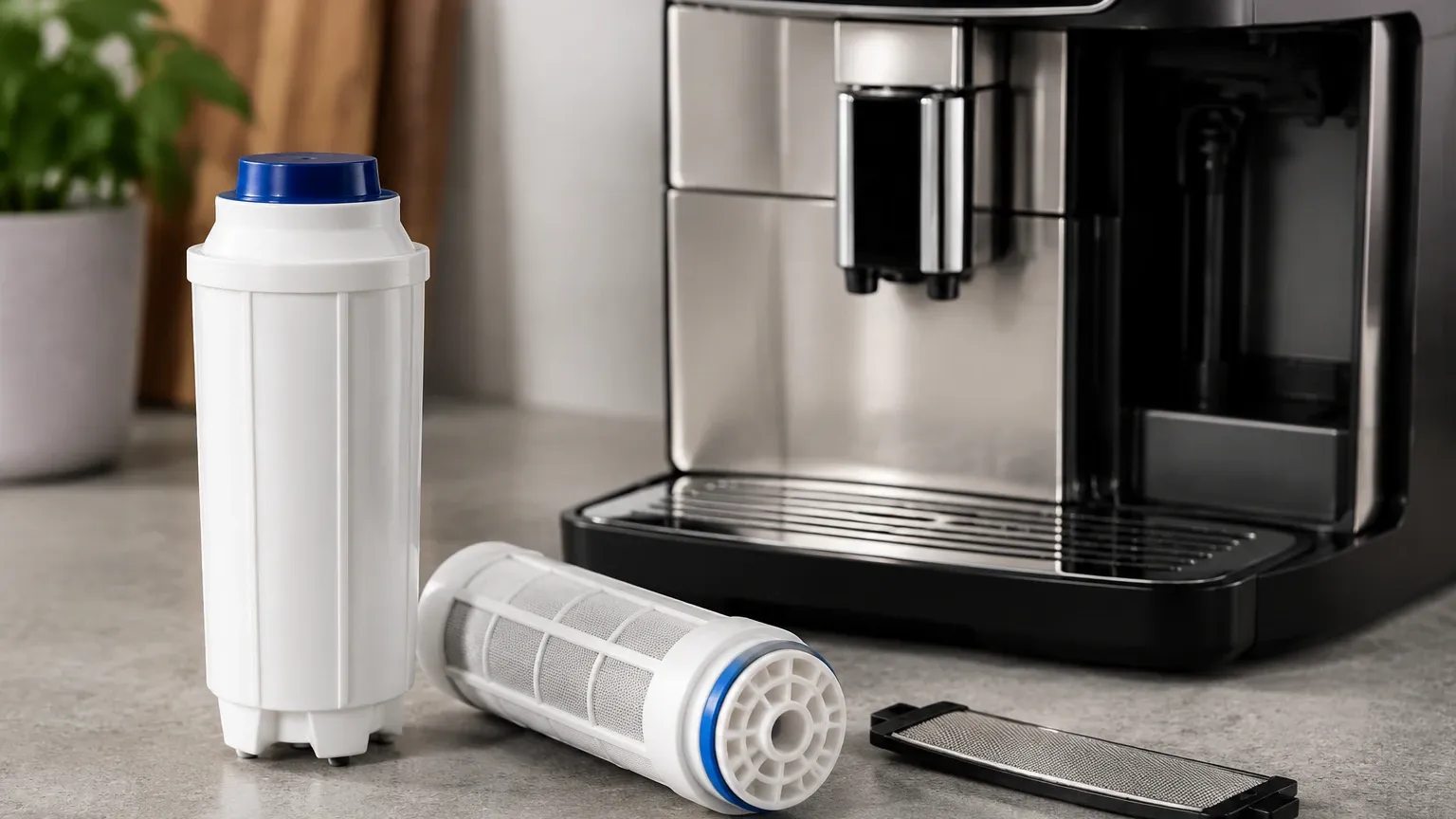
The DeLonghi Magnifica Evo typically utilizes the DLSC002 water filter. Understanding the technical construction of these cartridges helps in evaluating their performance and replacement intervals.
1. Ion-Exchange Resin: This component focuses on reducing temporary hardness. The resin beads have a specific exchange capacity, which is why the filter must be replaced based on water volume and hardness levels.
2. Activated Carbon Block/Granules: This stage targets chemical contaminants. It relies on a high surface area to trap chlorine and volatile organic compounds (VOCs) through adsorption.
3. Micron Filtration Mesh: To protect the high-pressure pump (often rated at 15 bar), the cartridge includes a fine mesh to prevent particulate matter from entering the internal circuit.
From an engineering perspective, the filter must provide sufficient filtration without creating an excessive pressure drop that could strain the vibration pump. A clogged or expired filter increases the resistance in the suction line, potentially leading to cavitation or reduced flow during the extraction phase.
Step-by-Step Guide to Filter Replacement Delonghi Magnifica Evo
Executing a filter replacement delonghi magnifica evo involves more than a simple physical swap; it requires a priming process to ensure the hydraulic circuit remains free of air pockets (airlocks).
1. Preparation and Date Setting
Most cartridges feature a rotating date indicator on the top. This is a manual tracking mechanism to help the operator monitor the two-month maximum service life. Set the dial to the current month before installation.
2. Priming the Cartridge
To prevent air from entering the machine’s internal pump, the filter must be fully saturated. Submerge the filter vertically in a container of clean water and gently squeeze the sides. This forces air out of the resin bed and replaces it with water. Continue until no more air bubbles emerge from the top vents.
3. Installation
Empty the water tank and insert the primed filter into the dedicated housing at the bottom of the tank. Ensure a firm press to seat the O-ring or gasket properly. If the seal is not airtight, the pump may draw air instead of water, leading to loud operation and no flow.
4. System Activation
Fill the tank with fresh water and reinstall it. The Magnifica Evo software must be notified of the new filter. Navigate through the settings menu (typically indicated by the gear or settings icon) to the "Water Filter" section and select "Activate/Replace." This triggers a rinse cycle that flushes approximately 0.5 liters of water through the hot water spout, clearing any loose carbon fines and stabilizing the flow.
Evaluating Filtration Efficiency and Replacement Cycles
The frequency of filter replacement delonghi magnifica evo is determined by two primary variables: the volume of water processed and the total dissolved solids (TDS) of the source water.
Water Hardness Testing
Industrial filtration solutions are always preceded by a water quality analysis. For the Magnifica Evo, users should utilize the provided pH/hardness test strip. The machine’s internal logic uses this hardness setting to calculate the expected lifespan of the filter. If the water is "Level 4" (very hard), the ion-exchange capacity will be exhausted much faster than at "Level 1."
The Two-Month Rule
Even if the water volume limit has not been reached, the filter should be replaced every two months. This is a standard hygiene protocol in filtration. Once the activated carbon is saturated and the cartridge is submerged in a static environment, there is a risk of bacterial biofilm development. In industrial food-grade filtration, such as that provided by Kaifil, material selection often includes antimicrobial properties or high-grade stainless steel to mitigate these risks. In the consumer space, regular replacement is the primary defense.
Industrial Perspective: Stainless Steel vs. Polymer Cartridges
While the Magnifica Evo uses disposable polymer-housed Filter Cartridges for convenience and chemical treatment, industrial sectors often opt for different materials based on the application.
* Polymer/Resin Cartridges: Ideal for water softening and chemical adsorption in low-to-medium pressure environments. They are cost-effective for point-of-use applications but generate recurring waste.
* Stainless Steel Wire Mesh Filters: In high-temperature or high-pressure industrial beverage production, manufacturers like Kaifil provide permanent or cleanable stainless steel filtration components. These offer superior mechanical strength and can be backwashed, reducing the total cost of ownership in large-scale operations.
For the Magnifica Evo, the use of disposable resin cartridges is a design choice necessitated by the need for ion exchange, which cannot be achieved through mechanical mesh alone. However, the precision-engineered mesh used in industrial Filter Cartridges serves as the inspiration for the internal pre-filters found within the machine's pump assembly.
Common Risks of Neglecting Filter Replacement
Failure to perform a timely filter replacement delonghi magnifica evo leads to several technical complications that can shorten the machine's lifecycle:
1. Calcification of the Thermoblock: As the ion-exchange resin reaches saturation, calcium ions pass through the filter and solidify on the heating elements. This increases the energy required to reach brewing temperature and can eventually block the flow entirely.
2. Pump Strain: Particulates or scale fragments can enter the pump's piston assembly, causing premature wear and noise.
3. Solenoid Valve Failure: Small scale flakes are the leading cause of stuck solenoid valves, which control the flow of water and steam. A stuck valve often requires a complete teardown and component replacement.
4. Flavor Degradation: Residual chlorine and accumulated organic matter in an expired filter will impart "off" flavors to the espresso, negating the benefits of high-quality coffee beans.
Information for Procurement and Maintenance Planning
When managing a fleet of machines in an office or commercial environment, or simply maintaining a high-end home setup, it is advisable to confirm the following before purchasing replacement stock:
* Compatibility: Ensure the cartridge is a genuine DLSC002 or a certified equivalent that matches the physical dimensions and O-ring specifications of the Magnifica Evo tank.
* Batch Quality: For industrial-grade reliability, look for filters that have been manufactured under ISO-certified quality management systems to ensure consistent resin density and carbon purity.
* Storage Conditions: Filter cartridges should be stored in a cool, dry place. Exposure to extreme temperatures can degrade the ion-exchange resin before it is even installed.
In conclusion, the filter replacement delonghi magnifica evo is a vital technical intervention. By adhering to a strict replacement schedule and understanding the engineering behind Filter Cartridges, users can ensure their equipment operates at peak efficiency. Whether in a domestic kitchen or an industrial processing plant, the principles of effective filtration remain the same: protect the hardware, stabilize the chemistry, and ensure the purity of the final product.
