


Filter Replacement Ge Microwave
Effective ventilation and air purification in kitchen environments rely heavily on the integrity of the filtration system. For technical professionals, facility managers, and engineers overseeing residential or commercial-grade appliance maintenance, understanding the nuances of filter replacement ge microwave systems is essential for maintaining air quality and equipment longevity. While often viewed as a simple maintenance task, the selection of filtration media, the engineering of the mesh, and the replacement cycle significantly impact the efficiency of the exhaust system.
In high-demand environments, the transition from standard consumer-grade components to high-performance stainless steel alternatives can offer superior durability and filtration precision. This guide examines the technical aspects of microwave filtration, the differences between grease and odor control, and the engineering considerations that define high-quality Filter Cartridges.
Understanding the Mechanics of Microwave Filtration
Over-the-range (OTR) microwaves function as dual-purpose appliances: they provide microwave cooking capabilities and serve as the primary ventilation hood for the cooking surface below. The filtration system within these units typically consists of two distinct stages designed to handle different types of pollutants: particulate matter (grease) and gaseous contaminants (odors).
Grease Filtration
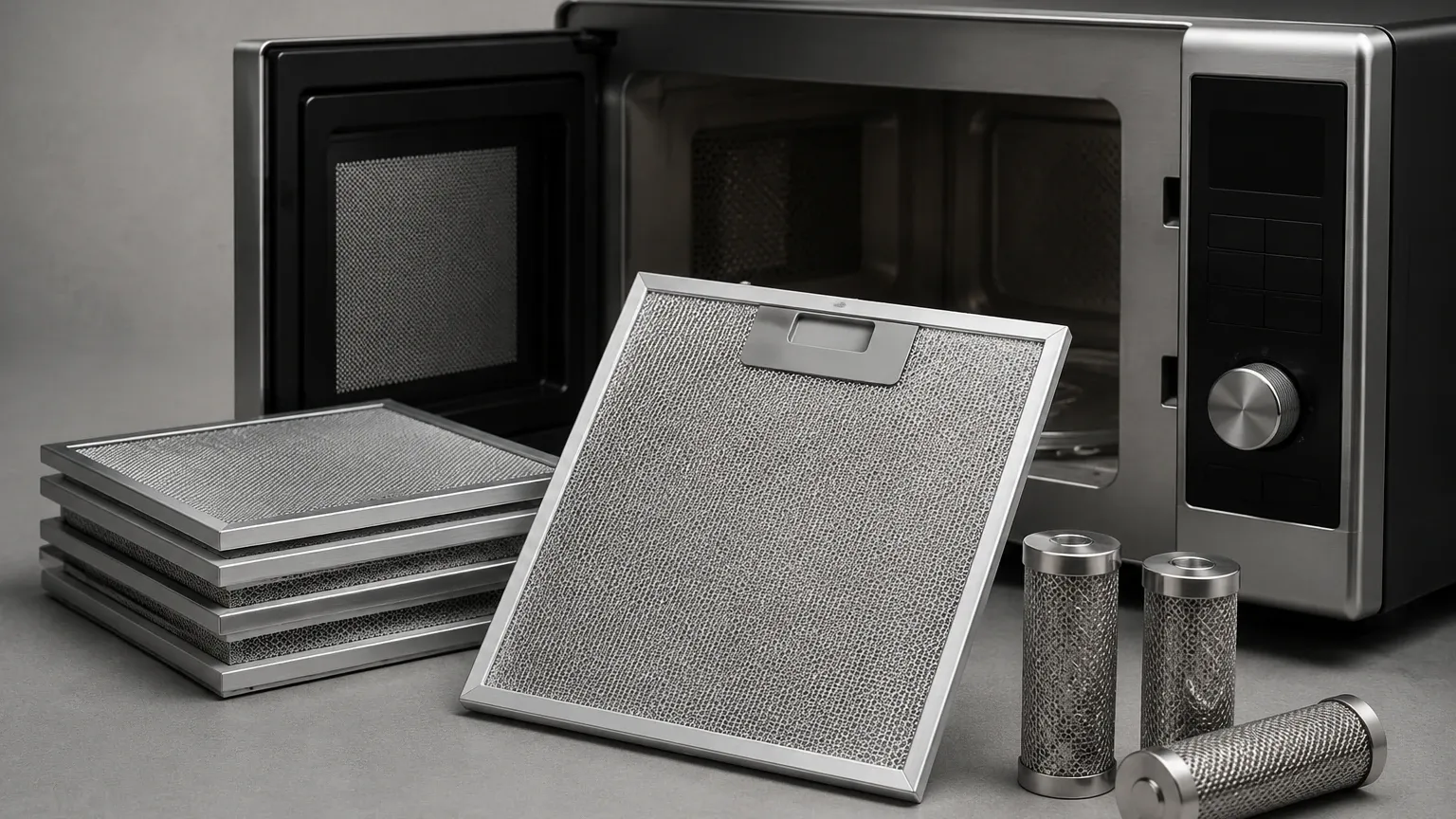
Grease filters are usually located on the bottom of the microwave. Their primary function is to capture airborne grease particles generated during cooking before they can enter the internal blower assembly or the ductwork. Most standard units utilize an aluminum mesh. However, from an engineering perspective, the density of the weave and the number of layers determine the "capture efficiency." In professional or heavy-use settings, stainless steel wire mesh is preferred due to its resistance to corrosion and its ability to withstand aggressive cleaning agents.
Odor and VOC Filtration
For microwaves that recirculate air back into the room rather than venting it outside, a secondary charcoal or carbon filter is required. These filters operate on the principle of adsorption, where volatile organic compounds (VOCs) and odors are trapped within the microscopic pores of the activated carbon. Unlike grease filters, these cannot be cleaned and must be replaced once the carbon sites are saturated.
Technical Specifications for Filter Replacement Ge Microwave
When sourcing components for filter replacement ge microwave units, technical professionals must look beyond simple model compatibility. Precision in dimensions and material quality ensures that the filtration system maintains the intended static pressure of the ventilation fan.
1. Dimensional Tolerance: Even a 2mm discrepancy in the frame size can lead to "air bypass," where contaminated air flows around the filter rather than through it. This leads to grease buildup on the internal motor and reduces the lifespan of the appliance.
2. Mesh Configuration: The efficiency of a metal grease filter is determined by the surface area of the wire. Multi-layered, expanded metal or woven wire mesh provides a tortuous path for the air, forcing grease particles to collide with and adhere to the metal surfaces.
3. Airflow Resistance: A filter that is too dense will restrict airflow, causing the fan motor to work harder, increasing noise levels and potentially leading to premature motor failure. Conversely, a filter that is too porous will allow grease to pass through, contaminating the ductwork and creating a fire hazard.
Material Selection: Aluminum vs. Stainless Steel
In the context of industrial and high-end residential filtration, the choice of material is a critical engineering decision. While aluminum is lightweight and cost-effective, it has limitations in terms of structural integrity and chemical resistance.
The Case for Stainless Steel
For those seeking a more robust solution during a filter replacement ge microwave process, stainless steel components offer several advantages:
* Thermal Stability: Stainless steel maintains its structural shape under high heat better than aluminum, which can warp over time when exposed to constant stovetop temperatures.
* Chemical Resistance: Stainless steel can be cleaned with heavy-duty degreasers or processed in high-temperature dishwashers without the risk of oxidation or pitting.
* Longevity: While the initial cost of stainless steel Filter Cartridges may be higher, their service life is significantly longer, reducing the total cost of ownership in commercial or high-use environments.
Evaluating Replacement Cycles and Performance Degradation
Determining when to perform a filter replacement ge microwave task depends on the volume of cooking and the type of filtration media used. Performance degradation in filtration systems is often gradual and may go unnoticed until the ventilation system fails to clear smoke or odors effectively.
Signs of Saturation
* Visible Grease Accumulation: For metal mesh filters, a visible coating of yellow or brown grease indicates that the capture surfaces are full. If the grease begins to drip, the filter has reached a critical saturation point.
* Increased Blower Noise: As the filter becomes clogged, the static pressure increases. The blower motor may emit a higher-pitched whine as it struggles to pull air through the restricted media.
* Lingering Odors: For charcoal filters, the reappearance of cooking smells in the room shortly after the fan is turned on is a definitive sign that the activated carbon has reached its adsorption limit.
For standard residential use, grease filters should be inspected monthly and cleaned or replaced every six months. Charcoal filters typically require replacement every 6 to 12 months, depending on usage frequency.
Engineering Custom Filtration Solutions
In many industrial or specialized applications, standard off-the-shelf filters may not meet specific performance requirements. This is where custom manufacturing and OEM expertise become vital. Companies like Kaifil specialize in developing precision metal filtration components that go beyond the capabilities of standard consumer parts.
When designing custom Filter Cartridges, engineers consider the following:
* Micron Rating: Defining the exact size of particles that need to be captured.
* Structural Reinforcement: Adding internal supports or specialized frames to ensure the filter can withstand high-pressure environments without collapsing.
* Multi-Stage Media: Combining different types of mesh—such as a coarse outer layer for large particulates and a fine inner layer for mist—to optimize filtration efficiency and service life.
For facility managers handling a fleet of appliances or specialized equipment, moving toward a standardized, high-quality filter replacement ge microwave strategy can simplify maintenance and ensure consistent air quality across all units.
Installation Best Practices for Optimal Performance
Proper installation is as important as the quality of the filter itself. When performing a filter replacement ge microwave, follow these technical steps to ensure the system operates at peak efficiency:
1. Power Safety: Always disconnect the power or turn off the breaker before accessing internal charcoal filters, as these are often located behind the top grille near electrical components.
2. Seating and Alignment: Ensure the filter is seated firmly within the retaining clips. Any movement or rattling during operation indicates an improper fit, which will lead to air bypass and noise.
3. Orientation: Some advanced grease filters have a specific airflow direction. Look for arrows or indicators on the frame to ensure the mesh layers are oriented correctly relative to the intake.
4. Cleaning the Housing: Before inserting the new filter, wipe down the surrounding housing and the fan intake area. Removing existing grease buildup prevents the new filter from becoming prematurely soiled and reduces fire risks.
The Role of High-Performance Filter Cartridges in Modern Ventilation
While the focus is often on the appliance itself, the filtration component is the heart of the ventilation system. High-quality Filter Cartridges are engineered to balance the competing needs of high filtration efficiency and low airflow resistance. In industrial settings, these components are designed with rigorous standards for material purity and mechanical strength.
By applying industrial-grade filtration principles to the filter replacement ge microwave process, users can achieve a cleaner environment and protect their investment. Whether it is selecting the right wire mesh count for a grease filter or ensuring the high-grade activation of a carbon filter, technical precision remains the key to effective air management.
Conclusion
Maintaining a GE microwave's ventilation system through regular filter replacement is a critical aspect of kitchen management. By understanding the underlying engineering—from the material properties of stainless steel to the physics of particle capture—purchasing teams and maintenance engineers can make informed decisions that go beyond the basic requirements. Investing in high-quality filtration components ensures that the appliance continues to operate safely, efficiently, and effectively for its entire service life.
