


Filter Replacement Kit
In industrial filtration systems, maintaining consistent flow rates and product purity depends heavily on the integrity of the filtration media and its associated hardware. A filter replacement kit is more than just a spare part; it is a coordinated set of components designed to restore a filtration housing to its original operating specifications. For engineers and maintenance managers, understanding the technical nuances of these kits—from material compatibility to sealing mechanisms—is essential for preventing bypass, reducing downtime, and extending the service life of high-value equipment.
Industrial filtration environments, particularly those involving chemical processing, pharmaceuticals, or high-temperature hydraulic fluids, place extreme stress on filter components. While the filter medium itself captures contaminants, the seals, gaskets, and internal supports are equally critical. A comprehensive filter replacement kit ensures that all wear-prone parts are replaced simultaneously, maintaining the structural and functional integrity of the entire assembly.
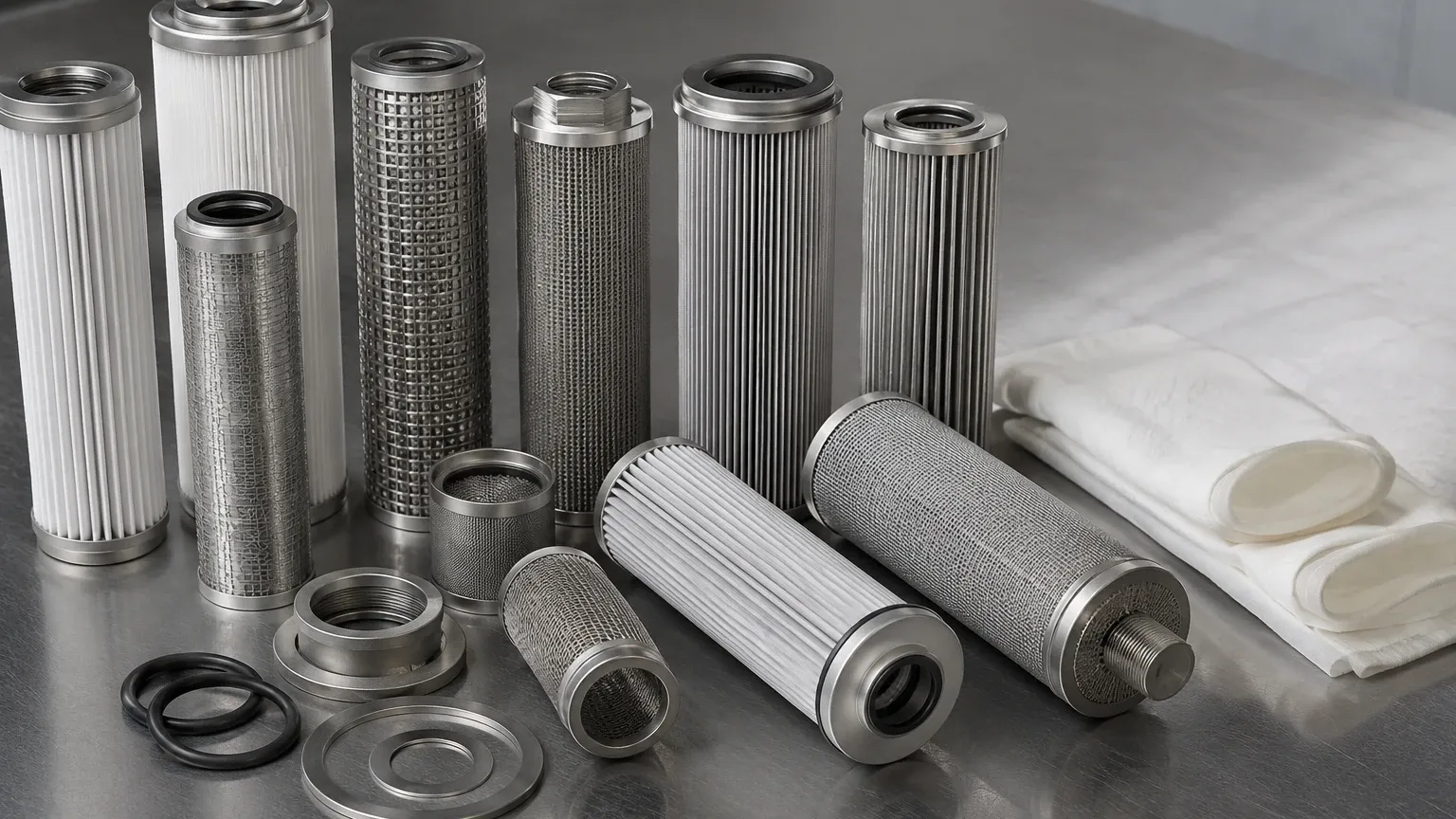
Components of a Professional Filter Replacement Kit
A standard industrial kit typically includes several key elements tailored to the specific housing and application. Understanding these components helps procurement teams avoid the risks associated with incomplete maintenance.
Primary Filtration Media
At the core of the kit is the filter element. In high-performance industrial applications, these are often Filter Cartridges constructed from stainless steel wire mesh or sintered metal. Unlike disposable polymer filters, stainless steel elements offer superior thermal stability and chemical resistance. The kit should specify the micron rating (nominal or absolute) and the construction type, such as pleated designs for increased surface area or cylindrical designs for high-pressure durability.
Sealing Elements (O-Rings and Gaskets)
Seals are the most frequent point of failure in filtration systems. A kit must include high-quality O-rings or gaskets made from materials compatible with the process fluid. Common materials include:
* Viton (FKM): Excellent for high temperatures and chemical resistance.
* EPDM: Preferred for steam and water applications, though unsuitable for petroleum-based fluids.
* PTFE (Teflon): Used for highly aggressive chemicals where universal resistance is required.
* Buna-N (Nitrile): A standard choice for hydraulic oils and general-purpose applications.
Hardware and Support Components
Depending on the housing design, a kit may also include compression springs, tie rods, or centering devices. These components ensure the cartridge remains seated correctly within the housing, preventing fluid from bypassing the media. In multi-round housings, specific spacers or mounting plates may also be included to maintain uniform flow distribution.
Engineering Considerations for Material Selection
When selecting a filter replacement kit, engineers must evaluate the materials of construction against the operating environment. Stainless steel is the industry standard for demanding applications, but the specific grade matters.
SS304 vs. SS316L
Stainless Steel 304 is suitable for many general industrial uses, but SS316L is required for environments where corrosion resistance is paramount, such as marine applications or processes involving chlorides and acids. The "L" in 316L denotes low carbon content, which improves weldability and prevents intergranular corrosion in the heat-affected zones of the filter structure.
Pressure Differential and Structural Strength
Every filter has a maximum allowable pressure differential (Delta P). A high-quality kit includes elements designed to withstand the collapse pressure specified for the system. For high-viscosity fluids or high-pressure hydraulic systems, the internal support core of the cartridge must be robust enough to prevent mechanical deformation as the filter loads with contaminants.
Performance Evaluation and Selection Criteria
Selecting the correct kit requires a technical assessment of the filtration goals. It is not enough to match the physical dimensions; the performance characteristics must align with the process requirements.
1. Filtration Accuracy: Determine if the application requires absolute filtration (where 99.9% of particles at a specific size are removed) or nominal filtration. For sensitive pharmaceutical or food and beverage processes, absolute-rated Filter Cartridges are generally mandatory.
2. Dirt-Holding Capacity: This refers to the volume of contaminants the filter can retain before the pressure drop reaches the terminal limit. Pleated stainless steel mesh significantly increases the effective filtration area, thereby extending the interval between replacements.
3. Flow Rate Requirements: The filter must be sized to handle the maximum system flow without creating an excessive initial pressure drop. An undersized filter will lead to frequent cleaning or replacement cycles, increasing the total cost of ownership.
Maintenance Cycles and Replacement Triggers
Implementing a proactive replacement strategy is more cost-effective than reacting to system failures. There are three primary methods used to determine when a filter replacement kit should be deployed:
Differential Pressure Monitoring
This is the most reliable method. Gauges measure the pressure before and after the filter. As the media becomes clogged, the pressure drop increases. Most industrial systems have a "terminal pressure drop" (e.g., 15-25 PSI) at which the filter must be replaced or cleaned to prevent bypass or element collapse.
Time-Based Intervals
In processes with consistent contaminant loading, maintenance can be scheduled based on operating hours. This is common in water treatment or steady-state chemical production. However, this method carries the risk of premature replacement or, conversely, allowing a clogged filter to remain in service if an unexpected surge in contaminants occurs.
Visual and Analytical Inspection
In some batch processes, the quality of the filtrate is monitored. If particle counts rise or the fluid clarity diminishes, it indicates a breach in the filter media or a failure of the seals, necessitating an immediate kit installation.
Risks of Using Substandard or Incomplete Kits
Attempting to save costs by purchasing non-OEM or incomplete kits can lead to significant operational risks.
* Bypass Contamination: If the O-rings in a kit are not sized correctly or are made of inferior material, they may shrink or degrade, allowing unfiltered fluid to bypass the cartridge. This can contaminate downstream equipment, such as high-pressure pumps or spray nozzles.
* Material Incompatibility: Using a kit with seals that are not compatible with the process fluid can lead to seal swelling or disintegration. This not only causes leaks but can also introduce seal fragments into the process stream.
* Mechanical Failure: Low-quality cartridges may lack the structural reinforcement needed for high-pressure surges. If a cartridge collapses, it can release a "slug" of concentrated contaminants into the system, often causing catastrophic damage to precision downstream components.
Customization and OEM Solutions
Many industrial systems utilize proprietary or specialized housings that require customized filter replacement kits. Kaifil specializes in manufacturing custom stainless steel filtration solutions that meet these exact specifications. Whether a system requires a unique micron rating, a specific mesh weave, or non-standard dimensions, customized kits ensure that the replacement parts perform as well as, or better than, the original components.
Customization also allows engineers to upgrade their filtration performance. For example, a system originally designed with a standard cylindrical filter can often be retrofitted with a pleated stainless steel cartridge from a specialized kit to increase the dirt-holding capacity and reduce the frequency of maintenance.
Total Cost of Ownership (TCO) Considerations
When evaluating the cost of a filter replacement kit, procurement teams should look beyond the initial purchase price. The Total Cost of Ownership includes:
* Labor Costs: The time required for maintenance staff to change the filters.
* Disposal Costs: Stainless steel filters are often cleanable and reusable, significantly reducing disposal costs compared to single-use plastic or paper cartridges.
* Production Downtime: High-capacity filters that last longer between changes reduce the frequency of system shutdowns.
* Equipment Protection: High-quality filtration prevents wear and tear on expensive downstream machinery, reducing long-term repair costs.
By investing in high-quality Filter Cartridges and comprehensive replacement kits, industrial facilities can achieve a more stable process, higher product quality, and lower overall operational expenses.
Conclusion
A filter replacement kit is a vital tool for industrial maintenance, ensuring that every component of the filtration interface is restored to peak condition. By focusing on material science, pressure dynamics, and precise sealing, engineers can maintain the efficiency of their systems even in the most demanding environments. When sourcing these kits, it is essential to partner with manufacturers who understand the technical rigors of industrial filtration and can provide the necessary customization and quality assurance to support continuous, reliable operation.
