


How Do You Dispose of Water Filter Cartridges
In industrial water treatment and process filtration, the management of consumables is a critical component of operational efficiency and environmental compliance. While the primary focus of an engineering team is often on filtration accuracy and flow rates, the end-of-life stage for filtration components presents significant logistical and regulatory challenges. Understanding how do you dispose of water filter cartridges correctly is not merely a matter of waste management; it is a necessity for maintaining ISO 14001 standards, minimizing environmental impact, and controlling the total cost of ownership (TCO).
Industrial filtration systems utilize a variety of media, ranging from disposable polymer-based depth filters to high-performance, cleanable stainless steel units. Each type requires a specific disposal or reclamation strategy. This guide examines the technical and regulatory frameworks for disposing of industrial filter cartridges, with a focus on material compatibility, contaminant classification, and the advantages of reusable metal filtration solutions.
Understanding Filter Cartridge Materials and Waste Classification
Before determining a disposal method, it is essential to categorize the filter based on its construction materials. Industrial Filter Cartridges are generally manufactured from three categories of materials, each posing different challenges for waste streams:
1. Synthetic Polymers: Polypropylene, polyethylene, and nylon are common in depth and pleated cartridges. These are typically single-use items. While the plastics themselves are technically recyclable, they are often fused with thermal bonding agents or adhesives that complicate the recycling process.
2. Cellulose and Natural Fibers: Often used in food and beverage or basic sediment filtration, these materials are biodegradable in their pure form but are frequently treated with resins to improve wet strength, which may affect disposal options.
3. Metallic Media: Stainless steel (304 or 316L) and other alloys are used for high-temperature, high-pressure, or corrosive environments. Unlike polymers, metallic filters are often designed for cleaning and reuse, significantly reducing the volume of the waste stream.
Waste classification is determined not just by the filter material, but by the substances captured during the filtration process. A filter used for municipal water pre-treatment is handled differently than one used in chemical processing or heavy metal removal.
How Do You Dispose of Water Filter Cartridges: Standard Procedures
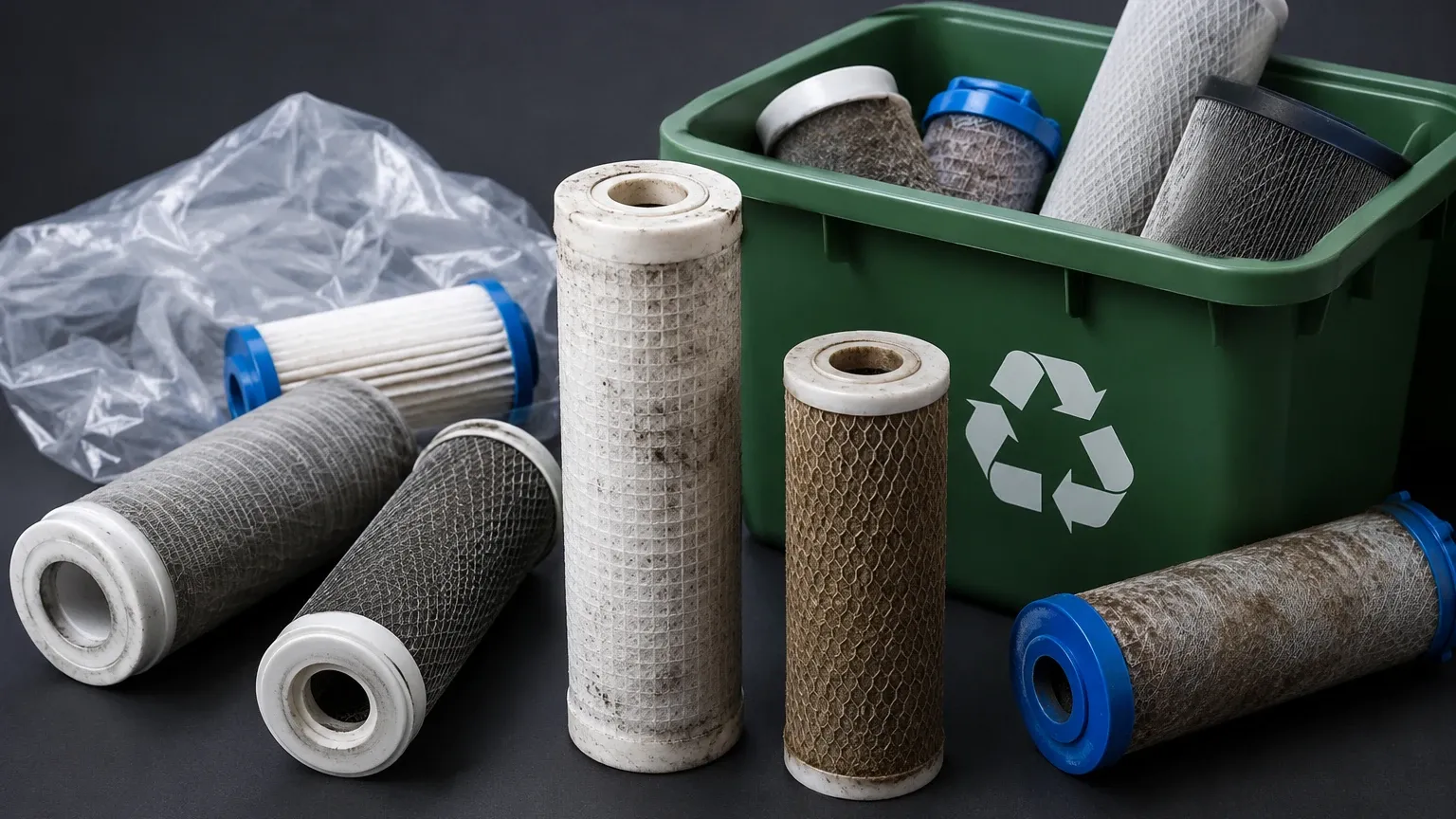
For most industrial facilities, the question of how do you dispose of water filter cartridges is answered by a three-tiered approach: recycling, landfilling, or incineration. The choice depends on the saturation of the media and the nature of the filtrate.
Recycling and Manufacturer Take-Back Programs
Some manufacturers of polymer filter cartridges offer take-back programs where used cartridges are collected, shredded, and pelletized for use in secondary plastic products. However, these programs often require the user to certify that the filters have not been exposed to hazardous chemicals. For stainless steel components, recycling is highly efficient. Once a metal filter reaches the end of its functional life—usually after many cleaning cycles—it can be sold as high-grade scrap metal, contributing to a circular economy.
Landfill Disposal
Non-hazardous, single-use cartridges are most frequently sent to industrial landfills. To minimize costs, many facilities use filter presses or centrifuges to dewater the cartridges before disposal. Reducing the weight and volume of the waste can significantly lower tipping fees. It is important to note that many jurisdictions require a "Waste Profile" to be filed before accepting large volumes of industrial filtration waste.
Incineration and Waste-to-Energy
In sectors where biological contamination or organic chemical saturation is a concern, incineration is the preferred method. This process destroys pathogens and organic compounds while reducing the filter to a small amount of ash. Some modern facilities utilize waste-to-energy (WtE) plants, where the high caloric value of polymer filters is used to generate steam or electricity.
The Impact of Contaminants on Disposal Strategy
The primary factor complicating the disposal of water filter cartridges is the presence of hazardous contaminants. Under environmental regulations such as the Resource Conservation and Recovery Act (RCRA) in the United States or the Waste Framework Directive in the EU, a filter becomes "hazardous waste" if it contains specific levels of toxic, corrosive, reactive, or ignitable substances.
Heavy Metals and Toxic Chemicals
If a filtration system is designed to remove lead, arsenic, mercury, or chromium from a water stream, the concentrated contaminants remain trapped within the filter media. When these cartridges are removed, they must be tested using the Toxicity Characteristic Leaching Procedure (TCLP). If the leachate exceeds regulatory limits, the cartridges must be disposed of at a licensed hazardous waste treatment, storage, and disposal facility (TSDF).
Biological and Pharmaceutical Waste
In the pharmaceutical and biotechnology sectors, filters often capture active pharmaceutical ingredients (APIs) or biological agents. These require specialized sterilization (autoclaving) or chemical deactivation before they can enter the standard waste stream. In many cases, these filters are classified as medical or biohazardous waste and require specialized handling by certified contractors.
Stainless Steel Filter Cartridges: A Sustainable Alternative
One of the most effective ways to address the complexities of disposal is to reduce the frequency of waste generation. This is where stainless steel filter cartridges offer a significant engineering advantage over disposable options. While the initial capital expenditure for stainless steel media is higher, the long-term environmental and operational benefits are substantial.
Cleanability and Longevity
Unlike polymer depth filters, which must be discarded once the pressure differential (ΔP) reaches a certain threshold, stainless steel wire mesh and sintered metal filters are designed for regeneration. They can be cleaned using several methods:
* Backwashing: Reversing the flow to dislodge surface cake.
* Ultrasonic Cleaning: Using high-frequency sound waves in a solvent bath to remove fine particulates from deep within the mesh.
* Chemical Cleaning: Using acids or alkalis to dissolve specific scales or organic build-up.
* Thermal Stripping: Burning off organic contaminants in a controlled furnace.
By cleaning and reusing the filter, a facility can extend the component's life from weeks to years. This drastically reduces the answer to "how do you dispose of water filter cartridges" to a rare event rather than a weekly logistical burden.
Material Recovery
When a stainless steel filter finally reaches the end of its service life—perhaps due to mechanical wear or irreversible fouling—it remains a valuable asset. The high nickel and chromium content of 316L stainless steel makes it highly sought after by metal recyclers. Unlike plastic filters, which lose value through degradation, metal filters retain their base material value.
Regulatory Compliance and Industrial Best Practices
For procurement managers and plant engineers, maintaining compliance during the disposal process is a non-negotiable requirement. Failure to document the disposal of industrial filters properly can lead to significant fines and reputational damage.
Documentation and Manifesting
Every batch of industrial filters leaving a facility should be accompanied by documentation that identifies the material, the contaminants, and the final destination. If the waste is hazardous, a Uniform Hazardous Waste Manifest is required. Even for non-hazardous waste, maintaining a "Certificate of Disposal" from the waste contractor is a best practice for internal audits.
Standard Operating Procedures (SOPs)
Facilities should develop clear SOPs for the removal and handling of filter cartridges. These procedures should include:
* Drainage and Drying: Ensuring cartridges are drained of process fluids to prevent leaks during transport and to reduce weight.
* Containment: Using heavy-duty, leak-proof bags or drums for storage.
* Labeling: Clearly marking containers with the date of removal and the type of filter.
* Personal Protective Equipment (PPE): Ensuring maintenance staff are protected from the contaminants captured by the filter during the change-out process.
Engineering Considerations for Filter Selection
When selecting Filter Cartridges, engineers should perform a lifecycle analysis that includes disposal costs. A low-cost disposable filter may seem economical at the point of purchase, but when the costs of frequent change-outs, labor, storage, shipping, and disposal fees are factored in, the total cost can be surprisingly high.
Total Cost of Ownership (TCO) Factors
* Disposal Frequency: How many units are discarded per year?
* Labor Costs: The time required for maintenance teams to swap and process used filters.
* Disposal Fees: Tipping fees for landfills or specialized fees for hazardous waste.
* Regulatory Risk: The potential cost of non-compliance or environmental incidents.
By opting for high-durability, cleanable metal filtration solutions, companies can shift their filtration strategy from a "consumable" model to an "asset" model. This not only improves the bottom line but also aligns the facility with modern sustainability goals and "Zero Waste to Landfill" initiatives.
Conclusion
Determining how do you dispose of water filter cartridges requires a comprehensive understanding of material science, process chemistry, and environmental law. While disposable polymer cartridges remain a standard in many applications due to their low initial cost, the growing pressure for industrial sustainability is driving a shift toward more durable solutions.
For engineers and purchasing teams, the goal should be to optimize filtration performance while minimizing the waste footprint. By selecting high-quality stainless steel filter cartridges and implementing rigorous cleaning and recycling protocols, industrial facilities can ensure they meet their process requirements while maintaining a responsible and compliant approach to waste management. Proper disposal is not just the final step in a filter's life; it is a critical part of a well-engineered filtration strategy.
Download How Do You Dispose of Water Filter Cartridges as a PDF
