


Noga Water Filter Cartridges
In the landscape of industrial fluid management, the efficiency of cooling systems and process water circuits depends heavily on the reliability of filtration components. Noga water filter cartridges have established a presence in specific niche applications, particularly where precision cooling and machine tool maintenance are critical. For engineers and procurement specialists, understanding the technical nuances of these cartridges—and the broader category of industrial filtration they represent—is essential for maintaining equipment longevity and operational uptime.
Industrial water filtration is not merely about removing visible debris; it is a complex engineering challenge involving fluid dynamics, material science, and cost-efficiency. Whether used in closed-loop cooling systems or as pre-filters in complex water treatment stages, the performance of a filter cartridge dictates the health of downstream components such as pumps, nozzles, and heat exchangers.
Understanding Noga Water Filter Cartridges in Industrial Applications
Noga water filter cartridges are often associated with specialized cooling systems and fluid delivery setups used in metalworking and precision engineering. These systems require consistent water quality to prevent the clogging of fine spray nozzles and to ensure that heat transfer surfaces remain free of scale and particulate buildup.
In industrial environments, "water" is rarely pure H2O. It often contains suspended solids, minerals, and microbial growth that can compromise mechanical seals and internal passages. The primary role of these cartridges is to provide a physical barrier against these contaminants. While many standard commercial filters focus on basic sediment removal, industrial-grade cartridges must withstand higher flow rates, varying pressure differentials, and potential chemical exposure from additives like rust inhibitors or biocides.
When evaluating noga water filter cartridges, technical teams must look beyond the brand name to the underlying specifications: the micron rating, the structural integrity of the core, and the compatibility of the end-caps with existing filter housings. These factors determine whether the filtration system will perform as intended or become a bottleneck in the production line.
Technical Specifications and Performance Metrics
To make an informed purchasing decision, engineers must analyze the performance metrics that define high-quality Filter Cartridges. These metrics go beyond simple dimensions and touch upon the physics of filtration.
Micron Rating: Absolute vs. Nominal
One of the most critical specifications is the micron rating. A nominal rating indicates the ability of the filter to trap a certain percentage of particles of a given size, whereas an absolute rating implies a much higher efficiency (typically 99.9%) at that specific size. For precision cooling systems using noga water filter cartridges, an absolute rating is often preferred to ensure that no particles larger than the nozzle orifice can pass through the system.
Beta Ratio
The Beta ratio is a more precise way to measure filtration efficiency. It compares the number of particles of a specific size upstream of the filter to the number downstream. A higher Beta ratio signifies a more efficient filter. In critical industrial water applications, understanding the Beta ratio helps engineers predict the cleanliness levels of the fluid after a single pass.
Differential Pressure (Delta P)
Every filter element creates a resistance to flow, known as pressure drop or Delta P. As the filter captures contaminants, the resistance increases. Industrial cartridges must be designed to handle a high "dirty" pressure drop without collapsing or allowing "bypass"—where fluid escapes around the media rather than through it. Quality stainless steel and reinforced synthetic cartridges are engineered to maintain structural integrity even as they reach their loading capacity.
Materials of Construction: Choosing the Right Media
The choice of material for a filter cartridge is dictated by the operating environment. While polymer-based media (such as polypropylene or polyester) are common for general-purpose water filtration, demanding industrial processes often require more robust materials.
Stainless Steel Wire Mesh
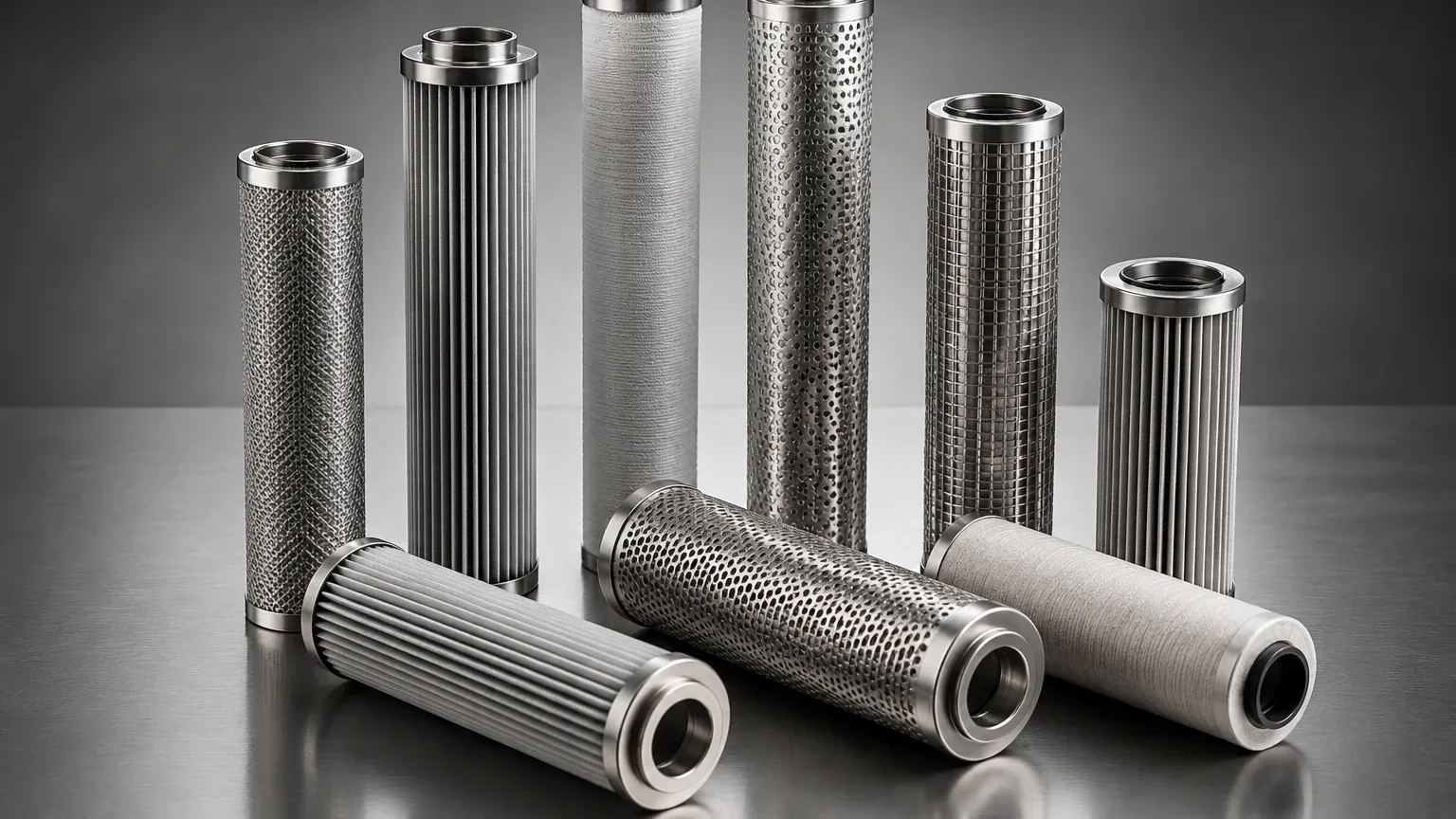
For high-temperature applications or environments where chemical compatibility is a concern, stainless steel wire mesh is the gold standard. Stainless steel Filter Cartridges offer several advantages over disposable synthetics:
1. Thermal Stability: They can operate in temperatures exceeding 250°C, far beyond the limits of most polymers.
2. Chemical Resistance: 304 and 316L stainless steel are resistant to a wide range of industrial chemicals and corrosive water conditions.
3. Cleanability: Unlike disposable cartridges, metal mesh filters can often be backwashed or ultrasonically cleaned, extending their service life and reducing waste.
Synthetic Depth Media
In applications where noga water filter cartridges are used for fine sediment removal, melt-blown or pleated synthetic media may be utilized. Pleated designs are particularly effective because they maximize the surface area within a compact footprint, allowing for higher flow rates and a longer interval between replacements.
Critical Selection Factors for Procurement and Engineering
When sourcing replacements or specifying filters for a new project, several factors must be confirmed to ensure compatibility and performance. Relying on a long-tail keyword like "noga water filter cartridges" is a starting point, but the following technical details are what truly matter on the factory floor.
Fluid Characteristics
The viscosity and temperature of the water-based fluid significantly impact filter selection. Higher viscosity fluids require more surface area to maintain the same flow rate at a given pressure drop. Additionally, if the water contains oily residues or surfactants, the surface tension may affect how particles adhere to the filter media.
Contaminant Load
Is the water contaminated with hard, abrasive metallic chips, or soft, organic algae? Hard particles are best captured by rigid mesh, while soft, deformable particles may require depth filtration to prevent them from being "squeezed" through the pores of a surface filter under pressure.
Housing Compatibility
Standardization in the filtration industry allows for some interchangeability, but nuances in end-cap designs (such as DOE – Double Open End, or SOE – Single Open End with specific O-ring configurations) are vital. A mismatch in the seal can lead to fluid bypass, rendering the filtration system useless regardless of the cartridge's quality.
Maintenance, Cleaning, and the Total Cost of Ownership
In a B2B context, the purchase price of a filter cartridge is only one component of the Total Cost of Ownership (TCO). Engineers must consider the labor costs associated with frequent filter changes, the disposal costs of contaminated cartridges, and the potential cost of downstream equipment damage if a filter fails.
Monitoring Pressure Drop
Effective maintenance starts with monitoring. Differential pressure gauges should be installed across every filter housing. A sudden drop in pressure might indicate a ruptured filter element, while a rapid increase suggests an unexpected spike in contaminant load. Setting clear thresholds for when a cartridge must be cleaned or replaced is essential for preventing system downtime.
The Case for Cleanable Elements
While disposable noga water filter cartridges may have a lower initial cost, the long-term savings of cleanable stainless steel cartridges are substantial. In high-volume industrial processes, the ability to reuse a filter element dozens of times reduces the logistics of inventory management and aligns with corporate sustainability goals by minimizing landfill waste.
Customization and OEM Solutions for Specialized Water Filtration
Many industrial systems utilize non-standard dimensions or require specific performance characteristics that off-the-shelf cartridges cannot meet. This is where custom manufacturing and OEM capabilities become invaluable.
Customization options often include:
* Varying Weave Patterns: Choosing between plain, twilled, or Dutch weaves to balance flow rate and filtration precision.
* Reinforced Cores: Adding internal support structures for high-pressure hydraulic or water-jetting applications.
* Specialized End-Caps: Engineering custom fittings to ensure a perfect, leak-proof seal in proprietary filter housings.
For manufacturers like Kaifil, the focus is on providing these tailored solutions. By working closely with engineering teams, a manufacturer can develop a filter cartridge that is optimized for the specific flow dynamics and contaminant profile of a particular machine tool or cooling circuit. This bespoke approach often results in better protection for expensive machinery and a more predictable maintenance schedule.
Conclusion: Making the Informed Choice
Selecting the right filtration component requires a balance of technical knowledge and operational foresight. Whether you are looking for noga water filter cartridges for a specific cooling unit or seeking a more durable stainless steel alternative for a harsh industrial environment, the focus must remain on the fundamental requirements of the application.
By prioritizing high-quality materials, precise micron ratings, and structural integrity, procurement teams can ensure that their filtration systems do more than just "clean the water"—they actively contribute to the efficiency and reliability of the entire production process. As industrial requirements become more stringent, the shift toward high-performance, often customized, filtration solutions continues to be a defining trend in modern manufacturing.
When evaluating your next filtration upgrade or replacement, consider the long-term benefits of precision engineering. High-quality Filter Cartridges are an investment in the stability of your operations, providing the necessary defense against the microscopic contaminants that can cause macroscopic failures.
