


Ov P100 Filter Cartridges
In industrial environments where air quality and process purity are paramount, the technical specifications of filtration media determine both operational safety and equipment longevity. Among the various standards used to classify filtration performance, the combination of organic vapor (OV) protection and P100 particulate efficiency represents a high-tier solution for complex environments. While often associated with personal protective equipment, the engineering principles behind ov p100 filter cartridges are increasingly relevant in the design of industrial process filtration systems, where volatile organic compounds (VOCs) and ultra-fine particulates must be managed simultaneously.
For engineers and procurement specialists, understanding the intersection of these standards—and how they translate into industrial-grade Filter Cartridges—is essential for maintaining compliance and optimizing system performance. This guide examines the technical foundations of OV and P100 ratings, material considerations for demanding applications, and the criteria for selecting high-performance filtration components.
Understanding the Technical Standards: OV and P100
The designation "OV P100" refers to a dual-function filtration capability. To evaluate these components accurately, it is necessary to break down what each rating signifies from an engineering perspective.
The P100 Particulate Standard
The "P" in P100 stands for "Oil Proof," indicating that the filter media can maintain its integrity and efficiency even in the presence of oil-based aerosols. The "100" represents the highest level of particulate filtration efficiency defined by NIOSH (National Institute for Occupational Safety and Health) and similar international bodies. A P100 rated filter must capture at least 99.97% of airborne particles that are 0.3 microns in diameter or larger. This is technically equivalent to HEPA (High-Efficiency Particulate Air) filtration and is critical for capturing hazardous dusts, metal fumes, and biological agents.
The Organic Vapor (OV) Standard
Organic Vapor filtration relies on adsorption rather than mechanical straining. Most OV cartridges utilize a bed of activated carbon or specialized synthetic sorbents. These materials possess an immense internal surface area with microscopic pores that chemically or physically attract and hold vapor molecules from substances such as solvents, degreasers, and resins. In an industrial process context, integrating OV protection into a cartridge system prevents the downstream contamination of sensitive equipment and ensures that exhaust gases meet environmental discharge regulations.
Material Engineering for Industrial Filter Cartridges
While standard plastic-housed ov p100 filter cartridges are common in respiratory protection, industrial process applications often require more robust materials to withstand high temperatures, high pressures, and corrosive chemical streams. This is where the transition from disposable safety gear to permanent stainless steel filtration components becomes necessary.
Stainless Steel Construction
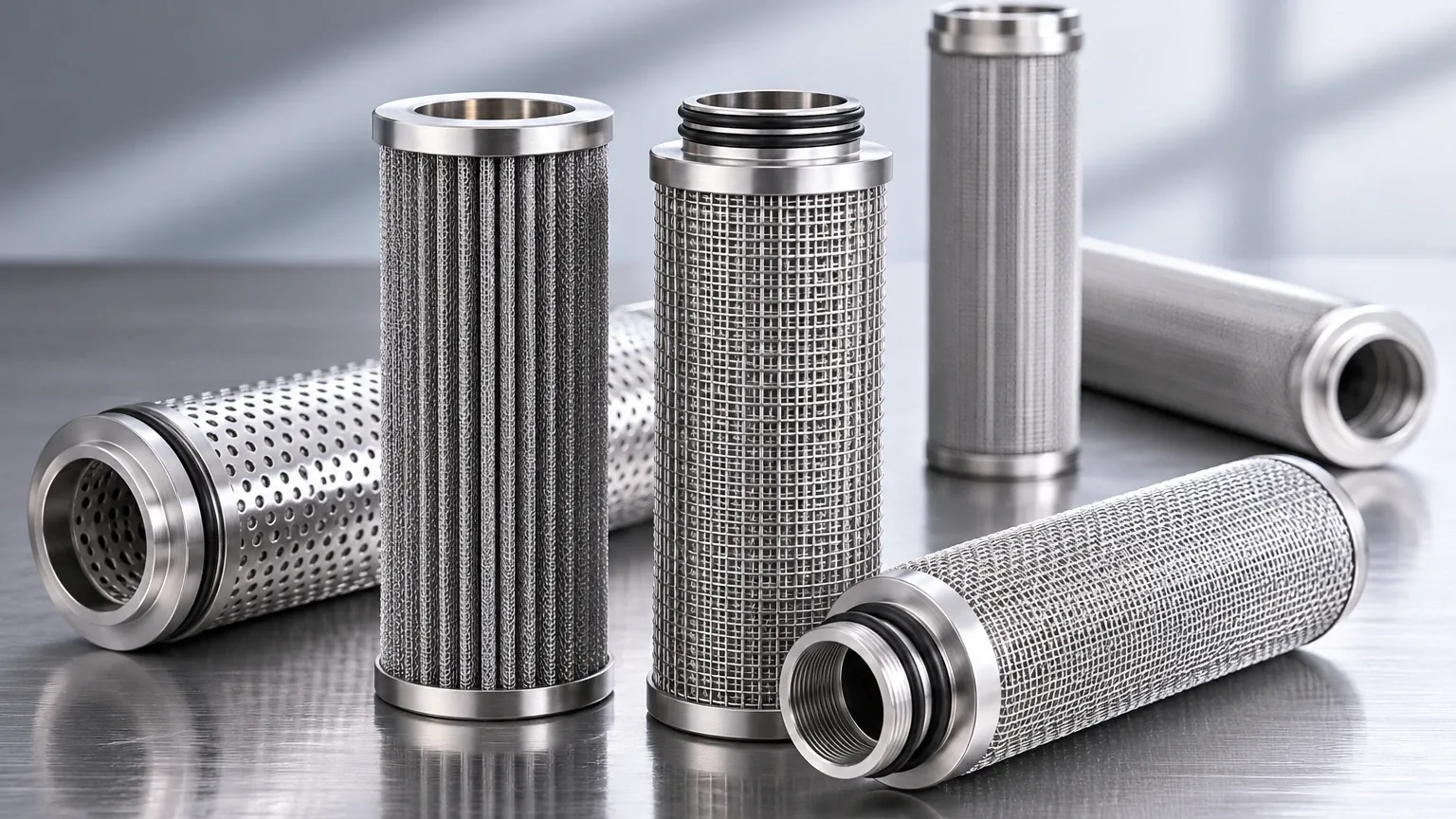
In many chemical processing and pharmaceutical applications, the filtration media must be housed in materials that do not outgas or degrade. Stainless steel (typically 304 or 316L) is the industry standard for high-performance Filter Cartridges. Metal housings provide several advantages:
* Thermal Stability: Unlike polymer-based cartridges, stainless steel components can operate in environments exceeding 200°C without losing structural integrity.
* Chemical Compatibility: 316L stainless steel offers superior resistance to a wide range of organic solvents and acidic vapors, preventing the risk of housing failure or media bypass.
* Mechanical Strength: In high-pressure hydraulic or gas systems, metal cartridges resist collapse and maintain a consistent seal under fluctuating loads.
Sintered Metal and Wire Mesh Media
To achieve P100-level efficiency in an industrial setting, manufacturers like Kaifil utilize advanced media such as sintered metal fibers or multi-layer wire mesh. Sintered metal felt, for instance, provides a high porosity structure that allows for deep particulate loading while maintaining a low pressure drop. When combined with specialized sorbent layers for vapor removal, these custom-engineered cartridges provide a durable alternative to traditional disposable units.
Engineering Considerations: Pressure Drop and Flow Rates
One of the primary challenges in deploying high-efficiency filtration like OV P100 is managing the resistance to flow, known as pressure drop (ΔP). Because P100 media is extremely dense to capture 99.97% of particulates, and OV beds require sufficient residence time for adsorption to occur, the system must be carefully balanced.
Optimizing Surface Area
To mitigate high pressure drop, engineers often specify pleated filter designs. Pleating significantly increases the effective filtration surface area within the same footprint. For a given flow rate, a larger surface area reduces the face velocity of the fluid or gas passing through the media, which lowers the initial pressure drop and extends the service life of the cartridge before it reaches its terminal ΔP.
Residence Time for Vapor Adsorption
For the "OV" portion of the filtration to be effective, the organic vapors must remain in contact with the sorbent media for a specific duration. If the flow rate is too high, the vapors may "break through" the filter before they are adsorbed. When designing custom Filter Cartridges, Kaifil engineers calculate the required bed depth and sorbent volume based on the specific VOC concentrations and flow dynamics of the customer’s application.
Customization and OEM Solutions for Specialized Applications
Standard off-the-shelf ov p100 filter cartridges may not fit the unique geometries or performance requirements of specialized industrial machinery. In these cases, custom OEM filtration solutions are required. Customization allows for the optimization of several key variables:
1. End Cap Configurations: Whether the system requires DOE (Double Open End), SOE (Single Open End) with 222 or 226 O-rings, or threaded connections, custom manufacturing ensures a leak-proof fit into existing housings.
2. Multi-Stage Filtration: It is often more efficient to design a single cartridge that incorporates a pre-filter layer (to catch larger debris), a P100-grade particulate layer, and an activated carbon stage for vapor removal. This reduces the frequency of maintenance and simplifies inventory management.
3. Regenerable Media: In some industrial gas applications, the particulate portion of the filter can be cleaned via backpulsing or ultrasonic cleaning, significantly reducing the total cost of ownership compared to single-use disposable cartridges.
Common Risks in Filter Selection and Implementation
Selecting the wrong filtration component can lead to catastrophic system failure or safety breaches. When evaluating ov p100 filter cartridges or their industrial equivalents, technical teams should be aware of the following risks:
* Bypass Leakage: If the cartridge is not seated correctly or if the gaskets are incompatible with the organic vapors being filtered, contaminated air or fluid will bypass the media entirely. Ensuring high-precision machining of the filter end caps is critical.
* Sorbent Saturation: Unlike particulate filters, which show an increase in pressure drop as they clog, OV filters do not typically show a physical sign of being "full." Once the adsorption sites are occupied, vapors pass through freely. Implementation of a strict replacement schedule or the use of breakthrough sensors is mandatory.
* Channeling: In poorly designed vapor cartridges, the gas may form "channels" through the sorbent bed, leading to premature breakthrough. Professional manufacturing ensures a uniform packing density of the filtration media to prevent this phenomenon.
Evaluating Total Cost of Ownership (TCO)
For purchasing teams, the initial price of a filter cartridge is only one component of the total cost. A technical evaluation should also consider:
* Replacement Frequency: A higher-quality P100 filter with more surface area may cost more upfront but last three times longer than a standard alternative.
* Energy Consumption: A filter with a lower clean pressure drop reduces the load on pumps and blowers, leading to significant energy savings over the life of the system.
* Disposal Costs: In many regions, filters saturated with hazardous organic vapors must be disposed of as toxic waste. Durable, cleanable stainless steel cartridges can reduce the volume of waste generated.
Conclusion: Selecting the Right Partner for Filtration
Implementing OV P100 filtration standards in an industrial context requires a deep understanding of material science, fluid dynamics, and chemical compatibility. Whether you are protecting sensitive laboratory equipment from VOCs or ensuring that a high-purity gas line remains free of sub-micron particulates, the quality of the filtration component is the deciding factor in your system's success.
Kaifil specializes in bridging the gap between stringent filtration standards and rugged industrial requirements. By providing customized stainless steel Filter Cartridges and precision-engineered wire mesh solutions, we help technical teams achieve reliable, long-term performance in the most demanding environments. When selecting filtration for your next project, prioritize components that offer the structural integrity and verified efficiency necessary to meet the complex challenges of modern industrial processing.
