


Pentair 420 Filter Cartridges
In high-capacity fluid management systems, the selection of filtration media is a critical engineering decision that impacts both operational efficiency and long-term maintenance costs. The Pentair 420 series represents a specific class of high-surface-area filtration designed for large-scale water treatment, commercial aquatic facilities, and light industrial applications. Understanding the technical specifications, material limitations, and performance variables of pentair 420 filter cartridges is essential for engineers and facility managers tasked with maintaining system integrity.
While these cartridges are often associated with standard commercial water systems, their design principles—centered on maximizing effective filtration area within a compact footprint—are highly relevant to broader industrial filtration discussions. For demanding environments where standard materials may fail, exploring specialized Filter Cartridges with enhanced structural properties becomes necessary.
Technical Architecture of the 420 Series
The "420" designation refers to the total effective filtration area provided by the system, which is 420 square feet. In standard configurations, such as the Clean & Clear Plus 420, this is achieved by utilizing a manifold system that houses four individual cartridges, each providing 105 square feet of media surface.
Dimensional Specifications
From an engineering perspective, dimensional accuracy is the first hurdle in procurement. A standard cartridge within a 420-square-foot set typically measures approximately 26 inches in length with an outside diameter (OD) of 7 inches. The internal core diameter is usually 3 inches. These tolerances are critical; even a 1/16-inch variance in the end-cap diameter can lead to bypass, where unfiltered fluid bypasses the media entirely, compromising the downstream process.
Media Composition and Micron Ratings
Most pentair 420 filter cartridges utilize a pleated polyester non-woven fabric. This media is chosen for its balance of permeability and particle retention. Standard nominal ratings for these cartridges typically fall between 10 and 20 microns. However, in industrial contexts, the "nominal" rating must be scrutinized. Unlike absolute-rated filters used in pharmaceutical or high-precision chemical processing, these pleated cartridges rely on a depth-loading mechanism that becomes more efficient as a small "cake" of debris builds on the surface, up to a certain pressure threshold.
Performance Evaluation Criteria
When evaluating pentair 420 filter cartridges for industrial or heavy-commercial use, engineers must look beyond the surface area and examine the fluid dynamics of the system.
Flow Rate and Flux
The maximum flow rate for a 420-square-foot system is generally rated at 150 gallons per minute (GPM) for commercial applications. However, operating at the maximum rated flow is rarely the most efficient strategy. The concept of "flux"—the flow rate per unit of area—is vital. By spreading 150 GPM over 420 square feet, the flux is approximately 0.35 GPM/sq. ft. Lower flux rates generally result in higher filtration efficiency and longer intervals between cleaning cycles because the velocity of the fluid passing through the media is low enough to prevent "bleed-through" of fine particles.
Differential Pressure (ΔP)
The pressure drop across the filter is the primary indicator of filter health. A clean set of pentair 420 filter cartridges typically exhibits a pressure drop of 1 to 2 PSI, depending on the system's plumbing. Industrial guidelines suggest that cartridges should be cleaned or replaced when the differential pressure increases by 8 to 10 PSI over the starting pressure. Allowing the ΔP to exceed 30 PSI can lead to structural failure of the cartridge core or permanent deformation of the pleats, known as "pleat bunching," which permanently reduces the effective filtration area.
Engineering Considerations: Material and Durability
In many B2B applications, the standard polyester media found in pentair 420 filter cartridges may face compatibility issues. Engineers must confirm that the chemical composition of the fluid and the operating temperature do not exceed the material's limits.
1. Chemical Compatibility: Polyester is generally resistant to chlorine and common water treatment chemicals but can degrade when exposed to high concentrations of certain acids, bases, or organic solvents. If the application involves aggressive chemical processing, transitioning to stainless steel or specialized polymer Filter Cartridges is often required to prevent media migration and downstream contamination.
2. Thermal Limits: Standard cartridges are typically rated for temperatures up to 100°F (38°C). In industrial heat exchange loops or hot water recovery systems, the structural integrity of the plastic end caps and the thermally bonded seams may be compromised.
3. Core Strength: The internal support core must withstand the radial pressure exerted by the fluid. High-quality replacements often feature reinforced polypropylene cores with high open-area ratios to minimize flow resistance while maintaining rigidity.
Common Risks in High-Capacity Filtration
Utilizing pentair 420 filter cartridges in a professional environment requires awareness of several operational risks that can lead to premature system failure or increased Total Cost of Ownership (TCO).
Media Blinding
In systems with high oil or grease content—common in industrial parts washing or specific food processing applications—the polyester media can become "blinded." This occurs when oils coat the fibers, preventing water from passing through regardless of the pressure. In these instances, standard cleaning protocols are ineffective, and the cartridges must be replaced. For such environments, engineers often specify cartridges with oleophobic coatings or consider backwashable stainless steel mesh alternatives.
Structural Bypass
Bypass is the most common cause of filtration failure. In a 420-square-foot system, the cartridges are held in place by a top manifold and a bottom collector. If the spring tension in the housing is insufficient, or if the end caps of the cartridges have warped due to heat or chemical exposure, fluid will take the path of least resistance around the seals. Regular inspection of the O-rings and the manifold seating surfaces is mandatory for maintaining the 10-20 micron retention target.
Customization and Industrial Upgrades
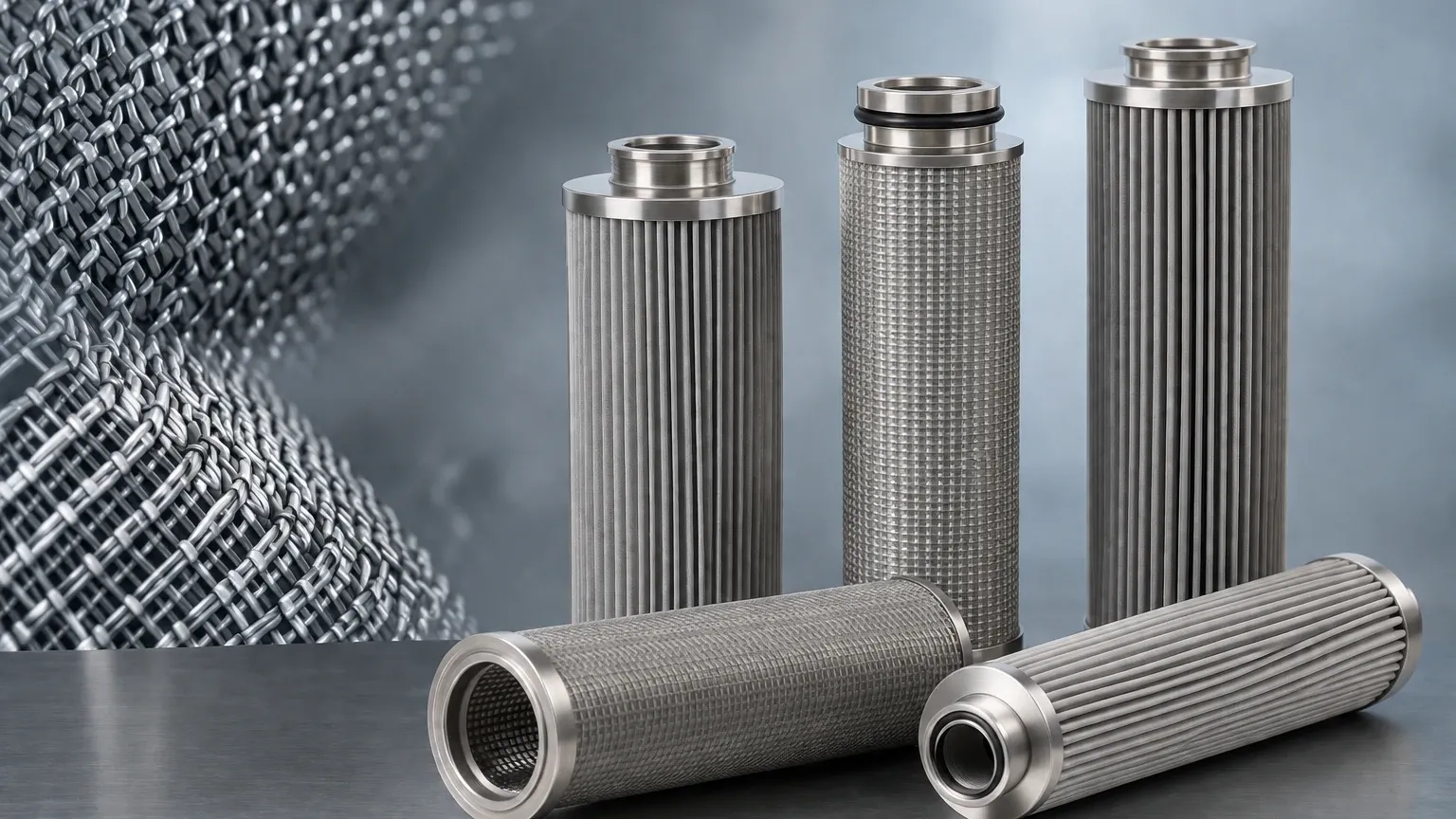
While the Pentair 420 series is a standard in many sectors, specific industrial requirements often necessitate customized solutions. When the standard polyester media does not meet the technical demands of a process, engineers look toward custom-engineered Filter Cartridges.
Stainless Steel Alternatives
For applications involving high temperatures, high pressures, or the need for frequent ultrasonic cleaning, stainless steel wire mesh cartridges are the preferred upgrade. Unlike disposable polyester, stainless steel mesh can be cleaned and reused indefinitely, providing a lower TCO over several years. These custom components can be designed to fit the exact dimensions of a 420-series housing while offering absolute micron ratings and superior chemical resistance.
Pleat Geometry Optimization
The number of pleats and the depth of each pleat determine the dirt-holding capacity. If the pleats are too tight, the fluid cannot reach the bottom of the pleat, effectively reducing the 420-square-foot surface area. Custom manufacturers can optimize the pleat count based on the specific particle size distribution of the process fluid, ensuring that the entire surface area is utilized for particle capture.
Maintenance and Replacement Cycles
A data-driven maintenance schedule is essential for B2B operations. Relying on a calendar-based replacement cycle is often inefficient; instead, replacement should be dictated by flow meters and pressure transducers.
* Cleaning Protocol: For standard pentair 420 filter cartridges, cleaning involves low-pressure rinsing. High-pressure washing can damage the delicate fibers of the polyester media, creating larger pores that allow contaminants to pass through.
* Degradation Indicators: During cleaning, if the media appears "fuzzy" or if the bands surrounding the cartridge are broken, the structural integrity is compromised. Fraying fibers can enter the effluent stream, which is particularly problematic in pharmaceutical or precision manufacturing applications.
* Total Cost of Ownership (TCO): When calculating the cost of filtration, engineers must include the labor costs of cleaning, the water costs associated with rinsing, and the downtime required for maintenance. In many cases, upgrading to a more durable or higher-efficiency cartridge reduces the frequency of these interventions, leading to significant long-term savings.
Conclusion for Procurement and Engineering Teams
Before purchasing or specifying pentair 420 filter cartridges, technical teams should confirm the following data points:
1. Actual Fluid Velocity: Ensure the GPM per square foot is within the optimal range for the target micron rating.
2. Chemical and Thermal Profile: Verify that the polyester and polypropylene components are compatible with the process fluid and peak operating temperatures.
3. Housing Compatibility: Confirm that the cartridge dimensions (Length, OD, ID) match the manifold requirements to prevent bypass.
4. Performance Requirements: Determine if a nominal rating is sufficient or if the process requires the absolute filtration provided by precision Filter Cartridges.
By focusing on these technical parameters rather than generic marketing claims, engineers can ensure that their filtration systems provide reliable, predictable performance in demanding industrial and commercial environments. Whether utilizing standard 420-series replacements or seeking custom-engineered metal filtration components, the priority remains the same: protecting downstream equipment and maintaining the purity of the process fluid.
