


Pool Filter Cartridges Nearby
For facility managers, maintenance engineers, and procurement specialists overseeing commercial aquatic centers, municipal pools, or industrial water features, the search for pool filter cartridges nearby is often driven by an immediate operational requirement. However, in a B2B context, the proximity of a supplier is only one variable in a complex equation that includes filtration efficiency, mechanical durability, and total cost of ownership. While local retail outlets may offer immediate availability for residential-grade equipment, industrial-scale systems require Filter Cartridges engineered to withstand high flow rates, aggressive chemical treatments, and continuous duty cycles.
Selecting the right filtration component requires a technical understanding of how different materials and designs impact the hydraulic performance of the system. This guide examines the engineering considerations necessary for sourcing high-performance cartridges, moving beyond simple proximity to focus on technical compatibility and long-term reliability.
The Shift from Residential to Commercial Filtration Requirements
When searching for pool filter cartridges nearby, it is essential to distinguish between the requirements of a backyard pool and those of a commercial or industrial aquatic facility. Residential filters are typically designed for intermittent use and lower bather loads. In contrast, commercial systems must handle significantly higher organic loads, constant chemical dosing (such as chlorine or bromine), and rigorous hydraulic pressures.
Commercial-grade cartridges are characterized by their structural integrity. In high-flow environments, the internal core of a standard cartridge may collapse under the pressure of a fouled media. Industrial-grade solutions utilize reinforced cores—often made of high-strength polypropylene or even stainless steel—to ensure that the cartridge maintains its shape and functionality even as the differential pressure increases. For engineers, the priority is not just finding a part "nearby," but finding a part that meets the specific PSI ratings and flow velocity requirements of their pump and piping infrastructure.
Technical Specifications: Beyond the Standard Micron Rating
One of the most misunderstood aspects of sourcing pool filter cartridges is the micron rating. While many products are marketed with a nominal micron rating, B2B purchasers must look for absolute ratings or beta ratios to understand true performance. A nominal rating of 10 microns may only capture 60% of particles at that size, whereas an absolute-rated cartridge provides a much higher capture efficiency.
Surface Area and Pleat Density
The effective filtration area (EFA) is a critical metric. A higher pleat count does not always equate to better filtration. If the pleats are too tightly packed, the water cannot flow freely into the valleys of the pleats, leading to "bridging" where debris clogs the outer edges prematurely. This increases the face velocity of the water through the remaining open areas, which can force contaminants through the media—a phenomenon known as breakthrough.
When evaluating pool filter cartridges nearby, engineers should verify:
- Pleat Stability: Look for cartridges with banding or specialized heat-setting that prevents pleat bunching during high-flow events.
- Media Weight: Heavier, point-bonded polyester fabrics generally offer better depth filtration than lightweight, spun-bonded alternatives.
- End Cap Integrity: The seal between the media and the end cap must be robust. Thermally bonded end caps are superior to those using adhesives, as they are less likely to degrade when exposed to high concentrations of pool chemicals.
Sourcing Strategies: Balancing Proximity with Performance
The urgency of a maintenance window often makes the prospect of finding pool filter cartridges nearby very attractive. However, relying solely on local generic stock can lead to increased maintenance frequency. A strategic sourcing approach involves identifying suppliers who can provide OEM-quality or custom-engineered replacements that match the specific hydraulic profile of the facility.
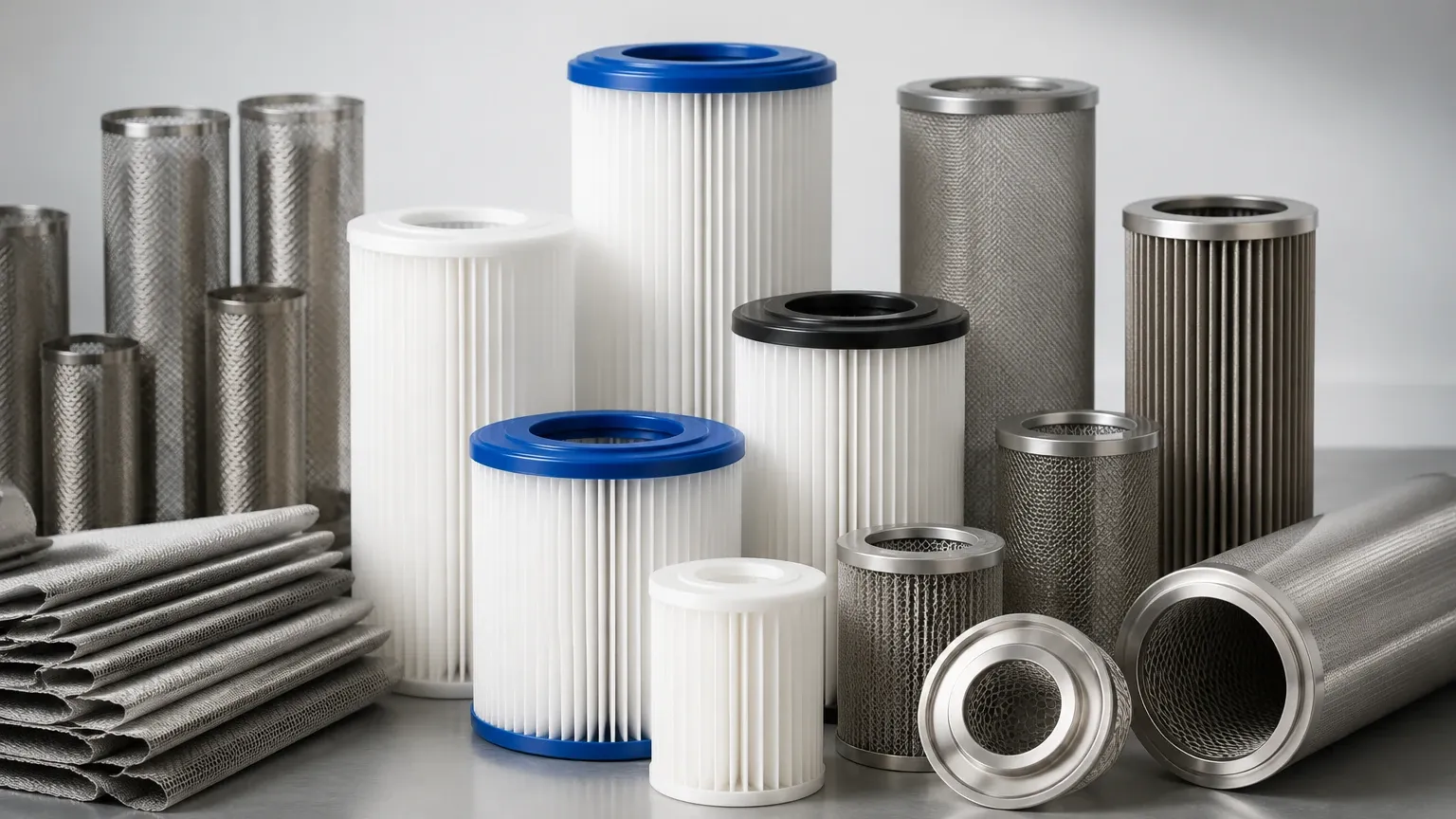
For many industrial applications, the standard polyester media found in local shops is insufficient. In environments where high temperatures or specialized chemicals are used—such as industrial cooling pools or thermal spas—stainless steel wire mesh cartridges may be required. These metal components offer cleanability and a lifespan that far exceeds synthetic media. While they may not be available at a local retail store, the long-term reduction in replacement frequency often outweighs the benefit of immediate local pickup for a lower-quality part.
Material Selection and Chemical Compatibility in Pool Environments
The chemical environment of a commercial pool is surprisingly aggressive. High levels of oxidizers, fluctuating pH levels, and the presence of sequestering agents can cause synthetic filter media to become brittle over time. When sourcing pool filter cartridges nearby, it is vital to confirm that the materials used are compatible with the specific water chemistry of your site.
- Polyester (Reemay): The industry standard for synthetic cartridges, offering a good balance of cost and performance. However, it can be susceptible to degradation from high ozone levels.
- Polypropylene: Often used for the core and end caps due to its excellent chemical resistance. In some high-purity applications, the filter media itself may be polypropylene.
- Stainless Steel (304 or 316L): For specialized industrial pools or high-pressure systems, stainless steel mesh provides unmatched durability. It is resistant to chemical attack and can be ultrasonically cleaned, making it a sustainable choice for facilities looking to reduce waste.
Engineers must also consider the "dirty" pressure drop. A cartridge that starts with a low pressure drop but blinds (clogs) rapidly due to poor material selection will ultimately cost more in energy consumption as the pump works harder to maintain flow rates.
Optimizing Replacement Cycles and Maintenance Protocols
A common question for those managing large-scale filtration systems is when to replace versus when to clean. While the search for pool filter cartridges nearby might be prompted by a failed cleaning attempt, a proactive maintenance schedule can extend the life of these components significantly.
1. Differential Pressure Monitoring: Cartridges should generally be cleaned when the pressure gauge shows an increase of 8-10 PSI over the "clean" starting pressure. Waiting longer can cause particles to be driven deep into the media fibers, making them impossible to remove.
2. Chemical Soaking: Degreasing agents are necessary to remove body oils and lotions, while acid soaking may be required to remove calcium scale. It is critical to ensure that the cleaning agents used do not damage the structural integrity of the cartridge fibers or the end cap seals.
3. Visual Inspection: During every cleaning cycle, the internal core should be checked for cracks and the pleats for fraying. If the media shows signs of "fuzzing," the filtration efficiency has likely been compromised, and a replacement should be sourced.
Total Cost of Ownership: Why Local Availability Isn't the Only Metric
For a B2B procurement team, the "price per unit" of a filter cartridge is only a fraction of the total cost of ownership (TCO). When evaluating pool filter cartridges nearby, consider the following hidden costs:
- Labor Costs: If a lower-quality cartridge requires cleaning every two weeks instead of every four, the labor costs for the maintenance staff effectively double.
- Energy Consumption: High-quality cartridges with optimized pleat geometry maintain a lower pressure drop for a longer period, reducing the electrical load on variable frequency drive (VFD) pumps.
- Chemical Consumption: Inefficient filtration leads to higher turbidity, which in turn increases the demand for chlorine and other sanitizers to maintain water clarity.
- System Downtime: In commercial settings, a filtration failure can lead to facility closure. Sourcing a more durable, perhaps more expensive, cartridge from a specialized manufacturer can be viewed as an insurance policy against unplanned downtime.
By focusing on these factors, engineers can justify the procurement of premium Filter Cartridges that may have a higher initial price point but offer significant savings over their operational lifespan.
Evaluating Suppliers and Logistics for Prompt Delivery
While the search term "pool filter cartridges nearby" implies a geographical preference, modern logistics and OEM partnerships have changed the definition of "nearby." Many manufacturers now offer rapid shipping programs or local distribution hubs that can deliver specialized industrial filters within 24 to 48 hours.
When vetting a supplier, technical professionals should ask:
- Do you offer custom sizing? Many older commercial systems use non-standard filter housings that require custom-fabricated cartridges.
- Can you provide technical data sheets? A reputable supplier should be able to provide flow vs. pressure drop curves and certified micron ratings.
- What is the lead time for bulk orders? For large facilities, maintaining an on-site inventory is often more efficient than repeated local sourcing.
Conclusion: Making an Informed Procurement Decision
Sourcing pool filter cartridges nearby is a practical starting point for addressing immediate maintenance needs, but it should not be the end of the procurement process for professional facilities. By prioritizing technical specifications such as effective filtration area, material compatibility, and structural integrity, engineers can ensure their filtration systems operate at peak efficiency.
Whether you are managing a municipal water park or an industrial process pool, the goal is to achieve consistent water quality with minimal intervention. Moving beyond the convenience of local retail and engaging with specialized manufacturers like Kaifil allows for the implementation of filtration solutions that are tailored to the specific rigors of the application. Investing in high-quality, durable filtration components is the most effective way to reduce long-term operational costs and ensure the safety and clarity of the water system.
