


Oil Coalescing Filter
In industrial fluid management, the separation of liquid phases—specifically the removal of oil aerosols from compressed air or the separation of water from hydraulic and lube oils—is a critical process for maintaining equipment integrity and process purity. An oil coalescing filter serves as the primary technical solution for these challenges. Unlike standard particulate filters that rely on simple mechanical straining to capture solid contaminants, a coalescing filter utilizes a sophisticated multi-stage physical process to merge sub-micron droplets into larger masses that can be effectively drained from the system.
For engineers and procurement professionals, selecting the correct oil coalescing filter requires a deep understanding of fluid dynamics, material compatibility, and the specific environmental conditions of the application. As a specialized manufacturer of stainless steel filtration components, Kaifil provides the technical expertise and precision manufacturing necessary to develop filtration solutions that meet the rigorous demands of chemical processing, power generation, and heavy industrial manufacturing.
Understanding the Mechanism of Coalescing Filtration
The efficiency of an oil coalescing filter is governed by the laws of physics rather than simple pore size. The process typically occurs within a specialized filter media—often a combination of borosilicate glass microfibers or specialized stainless steel mesh layers—designed to facilitate three distinct physical phenomena: direct interception, inertial impaction, and Brownian diffusion.
1. Direct Interception
This occurs when a droplet, following a streamline in the fluid flow, comes within one-half of its diameter of a filter fiber and adheres to it. This mechanism is most effective for larger droplets (typically those greater than 1 micron).
2. Inertial Impaction
Inertial impaction targets heavier droplets. As the fluid stream navigates the tortuous path of the filter media, heavier oil droplets possess too much momentum to follow the sudden changes in direction. Consequently, they collide with the fibers and become trapped. This is the dominant mechanism for droplets between 0.3 and 1 micron in size.
3. Brownian Diffusion
For extremely small, sub-micron aerosols (typically less than 0.1 micron), the movement is governed by Brownian motion—the random bombardment of the droplets by gas molecules. This erratic movement increases the probability that the droplets will contact a fiber and be captured.
Once captured, these tiny droplets move along the fibers, intersecting with other droplets to form larger beads. As these beads grow, they eventually reach a size where gravity overcomes the drag forces of the fluid flow, causing the oil to settle into a collection sump at the bottom of the filter housing for removal.
Structural Components of High-Performance Oil Coalescing Filters
The structural integrity of an oil coalescing filter is paramount, especially in high-pressure hydraulic or compressed gas systems. At Kaifil, we emphasize the use of high-grade materials to ensure the filter can withstand differential pressure spikes and corrosive environments.
Core Support and Outer Cages
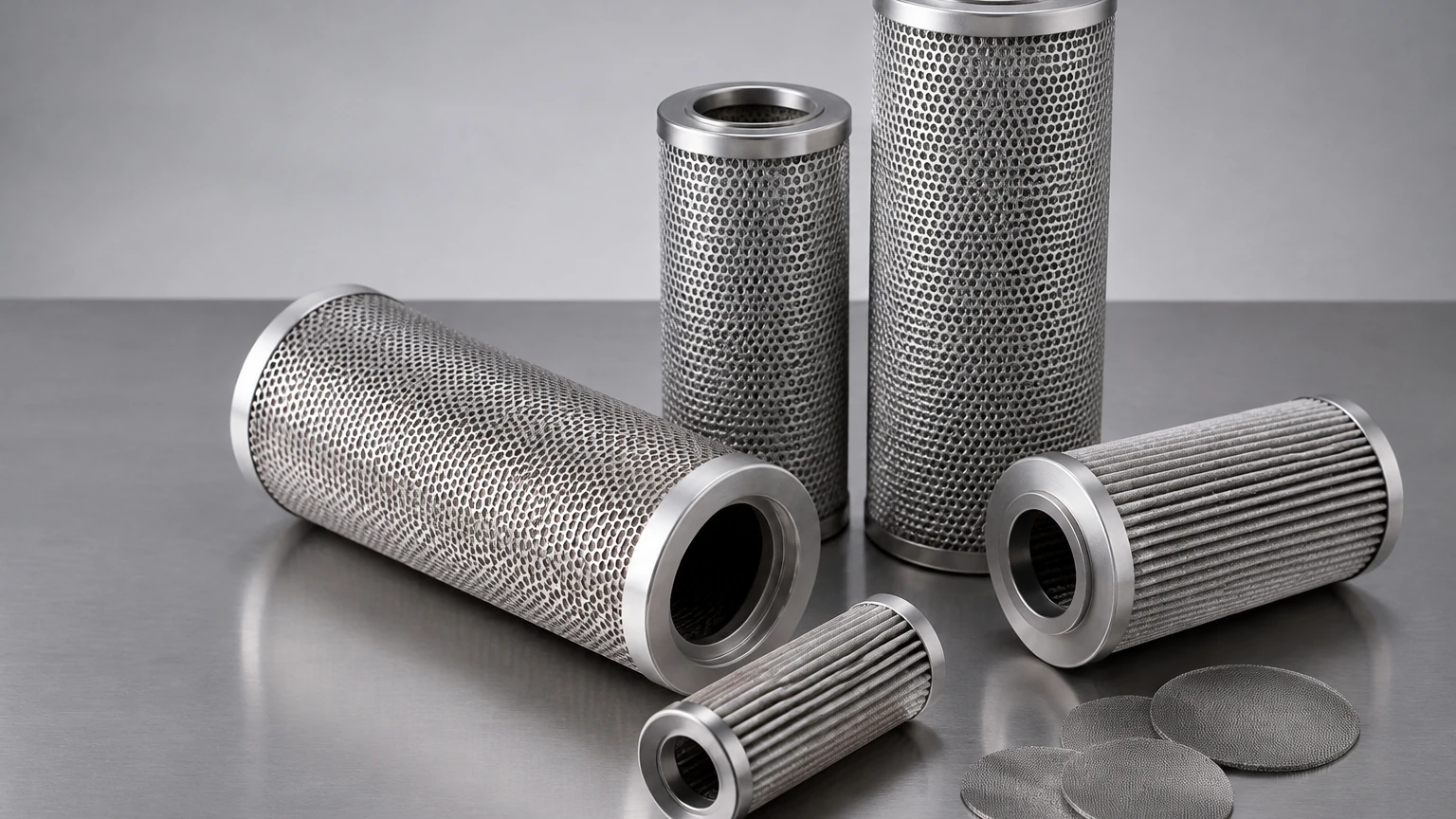
Industrial coalescing filters require robust internal support to prevent media collapse. Stainless steel (typically 304 or 316L) is the preferred material for inner cores and outer cages. These components provide the necessary mechanical strength while maintaining a high open area to minimize pressure drop. Precision-perforated or expanded metal cylinders are often employed to ensure uniform flow distribution across the media.
Media Layers
The media is the heart of the oil coalescing filter. High-efficiency systems often utilize a graded density structure. The inner layers focus on the initial capture and coalescence, while the outer layers—often referred to as the drainage layer—facilitate the movement of large oil drops to the sump. In high-temperature or chemically aggressive applications, stainless steel fiber felt or multi-layered wire mesh may be used as the primary coalescing medium to ensure longevity and chemical resistance.
End Caps and Seals
To prevent fluid bypass, end caps must be securely bonded to the filter media. In many industrial settings, polyurethane or epoxy resins are used, but for extreme temperatures or solvent-rich environments, all-welded stainless steel constructions are required. Proper sealing, often utilizing Viton or PTFE O-rings, ensures that 100% of the fluid passes through the coalescing media.
Critical Selection Criteria for Industrial Applications
When evaluating an oil coalescing filter for a specific project, engineers must look beyond the initial purchase price and focus on performance metrics that impact the total cost of ownership. The following factors are critical in the selection process:
Filtration Efficiency and Beta Ratings
Efficiency is often expressed as a percentage of contaminant removal at a specific micron size. For coalescing filters, this is frequently measured against aerosol concentrations (e.g., 99.99% removal of 0.3-micron droplets). Engineers should request validated test data according to ISO 12500-1 or similar standards to confirm performance under realistic flow conditions.
Clean Pressure Drop ($ΔP$)
The pressure drop across a new filter is a key indicator of energy efficiency. A high initial $ΔP$ means the system's pumps or compressors must work harder, increasing energy costs. An optimized oil coalescing filter design balances high capture efficiency with a low-resistance flow path. Utilizing high-quality Main Page components can help achieve this balance by providing precision-engineered support structures that do not impede flow.
Chemical and Thermal Compatibility
The fluid being filtered and the environmental temperature dictate the choice of materials. For example, in the pharmaceutical or food and beverage industries, 316L stainless steel is often mandatory due to its corrosion resistance and ease of sterilization. In hydraulic systems, the filter must be compatible with the specific type of oil (mineral-based, synthetic, or water-glycol) to prevent media degradation.
Application-Specific Engineering Considerations
The implementation of an oil coalescing filter varies significantly depending on whether the application involves gas or liquid separation.
Compressed Air and Gas Systems
In compressed air systems, coalescing filters are used to remove oil mist generated by lubricated compressors. If left unmanaged, this oil can foul pneumatic tools, contaminate end products, and damage downstream desiccant dryers. In these applications, the filter is typically installed in a "flow-through" configuration where the air moves from the inside of the element to the outside, allowing the coalesced oil to collect on the outer drainage layer and drop into the bowl.
Hydraulic and Lubrication Oil Reclamation
When removing water from oil (liquid-liquid coalescence), the process is reversed. The oil-water mixture usually flows from the outside to the inside of the element. The coalescing media captures the water droplets, which then sink (if heavier than the oil) or rise (if lighter) to a separation chamber. This is vital for preventing component corrosion and maintaining the lubricating properties of the oil.
Vacuum Pump Exhaust
Vacuum pumps often discharge a significant amount of oil mist. An exhaust oil coalescing filter is essential to protect the working environment and recover expensive pump oil. These filters must handle high flow velocities without significant backpressure, which could impair the pump's ultimate vacuum performance.
Performance Monitoring and Maintenance Protocols
An oil coalescing filter is a consumable component that requires a structured maintenance schedule to ensure system reliability. Failure to replace a saturated or fouled filter can lead to increased energy consumption, fluid bypass, or downstream contamination.
Differential Pressure Monitoring
The most effective way to monitor filter health is through differential pressure gauges. As the filter captures particulates (which often coexist with oil aerosols), the resistance to flow increases. Most industrial systems recommend a filter change when the $ΔP$ reaches a predetermined limit, typically between 8 and 15 psi (0.5 to 1.0 bar), depending on the system's sensitivity.
Saturation and Breakthrough
In coalescing applications, "breakthrough" occurs when the media becomes so saturated with oil that it can no longer effectively merge droplets, or when the velocity of the fluid strips coalesced oil from the drainage layer and carries it downstream. Regular visual inspections of the drainage sump and downstream air quality monitoring can help identify these issues before they cause system-wide failure.
Replacement Cycles
While the life of an oil coalescing filter depends on the cleanliness of the incoming fluid, a standard industrial guideline is to replace elements every 6 to 12 months. However, in heavy-duty chemical processing or high-contamination environments, this cycle may be shorter. Using high-quality stainless steel support structures, such as those manufactured by Kaifil, ensures that the filter element remains structurally sound throughout its service life, even under variable load conditions.
Customization and OEM Integration for Specialized Systems
Many industrial applications require filtration solutions that do not fit standard off-the-shelf specifications. Factors such as restricted installation space, extreme pressure requirements (up to 10,000 psi), or unique chemical exposures necessitate a customized approach to filter design.
Kaifil specializes in collaborating with engineering teams to develop bespoke oil coalescing filter components. Our capabilities include:
* Custom Sizing: Tailoring the length, diameter, and end-cap configuration to fit existing housings or proprietary equipment designs.
* Material Optimization: Selecting specific grades of stainless steel mesh or fiber felt to match the chemical profile of the process fluid.
* Precision Engineering: Utilizing advanced welding and assembly techniques to ensure zero-bypass performance in critical applications.
By focusing on the technical requirements of the application, Kaifil helps OEMs and end-users optimize their filtration processes, reduce downtime, and protect high-value downstream equipment. Whether you are designing a new hydraulic power unit or upgrading a chemical processing line, understanding the nuances of coalescing technology is the first step toward achieving superior fluid purity.
For more information on technical specifications and custom manufacturing capabilities, professionals are encouraged to Review product options and application support to find the ideal solution for their specific industrial filtration needs.
