


Replacement Filter Gxwh04f
In industrial and commercial water treatment, maintaining the integrity of downstream equipment requires consistent and reliable sediment removal. The replacement filter gxwh04f is a widely recognized component in point-of-entry (POE) and light industrial filtration systems. Designed primarily to address particulate matter such as sand, silt, rust, and scale, this filter serves as a critical first line of defense. For facility managers and maintenance engineers, understanding the technical specifications, performance limitations, and potential upgrades to more robust Filter Cartridges is essential for optimizing system uptime and reducing total cost of ownership.
Technical Specifications and Performance of the GXWH04F
The replacement filter gxwh04f is typically categorized as a depth-type sediment filter. Most standard versions of this filter are constructed from melt-blown polypropylene, a thermoplastic polymer known for its chemical resistance and structural stability in aqueous environments.
Micron Rating and Efficiency
The primary performance metric for the GXWH04F is its 5-micron nominal filtration rating. In filtration engineering, a "nominal" rating indicates the filter's ability to retain a majority of particles at the specified size (usually between 60% and 85%), rather than an absolute cutoff. This makes the GXWH04F suitable for general-purpose sediment reduction where ultra-fine precision is less critical than high flow rates and dirt-holding capacity.
Flow Rate and Pressure Drop
Standard configurations for these filters are designed to handle flow rates ranging from 3 to 10 gallons per minute (GPM), depending on the housing and the incoming water pressure. A key engineering consideration is the initial pressure drop (ΔP). As the filter accumulates debris, the ΔP increases. In industrial applications, monitoring this differential pressure is the most accurate method for determining when a replacement is necessary, rather than relying solely on a time-based schedule.
Understanding Filtration Efficiency and Micron Ratings
When evaluating the replacement filter gxwh04f against alternative filtration solutions, engineers must distinguish between depth filtration and surface filtration.
Depth Filtration Mechanics
The GXWH04F utilizes depth filtration, where particles are trapped throughout the entire thickness of the filter media. This is achieved through a graded density structure—the outer layers catch larger particles, while the tighter inner core captures smaller contaminants. This design allows for a high dirt-holding capacity, which is vital in systems with high turbidity.
Absolute vs. Nominal Ratings
While the GXWH04F provides a nominal 5-micron rating, many industrial processes require absolute filtration. Absolute-rated Filter Cartridges are tested to ensure that 99.9% of particles at the specified micron size are removed. If a process involves sensitive components like high-pressure pumps or precision nozzles, moving from a nominal sediment filter to an absolute-rated stainless steel or pleated cartridge may be necessary to prevent catastrophic equipment failure.
Common Challenges with Standard Sediment Filters
While the replacement filter gxwh04f is effective for standard water treatment, it faces specific challenges in demanding industrial environments.
Structural Integrity and Bypass
Polypropylene filters can suffer from "unloading" or bypass if subjected to high-pressure spikes. Under extreme pressure, the soft fibers of a melt-blown filter may shift, allowing trapped contaminants to pass through into the clean effluent stream. This is a significant risk in hydraulic systems or chemical processing lines where fluid consistency is paramount.
Chemical and Thermal Limitations
Standard polymer-based filters have a maximum operating temperature, often capped around 100°F to 125°F (38°C to 52°C). In applications involving hot process water or aggressive chemical solvents, these filters may degrade, leach surfactants, or lose their structural shape. Engineers must verify that the filter material is chemically compatible with the fluid being processed, referring to chemical resistance charts before installation.
Industrial Alternatives: When to Upgrade to Stainless Steel Filter Cartridges
For many B2B applications, the standard replacement filter gxwh04f may not provide the durability or cleanability required for heavy-duty operations. This is where stainless steel filtration solutions offer a superior alternative.
Durability and Reusability
Unlike disposable polypropylene filters, stainless steel Filter Cartridges are designed for longevity. They can withstand significantly higher temperatures (up to 500°F or more, depending on the alloy and seals) and are resistant to a wider range of corrosive chemicals. Furthermore, metal filters are often cleanable via backwashing or ultrasonic cleaning, which reduces the waste stream and long-term procurement costs associated with frequent disposable filter changes.
Precision Engineering
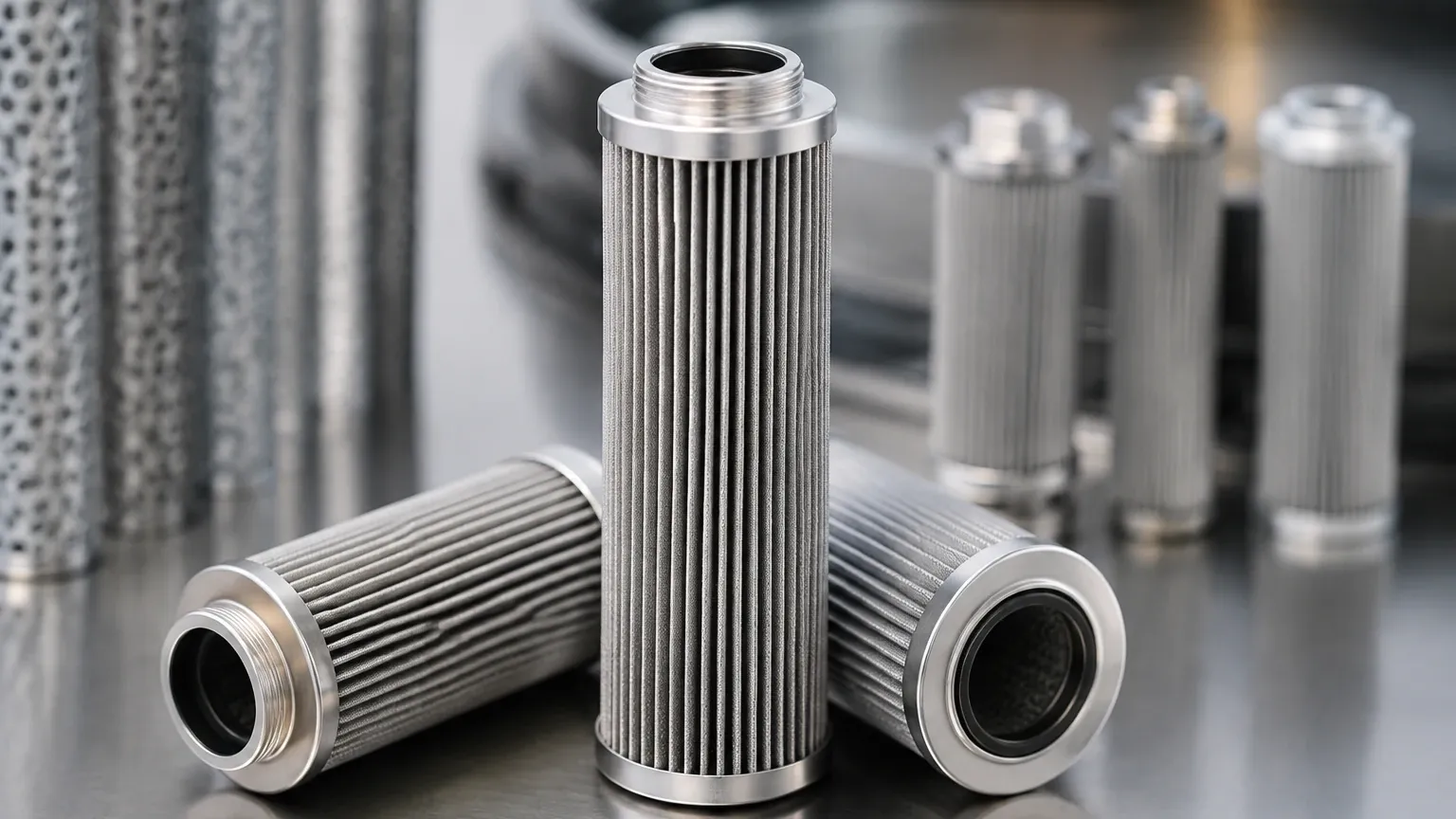
Stainless steel wire mesh filters provide precise surface filtration. Because the pore size is determined by the weave of the metal wire, the filtration rating is much more consistent than that of a blown fiber filter. For applications requiring a strict 5-micron or 10-micron cutoff without the risk of fiber migration, stainless steel mesh is the preferred engineering choice.
Key Evaluation Criteria for Selecting Replacement Filters
When sourcing a replacement filter gxwh04f or an industrial equivalent, procurement teams and engineers should evaluate several critical factors to ensure compatibility and performance.
1. Housing Compatibility: Ensure the filter dimensions (typically 10 inches in length and 2.5 inches in diameter for the GXWH04F) match the existing filter housing. Check the end-cap configuration (e.g., Double Open End or specific O-ring seals) to prevent bypass.
2. Fluid Chemistry: Confirm that the filter media and the seals (Buna-N, EPDM, or Viton) are compatible with the fluid. For example, EPDM is excellent for water but may fail if exposed to oils or petroleum-based fluids.
3. Operating Pressure: Verify the maximum allowable working pressure (MAWP) of both the filter and the housing. Industrial systems often operate at pressures that exceed the limits of standard residential-grade components.
4. Total Cost of Ownership (TCO): While a disposable filter has a lower initial cost, the labor and downtime associated with frequent replacements can make a permanent, cleanable stainless steel solution more cost-effective over a 24-month period.
Maintenance and Replacement Cycles for Optimal Performance
A critical aspect of managing systems that use the replacement filter gxwh04f is establishing a rigorous maintenance protocol. Failure to replace a saturated filter can lead to reduced flow rates, increased energy consumption by pumps, and potential contamination of the system.
Monitoring Differential Pressure
In a professional setting, filters should be replaced when the pressure differential reaches a predetermined limit, typically between 10 and 15 PSI above the initial clean pressure. Relying on visual inspection is often misleading, as a filter may look clean on the surface while its internal pores are completely occluded.
Preventing Biofilm Growth
In water systems, stagnant water within a filter housing can encourage the growth of biofilm or bacteria. If a system is offline for extended periods, it is best practice to drain the housing and replace the filter before restarting the process. For applications where microbial control is necessary, upgrading to Filter Cartridges with antimicrobial properties or utilizing stainless steel filters that can be steam-sterilized (SIP) is recommended.
Customization and OEM Solutions
For many industrial equipment manufacturers (OEMs), standard off-the-shelf filters like the GXWH04F do not meet the specific requirements of their machinery. Custom filtration solutions allow for the optimization of the filter’s surface area, material composition, and mechanical strength.
Customized stainless steel filters can be engineered to fit existing GXWH04F housings while providing enhanced performance characteristics. This includes the use of sintered metal fiber for high-efficiency depth filtration or multi-layered wire mesh for high-strength applications. By working with a specialized manufacturer, engineers can develop filtration components that are tailored to the specific viscosity, temperature, and particulate load of their unique application.
Conclusion: Making an Informed Selection
The replacement filter gxwh04f remains a staple for basic sediment removal due to its cost-effectiveness and ease of use. However, for industrial professionals, the selection process must go beyond simply matching a part number. By analyzing the micron requirements, pressure constraints, and chemical environment, engineers can determine whether a standard disposable filter is sufficient or if the application demands the high-performance capabilities of industrial-grade Filter Cartridges.
Investing in the right filtration technology not only protects expensive machinery but also ensures the consistency of the final product. Whether sticking with the GXWH04F for light-duty sediment control or upgrading to a custom-engineered metal filter, the focus should always remain on achieving the precise balance of filtration efficiency and operational reliability.
