


Universal Water Filter Cartridges
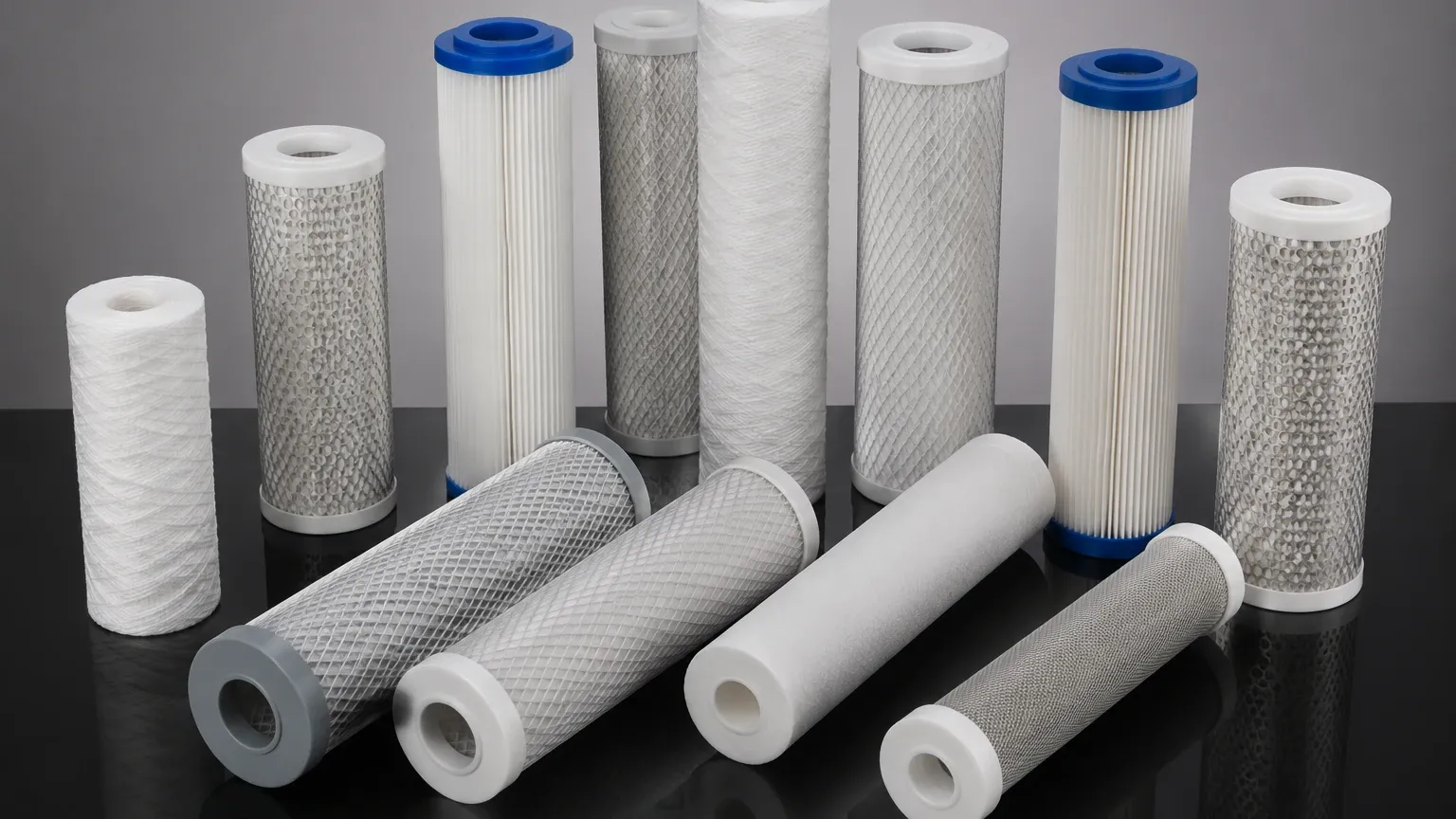
In the landscape of industrial and commercial water treatment, the term "universal" is frequently used to describe filtration components designed to fit a wide range of standard housings. For procurement officers and maintenance engineers, universal water filter cartridges represent a strategy for simplifying inventory, reducing lead times, and ensuring system uptime across diverse facilities. However, from an engineering perspective, universality is not merely about physical dimensions; it encompasses material compatibility, filtration efficiency, and the structural integrity required to withstand specific operating conditions.
Selecting the right Filter Cartridges requires a deep understanding of how standardized dimensions intersect with specialized performance requirements. While a cartridge may physically fit into a housing, its performance in a high-temperature chemical process or a high-pressure hydraulic system depends on technical specifications that go beyond simple size compatibility.
Defining the Standard: Dimensions and Compatibility
The concept of universal water filter cartridges is rooted in industry-standard dimensions that allow products from different manufacturers to be interchangeable. The most common standards in the industrial market are based on the diameter and length of the cartridge.
Standard Sizes
1. Slimline (Standard) Series: Typically 2.5 inches in diameter, these cartridges are commonly found in lengths of 10 inches and 20 inches. They are used in low-to-medium flow applications where space is a constraint.
2. Big Blue (Large Diameter) Series: With a diameter of approximately 4.5 inches, these cartridges are designed for higher flow rates and higher dirt-holding capacities. Like the Slimline series, they are most frequently available in 10-inch and 20-inch lengths.
End Cap Configurations
Compatibility is further defined by the end cap design. For a cartridge to be truly "universal" within a specific housing type, the seal must be absolute to prevent fluid bypass.
* Double Open End (DOE): This is the most common configuration for universal filters. The cartridge is open at both ends and relies on flat gaskets (often made of EPDM, Buna-N, or Viton) compressed against the housing's internal knife-edge to create a seal.
* Single Open End (SOE): These often feature specific O-ring configurations, such as the 222 or 226 styles, which provide a more secure, leak-proof seal for critical applications in the pharmaceutical or food and beverage industries. While less "universal" than DOE, they are standard across high-purity housing lines.
Material Engineering in Industrial Filtration
While many universal water filter cartridges are made from polymers like polypropylene or pleated paper, industrial environments often demand the durability of metal. Stainless steel filter cartridges have emerged as a robust alternative for applications where temperature, pressure, or chemical volatility renders plastic filters obsolete.
The Role of Stainless Steel
Using 304 or 316L stainless steel in a universal format offers several technical advantages:
* Thermal Stability: Stainless steel can operate at temperatures exceeding 500°F (260°C), whereas most polypropylene filters begin to lose structural integrity above 140°F (60°C).
* Chemical Resistance: In industrial water treatment involving corrosive cleaning agents or high-salinity process water, 316L stainless steel provides superior resistance to pitting and stress corrosion cracking.
* Cleanability and Reuse: Unlike disposable melt-blown or string-wound cartridges, stainless steel mesh or sintered metal cartridges can be cleaned via backwashing, ultrasonic cleaning, or chemical baths. This significantly reduces the total cost of ownership by extending the replacement cycle from weeks to years.
Performance Evaluation: Micron Ratings and Efficiency
When evaluating universal water filter cartridges, engineers must distinguish between nominal and absolute micron ratings. This distinction is critical for ensuring that the filtration system meets the required water quality standards.
Nominal vs. Absolute Filtration
* Nominal Rating: This indicates the ability of the filter to retain a majority (typically 60% to 90%) of particles of a specified size. Nominal filters are often used for pre-filtration where the primary goal is to protect downstream components from large debris.
* Absolute Rating: This refers to the diameter of the largest spherical particle that will pass through the filter under laboratory conditions. For critical processes, such as protecting high-pressure nozzles or membrane systems, an absolute-rated stainless steel mesh cartridge is often required to ensure 99.9% efficiency.
Pressure Drop (Delta P)
Every filter cartridge introduces a degree of resistance to the flow. The initial pressure drop is a function of the media's porosity and the fluid's viscosity. Universal cartridges must be selected with a surface area sufficient to maintain the required flow rate without exceeding the system's maximum allowable pressure drop. Pleated stainless steel designs are particularly effective here, as they provide significantly more surface area than cylindrical designs, allowing for higher flow rates in the same "universal" footprint.
Common Risks and Engineering Pitfalls
Transitioning to universal water filter cartridges is not without risks. Failure to account for specific application variables can lead to system failure or contamination.
Fluid Bypass
Bypass occurs when the fluid flows around the filter media rather than through it. This is usually caused by an improper fit between the cartridge and the housing seat. Even a millimeter of misalignment in a DOE (Double Open End) configuration can allow significant amounts of unfiltered water to pass through. When sourcing universal replacements, it is vital to verify that the gasket material and thickness are compatible with the existing housing's compression mechanism.
Structural Collapse
In high-viscosity applications or systems prone to pressure surges, a standard universal cartridge may lack the necessary structural support. Industrial-grade stainless steel cartridges often feature an internal perforated core to provide the rigidity needed to withstand high differential pressures (Delta P) without collapsing, a common failure mode for cheaper plastic alternatives.
Media Migration
In lower-quality string-wound or melt-blown universal filters, the fibers can sometimes break loose and enter the downstream flow—a phenomenon known as media migration. In sensitive industries like electronics manufacturing or pharmaceuticals, this can be catastrophic. Sintered metal or wire mesh cartridges eliminate this risk because the media is physically bonded or woven, ensuring no fibers are released into the process stream.
Customization Within Universal Standards
One of the most significant advantages of working with specialized manufacturers like Kaifil is the ability to customize the internal specifications of a cartridge while maintaining the external "universal" dimensions. This allows facilities to upgrade their filtration performance without replacing expensive housing infrastructure.
Tailored Filtration Layers
For complex water treatment challenges, a single-layer mesh might not be sufficient. Custom cartridges can be engineered with multiple layers of wire cloth—ranging from coarse outer layers for structural support to ultra-fine inner layers for precision filtration. This "graded density" approach improves dirt-holding capacity and extends the time between cleaning cycles.
Specialized Gasket Materials
While standard EPDM gaskets suffice for many water applications, universal cartridges can be fitted with specialized seals like PTFE or encapsulated Viton to handle specific chemical profiles or extreme temperatures that would degrade standard seals.
Total Cost of Ownership (TCO) Considerations
For purchasing teams, the initial price of a universal water filter cartridge is only one component of the TCO. Engineers should evaluate the following factors when deciding between low-cost disposable filters and high-performance metal filters:
1. Replacement Frequency: How often does the system need to be shut down to change the filter? Labor costs and production downtime often outweigh the cost of the cartridge itself.
2. Disposal Costs: Disposable cartridges contribute to waste streams and may incur hazardous waste disposal fees if they have filtered certain industrial chemicals.
3. Energy Efficiency: A filter that maintains a lower pressure drop for a longer period reduces the load on pumps, leading to measurable energy savings over the life of the system.
4. Durability: In applications with frequent pressure spikes or back-pulsing, the longevity of a stainless steel cartridge can make it more cost-effective than dozens of plastic replacements.
Conclusion: Making an Informed Selection
Universal water filter cartridges offer a versatile solution for modern industrial water treatment, provided they are selected with technical rigor. By standardizing the physical interface, these components allow for flexibility in sourcing and system design. However, the internal engineering—the material selection, the micron rating, and the structural design—must be matched to the specific demands of the application.
When evaluating options for your facility, it is essential to consult with manufacturers who understand the nuances of metal filtration and industrial processes. Ensuring that your Filter Cartridges provide the necessary chemical compatibility and mechanical strength is the only way to guarantee long-term reliability and efficient performance. Whether you are looking to replace standard sediment filters with more durable stainless steel options or seeking a custom solution that fits a universal housing, focusing on engineering specifications over simple size compatibility will lead to superior operational outcomes.
