


Viqua Water Filter Cartridges
In the landscape of industrial and commercial water treatment, the efficacy of ultraviolet (UV) disinfection systems is fundamentally dependent on the quality of pre-filtration. Viqua water filter cartridges represent a critical component in this process, serving as the primary barrier against suspended solids, sediment, and organic contaminants that can compromise UV transmittance. For engineers and procurement professionals, understanding the technical nuances of these cartridges—and how they integrate into broader filtration architectures—is essential for maintaining system integrity and optimizing operational costs.
Industrial filtration is rarely a "one-size-fits-all" endeavor. While standard viqua water filter cartridges are designed for specific flow rates and contaminant loads, industrial applications often require a deeper analysis of material compatibility, pressure dynamics, and long-term durability. This guide examines the engineering considerations behind filter selection, the role of pre-filtration in UV systems, and the technical advantages of high-performance Filter Cartridges in demanding environments.
The Critical Role of Pre-filtration in UV Disinfection
Ultraviolet disinfection works by passing water through a chamber containing a UV lamp. The UVC light penetrates the DNA of microorganisms, rendering them unable to replicate. However, this process is highly sensitive to the physical properties of the water. If the water contains suspended particles, a phenomenon known as "shadowing" occurs. Microbes can essentially "hide" behind sediment particles, escaping the UV rays and remaining viable in the effluent.
To prevent shadowing, UV systems typically require pre-filtration to at least a 5-micron level. Viqua water filter cartridges are engineered to meet these specific requirements. By removing silt, rust, and scale before the water enters the UV chamber, these cartridges ensure that the UV transmittance (UVT) remains high. In industrial settings, where water quality can fluctuate significantly, the reliability of the sediment filter is the first line of defense for the entire treatment train.
Technical Specifications and Media Types
Selecting the correct cartridge requires an understanding of the various media types available and how they interact with specific contaminants. Viqua-compatible systems generally utilize three primary categories of filtration media:
1. Sediment Filtration (Melt-Blown and Pleated)
Sediment cartridges are designed for the removal of physical particles. Melt-blown polypropylene cartridges offer depth filtration, where particles are trapped throughout the cross-section of the media. This is ideal for water with a wide range of particle sizes. Pleated cartridges, conversely, provide a higher surface area, allowing for higher flow rates and lower initial pressure drops. In industrial cooling or process water applications, pleated designs are often preferred for their high dirt-holding capacity.
2. Carbon Block and GAC
Granular Activated Carbon (GAC) and carbon block cartridges are utilized for the removal of chlorine, VOCs, and unpleasant tastes or odors. In a UV context, carbon filtration is crucial because chlorine and organic compounds can interfere with UV lamp efficiency and potentially react with other chemicals in the water under UVC exposure. Carbon blocks are generally superior for industrial use due to their structural integrity and prevention of "channeling," which can occur in loose GAC beds.
3. Specialty Media
For specific industrial challenges, such as high iron content or lead contamination, specialized cartridges are employed. These often use ion-exchange resins or proprietary blends to target dissolved inorganic contaminants that standard sediment or carbon filters cannot address.
Engineering Challenges: Flow Rate and Pressure Drop
One of the most common mistakes in filter selection is overlooking the hydraulic impact of the cartridge on the overall system. Every filter media introduces a degree of resistance to flow, measured as differential pressure (ΔP).
Calculating the Clean Pressure Drop
Engineers must calculate the initial pressure drop when the cartridge is clean. A high initial ΔP limits the remaining "headroom" for contaminant loading before the system reaches its terminal pressure drop (the point at which the filter must be replaced). For viqua water filter cartridges, the flow rate should be matched to the UV system's peak demand. If the flow exceeds the cartridge's rated capacity, the velocity through the media increases, which can lead to "breakthrough"—where contaminants are forced through the media—or structural failure of the cartridge core.
Impact of Viscosity and Temperature
In industrial environments, water temperature can vary. As temperature decreases, water viscosity increases, leading to a higher pressure drop across the same filter media. Conversely, high-temperature applications may require specialized materials, such as 304 or 316L stainless steel, to maintain structural integrity where standard polypropylene would soften or deform.
Material Selection: Polymers vs. Stainless Steel
While many standard viqua water filter cartridges are constructed from polypropylene or polyester, industrial engineers often face conditions where these materials are insufficient. This is where the transition to high-performance metal filtration components becomes necessary.
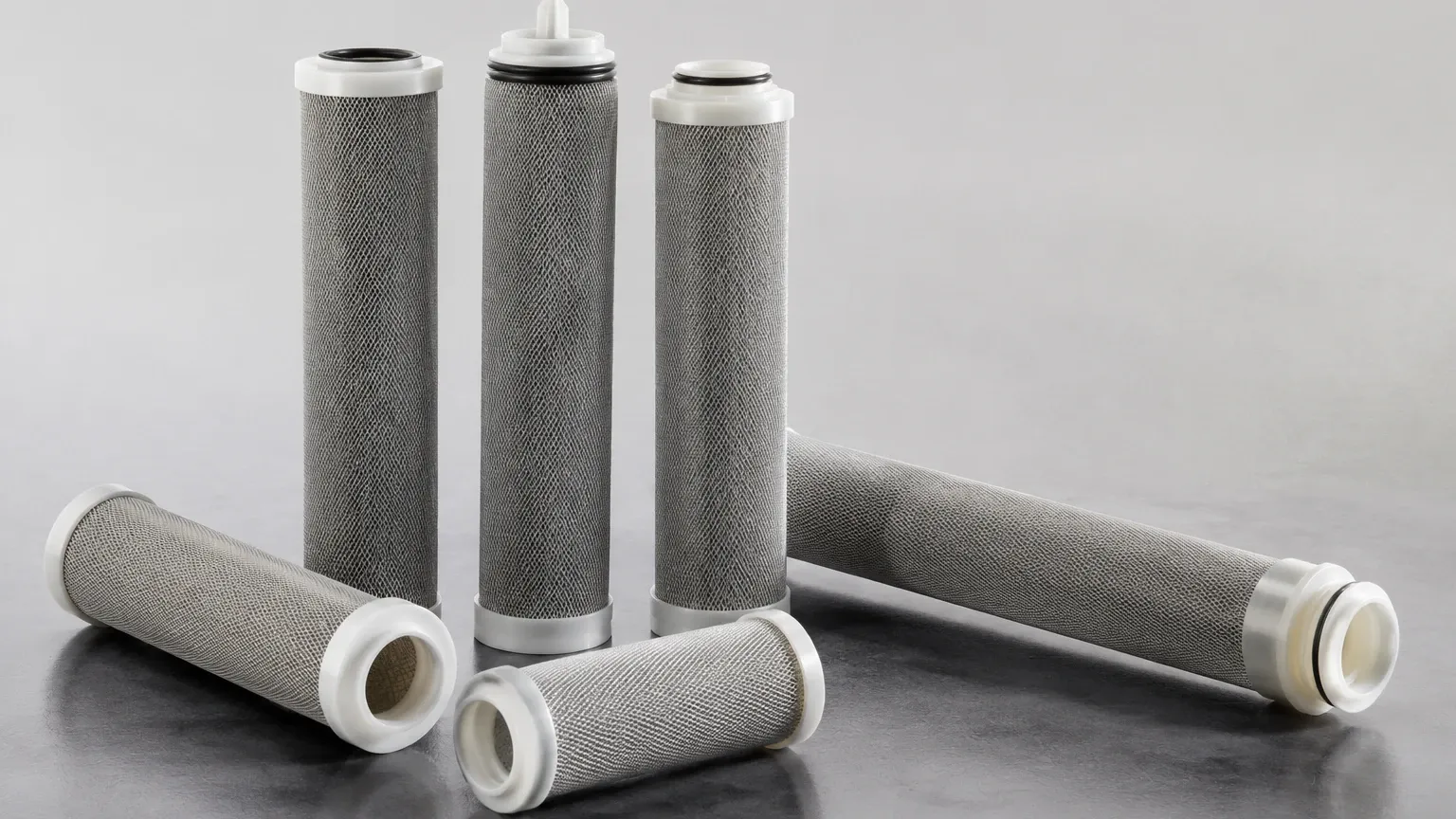
Advantages of Stainless Steel Filter Cartridges
Stainless steel Filter Cartridges offer several engineering advantages over disposable polymer options:
* Thermal Stability: Stainless steel can operate in environments exceeding 200°C, far beyond the limits of plastic media.
* Chemical Compatibility: For process water containing solvents or aggressive chemicals, 316L stainless steel provides superior corrosion resistance.
* Cleanability: Unlike disposable cartridges, stainless steel wire mesh filters can be backwashed or ultrasonically cleaned, significantly reducing the long-term waste stream and replacement frequency.
* Structural Integrity: In high-pressure systems or applications prone to pressure spikes (water hammer), metal cartridges provide the necessary mechanical strength to prevent media migration or collapse.
For applications that utilize Viqua UV systems in a pre-treatment capacity for industrial boilers or chemical processing, upgrading the pre-filtration stage to custom stainless steel components can provide a more robust and cost-effective solution over the equipment's lifecycle.
Evaluating Total Cost of Ownership (TCO)
In procurement, the "sticker price" of a filter cartridge is often a poor indicator of its true cost. A comprehensive TCO analysis must include:
1. Replacement Frequency: How often does the cartridge clog? A cheaper cartridge with low dirt-holding capacity may require weekly changes, whereas a higher-quality pleated or depth filter might last months.
2. Labor Costs: The time required for maintenance personnel to shut down the system, vent the housing, replace the cartridge, and restart the system.
3. Disposal Costs: In many regions, used industrial filters are classified as regulated waste, incurring significant disposal fees.
4. System Downtime: The lost productivity during filter changes can far outweigh the cost of the filter itself.
By moving toward high-capacity or cleanable filtration solutions, industrial facilities can often achieve a 30-50% reduction in annual filtration expenditures despite a higher initial capital investment.
Customization and OEM Solutions
Standard off-the-shelf viqua water filter cartridges are designed for general-purpose water quality. However, industrial processes often involve unique variables such as non-standard housing dimensions, specific micron requirements (e.g., 1-micron absolute for pharmaceutical use), or the need for reinforced end caps.
Manufacturers like Kaifil specialize in bridging the gap between standard products and custom engineering requirements. Whether it is adapting a stainless steel wire mesh to fit a standard Viqua housing or designing a high-flow manifold for large-scale UV arrays, customization ensures that the filtration system is optimized for the specific fluid dynamics of the application. This level of precision is particularly important in sectors like food and beverage or microelectronics, where even minor filtration failures can result in significant product loss.
Maintenance Best Practices for Industrial Manifolds
To ensure the longevity of both the filter cartridges and the downstream UV lamps, a rigorous maintenance schedule is required. Engineers should implement the following protocols:
* Differential Pressure Monitoring: Install pressure gauges upstream and downstream of the filter housing. The ΔP is the most accurate indicator of filter loading. Cartridges should typically be replaced when the differential pressure reaches 10-15 psi over the clean baseline.
* Gasket Inspection: Every time a housing is opened, the O-rings or gaskets (often EPDM or Viton) should be inspected for compression set or chemical degradation. A faulty seal allows bypass, which can immediately foul the UV sleeve.
* Sanitization: When changing cartridges, the interior of the filter housing should be sanitized to prevent the growth of biofilm, which can slough off and contaminate the UV chamber.
Conclusion
Viqua water filter cartridges are an indispensable element of modern water treatment, particularly when paired with UV disinfection technology. However, for the industrial user, the selection process must go beyond simply matching a part number. By considering the underlying physics of filtration—including flow dynamics, material science, and TCO—engineers can select the most appropriate Filter Cartridges for their specific needs.
Whether utilizing standard polymer media for routine sediment removal or commissioning custom stainless steel components for harsh industrial environments, the goal remains the same: ensuring consistent, high-quality water that protects downstream equipment and meets stringent process standards. For organizations looking to optimize their filtration performance, partnering with a manufacturer that understands these technical requirements is the most effective path to operational excellence.
