


Water Filter Cartridge Jumbo
In industrial water treatment and fluid processing, the efficiency of a filtration system is often dictated by the balance between flow rate, pressure drop, and dirt-holding capacity. The water filter cartridge jumbo, typically defined by its larger diameter (usually 4.5 inches compared to the standard 2.5 inches), serves as a critical component for high-flow applications. For engineers and procurement professionals, selecting the correct jumbo cartridge involves more than simply matching dimensions; it requires a technical understanding of media composition, structural integrity, and the specific thermodynamic or chemical demands of the process environment.
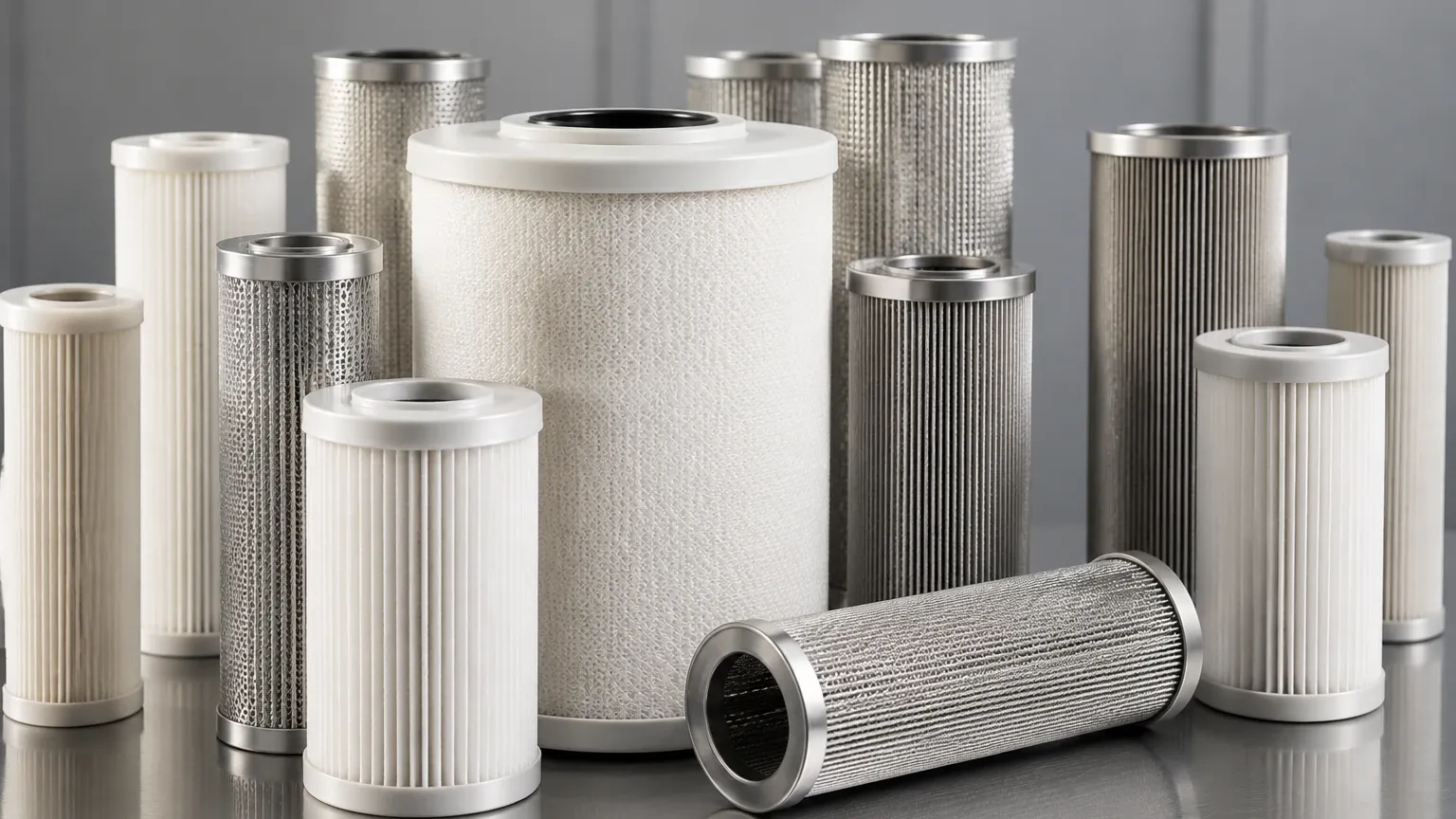
Industrial filtration systems utilizing jumbo-sized housings are designed to handle significantly higher volumes of water than standard slimline systems. This increased surface area allows for longer service intervals and reduced maintenance downtime, provided the cartridge material and micron rating are correctly specified for the particulate load. While polymer-based cartridges are common in light commercial use, heavy industrial applications often necessitate the durability and chemical resistance of stainless steel Filter Cartridges to ensure system reliability under extreme conditions.
Technical Specifications and Dimensions
The term "jumbo" primarily refers to the outer diameter (OD) of the filter. While standard industrial cartridges typically measure between 2.5 and 2.75 inches in diameter, a water filter cartridge jumbo features an OD of approximately 4.5 inches. These are most commonly available in two standard lengths: 10 inches and 20 inches.
From an engineering perspective, the increase in diameter does not just linearly increase the filtration area; it exponentially improves the dirt-holding capacity. For example, a 20-inch jumbo cartridge provides roughly three to five times the surface area of a standard 20-inch cartridge, depending on the pleating density. This allows for:
* Higher Flow Rates: Systems can process more gallons per minute (GPM) without exceeding the maximum recommended face velocity across the filter media.
* Lower Initial Pressure Drop: A larger surface area results in lower resistance to flow, which reduces the energy requirements for pumps.
* Extended Service Life: With more room to trap contaminants, the time required to reach the terminal pressure drop (the point at which the filter must be replaced or cleaned) is significantly extended.
Material Science in Jumbo Filtration
Selecting the right material for a water filter cartridge jumbo is the most critical decision in the design phase. The choice depends on the temperature of the water, the presence of chemicals, and whether the cartridge needs to be reused.
Polypropylene and Synthetic Media
In many standard water treatment applications, melt-blown or pleated polypropylene is used. These are effective for sediment removal and are generally cost-effective for single-use applications. However, they are limited by temperature (usually up to 140°F/60°C) and can suffer from structural bypass if the pressure differential becomes too high.
Stainless Steel (304 and 316L)
For demanding industrial environments, such as chemical processing or high-temperature steam filtration, stainless steel is the preferred material. Stainless steel jumbo cartridges, often constructed from pleated wire mesh or sintered metal fibers, offer several technical advantages:
1. Temperature Resistance: Capable of operating in environments exceeding 500°F, far beyond the limits of synthetic polymers.
2. Chemical Compatibility: 316L stainless steel provides excellent resistance to corrosion from treated water, saline solutions, and various industrial solvents.
3. Cleanability and Reusability: Unlike disposable filters, stainless steel cartridges can be backwashed, ultrasonically cleaned, or chemically cleaned, significantly reducing the long-term total cost of ownership (TCO).
4. Structural Integrity: Metal filters do not suffer from "unloading," where captured particles are forced through the media due to pressure surges.
Engineering Performance Metrics
When evaluating a water filter cartridge jumbo, engineers must look beyond the nominal micron rating. The performance of the filter is defined by several key metrics that impact the overall efficiency of the industrial process.
Micron Rating: Nominal vs. Absolute
A nominal rating indicates the filter's ability to retain a majority of particles of a specific size (e.g., 85% of 5-micron particles). In contrast, an absolute rating signifies that the filter will retain 99.9% (Beta 5000) of particles at that size. For critical applications like pre-filtration for Reverse Osmosis (RO) membranes, an absolute-rated jumbo cartridge is often necessary to prevent downstream fouling.
Differential Pressure (ΔP)
The pressure drop across a clean filter is the initial ΔP. As the filter collects debris, the ΔP increases. Engineers must specify the maximum allowable ΔP before the system triggers an alarm or bypasses. For jumbo cartridges, the larger surface area keeps the ΔP lower for a longer duration compared to standard cartridges, which is essential for maintaining consistent flow in high-demand systems.
Flow Velocity and Bypass Risks
If the flow velocity through the media is too high, it can cause "channeling," where the fluid finds the path of least resistance, effectively bypassing the filtration media. Jumbo cartridges mitigate this risk by spreading the flow over a larger area, ensuring that the fluid moves through the media at a velocity that allows for effective particle capture.
Industrial Applications for Jumbo Cartridges
The water filter cartridge jumbo is utilized across various sectors where high-volume fluid processing is required. Its robust design makes it suitable for both primary filtration and as a protective stage for more sensitive equipment.
1. Food and Beverage Processing
In the production of bottled water, soft drinks, and beer, water quality must be consistent. Jumbo cartridges are used to remove sediment, chlorine (when using carbon-impregnated media), and organic matter from source water. Stainless steel versions are particularly valued here for their ability to withstand Clean-in-Place (CIP) procedures using hot water or chemicals.
2. Pharmaceutical and Biotech
High-purity water is a fundamental requirement in pharmaceutical manufacturing. Jumbo filters serve as effective pre-filters for deionization (DI) and RO systems, removing larger particulates that would otherwise clog expensive membranes or resin beds.
3. Cooling Tower and Boiler Feed Water
Industrial cooling systems process massive amounts of water that can become contaminated with scale, rust, and biological growth. Using jumbo cartridges in a side-stream filtration setup helps maintain heat exchanger efficiency by continuously removing these solids without requiring a full system shutdown.
4. Chemical and Petrochemical
In these environments, fluids are often aggressive or handled at high temperatures. A stainless steel water filter cartridge jumbo provides the necessary durability to handle corrosive process water or brine solutions that would degrade standard plastic filters.
Selection Criteria: A Guide for Engineers
To ensure the optimal performance of a water filter cartridge jumbo, the following factors should be confirmed during the procurement process:
* Fluid Characteristics: Confirm the pH, temperature, and viscosity of the fluid. High-viscosity fluids may require a larger micron rating or a larger filtration surface to maintain flow.
* Contaminant Type: Is the sediment hard and angular (like sand) or soft and gelatinous (like algae)? Soft contaminants often require pleated media with more surface area to prevent premature blinding of the filter.
* Housing Compatibility: Ensure the cartridge end-cap configuration matches the housing. Common configurations include Double Open End (DOE), 222 O-rings, or 226 locking tabs. For jumbo housings, DOE is the most frequent standard, but high-pressure applications may require O-ring seals to prevent bypass.
* Flow Requirements: Calculate the peak flow rate of the system. It is often recommended to size the filter for 1.5 to 2 times the average flow rate to account for surges and to extend the life of the cartridge.
Maintenance and Total Cost Considerations
While the initial purchase price of a water filter cartridge jumbo is higher than that of a standard cartridge, the total cost of ownership is often lower in industrial settings. The reduction in the frequency of filter changes leads to lower labor costs and less process downtime.
For systems using stainless steel cartridges, the maintenance cycle includes periodic cleaning. Monitoring the differential pressure is the most effective way to determine when a cleaning cycle is required. Typically, a cartridge should be cleaned or replaced when the ΔP reaches 15-20 psi above the clean pressure drop. Over-extending the use of a clogged cartridge can lead to structural failure of the media or the collapse of the internal core.
Customization and OEM Solutions
In many industrial scenarios, off-the-shelf jumbo cartridges may not meet specific engineering requirements. Customization options for stainless steel jumbo filters include:
* Variable Pleat Heights: Adjusting the pleat depth to balance surface area with the space needed for heavy cake buildup.
* Reinforced Cores: For high-pressure applications where the differential pressure might exceed 50-100 psi.
* Specialized Alloys: Using Monel or Hastelloy for extremely corrosive environments where even 316L stainless steel might fail.
* Custom End-Caps: Designing specialized fittings to retrofit older or proprietary filter housings without replacing the entire pressure vessel.
By focusing on these technical parameters, engineering teams can ensure that their choice of a water filter cartridge jumbo provides the reliability and efficiency required for modern industrial water treatment. Whether the goal is protecting downstream equipment or ensuring the purity of a final product, the jumbo cartridge remains a cornerstone of high-capacity filtration design.
