

Water Filter Cartridges Asda
For many consumers and small-scale business owners, the search for "water filter cartridges asda" represents a move toward improving water quality for basic consumption or light-duty appliances. Retail-grade filtration solutions, such as those found in major supermarkets like Asda, are designed for the domestic market, focusing on removing chlorine, lead, and sediment from drinking water using plastic housings and activated carbon media. However, as industrial requirements scale upward in complexity and volume, the engineering demands on filtration systems shift significantly.
In professional environments—ranging from food and beverage production to chemical processing and pharmaceutical manufacturing—the stakes for water purity are much higher. While retail options provide a convenient entry point for basic residential needs, industrial Filter Cartridges must meet rigorous standards for durability, chemical compatibility, and precise micron ratings that consumer-grade products cannot achieve. Understanding the transition from retail-level filtration to high-performance industrial solutions is essential for engineers and procurement teams tasked with maintaining system integrity and operational efficiency.
Technical Comparison: Retail vs. Industrial Filter Cartridges
When evaluating "water filter cartridges asda" or similar retail offerings, the primary focus is usually on taste improvement and basic particulate reduction for a single point of use. These filters typically utilize a combination of ion-exchange resins and activated carbon wrapped in a polypropylene shell. While effective for a kitchen pitcher or a small office coffee machine, they possess inherent limitations in an industrial context.
Material Integrity and Pressure Ratings
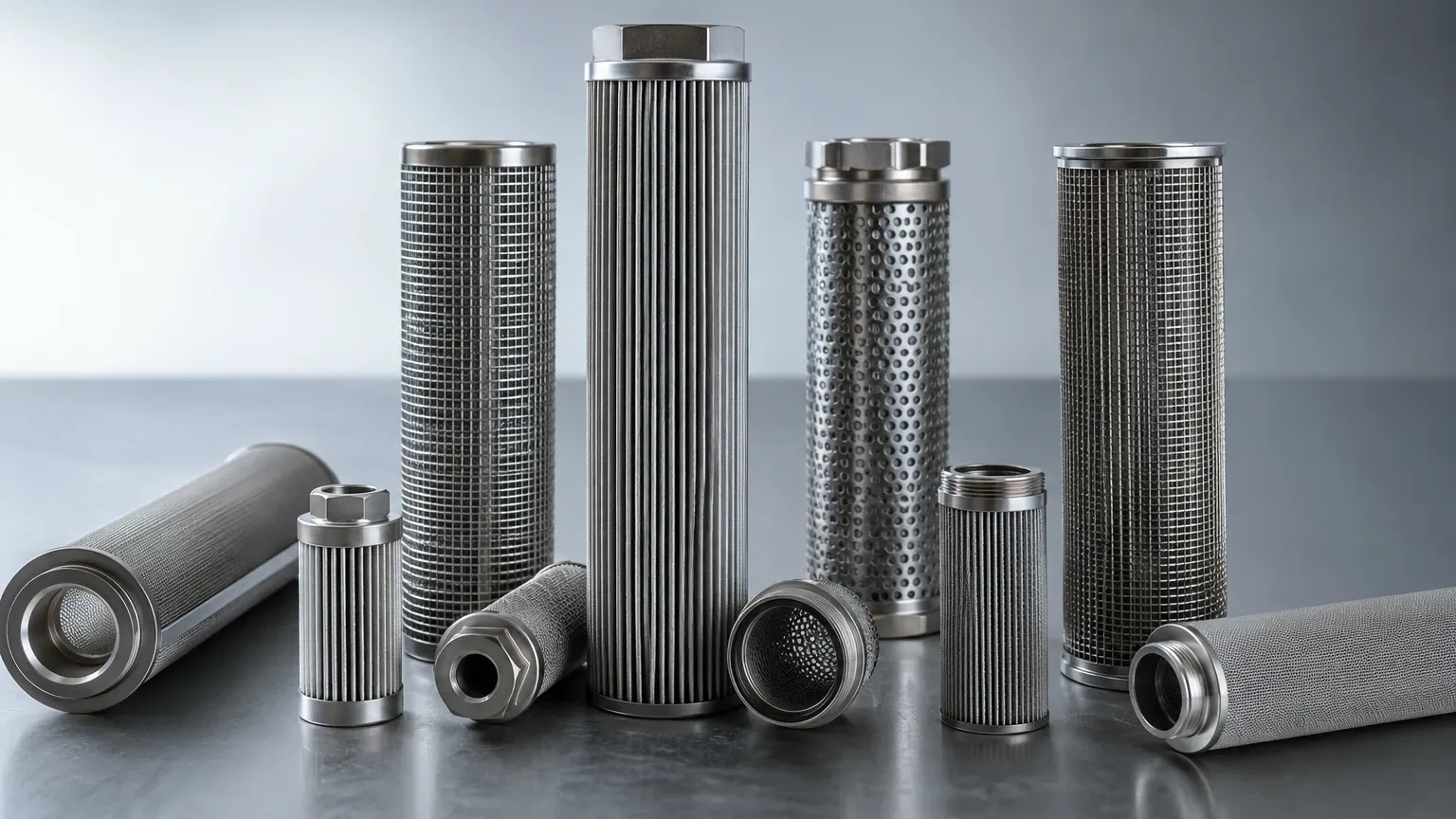
Industrial filtration environments often involve high-pressure systems and fluctuating temperatures. Retail cartridges are generally rated for low-pressure, gravity-fed, or standard municipal water pressure. In contrast, stainless steel filter cartridges manufactured by Kaifil are engineered to withstand significant differential pressures without collapsing or bypassing. The use of 304 or 316L stainless steel ensures that the filter housing and the media itself do not leach chemicals or microplastics into the process stream, a critical factor in high-purity applications.
Filtration Mechanisms
Retail filters primarily rely on adsorption (carbon) and basic depth filtration. Industrial solutions utilize a broader range of mechanisms, including surface filtration via precision-woven wire mesh or multi-layered sintered metal. This allows for a much more specific "absolute" micron rating. While a retail filter might offer a "nominal" rating (meaning it catches *most* particles of a certain size), industrial processes often require an absolute rating to ensure that 99.9% of contaminants above a specific size are removed, protecting downstream equipment like high-pressure pumps or sensitive spray nozzles.
Engineering Considerations for Industrial Water Filtration
Selecting the right filtration component requires a deep dive into the specific variables of the application. Engineers must look beyond the convenience of off-the-shelf retail products and consider the long-term mechanical and chemical demands of their systems.
Flow Rate and Flux
One of the most significant differences between consumer-grade water filter cartridges and industrial versions is the required flow rate. Industrial systems may process hundreds of gallons per minute. To accommodate this without excessive pressure drop, the surface area of the filter must be maximized. This is often achieved through pleating the stainless steel mesh, a technique that provides a much larger filtration area within the same footprint compared to a standard cylindrical carbon block found in retail stores.
Chemical Compatibility
Water in industrial settings is rarely just "water." It may contain cleaning agents, process chemicals, or be at a pH level that would degrade standard plastic filter components. Stainless steel Filter Cartridges offer superior resistance to a wide array of corrosive substances, ensuring that the filter does not become a source of contamination itself. This is particularly vital in the chemical processing and pharmaceutical sectors where batch purity is paramount.
Material Selection: Why Stainless Steel Outperforms Plastic
While the "water filter cartridges asda" search might lead to affordable plastic replacements for home use, industrial facilities prioritize material longevity and sterilization capabilities. Stainless steel is the gold standard for these demanding environments for several reasons.
1. Thermal Stability: Industrial processes often involve hot water sanitization or steam-in-place (SIP) procedures. Plastic cartridges will deform or melt under these conditions, whereas stainless steel maintains its structural integrity at temperatures exceeding 250°C.
2. Cleanability and Reusability: Retail cartridges are inherently disposable; once the media is saturated, the entire unit is thrown away. Stainless steel wire mesh filters can often be cleaned via backwashing, ultrasonic cleaning, or chemical baths. This reusability significantly reduces the volume of waste generated by a facility.
3. Mechanical Strength: In hydraulic systems or high-viscosity fluid processing, the filter media is subjected to intense mechanical stress. Sintered metal and reinforced wire mesh provide the necessary rigidity to prevent media migration—the shedding of filter material into the clean fluid—which is a common failure point in low-end fiber or plastic filters.
Evaluating Performance and Total Cost of Ownership (TCO)
For a purchasing manager, the initial price point of a retail-style filter might seem attractive. However, the Total Cost of Ownership (TCO) in an industrial setting tells a different story. When analyzing the cost-effectiveness of Filter Cartridges, several factors must be weighed against the low entry price of consumer goods.
Replacement Cycles and Labor Costs
A retail filter might need replacement every 30 to 60 days in a low-volume environment. In an industrial plant, that same filter might clog in hours. The labor cost associated with frequent filter changes, combined with the cost of system downtime, quickly eclipses the price of a high-quality, long-life stainless steel filter. By investing in a filter designed for the specific solids loading of the process water, facilities can extend service intervals from days to months.
Energy Efficiency
A clogged or undersized filter increases the resistance in the system, forcing pumps to work harder and consume more electricity. Precision-engineered industrial filters are designed to maintain a low clean pressure drop. By selecting a filter with the optimal balance of micron rating and open area, engineers can optimize the energy consumption of the entire fluid handling system.
Customization and OEM Solutions for Demanding Applications
One of the primary limitations of searching for "water filter cartridges asda" is the lack of variety in configuration. Retail products come in standard sizes (e.g., 10-inch or 20-inch Slimline/Big Blue) with limited end-cap options. Industrial applications, however, often require bespoke solutions to fit existing machinery or to meet specific filtration goals.
Kaifil specializes in the custom manufacture of filtration components, providing OEM services that allow for:
* Custom Dimensions: Tailoring the length, diameter, and wall thickness to fit unique housing designs.
* Specialized End-Caps: Offering various attachment styles, including DOE (Double Open End), SOE (Single Open End) with 222 or 226 O-rings, NPT threads, or flange mounts to ensure a leak-proof seal.
* Layered Media: Combining different mesh counts to create a graded-density filter that captures large particles on the outer layers and finer particles toward the core, significantly extending the life of the cartridge.
This level of customization ensures that the filtration system is an integrated part of the industrial process rather than a compromised add-on.
Common Questions Before Purchasing Industrial Filters
Before transitioning from basic water filters to industrial-grade Filter Cartridges, technical teams should confirm several key data points to ensure the selected product is fit for purpose.
* What is the specific contaminant? Knowing whether you are removing sand, scale, organic matter, or bacteria determines the choice between wire mesh, sintered metal, or wedge wire.
* What is the operating temperature and pressure? This dictates the alloy selection (304 vs 316L) and the requirement for internal support cores.
* Is the process continuous or batch? Continuous processes may require duplex filtration systems where one filter can be cleaned while the other remains in service.
* What are the regulatory requirements? In food, beverage, and pharmaceutical industries, filters must often comply with FDA or EU food contact regulations. Stainless steel is naturally compliant and easy to certify for these applications.
Conclusion: Making the Right Selection for Your Facility
While the market for "water filter cartridges asda" serves the essential need for clean household water, it does not address the complexities of industrial fluid dynamics. For engineers and technical professionals, the choice of filtration media is a critical decision that impacts product quality, equipment longevity, and operational costs.
By moving toward professional Filter Cartridges made from high-grade stainless steel, industrial users gain the benefits of precision engineering, extreme durability, and the ability to customize the solution to the exact needs of their application. Whether you are filtering process water for a bottling plant or protecting sensitive membranes in a desalination system, the transition from retail convenience to industrial performance is a necessary step for any scalable operation. Kaifil remains committed to providing the technical expertise and manufacturing quality required to meet these high-stakes filtration challenges.
