


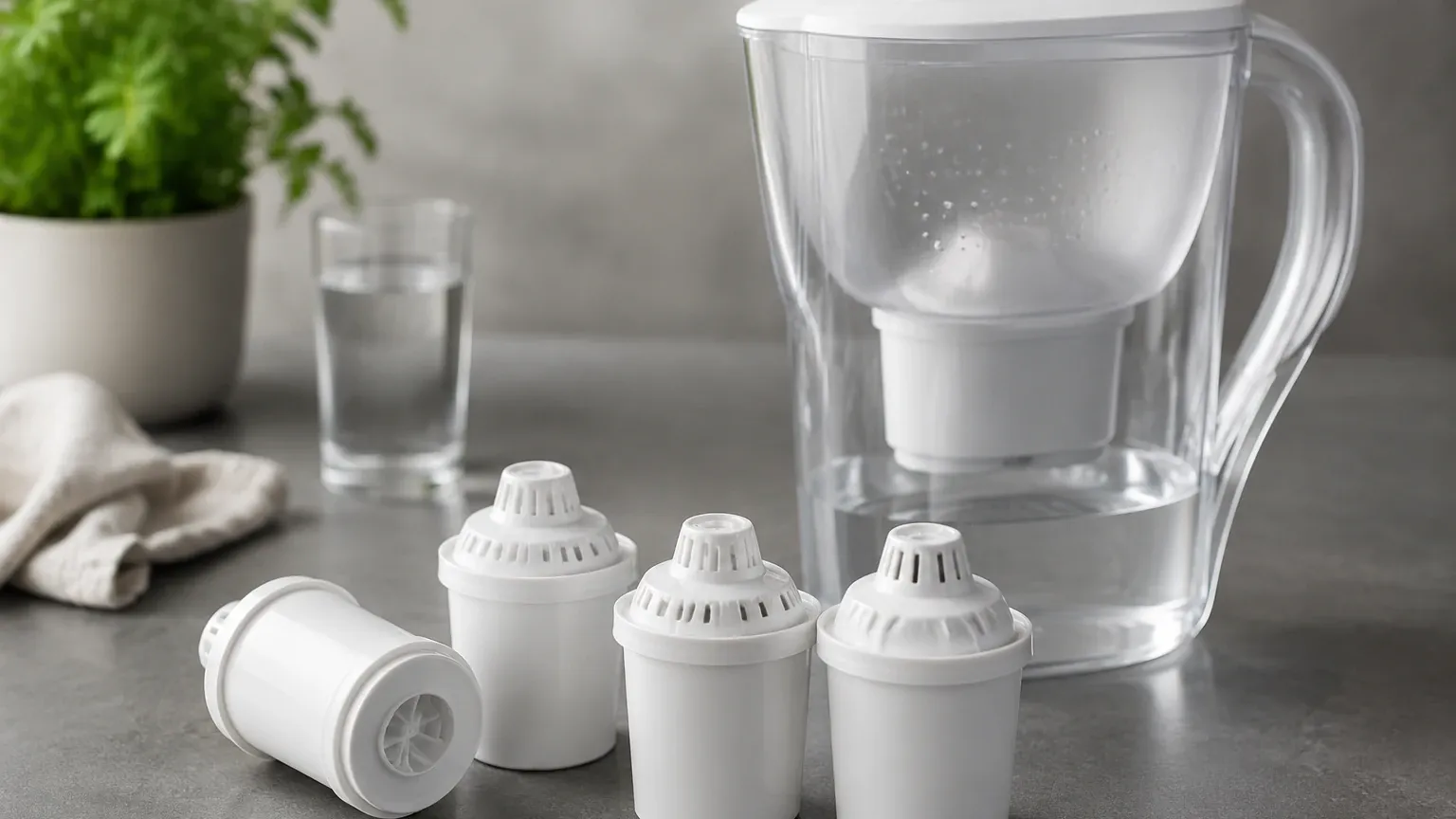
Water Jug Filter Cartridges
In the landscape of water treatment, filtration solutions range from simple point-of-use consumer products to complex, high-capacity industrial systems. While the term "water jug filter cartridges" often evokes images of household kitchen pitchers, the underlying engineering principles—adsorption, mechanical straining, and ion exchange—are foundational to professional filtration. For engineers and procurement specialists, understanding the transition from basic gravity-fed systems to high-performance industrial Filter Cartridges is essential for optimizing process efficiency and ensuring fluid purity in demanding environments.
Industrial filtration requires a level of durability and precision that standard consumer-grade materials cannot provide. However, by analyzing the mechanics of water jug filter cartridges, technical professionals can better appreciate the material science and design considerations necessary for scaling these processes to chemical, pharmaceutical, and food-grade applications.
The Engineering Principles of Water Jug Filter Cartridges
Most water jug filter cartridges operate using a multi-stage filtration process designed to remove specific contaminants such as chlorine, heavy metals, and organic compounds. In a B2B context, these same principles are applied using more robust media and housing structures.
Activated Carbon Adsorption
The primary component in most water jug filters is activated carbon, typically derived from coconut shells or coal. This media works through adsorption, where pollutants are chemically trapped within the pore structure of the carbon. In industrial settings, this is scaled up using large-scale carbon blocks or granular activated carbon (GAC) cartridges. Engineers must evaluate the iodine number and surface area of the carbon to determine its capacity for removing volatile organic compounds (VOCs).
Ion Exchange Resins
To address water hardness and heavy metal presence, many cartridges incorporate ion exchange resins. These resins swap undesirable ions (like lead or copper) with less harmful ones (like hydrogen or sodium). In industrial water treatment, ion exchange is a critical step for boiler feed water and high-purity laboratory water, often requiring specialized stainless steel housings to withstand the chemical regeneration processes.
Mechanical Straining
The outer shell or a dedicated internal layer of the cartridge acts as a mechanical barrier. In consumer water jug filter cartridges, this is often a simple non-woven fabric or plastic mesh. In contrast, industrial-grade cartridges utilize precision-engineered stainless steel wire mesh or sintered metal fibers to provide exact micron ratings and high structural integrity.
Transitioning from Consumer to Industrial Grade Filtration
When a process moves beyond the scope of a standard water jug, the limitations of plastic-based filtration become apparent. Industrial applications demand materials that can withstand high pressures, extreme temperatures, and corrosive chemical environments.
Material Integrity: The Shift to Stainless Steel
Consumer water jug filter cartridges are almost exclusively made of food-grade plastics. While sufficient for ambient temperature tap water, these materials fail under the thermal and mechanical stresses of industrial processing. Stainless steel (grades 304 and 316L) is the standard for high-performance filtration. Unlike plastic, stainless steel filter cartridges offer:
* Thermal Resistance: Ability to operate in environments exceeding 200°C.
* Chemical Compatibility: Resistance to solvents, acids, and alkaline cleaning agents.
* Mechanical Strength: High collapse pressure ratings, preventing media migration into the filtrate.
* Sustainability: Stainless steel components are cleanable and reusable, significantly reducing the total cost of ownership compared to disposable plastic cartridges.
Precision and Micron Ratings
While a water jug filter may have a nominal rating, industrial processes require absolute micron ratings. Whether the goal is protecting a high-pressure pump or ensuring the clarity of a beverage, the filtration media must provide consistent performance. Sintered wire mesh cartridges, for example, offer a fixed pore structure that does not bypass even under fluctuating pressure—a common failure point in lower-grade cartridges.
Key Evaluation Criteria for Industrial Filter Cartridges
For purchasing teams and engineers, selecting the right filtration component involves more than just matching a part number. A technical evaluation of the following factors is necessary to ensure long-term reliability.
Flow Rate vs. Pressure Drop
Every filter cartridge introduces a degree of resistance to the fluid flow, known as pressure drop (ΔP). An ideal system minimizes initial pressure drop while maximizing the dirt-holding capacity. In industrial systems, calculating the required surface area is critical; pleating the filtration media is a common engineering solution to increase surface area without increasing the cartridge's footprint.
Filtration Efficiency and Beta Ratio
In professional filtration, efficiency is often measured by the Beta Ratio—the ratio of particles of a given size in the upstream fluid to those in the downstream fluid. While water jug filter cartridges are rarely rated this way, industrial Filter Cartridges provide specific Beta ratios (e.g., Beta 5000 for 99.98% efficiency) to guarantee process results.
Sealing Mechanisms
To prevent fluid bypass, the method by which the cartridge seals into the housing is paramount. Common industrial configurations include:
* Double Open End (DOE): Sealed with gaskets at both ends.
* Single Open End (SOE): Features a threaded or bayonet-style fitting (like 222 or 226 O-rings) to ensure a leak-proof mechanical seal.
Common Risks in Substandard Filtration Selection
Using inadequately specified cartridges—or attempting to adapt consumer-level technology like water jug filter cartridges to industrial tasks—carries significant operational risks.
1. Media Migration: In low-quality filters, the filtration media (such as carbon fines or plastic fibers) can break loose and contaminate the downstream process.
2. Chemical Leaching: Plastic housings may leach phthalates or other chemicals when exposed to hot fluids or aggressive chemicals.
3. Premature Clogging: Without a properly calculated dirt-holding capacity, cartridges may clog rapidly, leading to frequent downtime and increased labor costs for replacement.
4. Structural Failure: Under high-pressure spikes, non-reinforced cartridges can collapse, potentially damaging expensive downstream equipment like membranes or spray nozzles.
The Role of Customization and OEM Solutions
In many industrial scenarios, off-the-shelf solutions are insufficient. This is where custom manufacturing becomes a strategic advantage. Manufacturers like Kaifil specialize in developing bespoke filtration components that meet specific engineering requirements.
Tailored Micron Ratings
Customization allows for the creation of multi-layered sintered mesh structures that provide graduated filtration—trapping larger particles on the outer layers and finer particles toward the core. This significantly extends the service life of the cartridge.
Specialized Geometry
Industrial equipment often has unique spatial constraints. Custom OEM filtration allows for the design of cartridges with specific lengths, diameters, and end-cap configurations to fit existing housings perfectly, eliminating the need for costly system overhauls.
Material Optimization
Depending on the fluid being filtered, engineers can specify 304 stainless steel for standard water applications or 316L for pharmaceutical and high-salinity environments. Specialized alloys like Hastelloy or Monel can also be used for extreme chemical resistance.
Maintenance and Replacement Cycles
Unlike the simple "change every two months" rule for water jug filter cartridges, industrial maintenance is data-driven. Monitoring the differential pressure across the filter bank is the most reliable method for determining when a cartridge needs attention.
* Cleaning Protocols: One of the primary advantages of stainless steel cartridges is their ability to be cleaned. Methods such as ultrasonic cleaning, backwashing, or chemical baths can restore the cartridge to near-original permeability, offering a sustainable alternative to the "throw-away" culture of consumer filtration.
* Integrity Testing: In critical applications (like pharmaceutical manufacturing), cartridges undergo integrity testing, such as the bubble point test, to ensure no damage has occurred to the media during operation or cleaning.
Conclusion: Making Informed Purchasing Decisions
Understanding the mechanics of water jug filter cartridges provides a useful baseline for understanding water purification, but industrial success depends on the transition to high-performance, durable filtration technology. When selecting Filter Cartridges for professional applications, engineers must prioritize material compatibility, structural integrity, and precise filtration ratings.
By focusing on stainless steel solutions and customized OEM designs, facilities can achieve higher purity levels, reduce waste, and lower the total cost of ownership. Whether you are managing a chemical processing plant or a food production line, the right filtration partner can provide the technical expertise needed to design a system that performs reliably under the most demanding conditions.
