


0 Filters
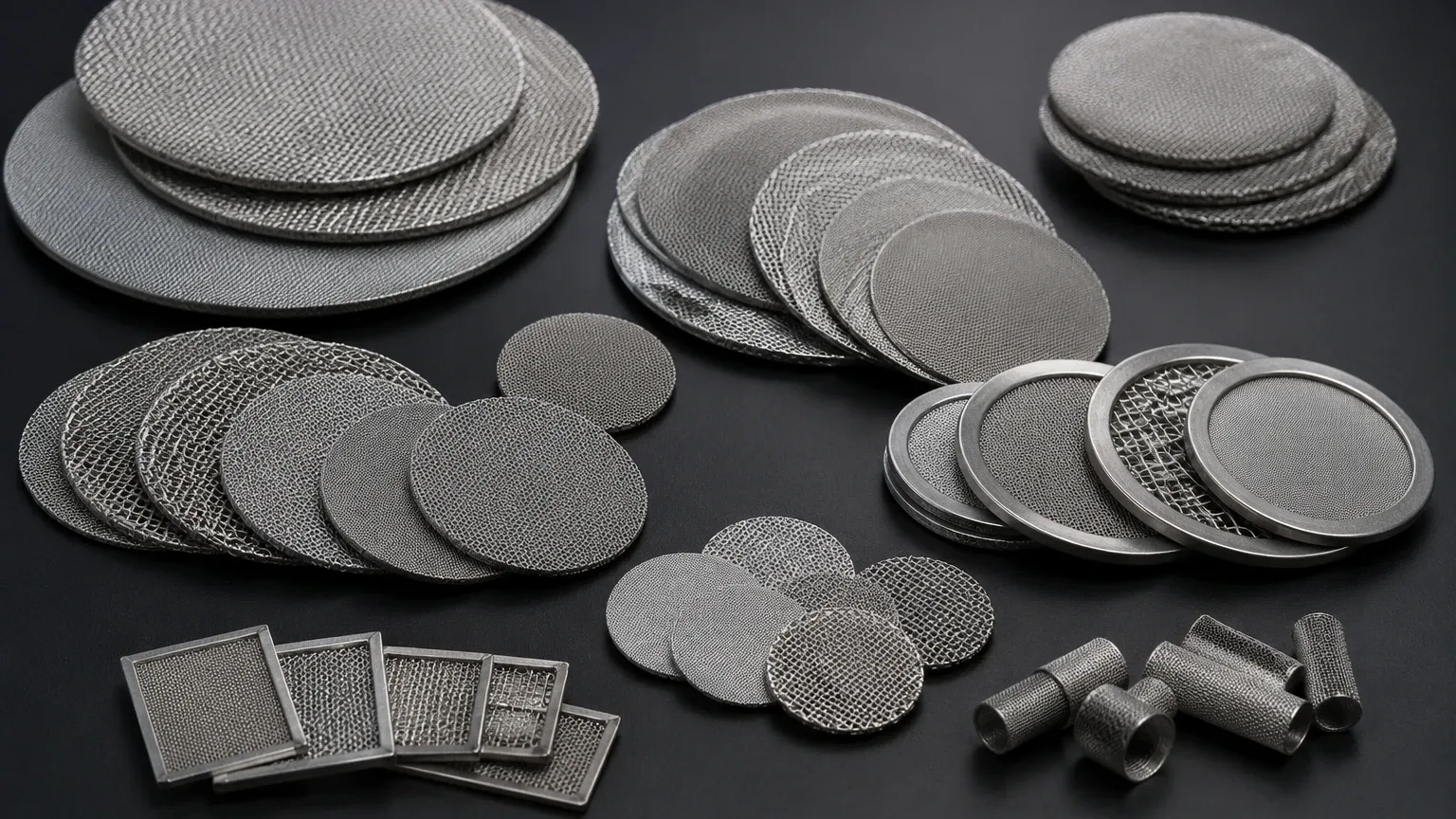
In the landscape of industrial processing, the pursuit of "zero"—whether it refers to zero-bypass, zero-defect production, or zero-tolerance for contaminants—is the hallmark of high-performance engineering. For technical professionals managing fluid dynamics, polymer extrusion, or chemical synthesis, the term 0 filters often represents the industry’s rigorous standard for absolute filtration integrity. Achieving this level of precision requires more than just a standard mesh; it demands specialized Filter Discs & Packs engineered to withstand extreme pressures while maintaining a perfect seal within the filtration housing.
Industrial filtration is rarely about simple separation. It is about protecting downstream equipment, ensuring the purity of high-value outputs, and minimizing the total cost of ownership through durable, cleanable components. This guide explores the technical foundations of zero-bypass filtration, the material science behind high-precision filter packs, and the selection criteria essential for engineers and purchasing teams.
The Engineering Logic of Zero-Bypass Filtration
A common failure point in industrial filtration is not the media itself, but the bypass of unfiltered fluid around the edges of the filter element. In high-pressure applications, such as hydraulic systems or plastic melt filtration, even a microscopic gap can lead to significant contamination. This is where the concept of "0 filters" (zero-leakage configurations) becomes critical.
To eliminate bypass, filter discs are often manufactured with reinforced edges. These can include:
* Spot-Welded Edges: Multiple layers of wire mesh are joined at the perimeter to ensure structural unity.
* Rimmed Edges: The use of aluminum, stainless steel, or copper rims to provide a mechanical seal against the housing wall.
* Sintered Structures: Bonding the wire intersections through heat and pressure to create a rigid, non-deformable disc that maintains its geometry under fluctuating loads.
By focusing on the mechanical interface between the filter and the machine, engineers can ensure that 100% of the process fluid passes through the intended micron-rated media, effectively achieving the "zero-bypass" objective.
Material Selection: Beyond Standard Stainless Steel
The performance of Filter Discs & Packs is fundamentally tied to the metallurgy of the wire mesh. While 304 stainless steel is a versatile standard, demanding industrial environments often require more specialized alloys to prevent premature failure.
316L Stainless Steel
For pharmaceutical and food processing applications, 316L is the preferred choice due to its low carbon content and superior resistance to pitting and crevice corrosion. It is essential for systems involving chlorides or high-temperature cleaning cycles.
High-Nickel Alloys
In chemical processing where aggressive acids are present, materials like Hastelloy or Monel may be integrated into the filter pack. These materials ensure that the filter does not become a source of contamination itself through oxidative degradation.
Multi-Layer Composite Packs
Rarely does a single layer of mesh suffice for high-precision tasks. Engineers typically design "packs" that utilize a graduated density approach. A coarse outer layer provides structural support and catches large particles (pre-filtration), while the inner layers provide the fine micron retention required for the specific application. This layered approach prevents the fine mesh from collapsing and extends the service life of the component.
Weave Types and Their Impact on Filtration Accuracy
When specifying 0 filters for a project, the weave pattern of the wire mesh dictates both the flow rate and the particle retention capability. Understanding these patterns is vital for optimizing system performance.
1. Plain Weave: The most common pattern, offering high flow rates and a predictable aperture size. It is ideal for general-purpose separation where pressure drop must be kept to a minimum.
2. Dutch Weave: This weave uses larger diameter warp wires and smaller diameter shute wires, creating a dense, strong mesh with very fine openings. It is the gold standard for high-pressure filtration where "zero" compromise on particle retention is required.
3. Twill Weave: By allowing heavier wires to be woven into a finer mesh, twill weaves provide increased durability for heavy-duty applications without sacrificing filtration accuracy.
Selecting the correct weave involves balancing the "Delta P" (pressure drop) against the required micron rating. A filter that is too restrictive will increase energy costs and risk pump cavitation, while one that is too open will fail to meet purity standards.
Critical Applications for High-Precision Filter Discs
The demand for zero-defect filtration spans several high-stakes industries. In these sectors, the cost of a filtration failure far outweighs the investment in premium Filter Discs & Packs.
Polymer and Fiber Extrusion
In the production of synthetic fibers and plastic films, even a single speck of carbonized polymer or a foreign metallic particle can cause a "break" in the extrusion line. Filter packs used in screen changers must provide absolute retention to ensure the homogeneity of the melt.
Pharmaceutical and Biotechnology
Batch purity is non-negotiable in pharmaceutical manufacturing. Filter discs used in these environments must be capable of withstanding rigorous sterilization processes (SIP/CIP) while ensuring that no particulate matter enters the final product.
Aerospace and Hydraulics
Hydraulic systems operating at several thousand PSI require filters that can capture silt-sized particles. The structural integrity of the filter disc is paramount here; if the mesh fails under pressure, the resulting "slug" of contaminants can cause catastrophic failure of valves and actuators.
Evaluating Filtration Efficiency: Nominal vs. Absolute
One of the most frequent points of confusion for purchasing teams is the difference between nominal and absolute micron ratings. To truly achieve the performance expected of 0 filters, one must understand how these ratings are tested.
* Nominal Rating: This is an efficiency figure, often indicating that the filter will trap 60% to 90% of particles of a certain size. While useful for general industrial water treatment, it is often insufficient for critical process protection.
* Absolute Rating: This indicates that the largest opening in the mesh is no larger than the specified micron size. For applications where zero particles above a certain threshold are allowed, absolute-rated Filter Discs & Packs are mandatory.
When consulting with a manufacturer like Kaifil, providing the specific particle size distribution of your contaminant and the desired cleanliness level (e.g., ISO 4406 standards) allows for a more precise engineering recommendation.
Customization and OEM Integration
Standard off-the-shelf filters rarely meet the nuanced needs of complex industrial machinery. Customization is often the only path to achieving a "zero-leakage" fit. Engineering teams should look for manufacturers capable of providing:
* Custom Geometries: Beyond simple circles, filter discs can be produced in oval, rectangular, or complex multi-lobed shapes to fit specific equipment footprints.
* Variable Layering: Adjusting the sequence of mesh layers to handle specific viscosity profiles of fluids.
* Prototyping and Testing: The ability to produce small batches for validation before moving to full-scale production.
By working closely with an OEM partner, engineers can design filtration components that are optimized for the specific flow dynamics of their system, reducing turbulence and maximizing the effective filtration area.
Maintenance, Cleaning, and Total Cost of Ownership
While the initial purchase price is a factor, the real value of stainless steel Filter Discs & Packs lies in their longevity. Unlike disposable paper or polymer filters, high-quality metal filters can often be cleaned and reused.
Cleaning Methods
* Ultrasonic Cleaning: High-frequency sound waves create cavitation bubbles that dislodge particles from deep within the mesh pores.
* Pyrolysis (Burn-off): In polymer applications, ovens are used to burn away residual plastic, leaving the stainless steel mesh clean and ready for reuse.
* Chemical Solvent Cleaning: Used for removing oils, resins, or chemical deposits that are not susceptible to mechanical cleaning.
Determining Replacement Cycles
A "zero-maintenance" filter does not exist, but a well-designed system will have predictable replacement cycles. Monitoring the pressure differential across the filter is the most reliable way to determine when a disc or pack is reaching its capacity. When the Delta P reaches a pre-determined threshold, the filter should be cleaned or replaced to prevent structural collapse or "media migration" (where the filter itself sheds particles into the stream).
Conclusion
In the world of industrial filtration, achieving "zero"—whether it is zero contaminants, zero bypass, or zero unplanned downtime—is a matter of precise engineering and material integrity. By selecting the appropriate Filter Discs & Packs and understanding the technical nuances of weave patterns, micron ratings, and edge sealing, engineers can significantly enhance the reliability of their processes. As a professional manufacturer, Kaifil remains committed to providing the technical expertise and customized manufacturing capabilities required to meet these demanding industrial standards, ensuring that every filtration solution is a step toward zero defects.
