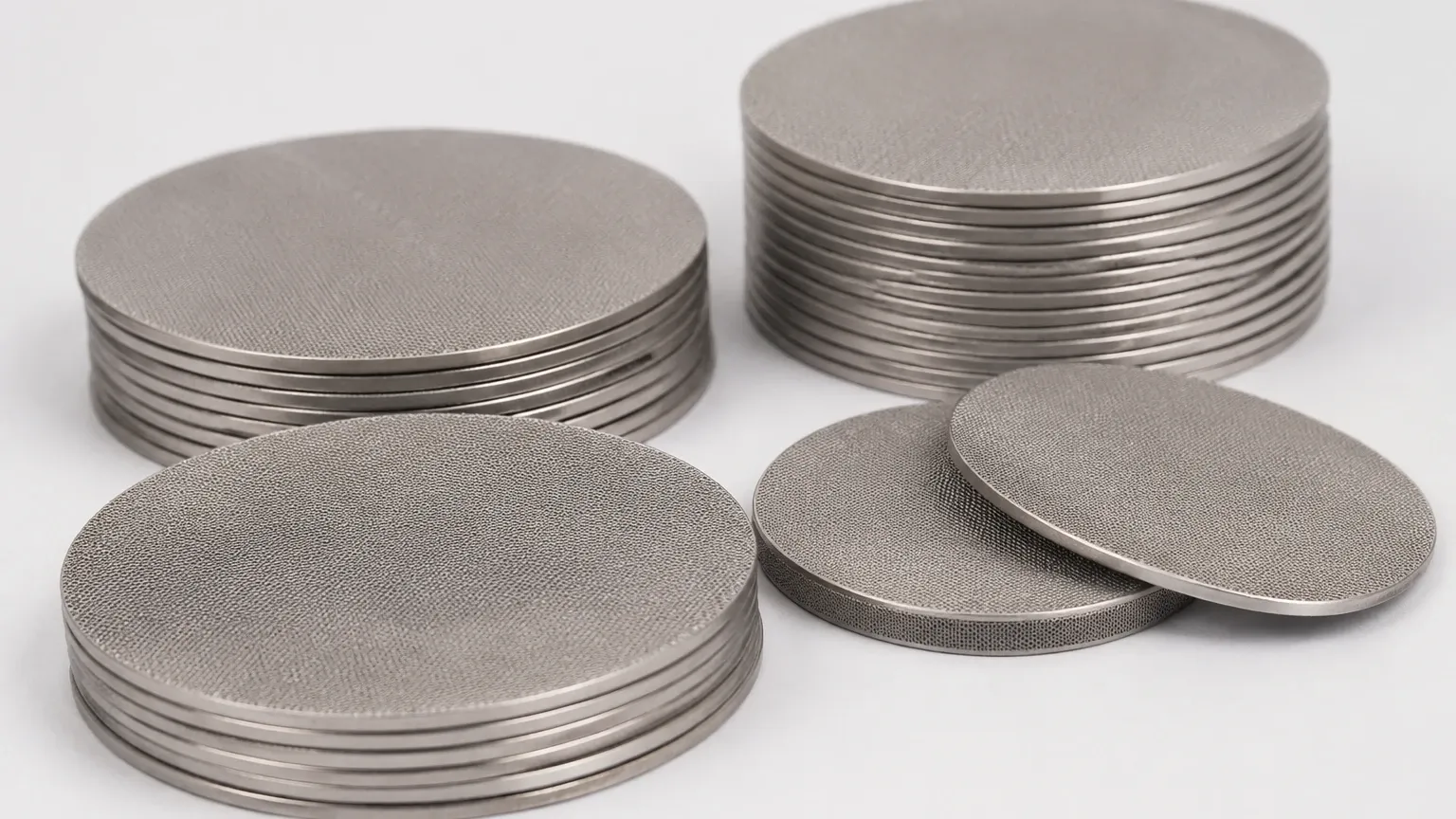
1 1 2 Disk Filter
In the landscape of industrial filtration, precision is the primary determinant of system efficiency and product purity. The 1 1 2 disk filter—referring to a 1.5-inch diameter filtration component—represents a critical size standard used across a variety of high-pressure and high-temperature applications. These components are essential in processes ranging from polymer extrusion and chemical processing to hydraulic fluid maintenance. Understanding the technical specifications, material properties, and structural configurations of Filter Discs & Packs is vital for engineers tasked with optimizing filtration performance and minimizing downtime.
Technical Specifications of 1 1 2 Disk Filters
A 1 1 2 disk filter is typically defined by its diameter, mesh count, and material composition. In industrial contexts, the 1.5-inch diameter is a common specification for circular screen packs used in plastic recycling and virgin resin production. These discs are designed to fit into recessed plates or breaker plates where they act as a barrier against contaminants.
Material Composition
The choice of material is the first engineering consideration. Stainless steel is the industry standard due to its mechanical strength and resistance to environmental degradation.
* AISI 304 Stainless Steel: This is the most common material for general industrial use. It offers excellent corrosion resistance and can withstand temperatures up to 800°F (427°C). It is suitable for water treatment, food and beverage processing, and standard hydraulic applications.
* AISI 316/316L Stainless Steel: For more demanding environments, 316L is preferred. The addition of molybdenum enhances resistance to pitting and crevice corrosion, particularly in chloride-rich environments. The "L" (low carbon) variant is essential for components that require welding, as it prevents carbide precipitation that can lead to intergranular corrosion.
* Specialty Alloys: In extreme chemical or thermal conditions, materials like Monel, Inconel, or Hastelloy may be utilized, though stainless steel remains the primary choice for the majority of 1.5-inch disc applications.
Weave Patterns and Filtration Efficiency
The performance of a 1 1 2 disk filter is largely dictated by the weave pattern of the wire cloth. Each weave offers a different balance of flow rate, mechanical strength, and filtration accuracy (micron rating).
Plain Weave
This is the simplest and most common weave, where each warp wire crosses over and under each shute wire. It provides a consistent pore size and is ideal for surface filtration where easy cleaning and high flow rates are prioritized.
Twill Weave
In a twill weave, each warp wire passes alternately over and under two shute wires. This allows for a heavier wire diameter to be used for a given mesh count, resulting in a more robust mesh. This is often used for finer filtration tasks where the mesh must withstand higher pressure differentials.
Dutch Weave (Plain and Twilled)
Dutch weaves utilize a larger diameter warp wire and a smaller diameter shute wire. This creates a dense, strong mesh with very small, tortuous paths for the fluid. This type of weave is excellent for depth filtration and is commonly found in 1 1 2 disk filter packs used for fine particle removal in chemical and pharmaceutical processes.
Structural Configurations: Single-Layer vs. Multilayer Packs
Depending on the application, a 1 1 2 disk filter may be used as a single layer of wire mesh or as part of a complex, multilayer pack.
Single-Layer Discs
These are used for coarse filtration or as a primary barrier in low-pressure systems. They are cost-effective and easy to replace. However, they lack the structural support required for high-viscosity fluids or high-pressure differentials.
Multilayer Filter Packs
To achieve both high filtration accuracy and structural integrity, multiple layers of mesh are combined. A typical 1.5-inch pack might consist of:
1. Support Layer: A coarse mesh that provides mechanical strength and prevents the finer layers from deforming under pressure.
2. Filtration Layer: The primary layer with the target micron rating.
3. Protective Layer: A medium mesh that protects the fine filtration layer from physical damage during installation or backwashing.
These layers can be joined through several methods:
* Spot Welding: The layers are welded at specific points to keep them aligned. This is common in polymer extrusion.
* Rimmed/Framed Edges: The edges of the discs are encased in a metal rim (usually aluminum or stainless steel). This ensures a better seal within the filter housing and prevents bypass—a critical failure point in precision filtration.
Engineering Considerations for Selection
When specifying a 1 1 2 disk filter, engineers must evaluate several variables to ensure the component meets the application's demands. Failure to account for these factors can lead to premature filter failure, product contamination, or equipment damage.
Micron Rating: Absolute vs. Nominal
It is essential to distinguish between nominal and absolute micron ratings. A nominal rating refers to the ability of the filter to retain a certain percentage of particles of a given size. An absolute rating indicates the pore size where no particle larger than that size can pass through. For critical pharmaceutical or aerospace applications, absolute ratings are often mandatory.
Pressure Drop (ΔP)
The pressure drop across the filter disc is a function of the mesh density, fluid viscosity, and flow rate. A high initial pressure drop reduces the service life of the filter and increases energy consumption. Engineers should select a mesh configuration that provides the required filtration while maintaining an acceptable ΔP.
Chemical and Thermal Compatibility
The filter must remain inert to the fluid being processed. In chemical processing, the pH levels and the presence of oxidizing agents will dictate the grade of stainless steel required. Similarly, the operating temperature must be within the material's stable range to prevent warping or loss of structural integrity.
Applications of 1 1 2 Disk Filters
The 1.5-inch size is particularly prevalent in several key industries due to its versatility and the standardization of equipment housings.
* Polymer and Plastic Extrusion: In the production of films, fibers, and resins, 1 1 2 disk filters are used in screen changers to remove "black specks" and un-melted gels. The multilayer design is crucial here to handle the high viscosity of molten plastic.
* Hydraulic Systems: These discs are used as last-chance filters in hydraulic lines to protect sensitive valves and actuators from particulate contamination that could cause mechanical seizing.
* Pharmaceutical and Biotech: In laboratory-scale production and pilot plants, 1.5-inch discs are used for the sterile filtration of gases and liquids. The use of 316L stainless steel ensures compliance with stringent sanitary standards.
* Food and Beverage: Used in the filtration of syrups, oils, and beverages to ensure clarity and remove impurities. Stainless steel mesh is preferred for its ease of sterilization and durability against frequent cleaning cycles.
Maintenance and Replacement Cycles
In industrial B2B environments, the total cost of ownership (TCO) is heavily influenced by the replacement frequency of filtration components. A 1 1 2 disk filter is often considered a consumable, but its lifespan can be extended through proper maintenance.
Cleaning Methods
Stainless steel filter discs can often be cleaned and reused, depending on the nature of the contaminant. Ultrasonic cleaning is the most effective method for removing fine particles trapped within the weave. For polymer applications, pyrolysis (burn-off) ovens may be used to remove residual resin, followed by ultrasonic treatment to restore the mesh's open area.
Determining Replacement
Replacement should be triggered by a specific increase in pressure differential. If the ΔP reaches a predetermined threshold that the system's pumps cannot efficiently overcome, the filter must be replaced. Additionally, any signs of "blinding" (permanent clogging) or mechanical deformation of the mesh indicate that the disc has reached the end of its functional life.
Customization and OEM Capabilities
Standard sizes like the 1 1 2 disk filter often require customization to meet specific machine tolerances or unique filtration challenges. Kaifil provides extensive OEM capabilities, allowing for the adjustment of wire diameters, mesh counts, and layering configurations. Custom rim materials and specialized welding techniques can be employed to ensure that the filter disc integrates perfectly with existing hardware.
When sourcing Filter Discs & Packs, it is beneficial to provide the manufacturer with detailed application data, including the fluid type, operating pressure, temperature, and the specific contaminant profile. This data allows for the engineering of a filtration solution that balances durability with precise particle retention.
Conclusion
The 1 1 2 disk filter is a fundamental component in the maintenance of industrial process integrity. Whether used as a single-layer screen or a complex multilayer pack, its performance depends on the rigorous selection of materials, weave patterns, and structural designs. By focusing on technical specifications such as micron ratings, pressure drop, and chemical compatibility, engineers can ensure that their filtration systems operate at peak efficiency, protecting downstream equipment and ensuring the highest quality of the final product.