


1 Disk Filter
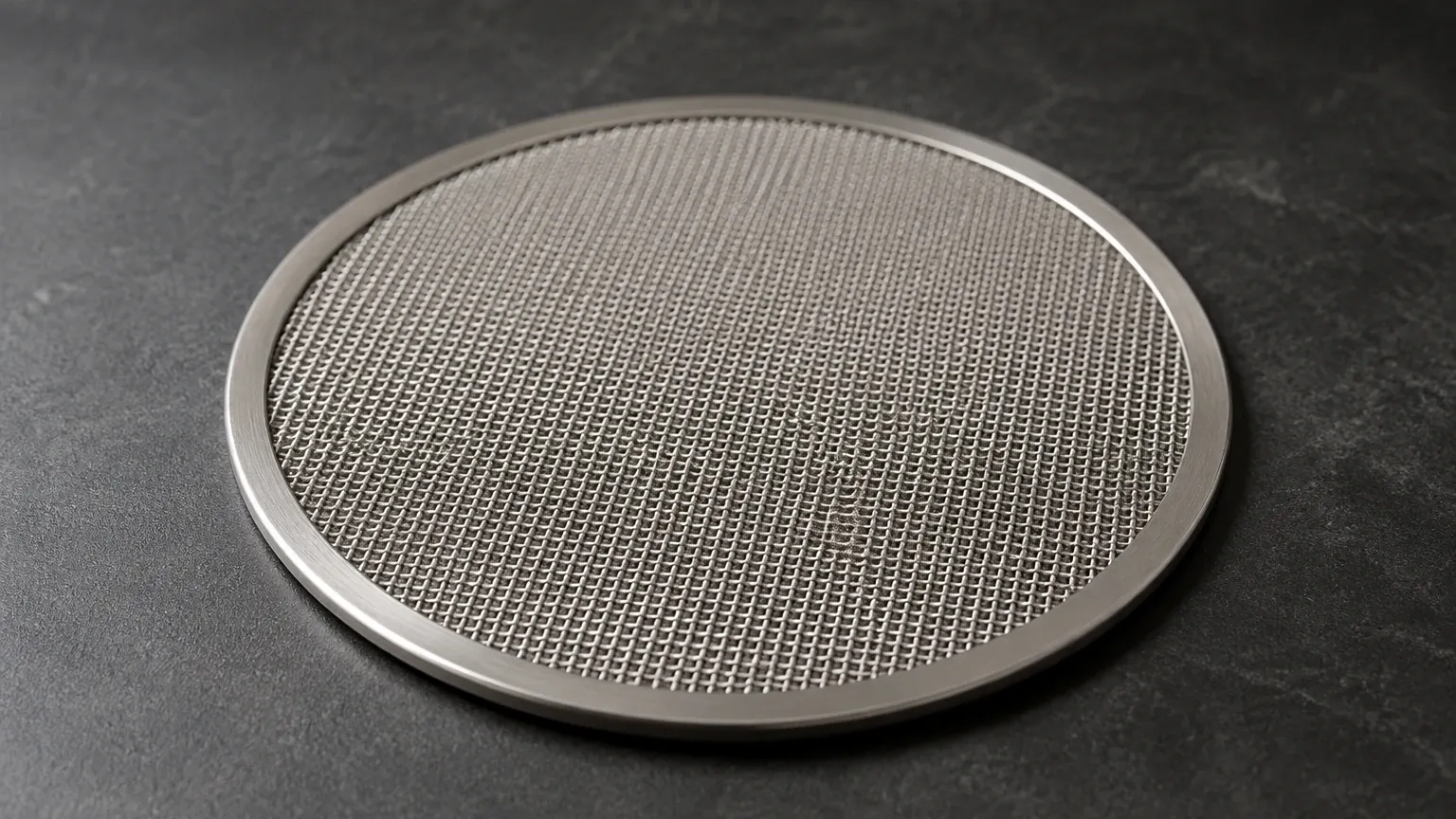
In industrial filtration, the term "1 disk filter" typically refers to a single-layer filtration component constructed from high-quality metal wire mesh. While seemingly simple, these components are critical in precision engineering environments where fluid or gas purity is paramount. As a specialized manufacturer, Kaifil provides these components as part of a comprehensive range of Filter Discs & Packs, designed to meet rigorous standards in chemical processing, hydraulic systems, and pharmaceutical production.
Selecting a single-layer filter disc requires a deep understanding of material science, fluid dynamics, and mechanical tolerances. This guide examines the technical specifications, engineering considerations, and application-specific requirements that define the performance of industrial disk filters.
Understanding the Role of Single-Layer Filter Discs in Industrial Systems
A 1 disk filter serves as a primary or secondary barrier in a filtration assembly. Unlike multi-layer packs, which are designed for depth filtration or high-pressure support, a single-layer disc is often utilized for surface filtration. In this configuration, particles larger than the mesh opening are captured on the upstream surface of the wire cloth.
Engineers often specify a single-layer design when the application requires low resistance to flow and easy cleanability. Because there are no internal layers where particles can become permanently trapped, these discs are highly effective in systems where backwashing or ultrasonic cleaning is a standard maintenance procedure. They are commonly found in polymer melt filtration, oil and gas processing, and as protective screens in sensitive valves and nozzles.
Material Selection and Chemical Compatibility
The performance of a 1 disk filter is fundamentally limited by its material composition. Industrial environments often expose filtration components to corrosive chemicals, high temperatures, and extreme pressures. Kaifil utilizes high-grade stainless steel to ensure longevity and reliability.
Stainless Steel 304
This is the most common material for general industrial use. It offers excellent mechanical properties and good resistance to atmospheric corrosion. It is widely used in food and beverage applications where high-strength and basic corrosion resistance are required.
Stainless Steel 316L
For more demanding environments, 316L is the preferred choice. The addition of molybdenum enhances resistance to pitting and crevice corrosion in chloride-rich environments. The "L" denotes low carbon content, which is essential for components that require welding, as it prevents carbide precipitation that could lead to intergranular corrosion.
Specialized Alloys
In specific B2B contexts, such as aerospace or specialized chemical manufacturing, materials like Monel, Inconel, or Hastelloy may be required. These alloys provide superior performance under extreme thermal stress or in contact with highly aggressive acids and alkalis.
Technical Specifications: Weave Types and Micron Ratings
The filtration efficiency of a 1 disk filter is determined by the weave pattern of the wire mesh. Each weave type offers a different balance of flow rate, mechanical strength, and filtration accuracy.
1. Plain Weave: The most straightforward pattern where each warp wire crosses over and under each shute wire. It provides the highest open area and lowest pressure drop, making it ideal for coarse filtration.
2. Twill Weave: Each shute wire passes over and under two warp wires. This allows for a heavier wire diameter to be used for a given mesh count, increasing the mechanical strength of the disc without significantly reducing the micron rating.
3. Dutch Weave (Plain and Twilled): These weaves use a larger diameter warp wire and a smaller diameter shute wire. This creates a dense, strong mesh with very small, curved openings. Dutch weave is the standard for precision filtration where high pressure is present, as it provides excellent structural integrity.
Micron ratings for these discs can range from 5 microns to several millimeters. Engineers must balance the "absolute" micron rating (the size of the largest particle that can pass through) with the "nominal" rating (the average pore size) to ensure the filter meets the specific purity requirements of the process.
Design Variations: From 1 Disk Filter to Multi-Layer Packs
While a 1 disk filter is often sufficient for low-pressure applications, many industrial processes require the enhanced capabilities of Filter Discs & Packs. The transition from a single layer to a multi-layer configuration is driven by three main factors:
* Mechanical Support: Fine mesh layers are often fragile. In a pack, a coarse mesh layer provides structural support to the fine filtration layer, preventing deformation under high differential pressure.
* Dirt Holding Capacity: Multi-layer packs can act as depth filters, trapping particles throughout the thickness of the pack rather than just on the surface. This extends the service life between cleaning cycles.
* Graduated Filtration: By stacking layers of varying micron ratings, a single pack can perform both pre-filtration and final filtration, protecting the sensitive fine mesh from large debris.
Kaifil specializes in custom configurations, including spot-welded packs and rimmed discs, ensuring that whether the design calls for a single layer or a complex stack, the component maintains its integrity within the housing.
Engineering Considerations for Flow Rate and Pressure Drop
One of the most critical calculations for an engineer is the expected pressure drop ($ΔP$) across the filter. A 1 disk filter is advantageous because it typically offers the lowest possible pressure drop for a given micron rating. However, this must be weighed against the Effective Filtration Area (EFA).
If the EFA is too small for the required flow rate, the velocity of the fluid through the mesh openings will increase. High velocity can lead to several issues:
* Particle Breakthrough: Deformable particles may be forced through the mesh openings.
* Erosion: High-velocity fluids, especially those containing abrasive particles, can wear down the wire mesh over time.
* Premature Clogging: Higher velocities can drive particles deeper into the mesh structure, making cleaning more difficult.
When designing a system around a 1 disk filter, it is essential to confirm that the housing allows for a disc diameter that provides sufficient EFA to maintain laminar flow and minimize $ΔP$.
Manufacturing Precision and Edge Finishing Options
The reliability of a filter disc is not just in the mesh itself, but in how it is finished. In many B2B applications, bypass—where fluid flows around the filter rather than through it—is unacceptable. Precision in manufacturing ensures a perfect fit within the filter housing.
Edge Treatment
* Unrimmed Discs: These are simple cut discs. While cost-effective, they may have loose wires at the edges which could contaminate the downstream fluid. They are best suited for applications where the disc is securely clamped or encapsulated.
* Rimmed Discs: These feature a metal border (often aluminum, stainless steel, or copper) compressed around the edge. The rim provides a better seal, prevents fraying, and adds significant mechanical strength. This is the preferred option for high-pressure hydraulic and polymer filtration.
* Spot Welding: For multi-layer packs, spot welding ensures the layers remain aligned during installation and operation.
Kaifil utilizes advanced cutting technologies, including laser and precision stamping, to ensure that every 1 disk filter meets the exact dimensional tolerances required by the client’s engineering drawings.
Maintenance, Cleaning, and Replacement Cycles
From a total cost of ownership (TCO) perspective, the longevity of stainless steel filter discs makes them superior to disposable synthetic filters. A high-quality 1 disk filter can be cleaned and reused multiple times, provided the cleaning protocol does not damage the mesh structure.
Common cleaning methods include:
* Ultrasonic Cleaning: High-frequency sound waves create cavitation bubbles that dislodge fine particles from the mesh.
* Chemical Cleaning: Using solvents or acids to dissolve contaminants, provided the chemical is compatible with the stainless steel grade.
* Burn-off/Pyrolysis: Used in polymer applications to remove hardened plastic residues.
Replacement cycles are typically determined by the "terminal pressure drop." Once the filter reaches a point where cleaning no longer restores the original flow characteristics, or if the mesh shows signs of mechanical fatigue or wire breakage, the disc must be replaced to prevent system failure.
Procurement and Customization with Kaifil
When sourcing industrial filtration components, purchasing teams must confirm several key factors to ensure they receive a product that matches their technical requirements. At Kaifil, we work closely with engineers to define these parameters before production begins:
1. Exact Mesh Count and Wire Diameter: These define the micron rating and the open area percentage.
2. Dimensional Tolerances: Critical for ensuring a leak-free fit in the filter housing.
3. Material Certification: Providing 3.1 or 3.2 certificates to verify the chemical composition of the steel.
4. Testing Requirements: Such as bubble point tests to verify filtration accuracy or pressure testing to confirm structural integrity.
As a professional manufacturer, Kaifil provides reliable OEM and customized filtration solutions. Whether you require a standard 1 disk filter for a simple screening application or a complex multi-layer pack for high-pressure chemical processing, our manufacturing capabilities ensure that every component delivers dependable performance in demanding industrial environments.
By focusing on quality, durability, and precise filtration, Kaifil helps global customers optimize their processes and reduce downtime through superior filtration technology.
