


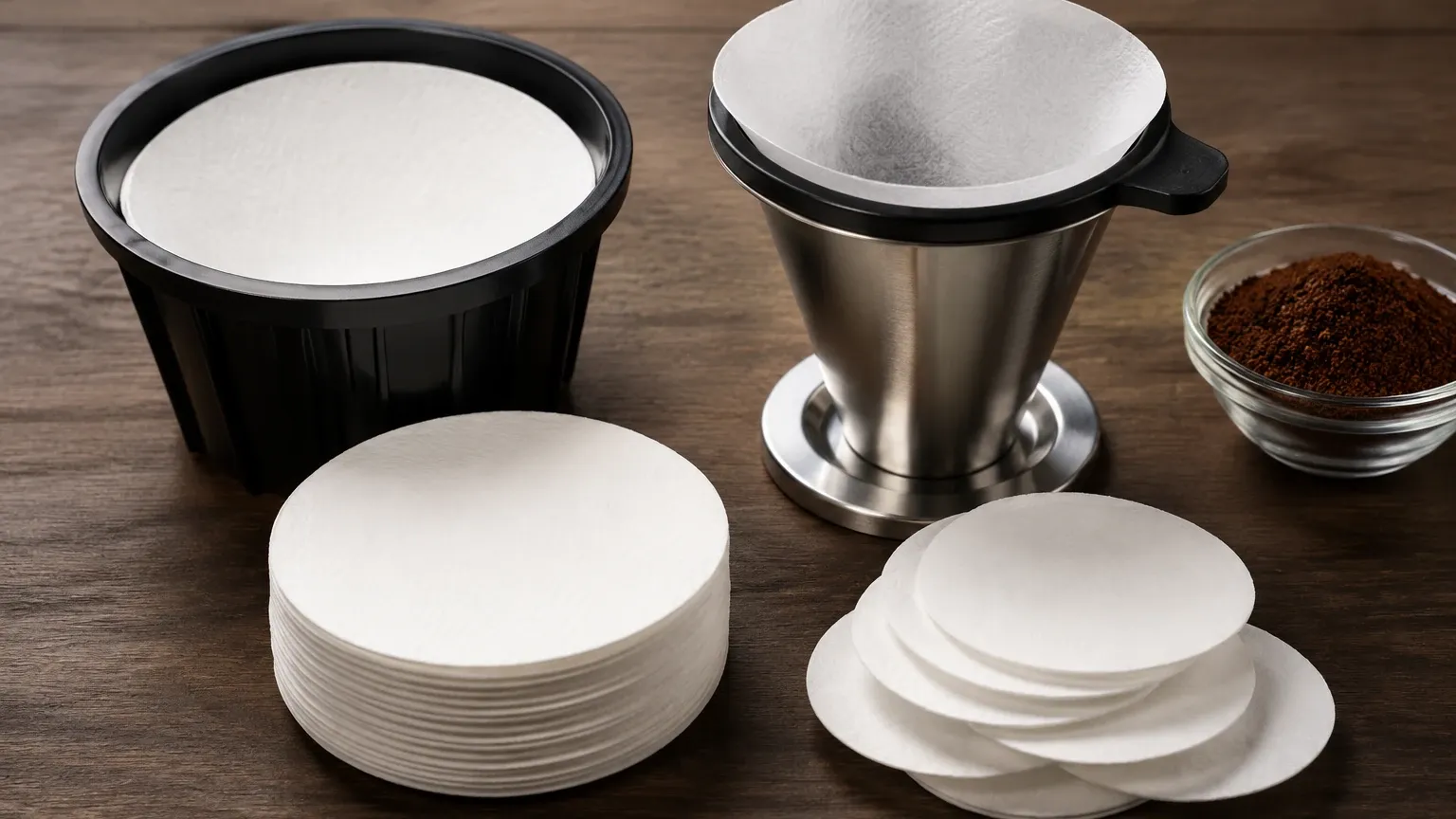
10 Cup Coffee Filter Packs
In the commercial beverage and food processing industries, the transition from disposable paper media to permanent, high-precision metal filtration components has become a standard for efficiency and consistency. While the term "10 cup coffee filter packs" often brings to mind consumer-grade paper inserts, the industrial perspective focuses on the engineering of the stainless steel Filter Discs & Packs that reside within commercial brewing systems, extraction equipment, and high-volume beverage production lines. For engineers and procurement specialists, selecting the correct filtration media involves a deep dive into material science, fluid dynamics, and mechanical durability.
Industrial-grade filter packs are designed to withstand the rigors of continuous thermal cycling, high-pressure cleaning, and chemical exposure—challenges that standard disposable filters cannot meet. This guide explores the technical specifications, material considerations, and engineering advantages of utilizing precision metal filter discs in commercial brewing and liquid processing applications.
The Role of Precision Filter Discs in Commercial Brewing
Commercial brewing equipment, particularly those designed for the standard 10-cup or larger carafes, requires a filtration interface that ensures a consistent flow rate while preventing sediment bypass. In industrial applications, the "filter pack" refers to a multi-layered assembly of wire mesh discs, often sintered or spot-welded together, to provide a specific micron rating and structural integrity.
Mechanical Stability and Flow Dynamics
Unlike paper filters, which can collapse under pressure or vary in pore size due to fiber density fluctuations, stainless steel filter discs offer a rigid structure. This rigidity ensures that the effective filtration area (EFA) remains constant throughout the brewing cycle. For a standard 10 cup coffee filter packs configuration, the disc must be engineered to handle the specific hydrostatic head of the water column while maintaining a uniform drip rate. This is achieved by selecting specific weave patterns, such as plain weave for high flow or Dutch weave for finer particulate retention.
Micron Rating and Clarity
The clarity of the final product is dictated by the micron rating of the wire mesh. In beverage processing, this typically ranges from 20 to 100 microns. A multi-layer filter pack might utilize a fine mesh for primary filtration, supported by a coarser mesh to provide mechanical strength against the weight of the wet grounds or slurry. Engineering these layers requires a balance between the desired clarity and the risk of blinding (clogging).
Engineering Considerations for Material Selection
When specifying components for 10 cup coffee filter packs in an industrial or OEM context, material selection is the most critical factor affecting the total cost of ownership and product safety.
Stainless Steel Alloys (304 vs. 316L)
Most industrial filtration components are manufactured from AISI 304 or 316L stainless steel.
* AISI 304: Suitable for standard food and beverage applications where corrosion resistance is required against water and organic acids.
* AISI 316L: Preferred for applications involving high-salinity water or aggressive cleaning agents (CIP – Clean-in-Place systems). The addition of molybdenum in 316L provides superior resistance to pitting and crevice corrosion, which is vital for maintaining hygiene standards in long-term installations.
Wire Mesh Weave Types
The geometry of the weave determines how the filter interacts with the fluid and the solids.
1. Plain Weave: The simplest and most common, offering high open area and low pressure drop.
2. Twill Weave: Allows for a heavier wire diameter in a given mesh count, increasing the physical strength of the disc.
3. Dutch Weave: Provides a tortuous path for particles, allowing for much finer filtration (down to 5 microns) while maintaining a robust structure suitable for high-pressure environments.
The Advantages of Permanent Metal Filter Packs
For high-volume operations, the shift from disposable media to permanent stainless steel Filter Discs & Packs offers significant operational advantages that extend beyond simple waste reduction.
Sustainability and Waste Reduction
In a commercial setting, the cumulative waste of thousands of paper filters represents both an environmental burden and a logistical cost. Stainless steel filter packs are reusable and can last for thousands of cycles if properly maintained. This aligns with modern corporate sustainability goals and reduces the frequency of consumable procurement.
Flavor Profile Consistency
Paper filters are known to absorb essential oils and can sometimes impart a "papery" taste to the beverage. Stainless steel is chemically inert and non-absorbent. This ensures that the full flavor profile of the extract is preserved. For engineers designing extraction equipment, this predictability is essential for maintaining brand standards across different geographic locations.
Cost-Efficiency Over Time
While the initial capital expenditure for a precision-engineered 10 cup coffee filter packs assembly is higher than a box of paper filters, the ROI is typically realized within the first year of operation. The elimination of recurring consumable costs, combined with reduced labor for inventory management, makes metal filtration the preferred choice for industrial-scale beverage systems.
Customization and Design Specifications
Industrial filtration is rarely a one-size-fits-all solution. Customization is often required to integrate the filter disc into existing hardware or to meet specific process requirements.
Layering and Sintering
For high-pressure applications, multiple layers of mesh are often sintered together. Sintering involves heating the mesh layers under pressure until the wires fuse at their contact points. This creates a porous metal plate that is incredibly strong and cannot be easily deformed. A common configuration for a 10 cup coffee filter packs disc might include a 50-micron filtration layer protected by a 20-mesh support layer on both sides.
Edge Treatment and Rimming
To ensure a proper seal within the filter housing and to prevent fraying of the wire mesh, discs are often finished with a metal rim or "binding." This can be a simple spot-welded U-clip or a fully encapsulated aluminum or stainless steel ring. The rim provides a flat surface for gaskets to seat against, preventing bypass—a common failure point in poorly designed filtration systems.
Geometric Precision
Using CNC laser cutting or precision die-stamping, manufacturers can produce filter discs with tolerances as tight as +/- 0.1mm. This precision is vital for automated brewing systems where the filter must fit perfectly into a robotic arm or a high-speed carousel without jamming.
Maintenance and Operational Longevity
To maximize the lifespan of industrial filter packs, a structured maintenance protocol is necessary. Unlike disposables, which are discarded when clogged, metal filters must be cleaned effectively.
Cleaning Protocols
* Ultrasonic Cleaning: The most effective method for removing fine particulates trapped within the mesh pores. High-frequency sound waves create cavitation bubbles that dislodge debris without damaging the wire structure.
* Backwashing: In automated systems, reversing the flow of fluid can clear the surface of the filter. This is common in large-scale beverage production.
* Chemical Cleaning: Using food-grade caustic or acidic solutions to dissolve organic buildup. It is crucial to ensure the filter material (e.g., 316L) is compatible with the cleaning agents used.
Monitoring Performance
Engineers should monitor the differential pressure (ΔP) across the filter pack. A steady increase in ΔP over time, even after cleaning, indicates that the filter is reaching the end of its functional life or requires a more intensive cleaning cycle. Establishing a baseline ΔP for a clean 10 cup coffee filter packs assembly allows operators to identify issues before they impact production quality.
Selection Guide for Purchasing Teams
When sourcing Filter Discs & Packs for commercial or industrial applications, purchasing teams should confirm several technical parameters with the manufacturer to ensure the component is fit for purpose.
1. Micron Rating: What is the specific particle size that must be retained? Is this an absolute or nominal rating?
2. Operating Temperature: Will the filter be exposed to boiling water, steam sterilization, or cryogenic temperatures?
3. Pressure Requirements: What is the maximum operating pressure and the expected differential pressure during the cycle?
4. Chemical Compatibility: What cleaning agents will be used? Are there specific acidity levels in the fluid being filtered?
5. Regulatory Compliance: Does the material meet FDA or EU food contact regulations? Is the manufacturing process free of contaminants?
By focusing on these technical boundaries, engineers can move beyond the consumer-level understanding of 10 cup coffee filter packs and implement robust, high-performance filtration solutions that enhance product quality and operational efficiency. The transition to precision-engineered stainless steel components is an investment in the reliability and consistency of the industrial beverage process.
