


2 Pack Filters
In the landscape of industrial filtration, precision and durability are the primary metrics for operational success. The term "2 pack filters" often refers to specialized dual-layer filter assemblies or standardized multi-unit packaging used in high-demand environments such as plastic extrusion, chemical processing, and hydraulic systems. For engineers and procurement specialists, understanding the technical nuances of these components is essential for maintaining system integrity and optimizing the total cost of ownership.
At the core of these solutions are Filter Discs & Packs, which are engineered to withstand extreme pressures and temperatures while providing consistent filtration accuracy. Whether used as a standalone dual-layer disc or as part of a larger filtration sequence, these components must be manufactured to exacting standards to prevent bypass and ensure mechanical stability.
The Architecture of Multi-Layer Filter Discs & Packs
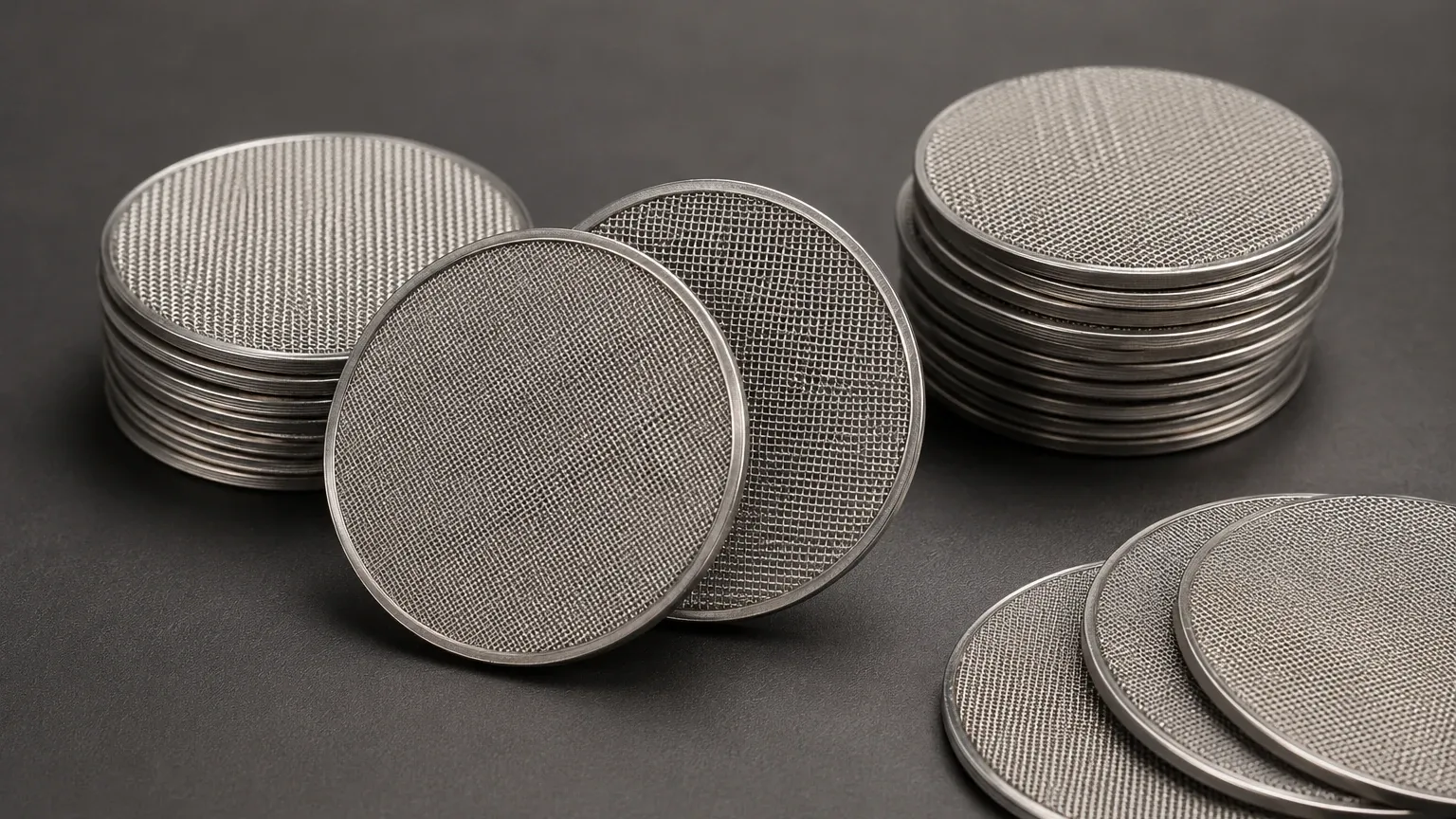
Industrial filtration often requires more than a single layer of wire mesh can provide. A "2 pack" configuration typically involves a primary filtration layer paired with a secondary support or drainage layer. This architecture is designed to balance two competing requirements: high filtration fineness and structural rigidity.
1. The Filtration Layer: This is the functional heart of the disc, usually consisting of a fine stainless steel wire mesh. Depending on the application, this might be a plain weave for general purpose or a Dutch weave for high-precision sub-micron filtration.
2. The Support Layer: Because fine mesh is inherently flexible and prone to deformation under high pressure, a coarser mesh layer is added. This support layer prevents the fine mesh from collapsing into the flow channels of the filter housing, maintaining the effective filtration area and preventing premature failure.
By combining these layers into a single unit—often through spot welding or rimming with aluminum, copper, or stainless steel—manufacturers create a robust component that is easier to handle during installation and more reliable during high-pressure cycles.
Material Selection: Why Stainless Steel is the Industrial Standard
The performance of 2 pack filters is heavily dependent on the alloys used in their construction. In the majority of industrial B2B applications, stainless steel is the material of choice due to its mechanical properties and chemical resistance.
* AISI 304 Stainless Steel: This is the standard grade for most general industrial applications. It offers good corrosion resistance and is cost-effective for environments where high-acid or high-saline exposure is not a primary concern.
* AISI 316L Stainless Steel: For more demanding environments, such as pharmaceutical or chemical processing, 316L is preferred. The addition of molybdenum provides superior resistance to pitting and crevice corrosion, particularly in chloride-rich environments. The "L" (low carbon) designation ensures better weldability and resistance to intergranular corrosion.
* Specialty Alloys: In extreme cases involving high-temperature oxidation or highly aggressive chemicals, alloys like Monel, Inconel, or Hastelloy may be utilized, though stainless steel remains the most common for standard filter packs.
Engineering Advantages of 2 Pack Filters in High-Pressure Systems
In systems like polymer melt filtration or hydraulic power units, the pressure drop across a filter can be significant. A single-layer filter might fail under the shear stress or pressure differentials. The use of 2 pack filters or multi-layer assemblies provides several engineering advantages:
Enhanced Mechanical Strength
The combination of a coarse mesh and a fine mesh creates a composite structure that can withstand higher differential pressures (ΔP). This is critical in extrusion processes where the viscosity of the medium exerts massive force on the filter media.
Improved Flow Distribution
The support layer in a dual-layer pack does more than provide strength; it also acts as a drainage layer. By providing a clear path for the filtrate to move toward the outlet after passing through the fine mesh, it ensures that the entire surface area of the filter is utilized, preventing localized clogging.
Simplified Maintenance
Using a pre-assembled 2 pack filter reduces the risk of human error during replacement. In high-speed production environments, technicians do not have to worry about the orientation or layering of individual mesh circles; the integrated pack ensures the support and filtration layers are always in the correct sequence.
Manufacturing Techniques: Spot Welding vs. Rimmed Edges
The method used to join the layers of a filter pack significantly impacts its performance and suitability for specific housings. There are two primary manufacturing techniques used for these components:
Spot-Welded Packs
In this process, the layers of mesh are joined at specific points using resistance welding. This is an economical method that keeps the layers aligned without adding significant thickness to the edges. Spot-welded packs are ideal for applications where the filter is clamped between two flat surfaces.
Rimmed or Bound Packs
For more heavy-duty applications, the edges of the 2 pack filters are encased in a metal rim (usually aluminum, copper, or stainless steel). This rim serves several purposes: it prevents the fraying of wire ends, provides a better seal against the filter housing, and adds significant circumferential strength. Rimmed packs are essential in high-pressure melt filters to prevent "blow-by," where the medium bypasses the filter at the edges.
Performance Metrics: Micron Ratings and Pressure Drop
When selecting filter discs and packs, engineers must evaluate the relationship between the micron rating and the allowable pressure drop.
* Absolute vs. Nominal Ratings: It is vital to confirm whether the 2 pack filters are rated nominally (an average pore size) or absolutely (the largest particle that can pass through). For critical applications like hydraulic valve protection, absolute ratings are usually required.
* Permeability: A finer micron rating naturally increases the resistance to flow. Engineers must calculate the initial pressure drop to ensure the pump system can handle the load as the filter begins to load with contaminants.
* Dirt Holding Capacity: Multi-layer packs often have a higher dirt holding capacity than single-layer discs because the depth created by the mesh intersection allows for more particle entrapment before the flow is restricted.
Applications Across Critical Industrial Sectors
The versatility of stainless steel filter packs makes them indispensable across various sectors:
* Plastic and Rubber Extrusion: Used in screen changers to remove impurities from recycled resins or virgin polymers, ensuring the quality of the final extruded product (films, pipes, profiles).
* Chemical Fiber Production: Essential for filtering polyester, nylon, and other synthetic fibers before they are spun through spinnerets.
* Oil and Gas: Employed in downhole sand control and the filtration of completion fluids where high-pressure and corrosive conditions are the norm.
* Food and Beverage: Used in the filtration of edible oils, syrups, and beverages where cleanability and food-grade material certification (FDA compliance) are required.
* Hydraulics: Protecting sensitive servo-valves and actuators from particulate contamination that could lead to catastrophic system failure.
Maintenance and Replacement: Maximizing Filter Life
While stainless steel 2 pack filters are durable, they are not infinite. Monitoring the replacement cycle is key to preventing downtime. Most modern industrial systems utilize differential pressure sensors to trigger a filter change.
Signs that a filter pack requires replacement include:
1. Increased ΔP: A steady rise in pressure drop indicates the mesh pores are becoming blinded by contaminants.
2. Reduced Flow Rate: If the pump speed remains constant but the output drops, the filter is likely the bottleneck.
3. Product Quality Issues: In extrusion, the appearance of "specks" or inconsistencies in the melt indicates a breach in the filter media or that the filter is saturated.
One of the primary benefits of stainless steel filter discs is their cleanability. Depending on the contaminant, packs can often be cleaned via ultrasonic baths, chemical cleaning, or burnout ovens, allowing for multiple reuse cycles and reducing the total cost of operation.
Technical Checklist for Procurement and OEM Customization
When ordering or specifying Filter Discs & Packs, procurement teams should provide the following technical details to ensure the product meets application requirements:
* Layer Configuration: Specify if a 2 pack, 3 pack, or multi-layer sintered structure is needed.
* Micron Rating: Define the required filtration fineness (e.g., 20 micron, 50 micron).
* Material Grade: Confirm AISI 304, 316, or 316L.
* Dimensions: Exact diameter (mm/inch) and thickness tolerances.
* Edge Treatment: Spot-welded, aluminum rimmed, or raw edges.
* Operating Conditions: Maximum operating temperature and peak differential pressure.
By focusing on these factual engineering boundaries, organizations can ensure they receive components that offer the necessary precision and longevity. Customization is often the key to success in industrial filtration; working with a manufacturer that understands the interplay between mesh geometry and fluid dynamics allows for the development of 2 pack filters tailored to specific process challenges.
In conclusion, while they may seem like simple components, the engineering behind filter packs is complex. From selecting the right weave type to ensuring structural integrity through advanced welding techniques, every detail contributes to the efficiency of the industrial process. Choosing high-quality, precision-manufactured filtration components is a direct investment in the reliability and quality of the final output.
