


2 Pack Air Filters
In industrial environments, air filtration is not merely a matter of comfort but a critical requirement for process integrity, equipment longevity, and safety. While the term "2 pack air filters" is frequently associated with residential HVAC maintenance, its application in the B2B and industrial sectors represents a strategic approach to inventory management and operational continuity. For engineers and procurement specialists, sourcing filtration components in pairs or multi-packs ensures that a secondary, identical unit is always available for immediate swap-out during scheduled maintenance or unexpected pressure spikes.
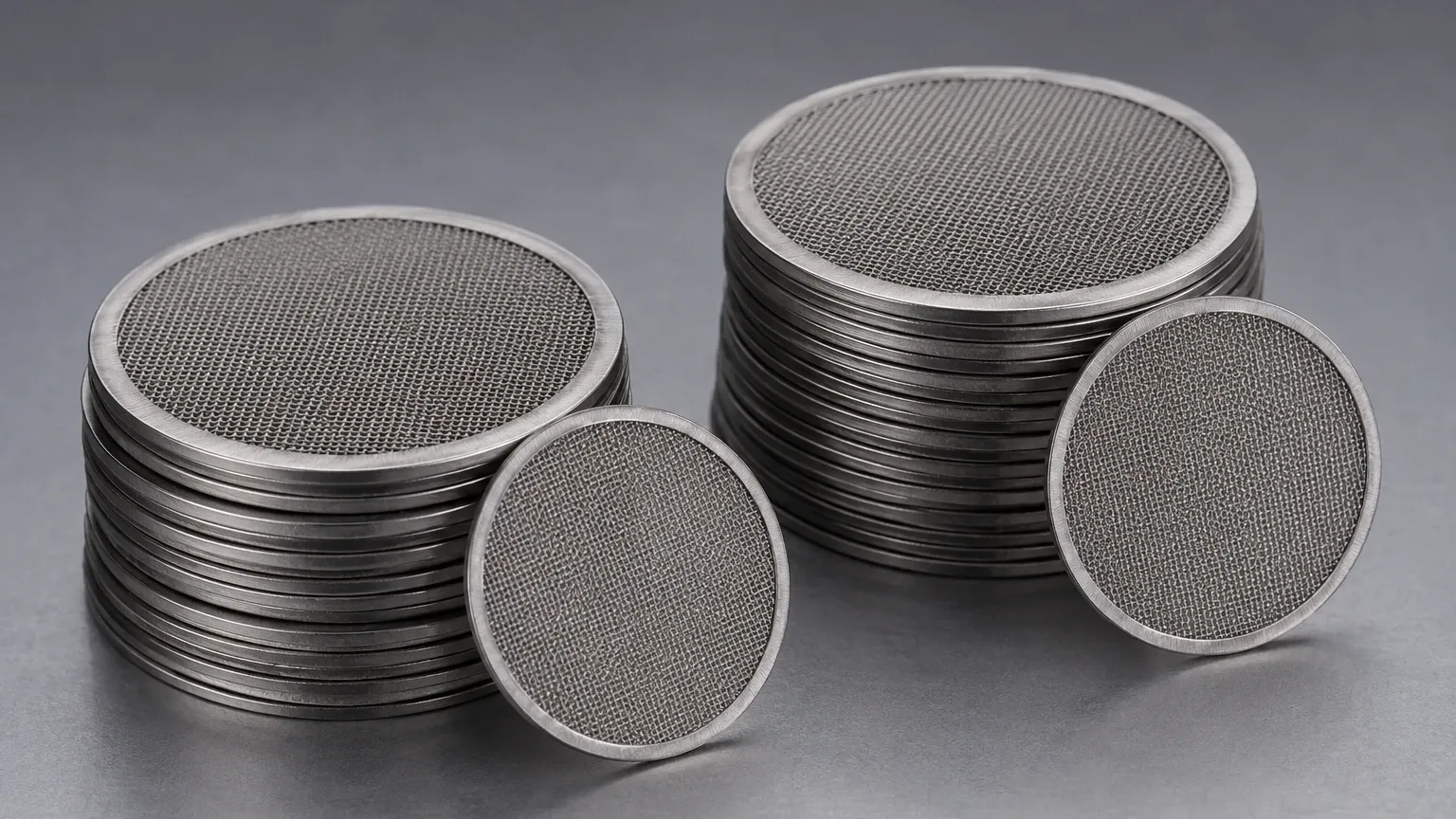
Industrial air filtration often requires robust materials capable of withstanding high temperatures, corrosive gases, and high-velocity airflow. In these demanding scenarios, stainless steel Filter Discs & Packs serve as the primary media for removing particulate matter from process air, pneumatic lines, and exhaust systems. Selecting the right configuration involves a deep understanding of mesh geometry, material science, and the specific mechanical constraints of the filtration housing.
The Strategic Importance of Industrial Air Filtration
Air filtration in an industrial context serves several distinct purposes. First, it protects sensitive downstream equipment, such as turbines, compressors, and vacuum pumps, from abrasive particles that can cause mechanical wear or catastrophic failure. Second, it ensures the purity of process air used in pharmaceutical manufacturing, food processing, and chemical synthesis, where even microscopic contaminants can compromise a whole batch of product.
When maintenance teams look for 2 pack air filters, they are typically addressing the need for a "duty and standby" arrangement. In critical systems, having a replacement filter on-site is essential to minimize downtime. If a filter becomes blinded—meaning its pores are completely obstructed by contaminants—the resulting pressure drop can strain the entire system. Having a second unit ready for installation allows for a seamless transition while the used stainless steel filter is cleaned and inspected for re-use.
Technical Composition of Filter Discs & Packs in Air Systems
Industrial air filters are often constructed using multiple layers of wire mesh to achieve a specific balance between filtration fineness and structural strength. These Filter Discs & Packs are engineered to handle the physical stresses of high-pressure air systems.
Multi-Layer Construction
Filter packs often consist of several layers of stainless steel wire mesh. The internal layer is usually a fine mesh that determines the filtration rating (the micron size). This is sandwiched between coarser support layers that provide the necessary rigidity to prevent the fine mesh from deforming under the force of the airflow. These layers can be spot-welded or bound with a metal rim (aluminum, stainless steel, or copper) to ensure the pack remains a single, cohesive unit during installation and operation.
Weave Types and Airflow
The type of weave used in the mesh significantly impacts how air moves through the filter. Plain weaves offer high open areas and low resistance, making them suitable for high-volume air intake. Conversely, Dutch weaves (Plain Dutch or Twill Dutch) provide much finer filtration levels and higher mechanical strength, which are often required in high-pressure pneumatic applications or gas separation processes.
Procurement Efficiency: Why Engineers Source 2 Pack Air Filters
In the B2B procurement cycle, the decision to purchase 2 pack air filters is driven by several logistical and economic factors. For customized stainless steel filtration components, lead times can be a significant factor. By ordering in packs of two or more, companies can mitigate the risks associated with supply chain delays.
Total Cost of Ownership (TCO)
While the initial cost of a stainless steel filter is higher than that of a disposable synthetic filter, the TCO is often lower. Stainless steel filters are cleanable and reusable. Sourcing them in a 2-pack allows one filter to be in service while the other is undergoing ultrasonic cleaning or chemical treatment. This rotation extends the life of the assets and reduces the frequency of replacement orders, leading to lower administrative and shipping costs over time.
Consistency in Specification
Sourcing filters in pairs ensures that both units meet the exact same engineering tolerances. In precision air systems, even minor variations in mesh count or wire diameter can lead to inconsistent flow rates. By procuring Filter Discs & Packs as a matched set, engineers can guarantee that the system's performance remains stable regardless of which filter is currently in the housing.
Engineering Parameters: Micron Ratings and Flow Resistance
When specifying 2 pack air filters for industrial use, engineers must calculate the optimal balance between filtration efficiency and pressure drop (Delta P). A filter that is too fine will clog quickly, leading to frequent maintenance intervals and high energy consumption by fans or compressors. A filter that is too coarse will allow contaminants to pass through, potentially damaging downstream components.
Defining Micron Ratings
In air filtration, the micron rating can be absolute or nominal. For critical applications, such as protecting the air intake of a high-speed turbine, an absolute rating is required to ensure that no particles above a certain size pass through. Stainless steel mesh is particularly effective here because the physical apertures are fixed and do not expand under pressure, unlike fiber-based media.
Calculating Pressure Drop
The resistance to airflow is influenced by the "open area" percentage of the filter disc. Engineers must ensure that the filter pack can handle the required CFM (Cubic Feet per Minute) without exceeding the system's maximum allowable pressure drop. This involves selecting the appropriate wire diameter and mesh count. For example, a mesh with a larger wire diameter will be more durable but will offer more resistance to airflow compared to a mesh with thinner wires and the same micron rating.
Material Integrity: Stainless Steel vs. Alternative Media
Why choose stainless steel for 2 pack air filters instead of paper or polymer alternatives? The answer lies in the operating environment. Industrial air often contains moisture, oil vapors, or corrosive chemicals that would degrade standard disposable filters.
1. Thermal Stability: Stainless steel (SS304, SS316, or SS316L) can operate at temperatures exceeding 500°C, where synthetic filters would melt or ignite. This is crucial for exhaust gas filtration in heavy industry.
2. Chemical Resistance: In chemical processing plants, air filters may be exposed to acidic or alkaline vapors. SS316L provides superior resistance to pitting and corrosion in these environments.
3. Mechanical Strength: High-velocity air can cause "media migration" in fiber filters, where bits of the filter material break off and enter the air stream. Stainless steel wire mesh is structurally sound and does not shed fibers, ensuring a clean air supply.
Maintenance Protocols and Service Life Extension
The benefit of having 2 pack air filters is most apparent during the maintenance cycle. Unlike disposable filters that are discarded when dirty, stainless steel Filter Discs & Packs are designed for longevity.
Cleaning Procedures
When the pressure drop across the filter reaches a pre-defined limit, the dirty filter is removed and replaced with the second unit from the pack. The dirty filter can then be cleaned using various methods:
* Ultrasonic Cleaning: High-frequency sound waves create cavitation bubbles that dislodge fine particles trapped deep within the mesh layers.
* Backwashing: Reversing the flow of air or liquid through the filter to push contaminants out of the pores.
* Chemical Cleaning: Using solvents or detergents to dissolve oils or organic buildup.
Inspection and Re-validation
After cleaning, the filter should be inspected for any signs of mesh deformation or damage to the rim. In highly regulated industries, a bubble point test may be performed to verify that the filtration rating has not been compromised. Having the second filter already in operation provides the maintenance team with the time necessary to perform these checks thoroughly.
Customization and OEM Capabilities for Specialized Air Filtration
No two industrial air systems are identical. Consequently, off-the-shelf 2 pack air filters may not always meet the specific requirements of a unique piece of machinery. This is where custom manufacturing becomes essential.
Engineers often require specific dimensions, ranging from tiny discs a few millimeters in diameter to large-scale packs used in industrial scrubbers. Customization options include:
* Edge Finishing: Choosing between hemmed edges, welded rims, or plastic-molded borders to ensure a perfect seal within the filter housing.
* Layer Configuration: Combining different mesh types (e.g., a perforated metal base for extreme strength with a fine twill mesh for filtration).
* Shape Variations: While discs are common, air systems may require rectangular, oval, or conical packs to fit specific ductwork or intake ports.
By working with a manufacturer that specializes in Filter Discs & Packs, procurement teams can ensure that their 2-pack sets are tailored exactly to their operational needs, providing the best possible protection for their industrial assets. This technical approach to sourcing ensures that "2 pack air filters" are not just a commodity purchase, but a calculated investment in system reliability and process efficiency.
