


3 Disk Filter
In the realm of industrial filtration, precision and structural integrity are paramount. Among the various configurations used to achieve high-purity results in demanding environments, the 3 disk filter—often referred to as a three-layer filter pack—stands out as a versatile and robust solution. These components are essential in processes ranging from plastic extrusion and chemical processing to hydraulic oil filtration. By combining multiple layers of stainless steel wire mesh into a single unit, engineers can balance fine filtration requirements with the mechanical strength necessary to withstand high differential pressures.
Selecting the right Filter Discs & Packs involves understanding the synergy between material science, mesh weaving techniques, and the specific fluid dynamics of the application. This guide explores the technical foundations of 3 disk filters, helping procurement teams and engineers make informed decisions regarding material selection, customization, and performance expectations.
The Engineering Behind the 3 Disk Filter Configuration
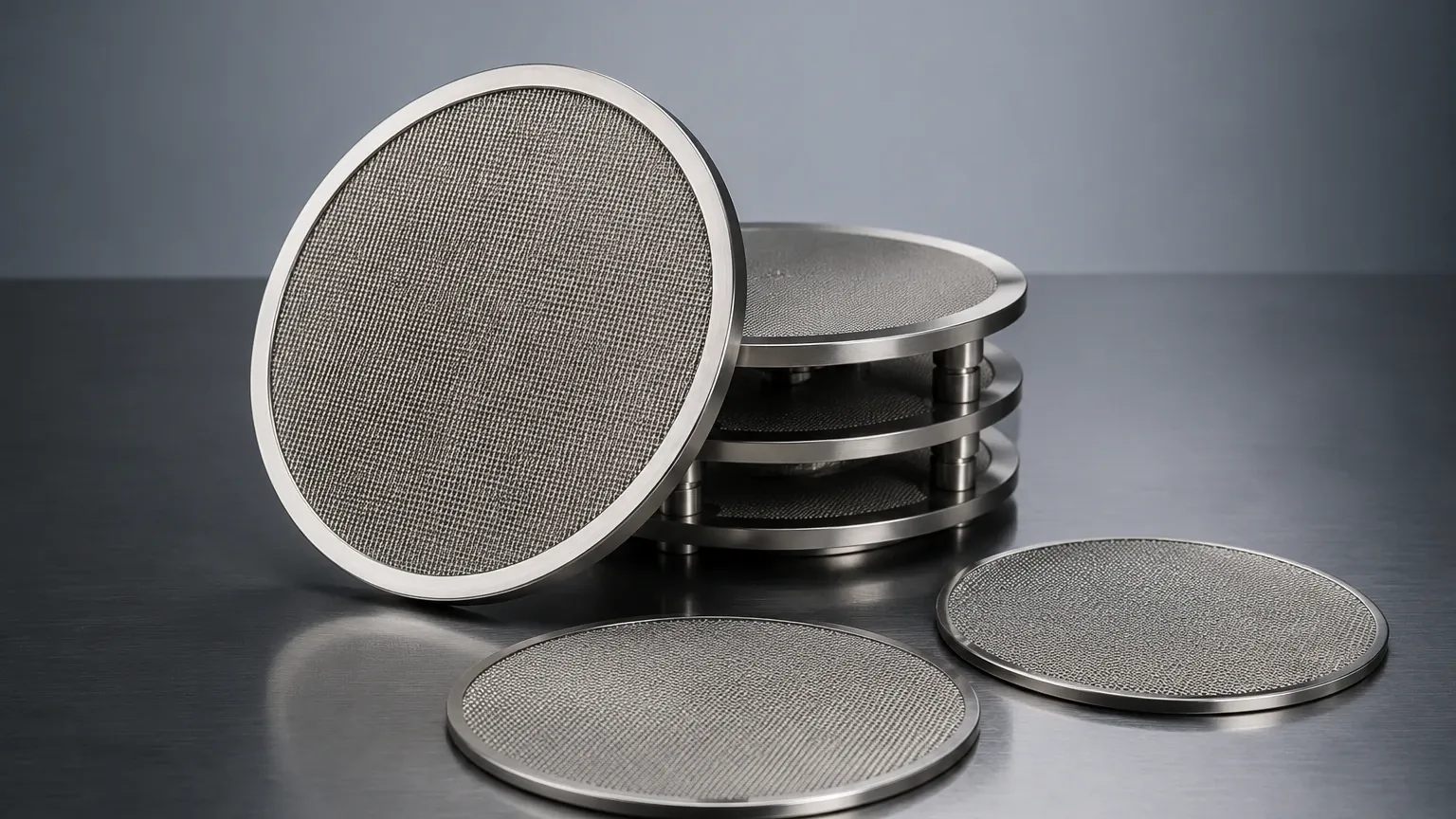
A 3 disk filter is rarely just three identical pieces of mesh stacked together. Instead, it is a carefully engineered "sandwich" designed to optimize flow and particle retention. In most industrial applications, the three layers serve distinct functional purposes:
1. The Filtration Layer (Core): The middle layer is typically the finest mesh. It determines the micron rating of the entire assembly. Because this layer is often fragile due to its fine wire diameter, it requires protection from both sides.
2. The Support Layer: The bottom layer (downstream) provides the structural backbone. It prevents the fine filtration mesh from deforming or "bursting" under the pressure of the fluid or gas flow. This layer usually features a coarser mesh with thicker wires.
3. The Protective/Distribution Layer: The top layer (upstream) acts as a pre-filter for larger contaminants and helps distribute the incoming flow evenly across the surface of the filtration layer. This prevents localized clogging and extends the service life of the disc.
This tri-layer construction allows for a much higher pressure threshold than a single-layer disc could ever achieve. By bonding these layers—either through spot welding or rim binding—manufacturers create a cohesive unit that is easy to install and replace.
Material Science: Selecting Stainless Steel for Filter Discs & Packs
The choice of material is the most critical factor in determining the longevity and chemical compatibility of a 3 disk filter. Stainless steel is the industry standard due to its resistance to corrosion, heat, and mechanical wear.
* AISI 304 Stainless Steel: This is the most common material for general industrial use. It offers excellent strength and basic corrosion resistance, making it suitable for food and beverage applications, hydraulic systems, and standard water treatment.
* AISI 316L Stainless Steel: For more aggressive environments, 316L is preferred. The addition of molybdenum provides superior resistance to chlorides and acids. The "L" denotes low carbon content, which is essential for components that undergo welding, as it prevents intergranular corrosion in the heat-affected zones.
* Specialty Alloys: In extreme cases involving high-temperature chemical processing or highly corrosive media, materials like Hastelloy, Monel, or Inconel may be utilized. These alloys maintain their structural integrity at temperatures where standard stainless steel would oxidize or lose tensile strength.
When specifying Filter Discs & Packs, engineers must also consider the weave type of the mesh. Plain weave is standard for general filtration, while Dutch weave (Plain or Twill) provides a much denser structure for fine-micron applications, often used in the core layer of a 3 disk filter to achieve ratings as low as 5 to 10 microns.
Performance Metrics: Micron Ratings and Pressure Differential
When evaluating a 3 disk filter, two primary metrics dominate the technical conversation: the micron rating and the allowable pressure drop (ΔP).
Micron Rating: Absolute vs. Nominal
It is vital to distinguish between nominal and absolute filtration. A nominal rating refers to the ability of the filter to retain a major percentage (usually 60% to 90%) of particles of a specific size. An absolute rating, however, implies that 99.9% of particles larger than the specified micron size will be captured. In a 3 disk filter, the precision of the center layer determines this performance. For high-purity pharmaceutical or chemical applications, absolute ratings are typically required to ensure process consistency.
Pressure Differential and Flow Capacity
Every filter introduces resistance to the system. The "clean pressure drop" is the initial resistance when the filter is new. As the 3 disk filter captures contaminants, the pressure drop increases. Because these discs are often used in high-viscosity applications like polymer melt filtration, the mechanical strength of the support layer is tested. If the support layer is too weak, the filtration layer may migrate or tear, leading to bypass—a catastrophic failure where unfiltered media passes through the system.
Industrial Applications: Where 3 Disk Filters Excel
The versatility of the 3 disk filter makes it a staple in several critical industries. Its compact profile allows it to fit into narrow housings, valve assemblies, and extrusion heads.
Polymer and Plastic Extrusion
In the production of plastic films, fibers, and resins, impurities can cause defects in the final product or damage expensive extrusion dies. 3 disk filters (often used in screen changers) remove "black specks," un-melted resin, and foreign particles from the molten polymer. The multi-layer design is essential here to handle the extreme pressures and temperatures of the extrusion process.
Hydraulic and Lubrication Systems
Hydraulic fluids must remain free of particulate matter to prevent wear on pumps and valves. A 3 disk filter is often integrated into hydraulic lines or breather caps. The stainless steel construction ensures that the filter does not shed fibers into the fluid, which is a common risk with paper or synthetic media.
Chemical and Petrochemical Processing
Corrosive fluids and high-temperature gases require filtration media that will not degrade. The 3 disk configuration allows for fine filtration of catalysts or the removal of carbon deposits in refining processes. The ability to clean and reuse stainless steel discs provides a significant cost advantage over disposable alternatives in these high-volume sectors.
Customization Options for Optimized Filtration
One of the primary advantages of working with a specialized manufacturer like Kaifil is the ability to customize Filter Discs & Packs to meet exact geometric and performance specifications. Standard off-the-shelf filters often fall short in specialized machinery.
* Rim and Border Options: To prevent fraying and ensure a leak-proof seal within the housing, 3 disk filters can be finished with various borders. Aluminum, stainless steel, or copper rims are compressed around the edge of the mesh layers. This not only adds rigidity but also acts as a gasket during installation.
* Spot Welding: For applications where a low profile is required, the three layers can be spot-welded at multiple points. This keeps the layers aligned without adding the bulk of a metal rim.
* Shape and Dimension: While circular discs are the most common, 3 disk filters can be manufactured in oval, rectangular, or ring shapes (with a center hole). Precision laser cutting ensures that the edges are clean and the dimensions are accurate to within microns.
* Sintered vs. Non-Sintered: For the most extreme pressure environments, the three layers can be sintered—a process where the wires are diffusion-bonded at their contact points using heat and pressure. This creates a monolithic structure that cannot migrate or delaminate.
Maintenance and Total Cost of Ownership Considerations
While the initial cost of a stainless steel 3 disk filter is higher than that of a disposable polymer or paper filter, the total cost of ownership (TCO) is often much lower. This is primarily due to the cleanability and durability of the metal mesh.
Cleaning Procedures
Unlike disposable filters, stainless steel discs can be cleaned using several methods:
* Ultrasonic Cleaning: High-frequency sound waves create cavitation bubbles that dislodge fine particles from deep within the mesh pores.
* Backwashing: Reversing the flow of the fluid can clear the surface of the protective layer.
* Chemical Cleaning: Soaking the discs in compatible solvents or acids can dissolve organic or inorganic build-up without damaging the stainless steel.
* Burn-off/Pyrolysis: In polymer applications, the discs can be placed in a controlled oven to burn off residual plastic, leaving the mesh clean for reuse.
When to Replace
Despite their durability, 3 disk filters are not permanent. Engineers should monitor the "terminal pressure drop"—the point at which the pressure differential is so high that the flow rate is compromised or the risk of structural failure becomes too great. Additionally, repeated cleaning cycles can eventually fatigue the wires or cause the pore sizes to enlarge. Regular inspection under magnification can help identify mesh distortion before it impacts product quality.
Conclusion
The 3 disk filter is a fundamental component in the toolkit of the modern industrial engineer. By providing a balanced solution that offers fine filtration, structural support, and long-term durability, these multi-layer packs ensure that critical processes remain efficient and contaminant-free. Whether you are managing a high-pressure hydraulic system or a complex chemical refinery, selecting the appropriate Filter Discs & Packs is a decision that impacts both operational uptime and the quality of the final output.
When sourcing these components, it is essential to partner with a manufacturer that understands the nuances of wire mesh engineering. From selecting the correct grade of 316L stainless steel to determining the optimal rim material for a specific housing, technical expertise is the key to achieving reliable filtration performance in the most demanding industrial environments.
