


6 Pocket Filter
In the landscape of industrial filtration, the 6 pocket filter represents a critical balance between surface area, airflow efficiency, and structural footprint. Designed primarily for medium to high-efficiency filtration, these components are ubiquitous in environments requiring the removal of fine particulate matter without inducing significant pressure drops. For engineers and procurement specialists, understanding the technical nuances of the 6 pocket configuration—ranging from aerodynamic stability to material compatibility—is essential for optimizing system performance and reducing the total cost of ownership.
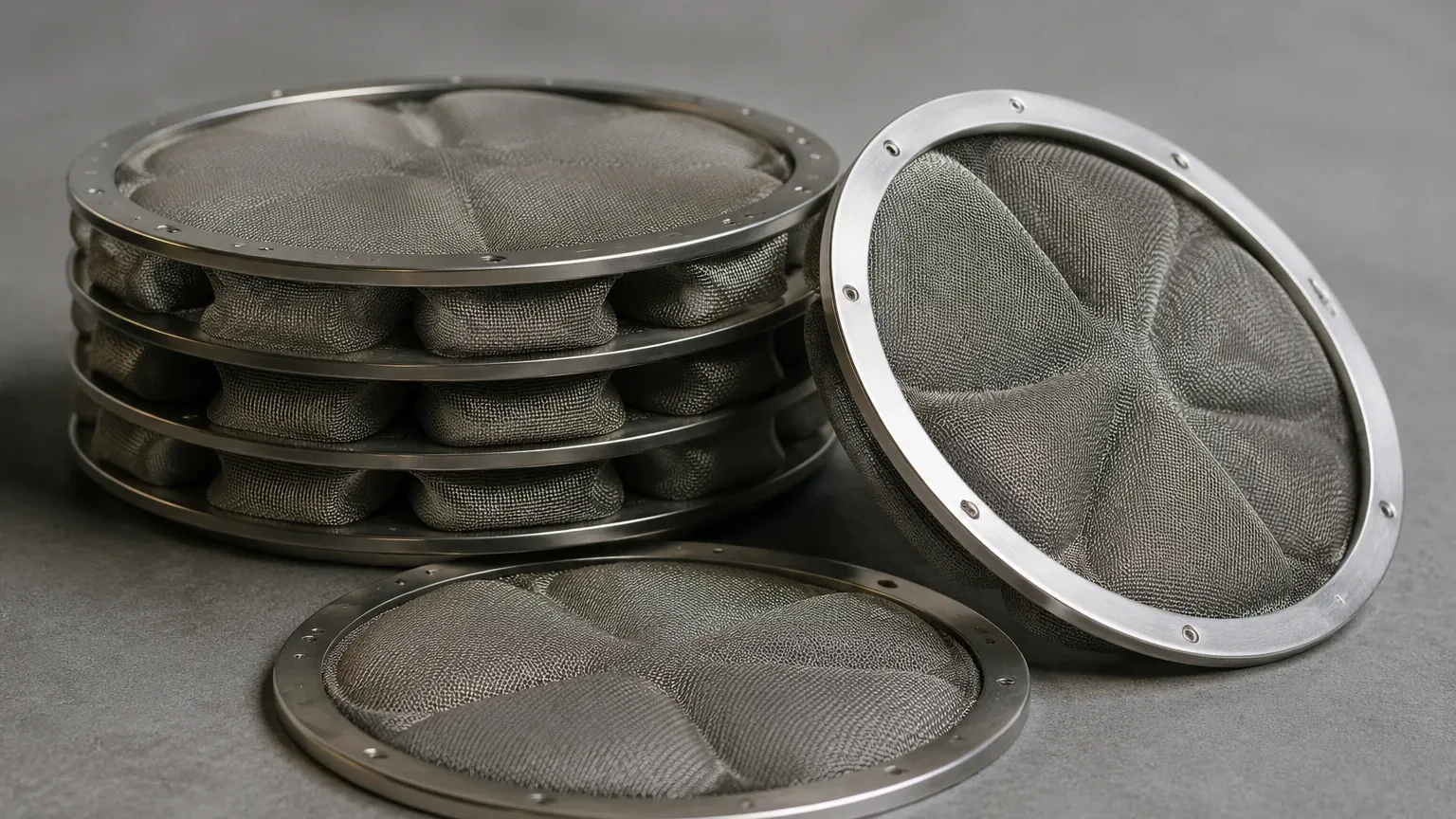
While many standard pocket filters utilize synthetic media for general HVAC applications, industrial-grade variants often incorporate specialized frames and support structures. In demanding sectors such as chemical processing or high-temperature manufacturing, the integration of precision metal components and Filter Discs & Packs ensures that the filtration system can withstand corrosive bypass or mechanical stress that would compromise standard commercial units.
The Engineering Logic of the Multi-Pocket Design
The primary objective of a 6 pocket filter is to maximize the effective filtration area (EFA) within a standardized header size, typically 592 x 592 mm (24 x 24 inches). By dividing the media into six distinct "pockets" or bags, the design significantly increases the square footage of the filter media compared to a flat panel or a low-pocket-count alternative.
Surface Area and Face Velocity
From an engineering perspective, increasing the surface area is the most effective way to lower the face velocity—the speed at which air or fluid passes through the media. Lower face velocity leads to several performance advantages:
1. Enhanced Particle Capture: Slower movement through the media allows for more effective diffusion and interception of sub-micron particles.
2. Reduced Pressure Drop: Lower resistance to flow means the system's fan or pump consumes less energy to move the same volume of fluid.
3. Extended Service Life: A larger surface area can hold a greater mass of contaminants before reaching its terminal pressure drop, lengthening the intervals between replacements.
In a 6 pocket configuration, the depth of the pockets (often ranging from 300mm to 600mm) further dictates the capacity. Engineers must calculate the specific volume of the installation space to ensure that the pockets can fully inflate without touching adjacent walls or components, which would create "dead zones" and reduce efficiency.
Material Selection and Structural Integrity
The durability of a 6 pocket filter is largely determined by the materials used in the header, the pocket spacers, and the media itself. In industrial B2B contexts, the choice of materials is dictated by the chemical composition of the process stream and the operating temperature.
Header and Frame Construction
The header is the peripheral frame that secures the filter into the housing. While galvanized steel is common in standard applications, stainless steel headers are preferred in pharmaceutical and food processing environments due to their resistance to corrosion and ease of sterilization. A rigid header prevents air bypass, ensuring that all fluid is forced through the filter media rather than around the edges.
Media and Internal Spacers
The media in a 6 pocket filter can range from melt-blown polypropylene and glass fiber to specialized metal-reinforced synthetics. To prevent the pockets from touching each other—a phenomenon known as "blinding"—internal spacers or aerodynamic ribs are often employed. These spacers ensure that the pockets remain open and parallel, maintaining uniform flow distribution across the entire surface area.
In specialized industrial processes where high-pressure pulses or heavy dust loads are present, the media may be supported by a wire mesh backing. This is where the synergy between pocket filters and precision Filter Discs & Packs becomes evident, as both rely on high-quality wire weaving to provide mechanical strength without sacrificing permeability.
Performance Metrics: Efficiency and Pressure Drop
When specifying a 6 pocket filter, technical professionals focus on two primary standards: the MERV (Minimum Efficiency Reporting Value) rating under ASHRAE 52.2 or the ISO 16890 classification.
Efficiency Ratings
A 6 pocket filter is typically available in efficiency grades ranging from MERV 11 to MERV 15 (ePM10 to ePM1 80% per ISO 16890). The choice depends on the sensitivity of the downstream equipment or the cleanliness requirements of the environment. For example, a MERV 14 filter is often used as a pre-filter for HEPA systems in cleanrooms, capturing the bulk of the particulate load to protect the more expensive final-stage filters.
Initial vs. Terminal Pressure Drop
The "Initial Pressure Drop" refers to the resistance of a clean filter at a specific flow rate. For a standard 6 pocket filter, this might range from 50 to 120 Pa. The "Terminal Pressure Drop" is the point at which the filter is considered loaded and must be replaced, usually around 250 to 450 Pa. Monitoring these values via differential pressure gauges is the only reliable way to manage maintenance schedules. Replacing a filter too early wastes material costs, while replacing it too late leads to excessive energy consumption and potential media rupture.
Industrial Applications and System Integration
The 6 pocket filter is a versatile component found in various multi-stage filtration systems. Its role is often to serve as a secondary stage, following a coarse G4-rated pre-filter and preceding high-precision metal filters or HEPA units.
Chemical and Pharmaceutical Processing
In these sectors, air purity is non-negotiable. 6 pocket filters are used to capture chemical dust and airborne contaminants that could compromise product integrity. Because these environments often involve volatile organic compounds (VOCs) or corrosive vapors, the use of stainless steel frames and chemically resistant media is standard practice.
Food and Beverage Production
Filtration in food production requires materials that are non-shedding and resistant to microbial growth. 6 pocket filters used here often feature ultrasonic welding on the pocket seams instead of traditional stitching. This eliminates needle holes where bacteria could potentially bypass the media or accumulate. When used in conjunction with stainless steel Filter Discs & Packs in the liquid processing line, these filters contribute to a comprehensive contamination control strategy.
Gas Turbine and Power Generation
Large-scale machinery requires massive volumes of clean air for combustion and cooling. 6 pocket filters are frequently used in the intake houses of gas turbines to protect the delicate blades from erosion and fouling caused by atmospheric dust. In these high-velocity environments, the structural stability of the 6 pocket design is paramount to prevent "pocket flapping," which can lead to mechanical fatigue and media failure.
Selection Criteria for Engineering Teams
Choosing the right 6 pocket filter involves more than just matching dimensions. Engineers should evaluate the following factors before procurement:
* Dust Holding Capacity (DHC): This metric indicates how many grams of standardized dust the filter can hold before reaching terminal pressure. A higher DHC directly correlates to a lower total cost of ownership due to fewer change-outs.
* Burst Pressure: In systems where fan surges are possible, the filter must have a rated burst pressure significantly higher than the maximum system pressure to prevent catastrophic failure.
* Temperature Limits: Standard synthetic pocket filters are often limited to 70°C (158°F). If the process involves higher temperatures, specialized media and metal-reinforced structures are required.
* Face Velocity Compatibility: Ensure the filter is rated for the specific CFM (Cubic Feet per Minute) of the system. Over-speeding a filter will drastically reduce its efficiency and lifespan.
Maintenance and Total Cost of Ownership (TCO)
In a B2B environment, the purchase price of a 6 pocket filter is only a fraction of its total cost. The majority of the expense comes from energy consumption and labor for replacement.
Energy Impact
Because the 6 pocket filter operates continuously, even a 10 Pa reduction in average pressure drop can result in significant annual energy savings across a large facility. High-quality filters with optimized pocket geometry maintain a lower pressure drop for a longer portion of their service life.
Disposal and Sustainability
As industrial facilities move toward greener operations, the disposability of filters becomes a concern. Filters with plastic or metal frames that can be separated from the media, or those made from recyclable materials, are increasingly favored. Furthermore, using a durable pre-filtration stage—often involving cleanable stainless steel mesh or Filter Discs & Packs—can significantly extend the life of the 6 pocket filter, reducing the overall waste stream.
Technical Validation and Quality Assurance
Before finalizing a supplier for 6 pocket filters, technical teams should request validation reports. This includes fractional efficiency curves, which show exactly how well the filter performs across different particle sizes, rather than just a single MERV number. For critical applications, leak testing and outgassing reports (for silicone-free environments) may also be necessary.
By focusing on the structural integrity, media performance, and aerodynamic design of the 6 pocket filter, industrial operators can ensure a reliable filtration process that protects both equipment and product quality. Whether used as a standalone solution or as part of a complex system involving precision metal components, the 6 pocket configuration remains a cornerstone of efficient industrial air and fluid management.
