


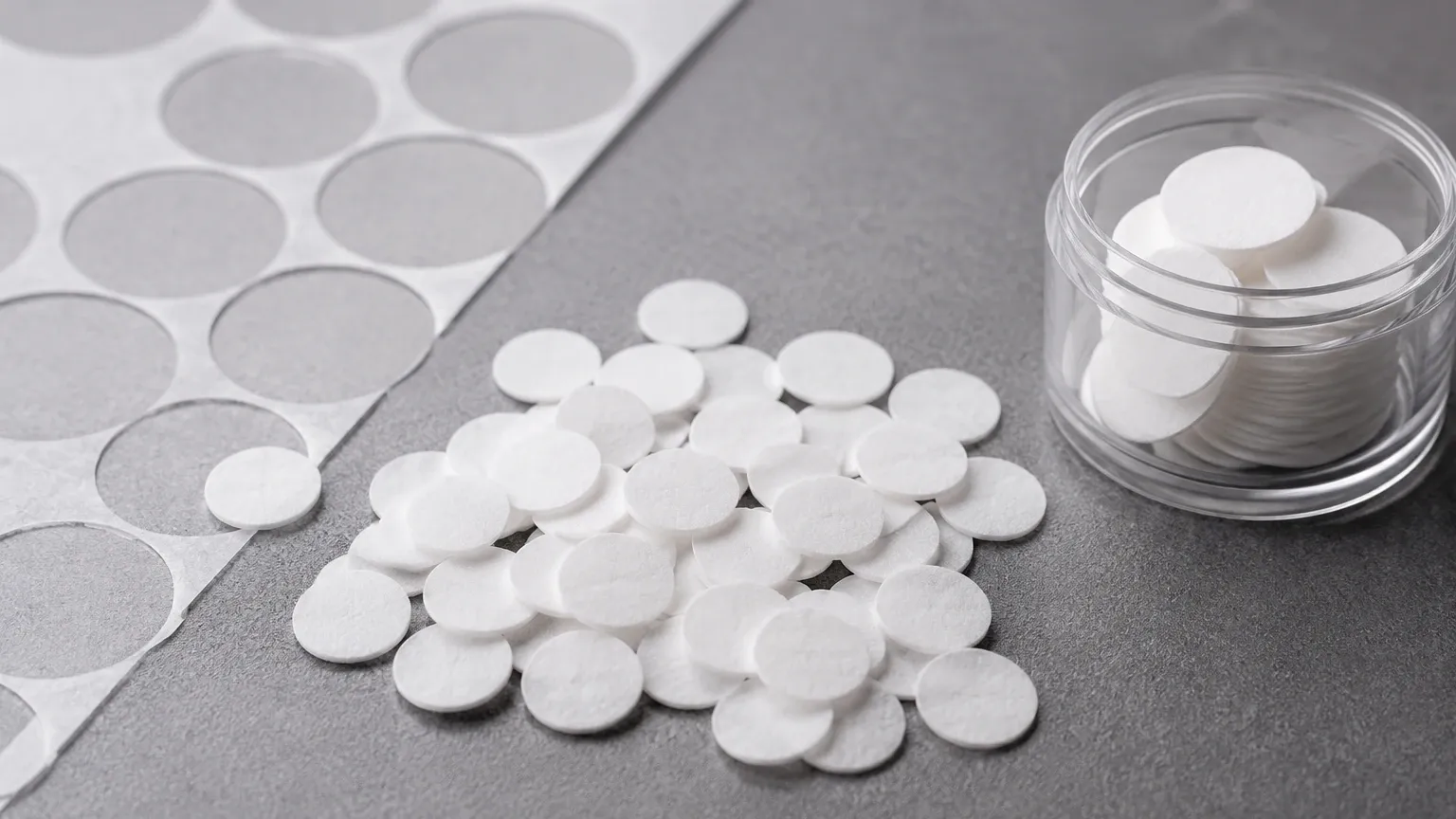
6mm Filter Paper Discs
In precision industrial filtration and laboratory analysis, the selection of media is dictated by the specific chemical, thermal, and mechanical requirements of the application. Among the various small-format filtration components, 6mm filter paper discs represent a specialized size often utilized in micro-filtration, multi-well plate assemblies, and specialized testing equipment. While paper-based media are common for single-use or analytical tasks, engineers must evaluate whether a fibrous paper disc or a more robust metal alternative within the broader category of Filter Discs & Packs is better suited for their specific operational environment.
Understanding the technical nuances of 6mm filter paper discs—including material composition, pore size distribution, and fluid compatibility—is essential for ensuring process integrity and preventing downstream contamination. This guide examines the engineering considerations behind these components and how they relate to industrial filtration systems.
Technical Specifications and Material Composition
6mm filter paper discs are typically manufactured from high-quality cellulose fibers, glass microfibers, or synthetic polymers. Each material provides distinct advantages depending on the fluid being processed and the required retention efficiency.
Cellulose Filter Discs
Cellulose is the most common material for standard filtration. These discs are often categorized by their ash content (quantitative vs. qualitative). For industrial OEM applications, high-purity cellulose provides a cost-effective solution for general clarification. However, cellulose is limited by its temperature sensitivity and potential for fiber migration under high-pressure conditions.
Glass Microfiber Discs
When higher thermal stability or finer filtration is required, glass microfiber is often preferred. These discs can withstand temperatures up to 500°C and offer high loading capacity. In a 6mm format, glass fiber discs are frequently used in air monitoring or the filtration of aggressive solvents where organic cellulose would degrade.
Synthetic Membrane Discs
For applications requiring absolute retention ratings, synthetic membranes (such as PTFE, Nylon, or PES) are die-cut into 6mm discs. These are used when the pore size must be strictly controlled to sub-micron levels, such as in pharmaceutical sterilization or high-purity chemical processing.
Engineering Considerations for 6mm Filtration
When specifying 6mm filter paper discs for an industrial process, engineers must look beyond the diameter. The physical performance of the disc under load is a critical factor in system design.
Flow Rate and Pressure Drop
The small surface area of a 6mm disc (approximately 28.27 mm²) means that flow rates are inherently limited. Engineers must calculate the flux—the volume of fluid passing through a unit area per unit time—to ensure the filtration stage does not become a bottleneck. If the pressure drop across the disc increases too rapidly, it may indicate that the pore size is too fine for the particle load or that the media is blinding.
Thickness and Burst Strength
The mechanical strength of the paper is vital, especially if the disc is unsupported. In many industrial housings, 6mm discs are placed within a recessed holder or supported by a secondary mesh. Without adequate support, the differential pressure can cause the paper to rupture, leading to "bypass" where unfiltered fluid enters the clean stream.
Chemical Compatibility
Before procurement, it is essential to confirm that the disc material is inert to the process fluid. For example, while cellulose is excellent for aqueous solutions, it may swell or dissolve in certain strong acids or organic solvents. In such cases, transitioning to stainless steel Filter Discs & Packs can provide the necessary chemical resistance and structural longevity.
Comparing Paper Discs with Stainless Steel Alternatives
In many B2B industrial contexts, a primary decision point for engineering teams is whether to use disposable paper media or permanent, cleanable metal media. While 6mm filter paper discs are effective for low-volume, single-use applications, they have limitations that stainless steel components address.
| Feature | 6mm Filter Paper Discs | Stainless Steel Filter Discs |
| :— | :— | :— |
| Durability | Low; single-use only | High; reusable and cleanable |
| Temperature Resistance | Limited (usually <120°C) | High (up to 600°C+ depending on alloy) |
| Chemical Resistance | Variable (depends on polymer/fiber) | Excellent (304, 316L, Hastelloy) |
| Structural Integrity | Requires external support | Self-supporting or reinforced |
| Total Cost of Ownership | Low initial cost; high replacement cost | High initial cost; low long-term cost |
For high-pressure hydraulic systems, polymer melt filtration, or pharmaceutical manufacturing where batch-to-batch consistency is paramount, stainless steel wire mesh or sintered metal discs are often the preferred choice. These metal components can be manufactured to the same 6mm dimensions while offering significantly higher burst pressures and the ability to be ultrasonic cleaned.
Applications of 6mm Filter Discs in Industry
The 6mm diameter is a standard size for several niche industrial and laboratory applications. Understanding these use cases helps in selecting the correct grade of media.
1. Analytical Testing and Chromatography
In HPLC (High-Performance Liquid Chromatography) and other analytical techniques, 6mm discs serve as pre-filters to protect sensitive columns from particulate matter. The small size minimizes dead volume, which is critical for maintaining the resolution of the analysis.
2. Micro-Fluidic Devices
As industrial processes move toward miniaturization, micro-fluidic chips often incorporate 6mm filtration zones. These zones are used to isolate cells, capture beads, or purify reagents in automated diagnostic and chemical synthesis equipment.
3. Environmental Monitoring
6mm glass fiber discs are frequently used in air sampling equipment to capture fine particulate matter (PM2.5 or PM10). The discs are weighed before and after exposure to determine the concentration of pollutants in a given volume of air.
4. OEM Equipment Integration
Many manufacturers of precision valves and sensors integrate 6mm discs as protective barriers. These "last chance" filters prevent stray particles from damaging internal components or clogging narrow orifices.
Selection Criteria: What Engineers Should Confirm
To avoid process failures or frequent downtime, purchasing and engineering teams should confirm the following data points before finalizing a source for 6mm filter paper discs or their metal counterparts:
* Nominal vs. Absolute Rating: Does the application require a general "nominal" capture rate, or is an "absolute" micron rating necessary to ensure 99.9% retention of a specific particle size?
* Edge Integrity: For 6mm discs, the method of cutting is crucial. Die-cutting can sometimes leave loose fibers at the edge of paper discs. If fiber shedding is a risk, a heat-sealed or metal-rimmed disc may be required.
* Stacking and Multi-Layer Packs: In some scenarios, a single 6mm disc is insufficient. Engineers may specify "packs" that combine multiple layers of different porosities to provide graduated filtration, extending the life of the final fine-filtration layer.
* Compliance and Certification: For food, beverage, and pharmaceutical applications, ensure the media meets FDA, USP Class VI, or relevant industry standards for extractables and leachables.
The Role of Customization in Filtration Performance
While standard 6mm filter paper discs are widely available, many industrial applications require customized solutions to optimize performance. Customization may involve specialized diameters, composite materials, or specific packaging formats for automated assembly lines.
As a professional manufacturer of filtration components, Kaifil specializes in providing high-performance alternatives to standard paper media. When paper discs fail to meet the rigors of high temperature, high pressure, or corrosive environments, our stainless steel Filter Discs & Packs provide a durable and precise solution. By utilizing advanced manufacturing techniques such as precision die-cutting, laser cutting, and multi-layer sintering, we ensure that even the smallest 6mm components meet strict engineering tolerances.
Conclusion
6mm filter paper discs are vital components in the toolkit of laboratory and industrial engineers. However, the transition from a lab-scale prototype to a full-scale industrial process often reveals the limitations of paper-based media. By evaluating the chemical environment, pressure requirements, and long-term maintenance costs, engineers can determine whether a disposable paper disc or a custom-engineered metal filter disc is the optimal choice for their application. For demanding industrial environments, investing in high-quality metal filtration solutions ensures reliability, reduces the risk of process contamination, and provides a lower total cost of ownership over the life of the equipment.
